
TAMPA BAY / SUNCOAST
Anna Maria Island
fishing guide
Understand the island’s Gulf and bay choices, plan around pier rebuilding and learn simple methods for its northern beaches and inshore edges.
Explore the guide ↓Choose the right part of Anna Maria Island
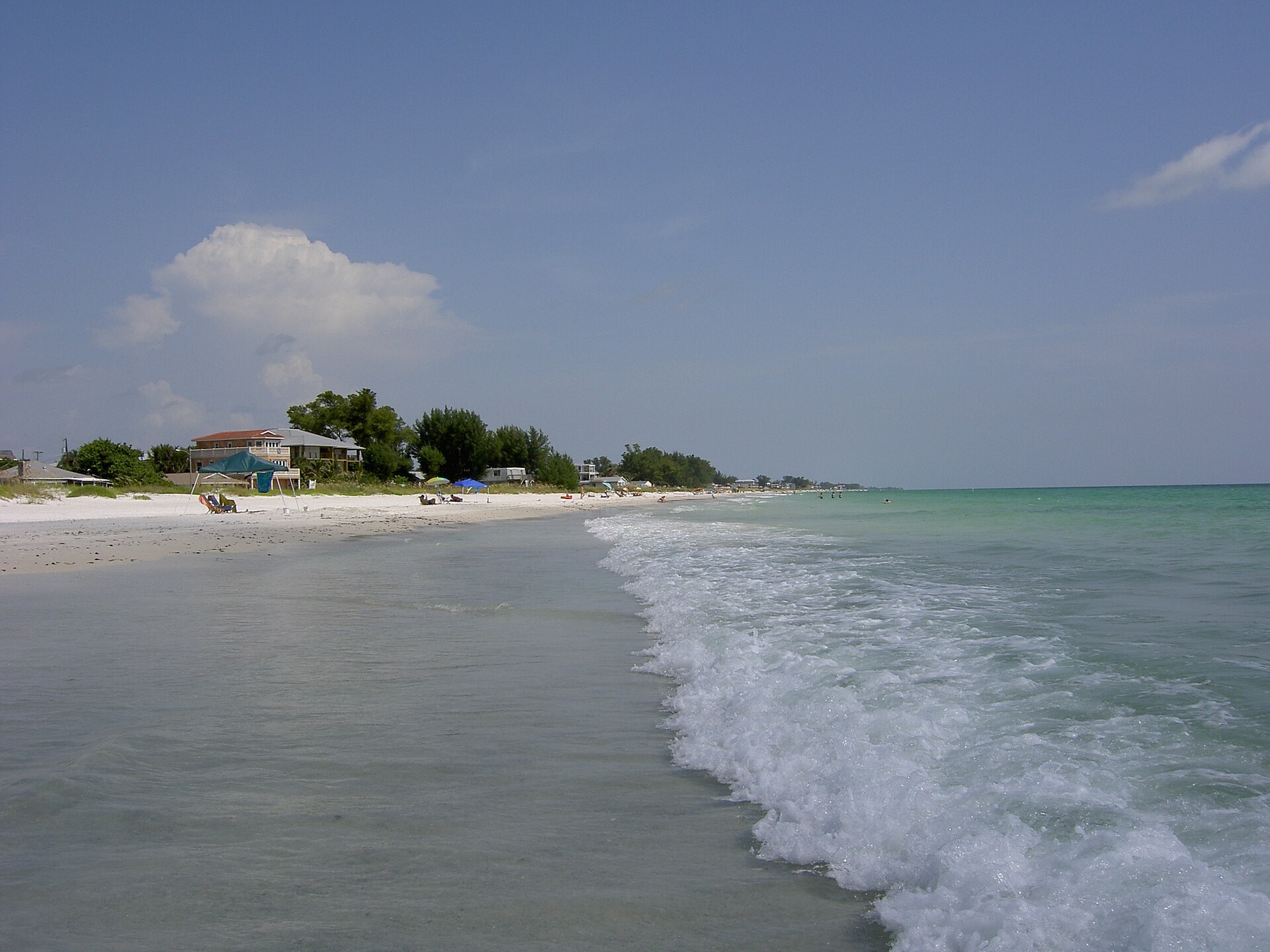
Anna Maria Island offers Gulf beach, Tampa Bay frontage and sheltered water on its eastern side. The northern city of Anna Maria, central Holmes Beach and southern Bradenton Beach are separate places along the same island. Their piers, parking and access arrangements should not be mixed together.
This guide gives an island-wide starting point with extra attention to the northern shore. Use the Holmes Beach and Bradenton Beach guides for more detailed plans farther south. For a first visit, choose one side of the island and learn its water rather than trying to fish all three cities.
The beach can provide a useful outing with light tackle. Boat fishing opens grass flats and deeper edges, but it also requires a legal launch, weather planning and respect for busy passages.
Do not rely on old pier advice
Anna Maria City Pier has been the subject of an active rebuilding project following storm damage. City records reviewed for this guide describe construction and repair work during 2026. A projected completion date is not the same as confirmed public access.
Before making a pier-based trip, verify an official reopening and the services actually available. Bring bait independently unless a current operator confirms sales. The same care applies to other well-known island piers, which may have their own damage or rebuilding history.
A pier closure should not lead you onto construction decking, broken seawalls or private neighboring property. Plan a legal beach alternative in advance so the trip does not depend on a single structure.
Old photographs remain useful for understanding the island’s shape. They should never be used as the deciding evidence that a facility is open.
Read the northern beach without entering the pass
The northern end near Bean Point faces powerful connections between Gulf and bay water. It is a place to respect current, changing sandbars and abrupt depth. Stay on permitted dry shore and do not wade toward the channel to gain casting distance.
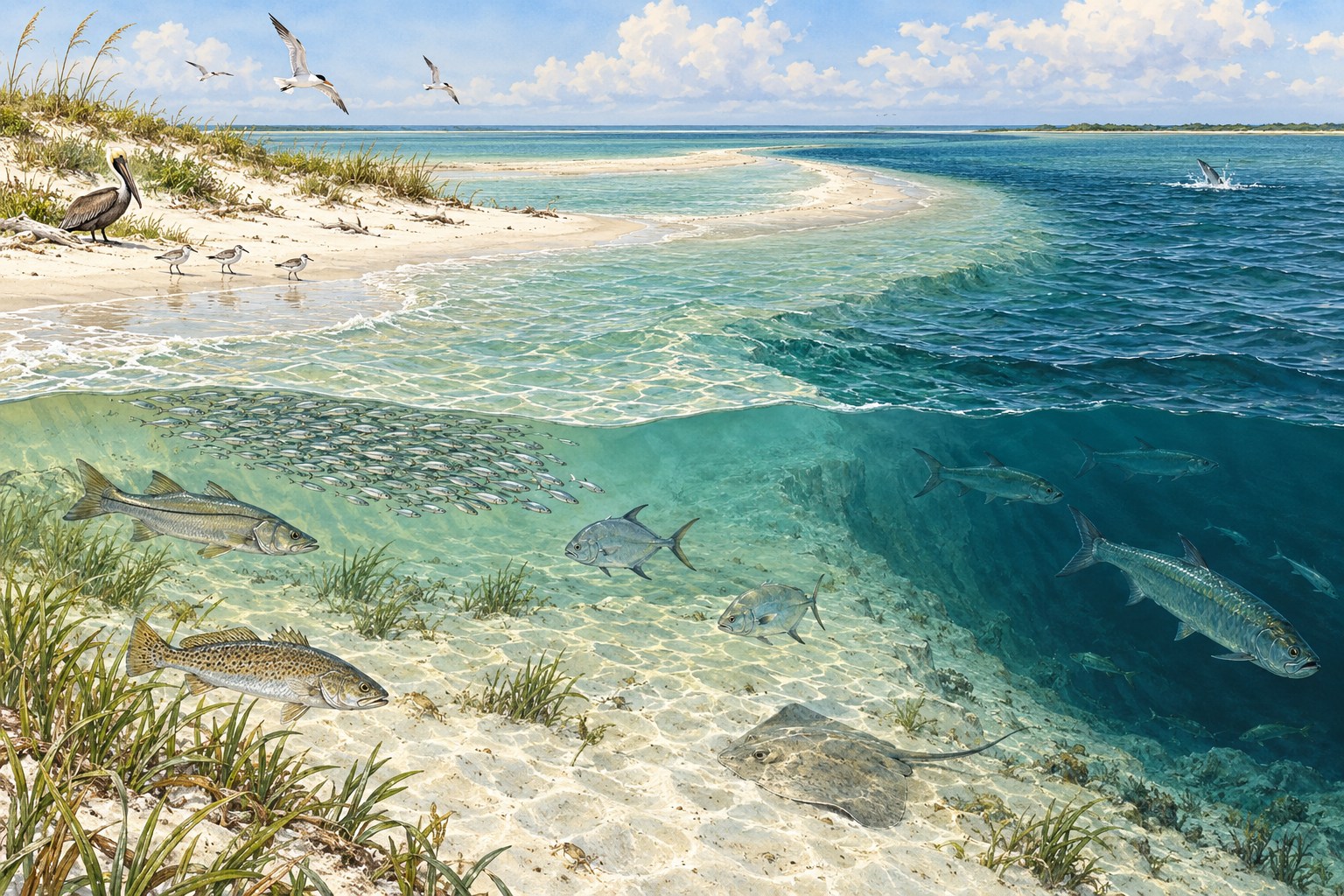
Fishable beach water may be well away from the strongest flow. Look for a clean sandy trough, a bait school moving along shore or a gentle edge between clear and slightly colored water. Those clues can be more useful than the dramatic-looking water at the tip.
Choose a public entrance and observe the parking signs on nearby residential streets. Keep driveways, emergency routes and dune vegetation clear. Carry a small kit that you can move if the tide or beach activity takes away your fishing space.
Use the Gulf shore for a simple beach session
Whiting often feed close enough for a short cast. Place a small shrimp bait in the first trough and let it settle. If the rig washes sideways toward people, move to a safer stretch or stop.
Pompano can use clean sand around bars and cuts. Sand fleas, shrimp and small jigs give different ways to reach them. Match the weight to the surf, and avoid setting several rods across a crowded beach.
During warm clear periods, snook may cruise parallel to the shoreline. Watch before casting and place a lure ahead of a traveling fish. A long shadow or a rushed approach can end a chance more quickly than the wrong lure color.
Look for grass and sand on the bay side
In sheltered eastern water, grass beds and pale sand pockets offer food and cover. Trout may hold above the grass. Redfish can feed along the shallower edge. A narrow depth change can collect both bait and predators.
These areas are often more practical from a properly launched small craft than from land. Do not assume a private seawall is public because it faces the same flat. Keep boats out of marked swim areas and avoid disturbing manatees or birds.
A lure should swim above the vegetation. If every retrieve brings back grass, use a lighter head or shallower presentation. Dragging through the bed is not a productive search method.
Match the fish to the island setting
| Fish | Useful water | Good starting choice |
|---|---|---|
| Whiting | Gulf wash over sand | A small piece of fresh shrimp |
| Pompano | Clean troughs and bar edges | Sand flea or compact jig |
| Snook | Warm beach lanes and bay cover | Small paddletail or baitfish |
| Spotted seatrout | Grass with nearby depth | Shrimp under a float |
| Redfish | Shallow sand and grass boundaries | Weedless soft plastic |
Mackerel and jacks may follow bait along the coast. Keep a compact metal lure available, but avoid casting into diving birds or through another angler’s line.
Choose a beach kit or a bay kit
For a beach walk, a medium spinning rod with 10 to 15-pound braid is usually manageable. Carry a few small hooks, light sinkers, a paddletail and a spoon. Add leader strength when targeting snook or fishing close to abrasion.
For a bay outing, weedless rigging and a float option become more useful. Keep loose tackle secured in a kayak and wear a personal flotation device. A route through shallow water still needs communication and a reliable return plan.
Bring bait in a small cool container. Whole live shrimp requires care; cut shrimp for beach fish is simpler to transport. Avoid buying more than you can keep in good condition.
Use a measuring tool before considering a fish for the cooler. Identification, current rules and careful handling are part of the outing, not tasks to solve after the fish is already dead.
Follow the island’s seasonal changes
Spring can bring cleaner settled water between fronts and more moving bait. Summer favors short dawn sessions, especially on popular beaches. Snook may be present close to shore, but spawning-season fish should be handled gently and released promptly when required.
Fall can produce quick feeding activity that moves along the beach. Watch birds and bait without racing into a crowded area. Winter often calls for smaller natural baits and a sheltered position during a mild spell.
Use the island-area tide and weather page to compare the wind with your chosen side. A calm-looking beach does not tell you what the pass will be doing.
Build a day around one dependable access point
Confirm the entrance and parking first. Choose a primary beach or public facility and identify a fallback that is also open. This avoids spending the best fishing hour driving between unavailable piers.
Begin with a short observation walk. Fish the nearest useful lane, then test another distance or bottom type. Keep a note of where the bites occur. If the beach fills with swimmers, finish or move before your tackle becomes a conflict.
A boat plan needs more margin. Allow time for launch queues, a slower return in wind and loading gear. Do not let the desire to cover the whole island push the route beyond the conditions.
Keep the island’s wildlife out of the tackle
Stay outside marked nesting zones and avoid leaving bait where birds gather. Cover bait buckets and pack line clippings immediately. If dolphins approach a hooked fish, avoid feeding them or encouraging the interaction.
Handle fish with wet hands and keep them supported. Check the official FWC saltwater fishing rules for the latest license and harvest requirements.
Choose a beach distance with purpose
A common mistake on a wide island beach is assuming that farther always means better. Before casting, compare the closest trough with the water beyond the first bar. Look for where waves stir the bottom and where small fish gather.
Start with one bait close enough that you can see its entry point. Give it a fair test, then move the same rig farther out. If bites occur only at the nearer distance, keep fishing that lane. You have found useful information without needing another rod.
Pompano and whiting may feed over different pieces of sand during the same session. A compact bait that stays near bottom suits the search. If the bait washes constantly toward people, the area is no longer an appropriate test.
For visible snook, distance matters differently. The important task is placing a lure ahead of the fish while staying far enough back not to alarm it. Watch the travel direction and cast to where the fish is going, not where it was when you first noticed it.
If you cannot see fish because of glare, change your viewing angle before changing beaches. A few steps can reveal a trough that was hidden by reflected light. Polarized glasses help, but they do not make rough or muddy water transparent.
Keep these observations separate from claims about the whole island. A useful northern beach lane on one morning does not establish identical conditions at Holmes Beach or near Longboat Pass. Each part deserves its own look when you arrive.
Anna Maria Island questions
Are Anna Maria and Bradenton Beach the same city?
No. They are separate cities on the same island, with Holmes Beach between them.
Should I plan around the City Pier?
Only after confirming public reopening and available services. Keep a beach option in your plan while repairs are involved.
Is the island’s northern tip safe for a casual wade?
Do not treat it that way. Strong current and nearby depth changes make a dry-shore approach much more sensible.