
FLORIDA KEYS & EVERGLADES
Anne's Beach
fishing guide
Anne's Beach is a shallow-water viewing and swimming stop in Islamorada. Fishing is prohibited here. Use the shore to learn about Keys habitat, then choose a separate place that expressly allows angling.
Explore the guide ↓Fishing is not allowed at Anne's Beach
Islamorada's official Parks and Beaches page states that no fishing is allowed at Anne's Beach. The rule applies to this municipal beach even though the wider Keys are famous for sportfishing. A license, an empty swimming area or a plan to release every fish does not change that local restriction.
This is a habitat-learning stop, not a recommendation to cast from the beach or boardwalk. Keep rods and bait packed. If fishing is the day's main goal, arrange a separate authorized location before arriving. Do not treat a no-fishing sign as applying only while someone is swimming or only to people who plan to keep fish.
Use the boardwalk to see the shallow coast
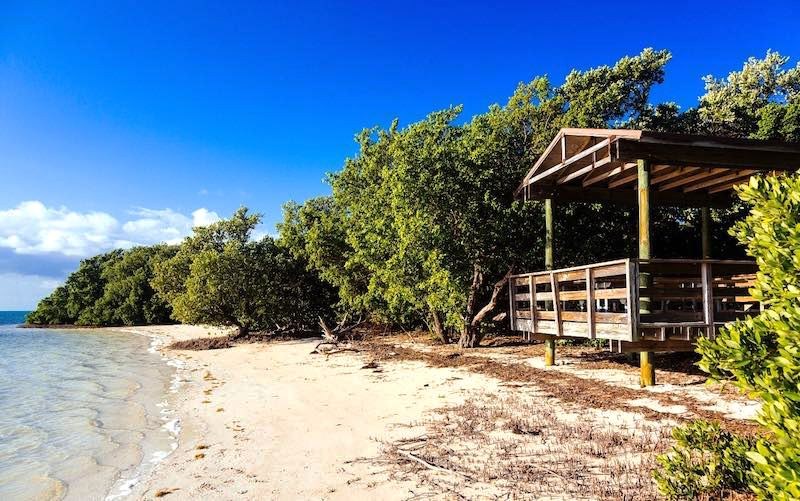
Anne's Beach is at mile marker 73.5 on the oceanside of the Overseas Highway in Islamorada. The village lists sunrise-to-sunset hours, a boardwalk, picnic pavilions and restrooms at the north parking area. Check the condition of open routes and follow current signs.
The shallow water often has little wave action, but no place is safe in every weather condition. Watch water level before walking on a route near the shore. Use the public access rather than surrounding property. Keep the outing simple enough for a comfortable return when heat, rain or higher water reduces the usable beach.
Look at the small life that supports larger fish
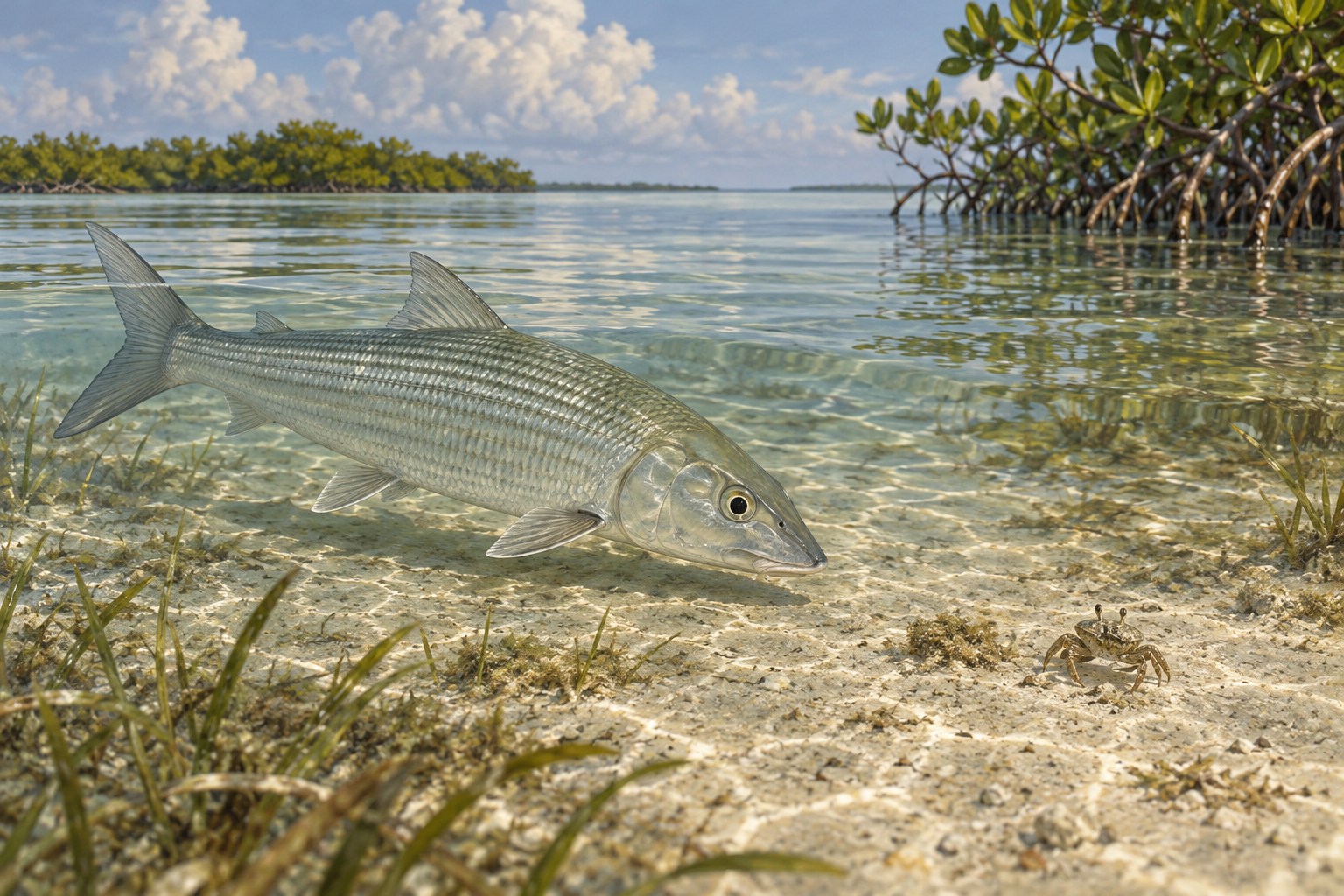
The shallow Keys environment supports small fish, shrimp and crabs that become food for larger predators. Mangrove roots and submerged vegetation can provide shelter from open-water threats. Clean sand margins can act as routes between that shelter and feeding areas.
Observe without feeding or collecting the animals. A small school near the boardwalk may shift direction together as a shadow passes, showing why cover matters. That lesson helps an angler think about presentation elsewhere. Here, learning the food web is the activity itself; visible fish do not create permission to offer them a bait.
Learn what a feeding route looks like from dry ground
Bonefish search shallow sand and mixed flats for small crustaceans. Barracuda hunt fish, while mangrove snapper can use structure and edges. These are lessons about suitable Keys habitats, not claims that every species will be visible at Anne's Beach during a visit.
Use polarized glasses to reduce glare and watch where prey gathers. An isolated dark shape is not enough for reliable identification. Notice repeated movement, body outline and the habitat around it. Avoid approaching rays or other wildlife. A photograph from a respectful distance can be more useful than a guess based on a quick splash.
Watch how water level changes the same shoreline
A rising tide can cover sand that was exposed earlier, allowing small animals to use a broader area. Falling water may concentrate movement into shallower lanes or leave parts of the shore uncovered. This makes Anne's a useful place to study the difference between a water-level prediction and what is happening locally.
Do not assume that high water means safe footing or that low water means a firm walking surface. Mud, vegetation and hidden holes can remain. Record a fixed shoreline marker and look again later from the permitted route. The comparison teaches more than wandering farther out to inspect a patch whose depth and bottom are uncertain.
Choose an expressly permitted angling destination
Long Key State Park lists flats fishing, while Curry Hammock State Park describes fishing opportunities among mangrove and seagrass habitat. They are separate locations with their own opening status, designated areas and rules. Confirm current access before planning to carry the rod there.
Another municipal beach is not automatically an alternative. Islamorada also prohibits fishing at Library Beach Park, and Founders Park has its own no-fishing rules. Ask about the exact authorized casting location, not simply whether the area has water. For a boat outing, check sanctuary zones and any no-entry boundaries before choosing the route.
| Visit activity | Useful lesson | Boundary |
|---|---|---|
| Boardwalk observation | Prey and shelter | No casting or baiting |
| Tide comparison | Changing shallow-water area | Stay on the permitted route |
| Separate legal fishing trip | Apply habitat observations | Verify destination rules first |
Match food to habitat only when fishing elsewhere is legal
At an authorized flat, a shrimp imitation can represent small prey without dragging across the whole bottom. Its weight should allow controlled movement above plants or across a clear sand lane. A natural shrimp may be effective too, provided the bait, hooks and activity follow the rules at the chosen location.
For a predator chasing fish, a compact baitfish imitation offers a different lesson. Retrieve style should match observed prey behavior rather than a rigid pattern. Do not test these tactics at Anne's Beach. Carry the habitat observations away and apply them where angling is specifically permitted, with a safe landing plan and current species regulations.
Keep the visit comfortable for families and wildlife
The village permits leashed dogs at Anne's Beach but prohibits motorboats, personal watercraft and open flame or grilling. Plan food and shade with those rules in mind. A picnic pavilion is a place for a restful stop, not a reason to spread sharp tackle around a swimming beach.
Stay on the boardwalk and public routes, and let wildlife move without being chased. Keep food scraps contained so birds do not gather around visitors. Do not step through mangrove roots or disturb submerged plants to get a closer photograph. Gentle observation keeps the beach useful for people while preserving the habitat that makes the wider Keys fishing possible.
Make this stop part of a well-planned fishing day
An Anne's Beach visit can begin a day by showing how shallow water, prey and shelter fit together. A later angling session at a confirmed open permitted site can use those observations. Keep enough travel time between the two that nobody feels rushed to cast at the restricted beach instead.
Record what you actually saw: small fish movement, changing level, glare and shoreline cover. Distinguish those notes from species you only hoped to find. The most valuable result is understanding why healthy habitat and clear use boundaries matter. A place can belong in a coastal fishing guide because it teaches that lesson, while still being entirely off limits to fishing.
Common questions
Can I fish at Anne's Beach if I release everything?
No. The municipal rule prohibits fishing, including a catch-and-release session.
Is Library Beach Park a nearby fishing alternative?
No. Islamorada also lists no fishing at Library Beach Park. Choose an expressly authorized destination.
What can anglers learn here?
Observe shallow-water prey, cover, glare and tidal level from permitted viewing routes without baiting or collecting wildlife.
Which parks may offer a separate angling plan?
Long Key and Curry Hammock state parks list fishing. Confirm their current opening status and designated areas before traveling.
Prepare for your visit
Check local tides and weather. Read more about mangrove snapper, permit, bonefish. Check current FWC saltwater fishing rules.