
PANHANDLE
Bald Point State Park
fishing guide
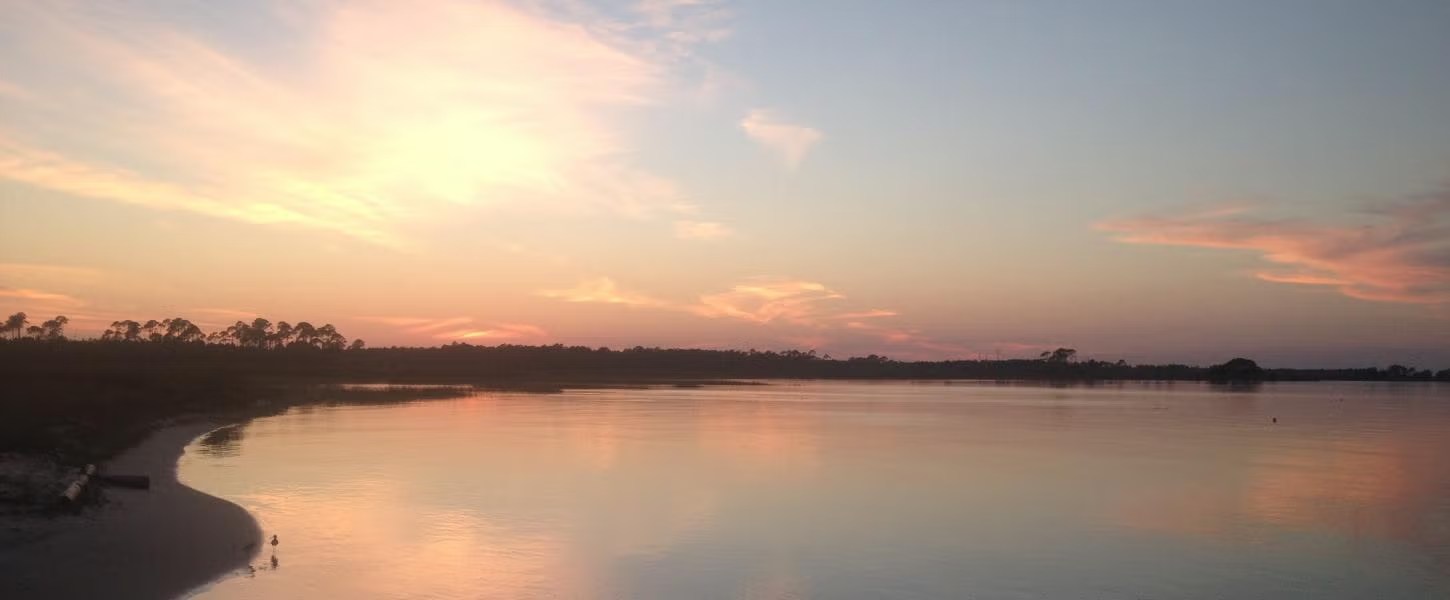
Bald Point sits where Ochlockonee Bay meets Apalachee Bay. Marsh, sand and shallow water make it a useful place to understand redfish and trout habitat before choosing a rig.
Explore the guide ↓Choose an open designated fishing area
Bald Point State Park is at 146 Box Cut Road on Alligator Point. The usual visiting schedule is 8 a.m. to sunset. The official park lists beaches and a fishing dock, but those facilities do not make every shoreline, trail overlook or wetland an approved casting position.
Check the park's current notices before traveling. Its page describes a habitat improvement project involving sand-pine removal. Follow any related closures and staff instructions. The park contact is 850-962-2771. Pick a designated beach or dock location that is open, with a secure route back to the car. Ask about accessible equipment and routes if mobility affects the plan.
Read the junction of sand and marsh
The meeting of two bays creates a varied coastal setting. Small fish and shrimp use shallow cover, while predators can move along cleaner lanes beside it. Notice where the water touches marsh edges at the current level rather than aiming blindly toward the farthest visible shore.
Look for repeated bait movement and an edge that offers a manageable retrieve. An exposed shell patch may provide feeding habitat, but it can also cut feet and snag tackle. View it from secure ground. Soft mud, submerged holes and alligators in wetland environments are reasons to avoid casual wading beyond an inspected permitted area.
Let a shrimp presentation pass beside cover
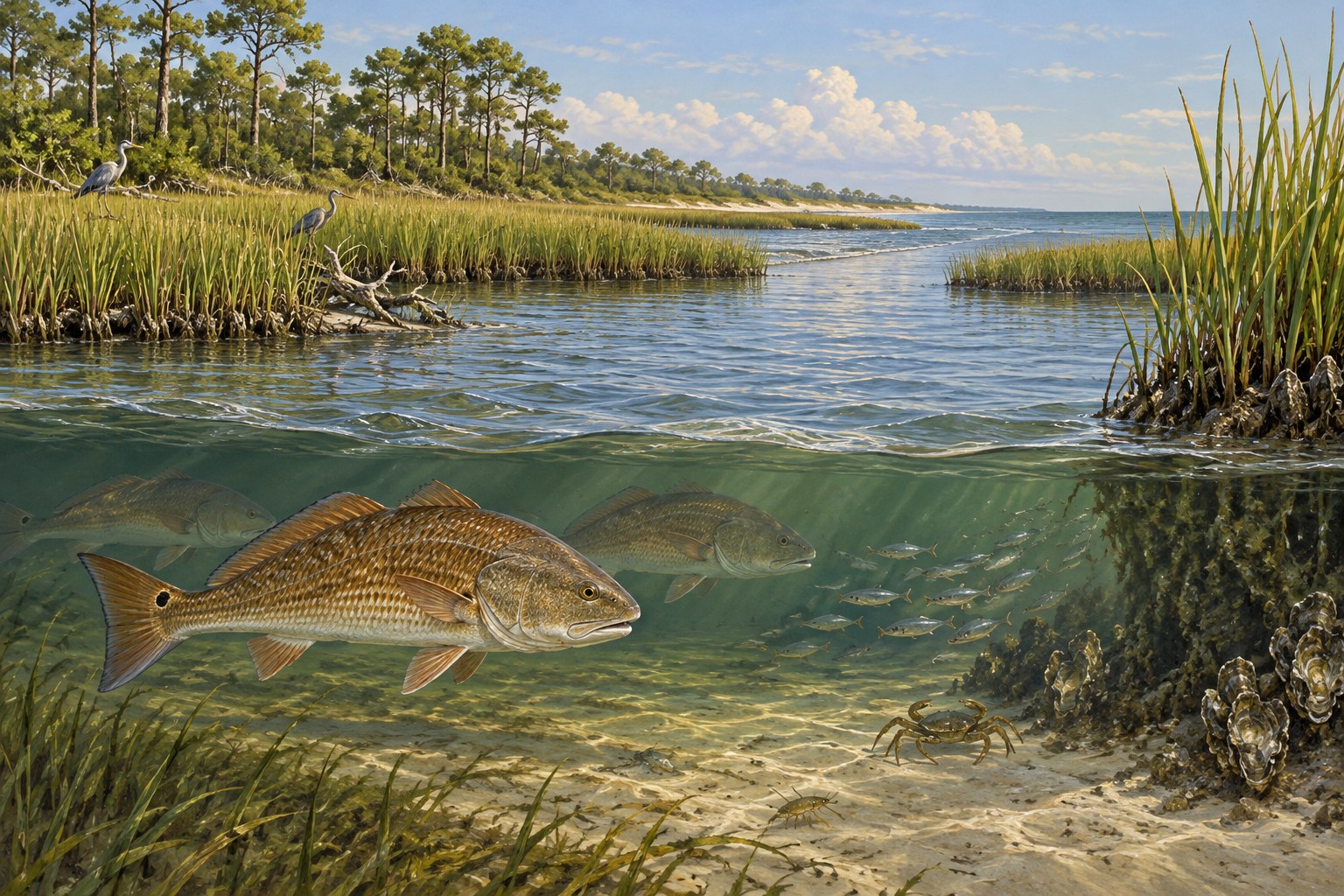
Redfish feed on crustaceans and small fish in shallow coastal water. A live shrimp or compact shrimp-shaped lure can fit the food available near a marsh margin. Cast beside a recoverable edge, leaving room to bring a fish back without pulling it across vegetation.
With a float, set the bait above the bottom and use brief small movements. With a jig, choose enough weight to maintain contact without plowing into mud. If the presentation hangs up on every cast, move to a cleaner lane. Redfish can feed in very shallow water, so a quiet approach may help more than another long cast.
Give seatrout a clean route above the grass
Spotted seatrout often hunt over submerged vegetation mixed with sand. A small baitfish imitation that swims above the cover is a reasonable way to search an approved area. Start with a steady pace and then add an occasional short pause.
A suspended shrimp lets you test a lane without dragging a hook through the plants. Adjust depth after each look at the returning rig. Keep drag pressure smooth to avoid tearing a trout's mouth. Support a released fish gently with wet hands, and make identification before deciding whether a catch meets the current regional harvest rules.
Use a slower approach for drum and flounder
Black drum and flounder are possible fish in the broader bay habitat. They need different expectations from a fast surface-feeding jack. A small natural bait near clean bottom can make a useful controlled trial beside an approved dock or stable shore position.
Flounder can wait near a transition between depth and bottom type. Work a light offering slowly enough to stay near that lane without burying it in shell. Black drum can find shrimp by scent. Avoid treating every small tap as the same species, and learn identification before keeping a fish with a body shape you do not recognize.
Prepare a landing method before a dock bite
If the designated fishing dock is open, first inspect where people can walk and where a fish could be landed. Do not swing a heavy catch over a crowded railing. A suitable net or prompt water-level release can be safer than lifting a fish by the line.
A medium spinning setup with modest leader covers many inshore presentations. Carry a float, a few light jigs and small bait hooks. A hook remover, ruler and container for sharp waste are particularly useful on a shared platform. Keep bags against the side of the usable space instead of building a tackle barrier across the entrance.
| Habitat in an allowed area | Presentation | Check first |
|---|---|---|
| Marsh-side open lane | Shrimp float | Depth and quiet approach |
| Grass with sand gaps | Small swimming lure | Clean retrieve above cover |
| Dock-side sandy bottom | Natural shrimp bait | Safe landing without blocking walkers |
Allow wind to change the usable shoreline
Apalachee Bay can become rough when wind works across its shallow open water. A pleasant view from a pavilion is not a forecast for a paddle farther out. Evaluate the whole return route and wear a life jacket whenever using a kayak.
Water level can uncover mud or flood a marsh edge, changing both fish routes and your footing. Tide tables are a planning aid, not a substitute for watching the local water. After a strong front, choose a shorter session and a slower lure. Leave exposed shore early if thunder develops, even when the next shower appears distant.
Share the park with nesting and migrating birds
Bald Point is a wildlife destination as well as a fishing location. Watch feeding birds from a distance, and do not cast toward an area they are actively using. Nesting boundaries and restoration areas remain off limits regardless of whether a promising bait school passes nearby.
Stay on the approved public routes and protect marsh plants. Keep discarded bait contained instead of drawing animals to a picnic or fishing station. Pets are not allowed on the park beaches, even though leashed pets may be permitted elsewhere. Plan that distinction before bringing a dog, rather than assuming a coastal park has one rule for every area.
Use a short visit to learn one bay edge
Begin with one designated dock or beach spot and one uncomplicated bait. Note the water color, direction of drift and whether the hook returns clean. Change float depth or lure weight based on that observation, rather than replacing all tackle after a quiet first cast.
Leave time for a wildlife walk away from sharp equipment. Confirm fishing-license needs and the current species limits before the trip. At the end, clear the fishing area of line and hooks, then record what the water level allowed you to use. This helps distinguish a seasonal fish pattern from a simple access or depth change.
Common questions
Does Bald Point have a fishing dock?
The official park lists a fishing dock. Confirm it is open and follow its posted use boundaries.
Can I bring a dog onto the beach?
No. The beach rules exclude pets, although leashed pets may be allowed in other park areas.
What is a useful redfish bait?
Shrimp or a small shrimp imitation presented beside a permitted marsh or sand edge offers a practical start.
Should I wade across shell and mud to reach darker water?
No. Soft bottom, sharp shell and sudden depth make an uncertain crossing a poor way to seek fish.
Prepare for your visit
Check local tides and weather. Read more about permit, spotted seatrout, flounder. Check current FWC saltwater fishing rules.