
SOUTHEAST ATLANTIC
Bill Baggs Cape Florida State Park
fishing guide
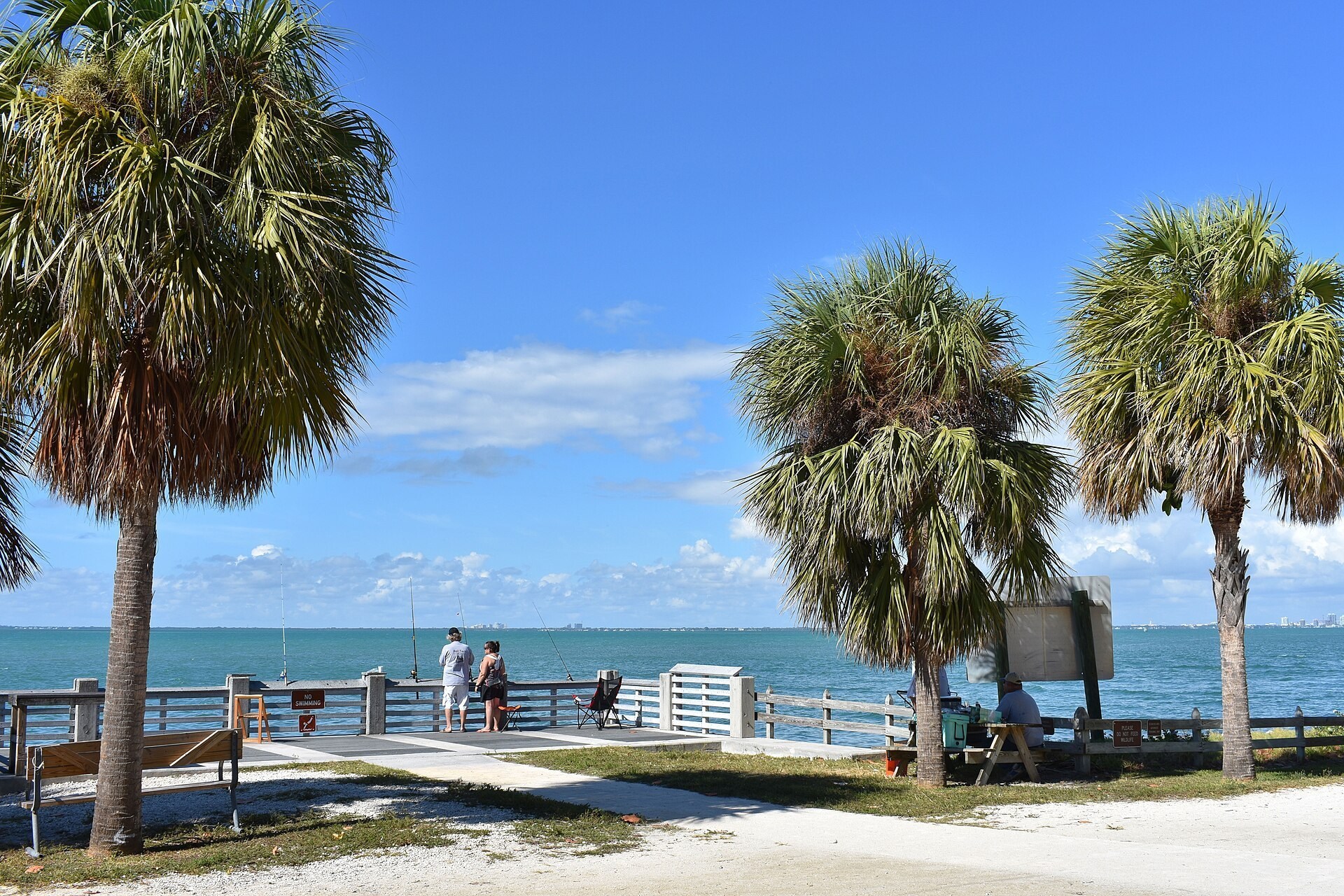
Bill Baggs Cape Florida State Park has a scenic bay-side fishing setting, but its fishing platforms are closed for repairs under the current notice. Confirm any available permitted seawall section before visiting, and keep hooks off the ocean beach and mangroves.
Explore the guide ↓Start with the current fishing-platform notice
Bill Baggs Cape Florida State Park occupies the southern end of Key Biscayne. Its official notice lists fishing platforms as closed for repairs. A general activities description mentioning the platforms does not cancel that closure.
Confirm whether a permitted portion of the bay-side seawall remains available and how it is reached. Ask the ranger rather than assuming that a familiar photograph provides current access. Do not enter closed platforms or bypass barriers.
Fishing is excluded from the ocean beach and mangroves under the park's activity guidance. The bay-side setting has its own limits. A beach admission and a saltwater license do not authorize hooks everywhere in the park.
The reviewed notices also identify work affecting other facilities. Check the latest route and restroom information before planning a long visit. Arrive with a backup plan if fishing access is too limited that day.
Choose the authorized bay setting instead of the swimming beach
The ocean side offers beach recreation, while the west side faces bay water. Their habitats and uses differ even within one state park. Plan fishing only where the ranger confirms it is permitted and currently accessible.
Bay current, vessel movement and structural edges can affect a rig without visible surf. Watch the line path before choosing weight. Keep the presentation clear of boating approaches and other park visitors.
The lighthouse is a park landmark with separate visitor arrangements. A view beside it does not establish a fishing position. Keep the trip focused on the authorized water rather than treating every scenic edge as a station.
If no suitable legal edge is open, a non-fishing park visit can still provide useful habitat observation. Choose another confirmed facility for the rod session.
Use a small offering beside a recoverable edge
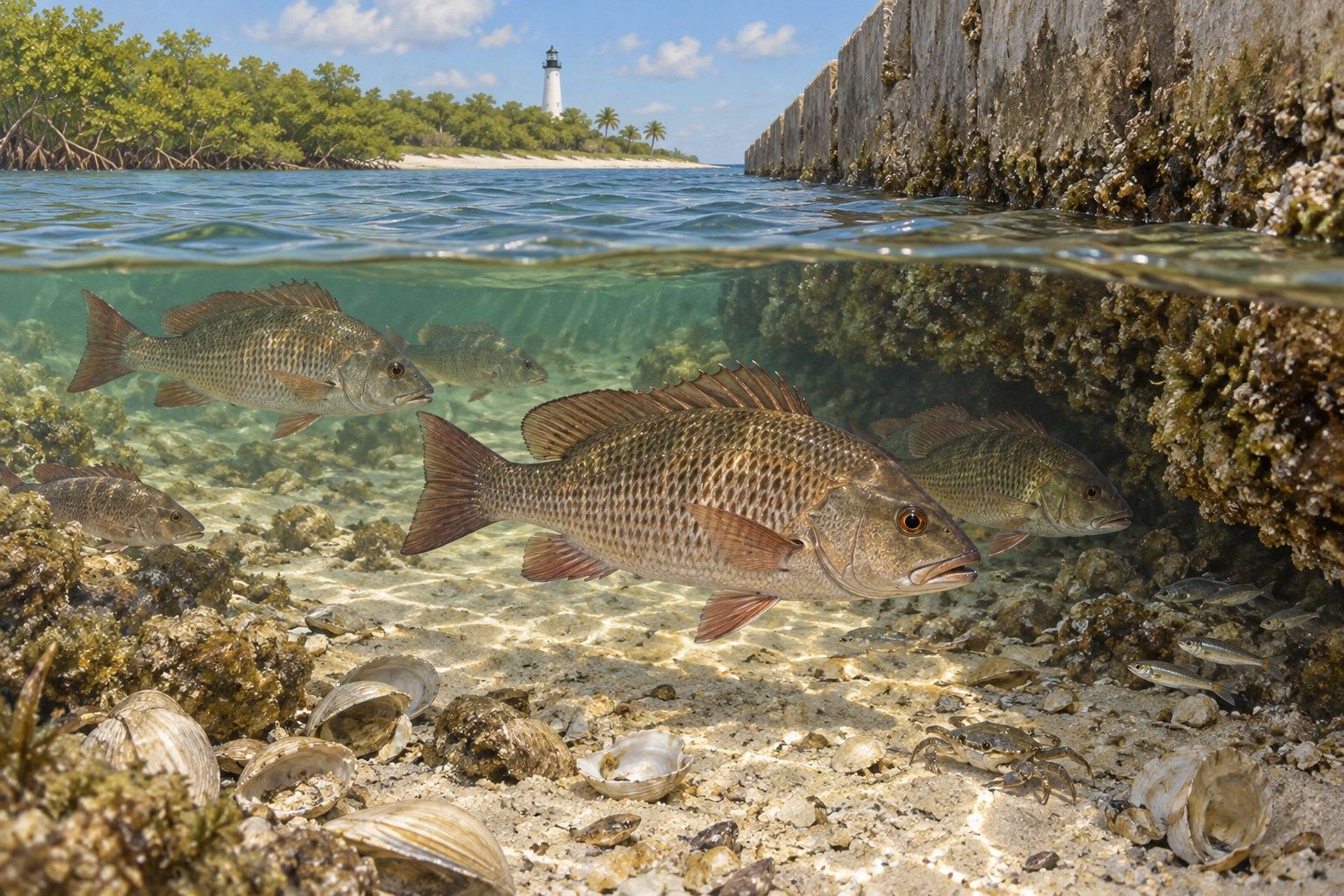
Mangrove snapper can use suitable bay-side hard cover and feeding margins. A small shrimp piece or neat baitfish portion can test approved open water beside that habitat. Keep the hook point clear.
Use enough weight to follow the bait without pinning it inside rough cover. Retrieve before it disappears behind the seawall or a snag. Repeated lost rigs show that placement or current control needs changing.
Watch short bites closely and refresh stripped bait. A smaller firm portion may be more useful than a large soft bundle. One attentive rod makes the first drift easier to understand.
Check leader wear after contact with the edge and guide a hooked fish outward with controlled pressure. Identify the catch before retaining it, since similar coastal fish can have different rules.
Search a legal open bay lane for passing predators
Snook and jacks may follow small fish through suitable coastal margins. A swimming plug or soft plastic can cover a ranger-confirmed lane without resting on rough bottom. Look for prey movement before selecting the cast angle.
Bring the lure ahead of a visible fish's route and keep its path clear of the edge. A following fish may respond to a change of pace. Avoid repeatedly landing the lure directly beside its head.
Current can carry the lure toward an inaccessible corner. Retrieve early rather than allowing it to leave the approved controllable water. Do not cast into mangroves to continue a promising route.
The habitat illustration teaches the relationship between cover, prey and open water. It does not portray a closed platform as usable or show a surveyed bay depth.
Prepare fish handling from the open position
A seawall can place the angler above the fish. Choose a position with a realistic authorized way to support and release a catch. Ask about permitted handling equipment before targeting larger fish.
Do not lift a large fish by the leader or climb a barrier to reach it. The closure makes advance planning even more important because an old landing route may be unavailable. Change the method if safe handling cannot be arranged.
Keep pliers and a measuring tool ready. Support release fish with wet hands and limit air exposure. A photograph should not become a reason to hold the fish on hot pavement.
Use the current notice over an older amenities list
The park's fishing history is useful context, but the available facilities are decided by current notices and staff guidance. Treat these distinctions as part of the plan.
| Park feature | Current planning approach | Do not assume |
|---|---|---|
| Fishing platforms | Listed as closed for repairs | An activities page confirms open rails |
| Bay-side seawall | Ask which permitted section is available | Every visible edge is accessible |
| Ocean beach | Use its authorized beach recreation | Park admission permits surf casting |
| Mangroves | Observe habitat without fishing | A lure route overrides the exclusion |
Leave room for park entry and the return journey
Busy weekends can trigger capacity-related entry changes. Check the current visitor guidance and allow time for the drive along Key Biscayne. A favorable tide is not useful if the chosen route cannot be reached as planned.
Verify gate hours, entry fees and facility work before carrying a large kit. A short first visit can focus on the open bay route and current. Keep enough time to pack and leave under the applicable schedule.
Plan water and sun protection independently of concession availability. Carry only equipment that can be managed around the open public route.
Watch wind, wakes and actual current
Bay water can appear sheltered while wind and wakes make the edge difficult to fish. Watch several passing conditions before setting the rod. Keep gear back from the water so a wake cannot remove it.
Moving tide can refresh a prey route, but the strongest flow may reduce control. A slower permitted lane can be a better first test. Record the bait path rather than labeling one forecast stage as always best.
Lightning and worsening weather are reasons to end both fishing and the scenic visit. Have a clear route back to the vehicle and avoid delaying it for one more drift.
Leave the bay habitat clear of tackle
Check current FWC licenses and harvest rules before fishing an approved open section. Keep unknown or unwanted catches out of the cooler and release them with appropriate support. Do not use an old regulation saved for another area without checking it.
Collect every line fragment and bait wrapper, including pieces around the seawall edge. Finish through the authorized route and recheck the platform notice before the next visit. The broader Key Biscayne guide explains other distinct water and access settings.
Common questions
Are Bill Baggs' fishing platforms currently open?
The reviewed official notice lists them as closed for repairs. Older activity descriptions and photographs should not be treated as reopening confirmation.
Can I fish from the ocean beach?
The park's activity guidance excludes the ocean beach and mangroves from fishing. Use only a confirmed permitted open bay-side setting.
Is any seawall fishing available during repairs?
Ask the ranger which permitted section, if any, is accessible that day. Do not assume a general description establishes a usable route.
What should I do if safe landing is impossible?
Choose a different approved position or method, or make a non-fishing visit. Do not climb closed platforms or lift a large fish by its leader.
Prepare for your visit
Check local tides and weather. Read more about snook, mangrove snapper, permit. Check current FWC saltwater fishing rules.