
SOUTHWEST
Bunche Beach
fishing guide
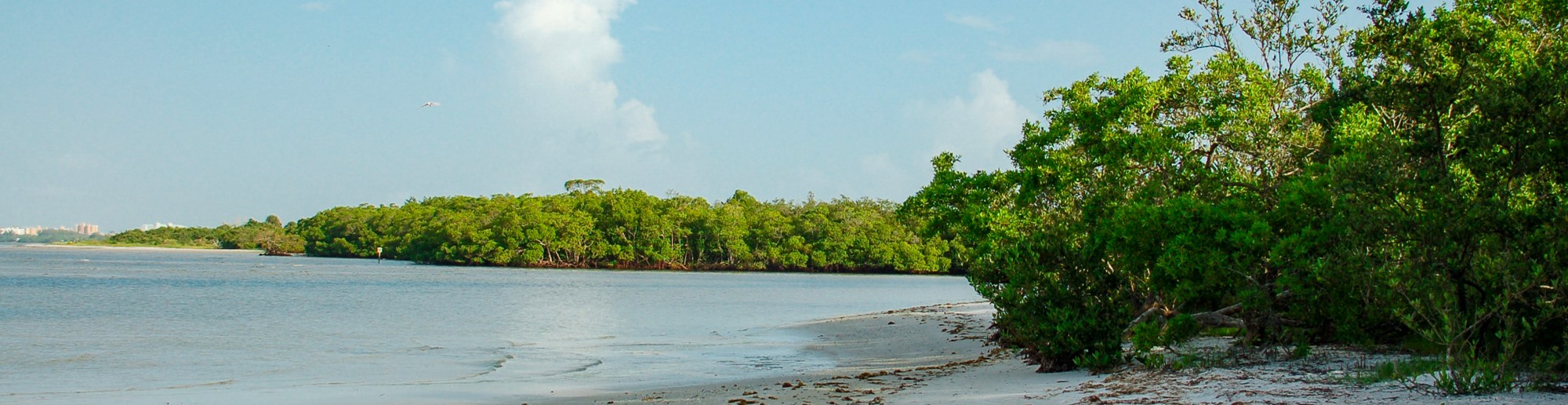
Bunche Beach is a natural mainland shoreline on San Carlos Bay near the Sanibel Causeway. Its shallow tidal setting is different from a breaking Gulf surf beach. Work with water level, protect the flat and choose an allowed open casting lane instead of treating the exposed sand as a route to deeper channels.
Explore the guide ↓Recognize Bunche as a bay shoreline
Official Fort Myers tourism identifies Bunche Beach at 18201 John Morris Road. It lies on the mainland beside San Carlos Bay near the Sanibel Causeway. This location should not be confused with a Sanibel island beach or an open-Gulf surf access.
Lee County describes the preserve as natural habitat. Verify current parking, facilities and fishing instructions before your visit. A natural beach does not necessarily provide the convenient services associated with a developed beach park.
Follow the signed public route and ask about current angling boundaries when uncertain. Keep hooks outside swimmer and paddlecraft activity. A place where visitors can reach the bay still requires a sensible permitted fishing position.
Read the water level before selecting a method
Shallow flats can expose wide sections when water falls. A place covered earlier may become dry or too thin for a useful lure retrieve. Watch the actual water edge and compare it with the tide forecast for the outing.
A rising tide can bring feeding water closer to the accessible margin. It can also cover the return route or soften previously firm footing. Keep the route back in sight and do not cross a depression simply because others have walked nearby.
Stay off sensitive grass and fragile muddy bottom. There is no need to reach a distant channel on foot to make the visit worthwhile. A dry or unsuitable flat is a reason to change the outing rather than push farther into uncertain water.
Think about cover and prey rather than surf bars
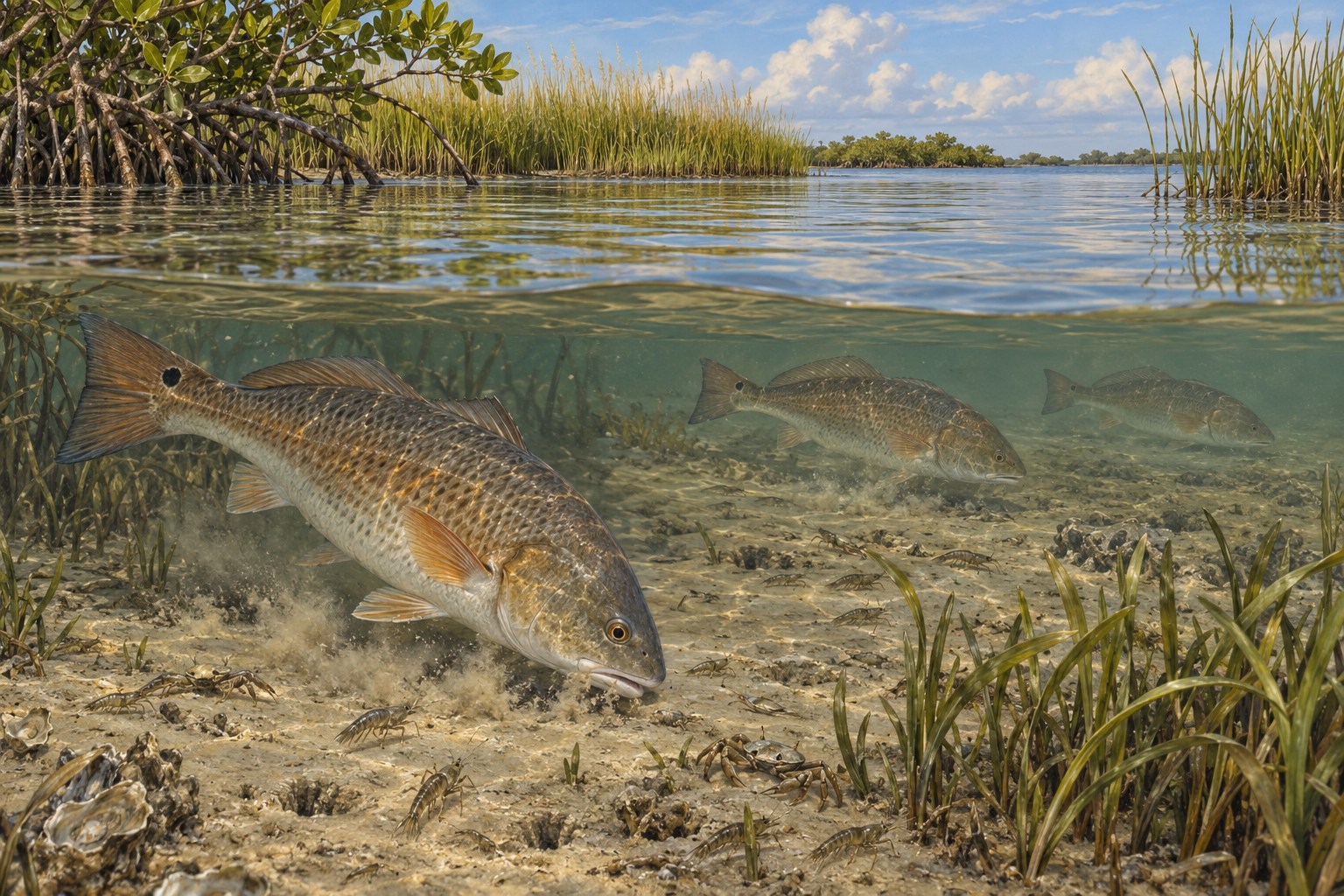
Redfish, seatrout, snook and jacks are regional bay possibilities. Their use of a particular edge depends on prey, water depth, clarity and temperature. Do not expect all of them to feed within shore reach at the same time.
Small shrimp and baitfish can move across sand and near vegetation as water changes. Look for activity along an open margin that allows a clean retrieve. Avoid casting through roots or protected habitat to reach a speculative hiding place.
Notice birds feeding at a distance without approaching or scattering them. Their activity can suggest prey movement but does not make their feeding patch available for angling. Use observation from the existing public route.
Present shrimp where the retrieve stays clear
A small shrimp offering can suit an allowed bay-edge presentation. Use a light rig that keeps it in useful water without burying it in grass or mud. When depth permits, a simple float can help suspend bait above vegetation.
Allow modest movement with the water while maintaining control of the line. Do not leave a bait drifting through a swimmer's or kayaker's path. Retrieve and reset when the direction carries it toward a conflict.
Keep bait sizes sensible for the fish you hope to catch. An oversized offering is not a substitute for finding feeding water. Secure the remaining bait so that birds do not learn to gather around your tackle bag.
Use a soft plastic that matches the shallow setting
A small paddletail or shrimp imitation can search open sand lanes. Choose the weight after seeing the actual depth, not by copying an offshore or surf setup. In thin water, a heavy lure may spend the whole retrieve scraping bottom.
Retrieve steadily enough to keep the lure moving without rushing it past the useful edge. If it collects grass on every cast, change the angle or choose another permitted opening. Avoid repeated casts that pull material from sensitive bottom.
A surface lure requires safe space behind and ahead of the angler. Use it only with a clear lane, and watch for birds attracted to surface movement. Stop when wildlife or other users enter that line.
Build a shallow-water kit instead of a surf spread
One medium spinning outfit is usually easier to manage than several planted rods in this setting. Bring a small selection of light jig weights, suitable leader and pliers. Keep a measuring tool handy for species with current size rules.
Wear footwear appropriate to the verified access route and avoid stepping into hidden holes. Bring water, sun coverage and insect protection as needed. Check whether the facilities you expect are actually operating before relying on them.
The table links presentations to observable conditions. It does not imply permission to enter every mangrove opening or tidal flat.
| Observed condition | Presentation to consider | Boundary to respect |
|---|---|---|
| Open sand lane with sufficient water | Lightly weighted paddletail | Avoid scraping or disturbing bottom |
| Allowed edge above vegetation | Small shrimp under a suitable float | Keep the drift away from people |
| Exposed flat at low water | Observation or another authorized site | Do not chase distant channels on foot |
| Bird feeding concentration | Watch from the existing route | Do not cast through wildlife |
Let wind help explain the water you see
Bay water can change color when wind and tides move sediment. Modest color may still suit a close bait presentation, while heavy disturbance can remove useful visibility for a shallow lure search. Read the actual conditions rather than judging the bay from an older photo.
Water level can be affected by wind as well as tide. A charted rise may be less evident under a wind that pushes water away from the shore. Conversely, a stronger wash can cover a route sooner than expected.
Check coastal water-quality and fish-kill notices before planning a catch for food. Do not infer that an advisory exists merely from cloudy water. Use current official information to understand conditions for the date of the visit.
Give wildlife and other shoreline users their space
Bunche's natural character makes wildlife observation part of many visits. Keep clear of resting and feeding birds, especially where they gather near shallow water. A longer cast is not worth cutting across their approach or forcing them to fly.
Swimmers and paddlers may use the same accessible water. Keep your line visible and your tackle compact, and pause when someone passes. Never stretch a leader across the dry foot route to mark out a fishing station.
Do not enter mangroves or pull branches aside to create a cast. Stay within the manager's open routes and obey seasonal or habitat closures. A fishing visit should preserve the very cover that supports bay life.
Leave while the route remains comfortable
A shore session should end before changing tide, heat or approaching lightning makes the return difficult. Reassess the route throughout the outing. A short walk on firm sand can become a different walk after the water covers it.
Use current Florida saltwater license rules and harvest limits. Bay fish must still be identified and measured accurately. If you cannot make a confident identification or safe retention decision, release the fish promptly.
Take every hook and line fragment home and inspect the place where you stood. Empty bait containers should not remain on the flat, even beside a bin. Leave the natural shoreline ready for wildlife watchers and the next careful angler.
Common questions
Is Bunche Beach an open-Gulf surf-fishing beach?
It is a mainland San Carlos Bay shoreline with a shallow tidal setting. Plan bay-edge methods rather than assuming surf troughs.
Should I walk across the flat to reach a channel?
Do not use uncertain shallow ground as a route to deeper moving water. Keep to verified open access and a secure return.
What bait suits a modest bay-edge test?
A small shrimp presentation can be useful where permitted. Keep it controlled and above sensitive bottom when possible.
Why does the water look different on different visits?
Tide height, wind and sediment movement change this shallow setting. Compare the current water with official forecasts and notices.
Prepare for your visit
Check local tides and weather. Read more about snook, permit. Check current FWC saltwater fishing rules.