
FLORIDA KEYS & EVERGLADES
Calusa Beach
fishing guide
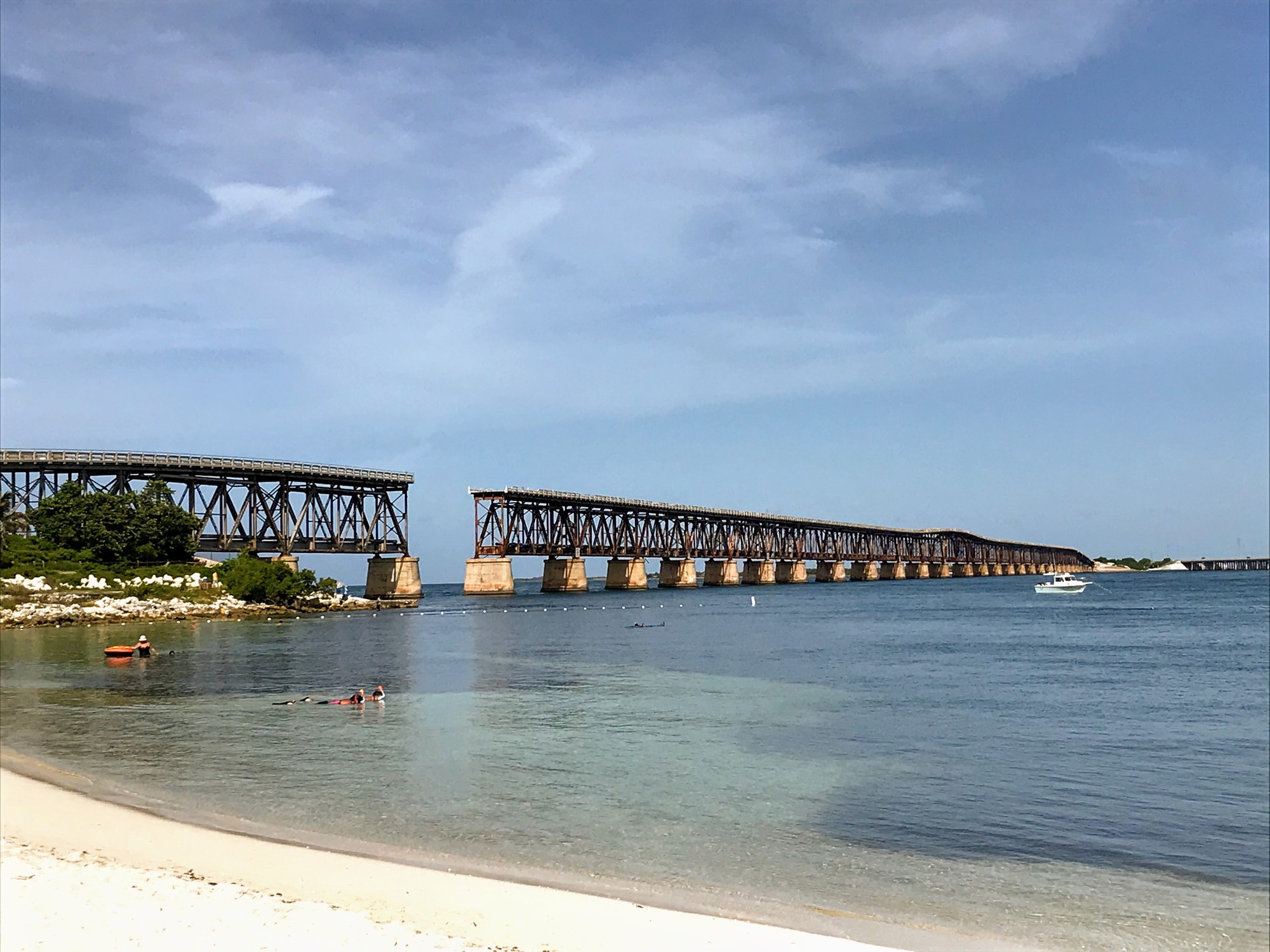
Calusa Beach is the small bay-facing beach at Bahia Honda State Park near the old bridge. Plan swimming and observation here, and confirm a separate authorized position before fishing nearby.
Explore the guide ↓Recognize Calusa's bay-facing setting
Calusa Beach lies at the southwest end of Bahia Honda State Park. It faces the bay side and has picnic pavilions, with the old bridge providing a distinctive nearby backdrop. Sandspur and Loggerhead face the Atlantic side elsewhere in the park, so the beach name matters when planning access.
Use the current park map and open visitor routes to reach Calusa. Ask about any repairs or temporary limits before carrying tackle through the day-use area. The beach's sheltered appearance is useful for orientation, not proof of unrestricted fishing permission. Treat the swimming beach and any separately approved fishing edge as different destinations.
Keep a hook out of the swimming area
Calusa is described by the park as a beach for swimming and recreation. Do not cast into designated swimming water or assume an empty morning removes its boundary. People can enter quickly from the sand, and a small concealed hook remains dangerous even when nobody saw it land.
For nearby fishing, ask staff to identify the current allowed position. Older park fishing material refers to old bridge seawalls, but current access needs confirmation. An overlook, railing or rock edge is not automatically authorized for casting. If no workable fishing position is available, enjoy Calusa as a fish-habitat observation stop and move the angling plan elsewhere.
Learn from prey movement without feeding it
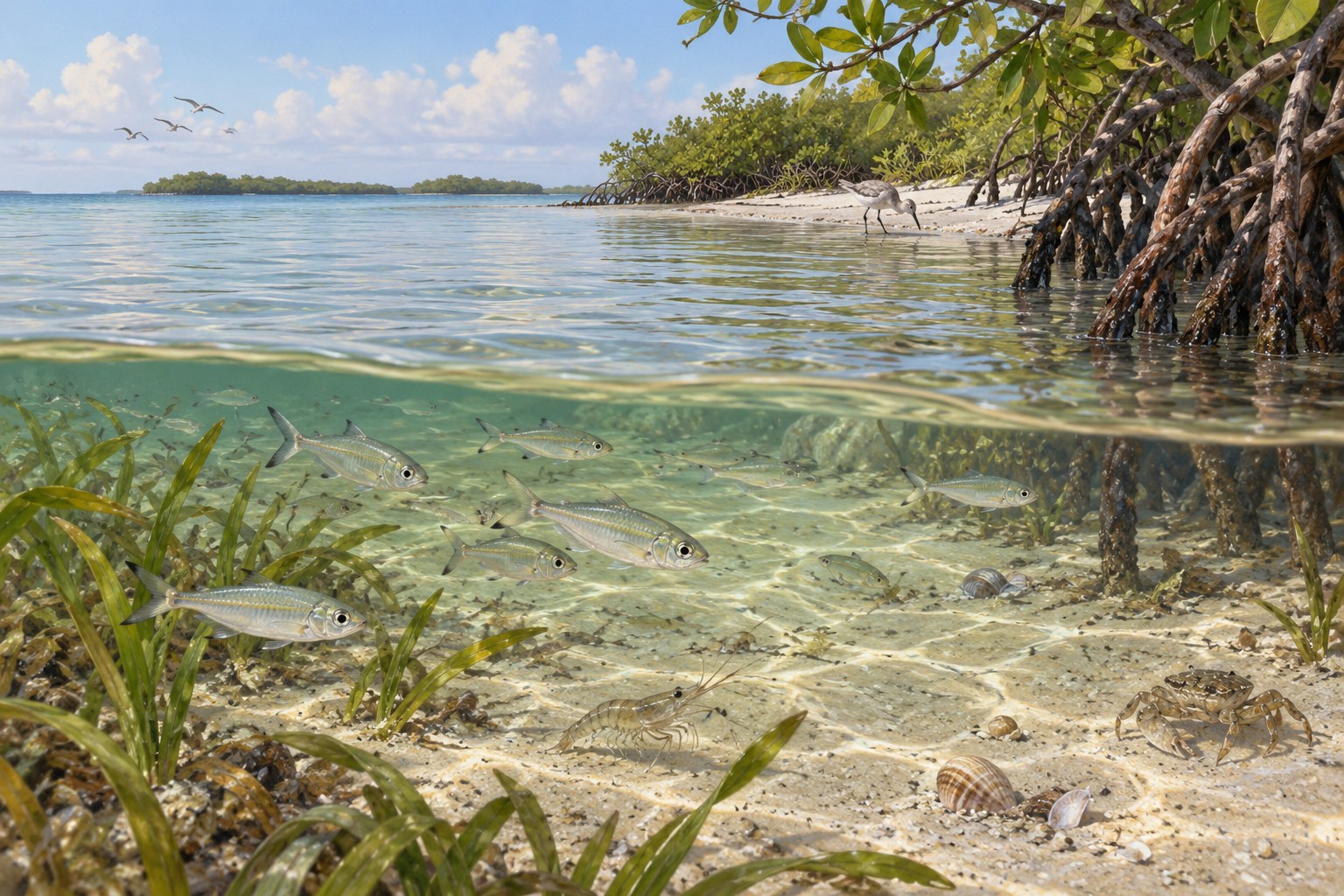
Small fish can use beach margins and nearby rough structure as shelter. Watch how a school changes shape when a larger shadow passes. That movement illustrates why predators often travel along the border between cover and open water.
Polarized glasses can reduce glare, though they do not establish exact depth or species identity. Look for body outline and repeated behavior rather than naming every splash. Do not throw food or bait into the swimming area to attract fish. Natural feeding patterns are more educational, and keeping the animals undisturbed protects both wildlife and the beach's other visitors.
Understand what snapper seek beside structure
Mangrove snapper can use structure and edges in surrounding Keys water. Their interest in small shrimp and fish helps explain why hard edges attract anglers at legal locations. This is a habitat lesson, not permission to fish any visible Calusa rock or bridge base.
At a separately authorized position, a small shrimp bait can be placed beside a recoverable edge. Keep enough leader strength for abrasion and know how the fish will be landed. An offering buried in a crevice is more likely to snag than give useful control. Do not climb wet rocks or cross a restricted shore to improve the angle.
Notice the difference between sand and living cover
Pale sand beside darker submerged vegetation may form a route used by shallow-water fish. Bonefish search for small crustaceans, while barracuda hunt baitfish. A view from Calusa can teach those relationships without promising that either species will appear during a short visit.
For any later flats session at a legal site, choose a presentation that stays within the clean lane. A shrimp imitation needs little movement to suggest prey. A baitfish lure needs a different retrieve. Protect the plants and avoid disturbing the bottom just to check a dark shape. The health of that shallow habitat supports the fish people hope to catch.
Separate beach supplies from fishing equipment
For Calusa itself, carry water, sun protection and comfortable beach items. Keep hooks, lures and bait secured if another approved fishing location is part of the day. A busy picnic area is not a good place to tie exposed rigs while children walk between tables and the sand.
For the legal fishing portion, pack pliers, a ruler, spare leader and a small selection of hooks or jigs. Avoid carrying a heavy offshore kit through the beach simply because strong fish can use nearby channel water. Match the tackle to an actual authorized position and a safe landing method, rather than the most dramatic species story.
| Calusa activity | What it teaches | Keep separate |
|---|---|---|
| Beach observation | Small fish using cover | Bait and hooks |
| Bridge view | Channel and island setting | Unsafe water approaches |
| Approved nearby fishing | Structure-edge presentation | Designated swimming water |
Do not let the quiet beach disguise channel risk
Calusa can look calmer than an exposed Atlantic shore. The nearby channel still carries tidal water and can have strong flow. Do not swim or wade toward it to reach a fish, a lure or the old bridge base. A pleasant surface at the beach is not evidence of safe current beyond it.
Boat plans need their own route and forecast. Wind against current can create rough water outside the protected-looking sand. Check launch availability and current sanctuary zones, and keep navigation lanes clear. For a shore visit, remain within the permitted visitor area and let viewing replace any impulse to chase activity into deeper water.
Build comfort around shade and an easy return
The warmer months can bring strong sun, humid heat and quick afternoon storms. Plan a shorter morning activity and keep an easy route to shelter. Cooler months may be more comfortable for walking, but fronts can change wind direction and clarity.
Compare the tide prediction with water movement at the shore. The level may change the amount of visible sand and cover, but it does not remove swimming or fishing boundaries. Keep a phone and spare dry clothing protected from spray. If thunder develops, leave exposed beach space instead of waiting beneath a picnic shade structure that is not suitable storm shelter.
Use Calusa to combine learning with a responsible day
A practical visit begins with the park's current rules, a beach observation period and a separate decision about authorized fishing. Children can learn to notice prey, cover and water movement without handling baited hooks beside swimmers.
Before a legal angling session elsewhere, review license requirements and species limits. Bonefish handling, protected species and sanctuary boundaries are separate responsibilities from park admission. End by collecting litter and checking beach bags for loose tackle. Calusa's value includes a clear lesson: an excellent view of fish habitat can remain a swimming and observation space, while fishing takes place within its own approved boundary.
Common questions
Which side of Bahia Honda is Calusa Beach on?
It is the bay-facing beach at the southwest end near the old bridge, separate from the Atlantic-facing beaches.
Can I cast because the swimming beach is empty?
Do not treat an empty beach as permission. Keep hooks out of designated swimming water and ask staff for an authorized fishing location.
Is the bridge overlook a fishing platform?
A scenic overlook does not automatically permit casting. Verify its current use and access with the park.
What can a family learn without fishing here?
Watch natural prey movement, sand-and-plant edges and changing water level from permitted visitor routes.
Prepare for your visit
Check local tides and weather. Read more about mangrove snapper, permit, bonefish. Check current FWC saltwater fishing rules.