
PANHANDLE
Cape Palms Park
fishing guide
Cape Palms Park puts anglers on the Gulf side of Cape San Blas. Start with a short walk, read the surf and choose a quiet casting lane beyond the swimmers.
Explore the guide ↓Begin at the public beach route
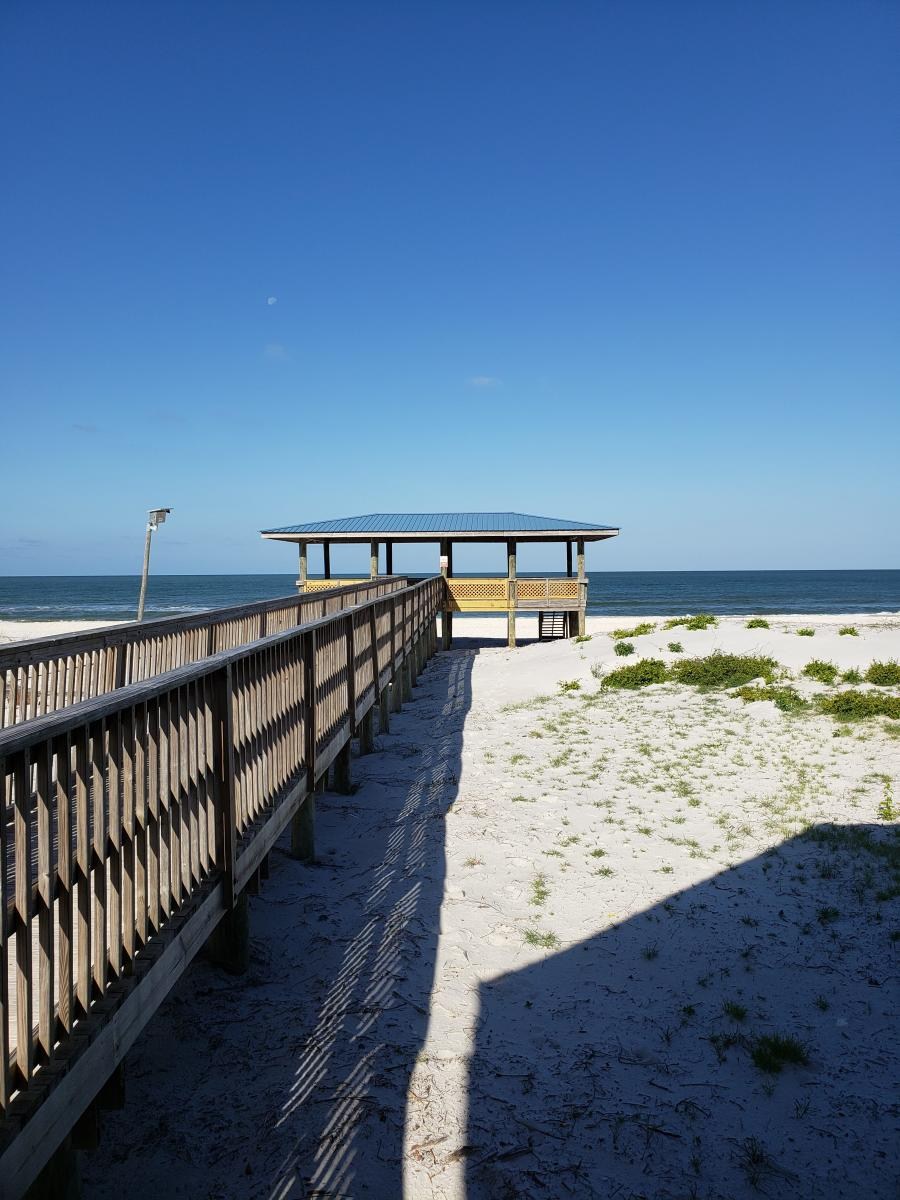
Cape Palms Park is a county park on the Cape San Blas peninsula. Its beach access reaches the Gulf shore, rather than the grass flats inside St. Joseph Bay. Those two settings need different rigs and different weather decisions. Follow the public park route instead of crossing nearby rental properties.
Confirm the park entrance, beach crossing and facilities are open after a storm. A photograph of an intact boardwalk cannot establish its condition today. Check signs when you arrive, then walk out without tackle to see where people are swimming. Set up only where local rules allow fishing and the full casting path is clear.
Find the first trough before casting farther
Watch a few sets of waves before unpacking. A band where waves break repeatedly often marks a shallow bar. The quieter water between that bar and the sand can hold a feeding lane. Fish may work this nearshore trough while an angler casts completely beyond them.
A gap in breaking waves can indicate a deeper opening. Use it as a clue from dry land, not as an invitation to wade. Currents through openings can be dangerous. Compare two reachable sand lanes and fish each for a short interval. Move the bait closer when a long cast produces no useful information.
Make whiting the first approachable target
Whiting feed close to sandy surf bottoms and are a sensible fish for a beginner's beach plan. A small piece of shrimp on a modest hook presents food without a large mouthful. Leave the hook point exposed. An oversized bait can encourage repeated nibbles without a firm connection.
Place the rig in a clean trough with enough weight to remain controllable. Watch the rod tip for taps that differ from the steady wave rhythm. Lift smoothly when the fish is connected. Keep the fish supported during identification, and check harvest rules before assuming every small silver surf fish can go into the cooler.
Offer shellfish-sized food to traveling pompano
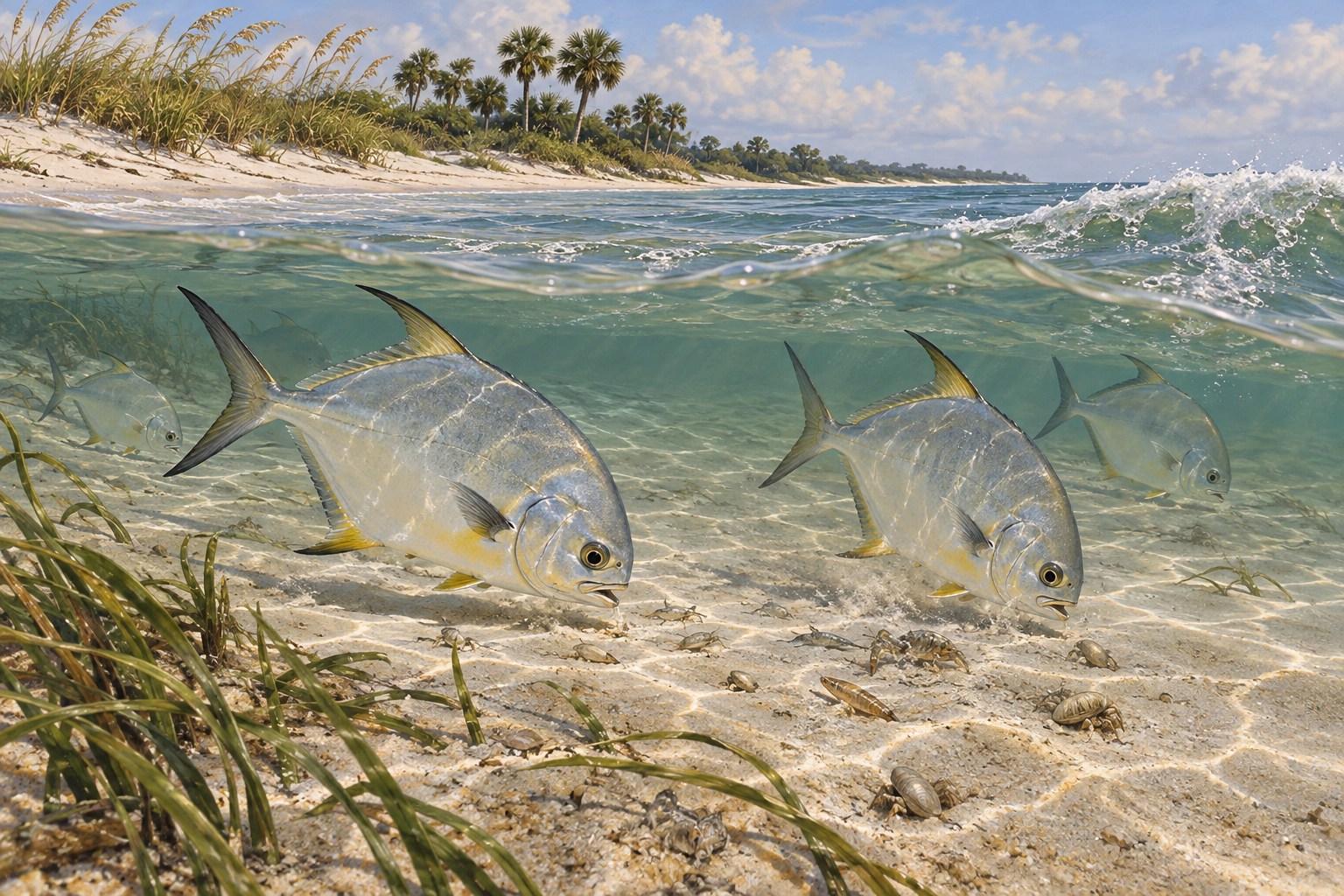
Pompano move along Gulf beaches and may visit this stretch when suitable water and food coincide. Sand fleas obtained legally, pieces of shrimp and small crustacean-style prepared baits are common starting choices. There is no need to cover the entire hook with a thick wad.
Try one offering in the nearer trough and another reachable distance only if you can supervise both safely. Change distance before replacing the whole rig. Spring and fall often draw attention from pompano anglers, but a calendar alone cannot locate a school. Clear enough water, manageable surf and recent bait activity are better practical clues.
Use a moving lure when prey becomes visible
A compact spoon or small baitfish imitation suits a brief burst of activity near the surface. Jacks, bluefish or Spanish mackerel may pursue prey along the broader coast. Treat these as possible roaming visitors, rather than promised catches from a fixed park access.
Keep a lure rod separate from a bait rod if space permits. Cast past the visible disturbance, then retrieve through it without crossing another person's line. Bluefish and mackerel have sharp teeth. Use pliers and check the leader after contact. Avoid throwing into diving birds or trying to pull a hooked lure through a bird's flight path.
Pack less and keep the working tackle organized
A medium spinning outfit can handle many smaller surf fish. A longer beach rod helps place a bottom rig over a nearby breaker, provided its casting rating matches the weight used. Choose the lightest sinker that keeps the rig under control. Too much weight masks light bites and makes every retrieve more tiring.
Carry spare leaders, small hooks, pliers, a measuring tool and a sealed line-waste container. Keep bait shaded and use a cooler suited to the length of the walk. A sand spike helps hold an attended rod; it does not justify leaving the beach while a bait remains in the water.
| Target or sign | Opening choice | What to watch |
|---|---|---|
| Whiting near shore | Small shrimp piece | Light taps between waves |
| Possible pompano run | Crustacean bait | Clean sandy trough |
| Surface prey chase | Compact spoon | Birds and safe line direction |
Judge the surf again as the tide changes
Rising water can move the feeding trough closer to shore. Falling water can expose a bar and change where waves release foam. Check the same landmarks during the outing, because yesterday's productive distance may no longer match the usable lane.
An onshore wind can increase wave height and push weed across the line. Stop when the rig repeatedly sweeps through occupied beach space. Offshore wind may flatten the immediate shore while making a paddle trip risky. Thunderstorms can arrive before rain reaches the park. Leave exposed sand when thunder is heard, and do not shelter beneath an isolated beach umbrella.
Keep the dune crossing and wildlife protected
Stay on the established beach crossing. Dune plants hold sand and provide cover for animals that cannot simply move to the parking lot. Keep equipment off roped nesting areas, and give resting shorebirds room to feed without being repeatedly flushed into flight.
Use a compact daytime setup rather than lights spread across the beach. Sea turtles nest along this coast during the warmer months. Retrieve every piece of cut line and every small bait wrapper. If a bird becomes hooked, avoid cutting the line and sending it away with trailing tackle; seek appropriate wildlife help while keeping people safe.
Build a first visit around one small stretch
Choose a simple goal: identify the closest trough, present a small bait and learn the direction of the moving water. A single supervised rod leaves more attention for waves, people and bite patterns. Keep the car return easy, especially if heat or weather shortens the session.
Before leaving, note which bait stayed intact, which sinker held and how far the fish were feeding. Separate those observations from guesses about fish species you never saw. Cape Palms is most useful as a repeatable public beach starting point. A careful small session teaches more than a crowded collection of rods cast blindly toward the horizon.
Common questions
Is Cape Palms Park on St. Joseph Bay?
The park beach access is on the Gulf side of Cape San Blas. Bay fishing requires a separate legal access plan.
What bait should a beginner try?
A small shrimp piece in a reachable sandy trough is a practical starting point for whiting and other surf fish.
Should I wade to the outer sandbar?
No catch requires entering an unsafe surf channel. Read the waves and cast from secure dry sand.
Does this park guarantee pompano?
No. Pompano travel, and weather, water temperature and available food affect whether they pass this beach.
Prepare for your visit
Check local tides and weather. Read more about florida pompano, whiting, spanish mackerel. Check current FWC saltwater fishing rules.