
SOUTHEAST ATLANTIC
Carlin Park
fishing guide
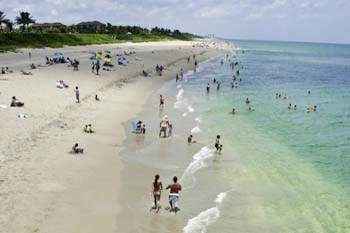
Carlin Park puts you beside Jupiter's Atlantic surf, with room for a simple beach-fishing plan outside the guarded swimming area. Learn how to read the sand, choose small baits and work a manageable stretch of shoreline.
Explore the guide ↓Start on the ocean side of Carlin Park
Carlin Park is a public park in Jupiter. The beach entrance is at 400 South State Road A1A. The amphitheater uses a different address, so choose the beach entrance when carrying fishing gear.
The county lists saltwater fishing as an activity here. Its guarded swimming area is excluded. Find the current swimming boundary before setting a rod holder, and leave room for walkers to pass behind the tackle.
Published park hours run from sunrise to sunset. Lighted sports facilities have separate hours, which do not extend beach access. The park provides parking, restrooms and outdoor showers. Its cafe was listed as closed when this guide was reviewed.
This is an ocean-beach plan. There is no need to invent a secret jetty or assume a nearby private walkway is public. Use the marked crossing, then choose a legal section where the surf can be fished from dry, stable sand.
Look for a trough before making a long cast
The first useful fishing lane may be close to shore. Watch several waves from above the wash. A darker strip between the beach and a breaking bar can show deeper water where food collects.
A smooth patch between two breaking sections may indicate a gap in the bar. That can carry food, but it can also carry a rip current. Treat it as something to cast toward from shore, rather than somewhere to wade.
Begin with a short cast into the near trough. If the weight holds and the bait returns clean, try a slightly longer cast. Work outward in steps so the result tells you which distance deserves attention.
Moving along the beach can be more useful than adding casting distance. A small depression or shell patch may differ from the sand only a few yards away. Keep the search within the open fishing section.
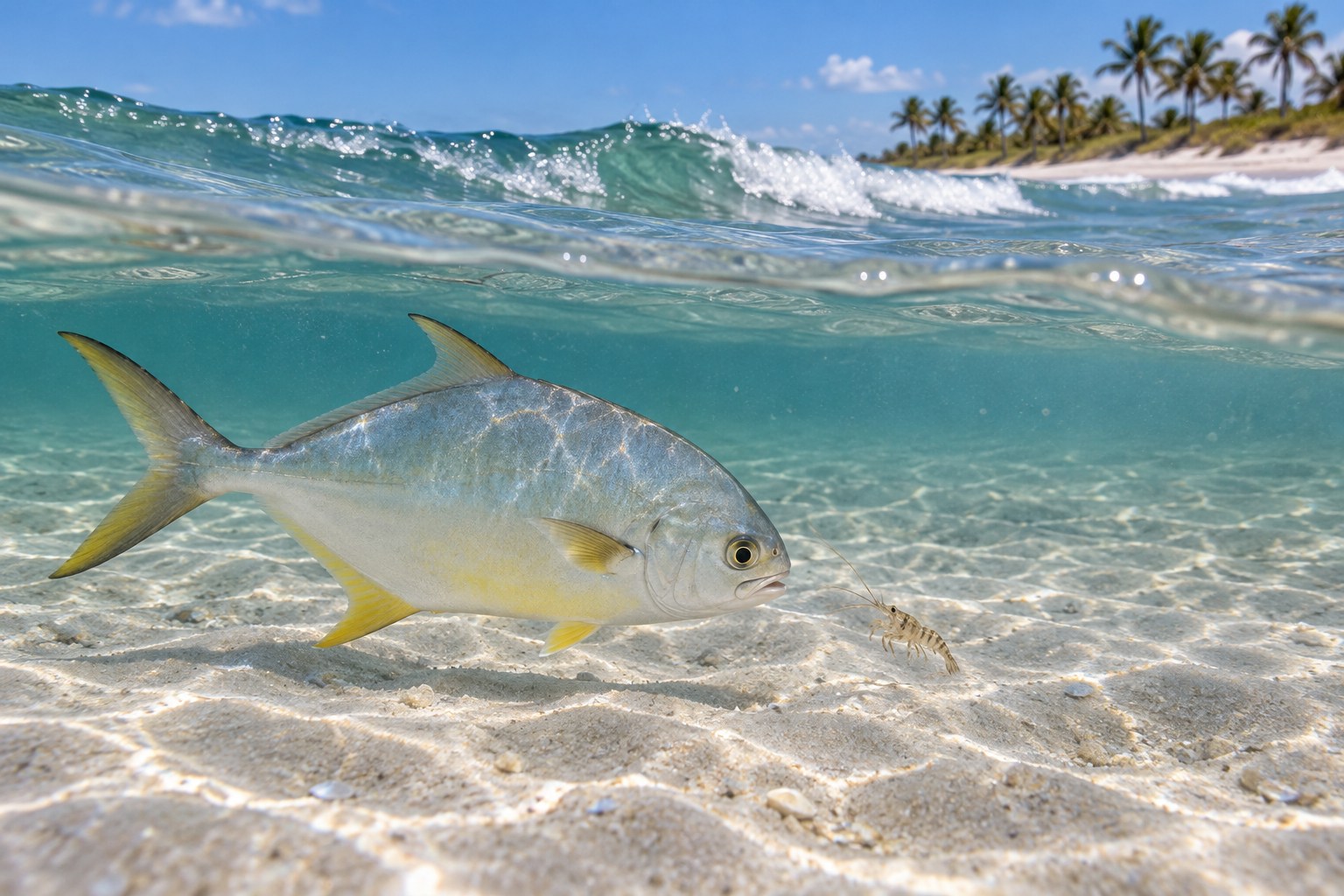
Give pompano a compact bait over clean sand
Florida pompano feed on small creatures associated with sandy beaches. Sand fleas, shrimp pieces and suitable commercial strip baits fit that feeding style. Keep each offering small enough that the hook point remains exposed.
A two-hook dropper rig can test different positions above the bottom. Use a sinker that holds under the day's wash without exceeding the rod's weight rating. There is no single correct sinker size for every visit.
If one hook repeatedly loses bait while the other remains untouched, inspect the rig for twists and compare bait size. Small bait thieves can create steady taps without producing the fish you intended to catch.
Pompano are mobile. A few catches along a lane can be followed by a quiet spell as the fish move. Record where bites occurred and continue covering useful sand instead of treating a rod holder's position as permanent.
Use whiting to learn the nearshore water
Whiting, also called kingfish, offer a practical target for a short family session. Small shrimp sections near the sand are a straightforward starting point. Their feeding lane can lie inside the water reached by an ambitious distance cast.
Keep enough tension to notice light movement without dragging the weight continuously. After a series of taps, bring the bait back and examine it. A neatly stripped hook means the bait needs attention before the next cast.
A smaller hook and tidier bait can help when the fish are small. Match tackle to the intended catch, and avoid leaving a large loose shrimp tail flapping over the hook bend.
For children, one attended rod is easier to manage than several spread along the beach. Let the young angler feel the difference between wave movement and a fish taking line. The lesson is useful even when the catch is modest.
Search the beach edge when baitfish appear
Snook can follow bait along South Florida beaches, especially during warm periods. Watch for small fish moving in a tight band close to the shoreline. The black lateral stripe helps distinguish a snook from other passing silver fish.
A light swimming lure can cover that band without anchoring a bait. Cast ahead of visible movement and retrieve through the fish's path. Dropping a lure directly onto a cruising fish often wastes the opportunity.
Keep the lure above the bottom and clear of people entering the water. If the swim area leaves no safe legal lane, change the plan. A visible fish does not remove the beach restriction.
Snook harvest rules change by region and season. Prepare for release before making the cast, with pliers ready and a way to support the fish without placing it on hot sand.
Pack a small bait kit that survives the heat
Carry only the bait needed for the expected session. Keep shrimp cold in a closed container, with the working portion separate. Repeatedly opening the main cooler warms everything inside it.
Firm pieces stay attached better during a surf cast. Thread the bait so it cannot rotate around the point. Test the first retrieve for damage rather than assuming a missing bait was eaten.
Local bait collection has its own rules. Confirm what may be collected and where before digging or netting. Purchasing bait can make a brief outing simpler when access and collection restrictions are unclear.
Include spare leaders, a few sinker shapes and a small rubbish bag. A tangled rig should be replaced quickly, while the damaged line stays contained for proper disposal.
Choose conditions that let you control the presentation
Cooler months can bring comfortable surf sessions between fronts. Clean water and a moderate wash are useful for sand-feeding fish. Strong onshore wind can turn the same beach into a poor place to keep a small rig steady.
Warm weather shifts attention toward early legal access, bait movement and heat management. Afternoon thunderstorms can end a session quickly. Arrange the gear so returning to the vehicle does not require a lengthy pack-up.
A rising or falling tide can change the trough's depth and the position of the wash. Observe where the bait lands after each change. Tide movement matters through its effect on the actual water, rather than a promise of bites at a printed time.
Use HookCurrent's tide and weather page for the wider outlook, then read the beach in front of you. A forecast cannot show a swimmer entering the casting lane or weed collecting on a particular stretch of line.
Keep the rig suited to the beach task
A longer surf rod helps clear shorebreak, but it is not necessary for every near-trough presentation. Choose a rod you can control through the full cast and landing process. A smooth, repeatable cast usually beats an awkward attempt at maximum distance.
| Task | First choice | Adjustment to try |
|---|---|---|
| Small fish in the inner trough | A little shrimp portion kept close to the sand | Shorten the cast before adding more weight |
| Pompano passing over sand | Dropper rig with tidy sand-flea or strip bait | Compare two bait heights |
| Snook following shoreline prey | Swimming lure on a manageable spinning outfit | Place the lure ahead of the travel path |
| Line collecting weed | One attended rig in a cleaner lane | Retrieve and relocate before tangles grow |
Leave the fishing section ready for the next visitor
Sea turtles and shorebirds share this coastline. Stay outside marked nesting areas and pause if birds move into the line's path. Keep light and noise modest during the permitted early or late part of the day.
Carlin Park prohibits balloons. Keep bait scraps secured as well, so a fishing stop does not become a feeding station for birds. Check the sand around the rod holder for hook fragments and leader clippings.
Review current licensing and harvest requirements through the single FWC link below. If the intended beach lane is occupied, compare nearby Jupiter guides for a different setting rather than squeezing tackle between swimmers.
Write down the bait, distance and water appearance that produced attention. Those observations make a return visit more useful than a vague memory that the beach was either good or bad.
Common questions
Can I fish inside Carlin Park's guarded swimming area?
The county excludes fishing from that area. Use an open permitted section and follow the day's marked boundaries.
Do the sports-court hours extend beach fishing?
No. Plan the beach outing within the published sunrise-to-sunset park schedule.
Should I cast as far as possible?
Start by testing the closer trough. Fish can feed within a short cast of the sand.
Is the amphitheater address the beach entrance?
Use 400 South State Road A1A for the beach side. The amphitheater has a separate entrance address.
Prepare for your visit
Check local tides and weather. Read more about snook, florida pompano, whiting. Check current FWC saltwater fishing rules.