
SOUTHEAST ATLANTIC
Coral Cove Park
fishing guide
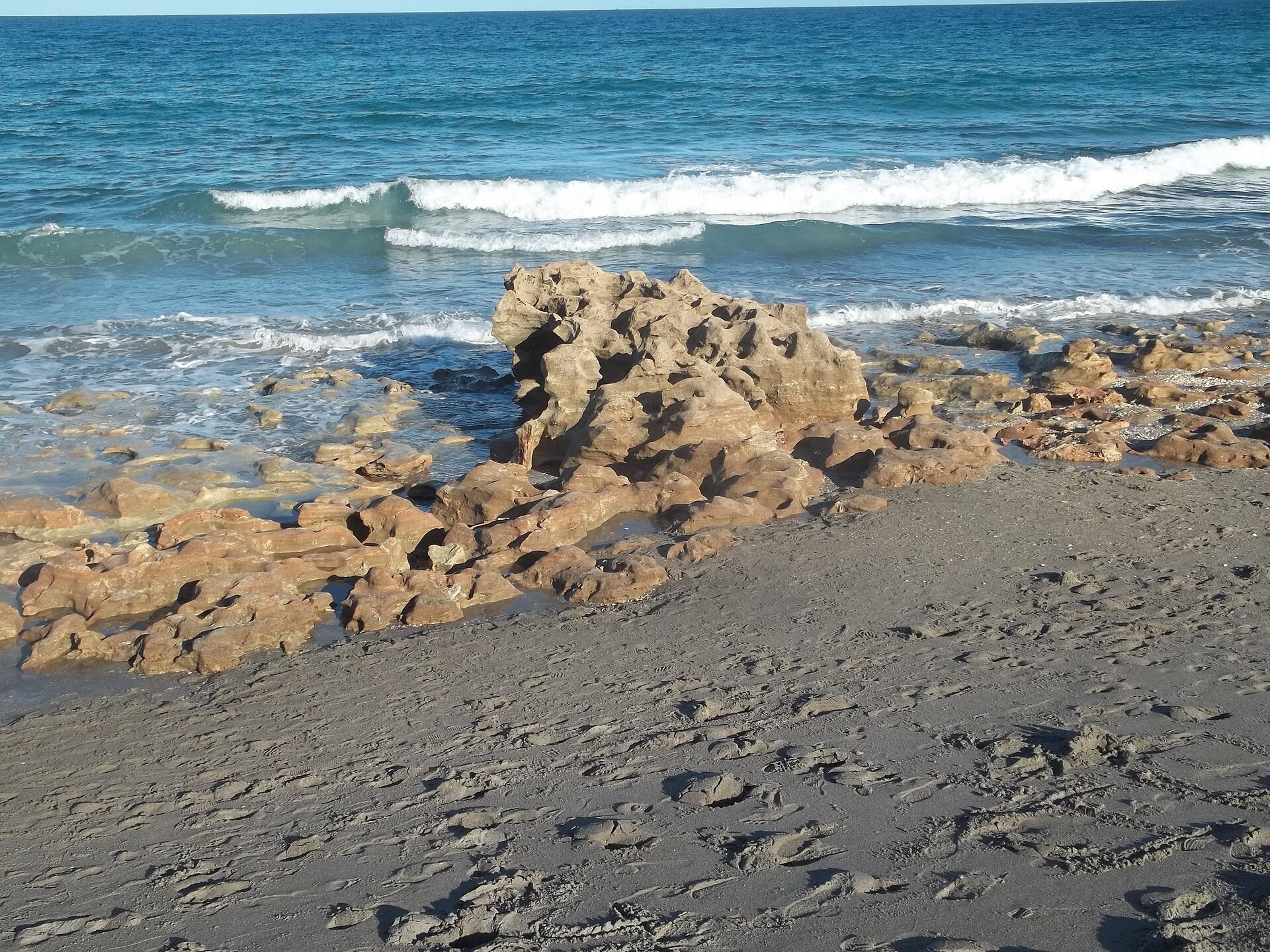
Coral Cove Park combines Atlantic sand with distinctive coastal rock. Its fishing plan depends on finding permitted space, reading where sand meets hard bottom and keeping clear of the guarded swimming section.
Explore the guide ↓Use Coral Cove's marked crossings
Coral Cove Park is reached at 1600 Beach Road in Tequesta. Palm Beach County lists saltwater fishing, parking, restrooms and outdoor showers among its facilities. The park's published schedule is sunrise to sunset.
There is a guarded beach section and an unguarded stretch south of the park reached by dune crossovers. Fishing is excluded from guarded swimming areas. Unguarded does not mean free of swimmers, so inspect the water as well as the signs.
The park also has Intracoastal frontage, but that listing is not a promise of unrestricted fishing from every bank. Ask about the permitted shoreline before choosing a bay-side position. Private neighboring property remains separate.
Follow the established crossings through the dunes. They protect the shoreline and keep the return route clear when you are carrying a rod, cooler and wet gear.
Read the sand beside the rocks
Coral Cove's exposed rock gives the shoreline a different character from a broad, uniform sand beach. Underwater hard edges can support small prey and create breaks in the wash. Open sand beside them offers a place for a bait to settle without immediately snagging.
Watch where waves cover and uncover the rock. A ledge that looks dry between sets can be washed by a larger wave. Stay on dependable ground rather than climbing farther out to gain casting reach.
A darker patch may be rock, deeper water or weed. Make a cautious first presentation and examine the retrieve. Repeated scraping tells you more about the bottom than color alone.
Work one clear lane thoroughly before moving. Fishing beside a hard edge is about keeping the offering accessible to fish while maintaining a route to retrieve it.
Present a small crab or shrimp near hard cover
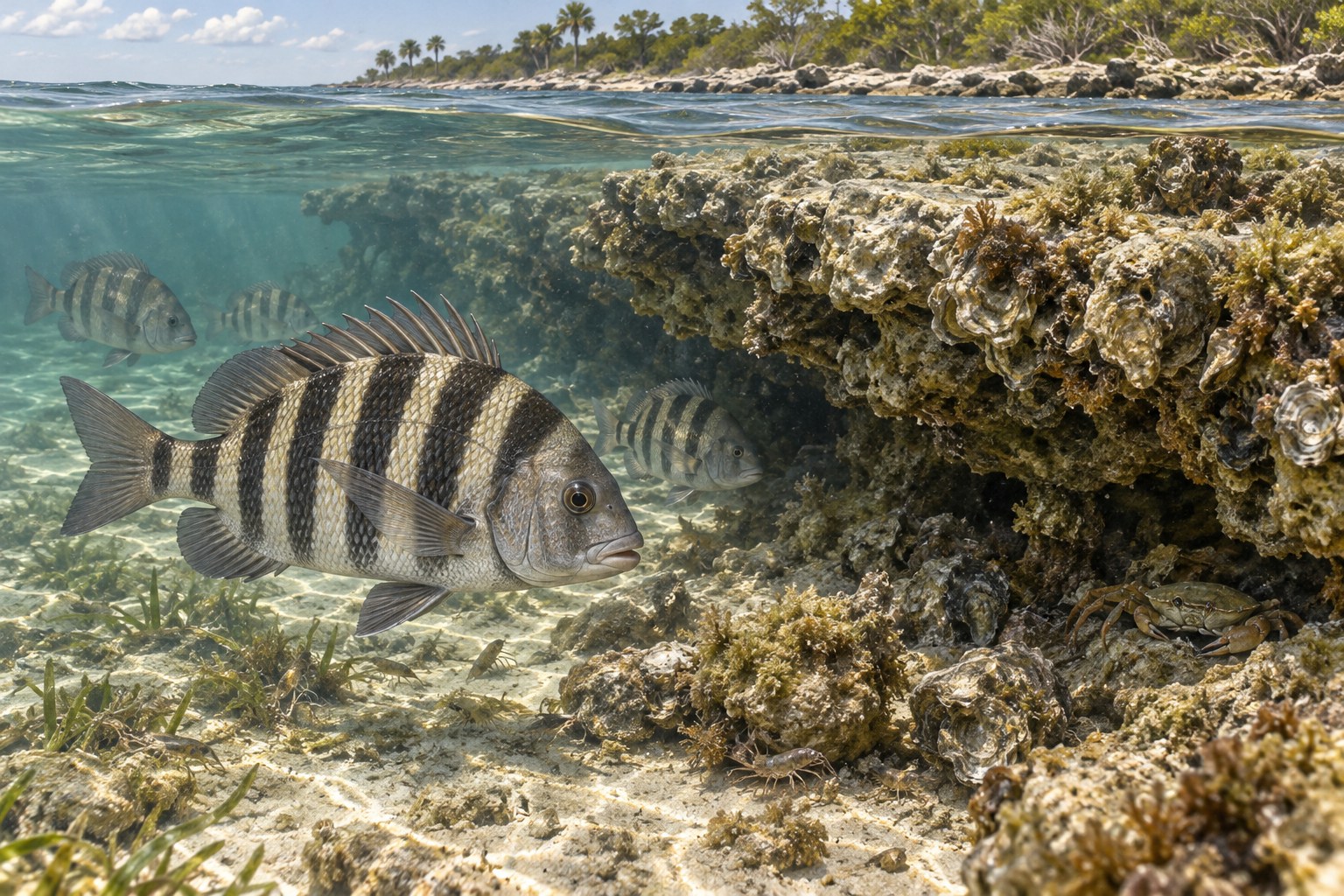
Sheepshead use strong teeth to feed on small crustaceans and other prey around hard surfaces. Their black vertical bars make identification easier. Rocky habitat can suit them, although the presence of rock does not guarantee a school.
A compact crab, shrimp piece or other permitted crustacean bait can be placed near the edge. Keep the weight controlled and the hook close enough to the bait that a fish cannot take a large loose portion without meeting the point.
Do not drag a rig blindly through every crack. Lower or cast it into a manageable opening, allow time for attention and lift it clear. If it wedges repeatedly, choose a cleaner pocket or alter the approach angle.
Light taps deserve a prompt check. A stripped bait can mean the presentation is too bulky, the hook is hidden or small fish are reaching it first. Solve that problem before adding more tackle.
Use the softer bottom for a second plan
Whiting and Florida pompano are better matched to sandy feeding lanes than a rig buried in rough rock. Look for a clean strip beyond the beach wash or beside the hard patch. Small shrimp sections and sand-flea-style baits fit the task.
A bottom rig should stay in the chosen sand opening. If it rolls into the rocks after every wave, more weight may not solve the problem. Shorten the cast, change its direction or leave that lane for gentler conditions.
Avoid treating every dark mark as a reef to reach. Sometimes the useful place is the pale sand beside it. That gives the bait a clear presentation and makes a safe retrieval more likely.
Take note of the distance where the rig remains clean. A productive sand lane is easier to revisit when the information is more precise than simply casting toward the ocean.
Follow prey movement along the shoreline
Common snook can travel along suitable South Florida beach edges. Small mullet or other baitfish may reveal their route. Watch from a permitted position before beginning a series of casts.
Choose a swimming lure that can pass above the rough bottom. Place it ahead of the moving prey and bring it along the edge, leaving enough space to turn a hooked fish away from the sharpest cover.
An abrasion-resistant leader is useful near rock, but heavy tackle cannot make an unsafe landing position acceptable. Identify a sandy landing area first. Never follow a fish onto a wet ledge to shorten the fight.
Fish that follow without taking may be reacting to speed, depth or the lure's path. Change one of those factors on the next pass rather than replacing the entire outfit immediately.
Let the wash set the fishing pace
As the tide changes, water can move across different parts of the rock shelf. The effective casting lane and landing route can change with it. Reassess both after a noticeable rise in the wash.
A moderate movement of water can carry prey along the edge. Stronger surge can make the bait impossible to control and turn retrieval into repeated snagging. Stop before the rod becomes a tool for fighting the bottom.
An offshore breeze may flatten the nearshore surface, while onshore conditions can create a much more active wash. Neither wind direction promises feeding fish. Judge whether the conditions allow the method you packed.
Use the local tide outlook as a planning aid. The safe place to stand is determined by the largest observed waves and current shoreline notices, not the calmest moment in the set.
Bring tackle for two distinct surfaces
Pack a few replacement leaders because rough cover can damage line even without a catch. Inspect the section nearest the hook after contact with rock. A cloudy or nicked leader should be replaced before it fails under tension.
Keep tools in a secure pocket. A dropped knife or loose hook on a rocky family beach is a hazard that is hard to retrieve safely. Arrange the bait station on stable sand above the wash.
| Water to fish | Likely approach | Avoid |
|---|---|---|
| Clear sand near shore | Small bait held near the bottom | Letting a sinker roll into the shelf |
| Reachable hard edge | Compact crustacean bait in a clean opening | Pulling the rig through deep cracks |
| Baitfish lane over mixed bottom | Swimming lure kept above cover | A retrieve that scrapes on every cast |
| Heavy breaking wash | Change location or postpone | Standing on exposed wet rock |
Use seasonal conditions without expecting a fixed catch
During cooler periods, a sand-based surf plan can be comfortable between fronts. Strong frontal wind may remove that opportunity for several days. Pompano and whiting tactics are most useful when the water and bait can be managed.
Warm-season visits can focus on visible shoreline bait and cruising snook in suitable conditions. Heat builds quickly on the open sand. Carry drinking water and choose a session length that includes the walk back.
Thunderstorms require an early exit, particularly when the crossing is some distance from the fishing position. A rod held on an open shore is no place to wait for lightning to pass.
Avoid assigning a fish to a month as though it were an appointment. Water clarity, prey, wave action and legal access all influence the day's useful options.
Keep a beach visit and a fishing visit compatible
Separate the tackle from picnic and play space. A child exploring the rock should not be within the casting arc, and a swimmer entering the water should never have to cross a live line.
The county prohibits balloons here. Keep disposable bait packaging in the same secure bag as damaged line. Wind can move small scraps into the rocks faster than they can be collected.
Use the current FWC guidance for species rules and licensing. Coral Cove is not the same place as Blowing Rocks Preserve farther north, and restrictions at one site should not be assumed to apply identically at the other.
Finish with a careful inspection of the working area. A short session with a controlled bait and an easy return is a better starting point than a long outing built around an unreachable ledge.
Common questions
Where is Coral Cove Park?
The county park entrance is at 1600 Beach Road in Tequesta.
Is the unguarded south section reached through the dunes?
Use the designated dune crossovers. Do not make a new path through vegetation.
Can fishing tackle be used in the guarded swimming area?
Fishing is not permitted within that area. Keep the presentation in a confirmed legal section.
Are the rocks safe to stand on between waves?
A larger set can wash across an apparently dry ledge. Fish from stable ground and plan a sandy landing route.
Prepare for your visit
Check local tides and weather. Read more about snook, florida pompano, whiting. Check current FWC saltwater fishing rules.