
PANHANDLE
Deer Lake State Park
fishing guide
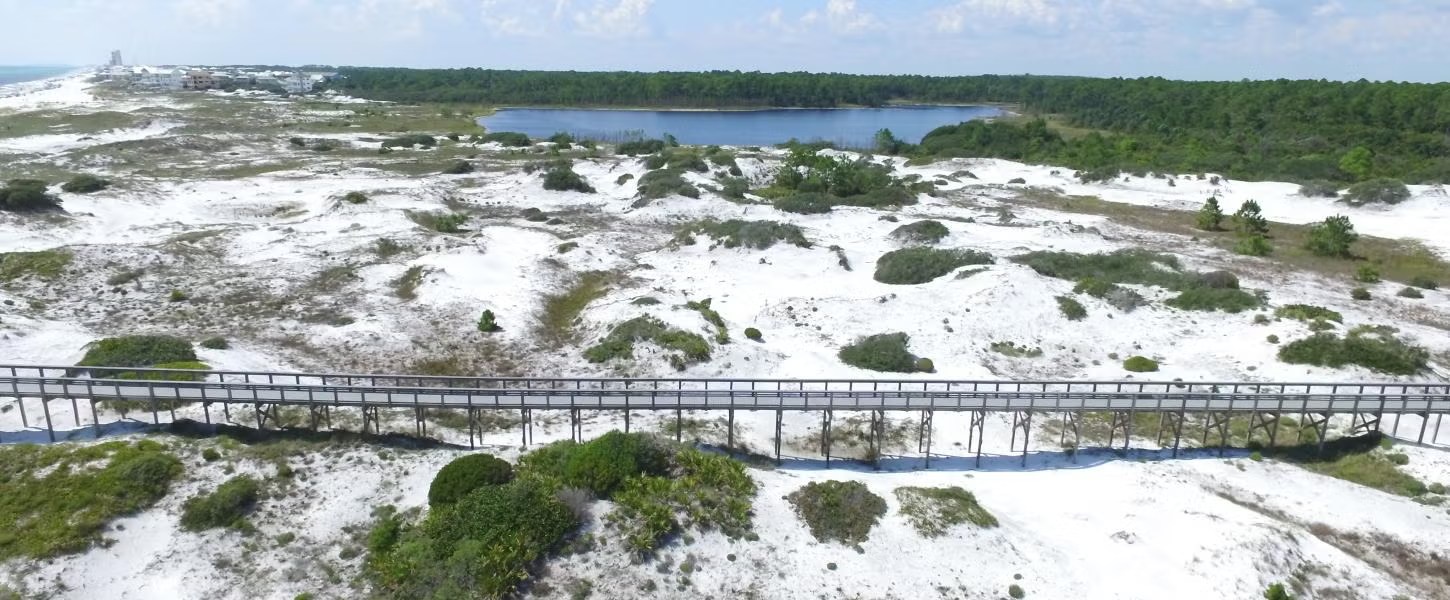
Deer Lake State Park pairs a protected dune landscape with Gulf surf fishing. The shore is reached over a designated boardwalk, so a light kit makes sense. Check reopening before visiting, and keep the fishing plan on approved beach access rather than assuming the lake is available.
Explore the guide ↓Confirm reopening before driving to the park
The official Deer Lake State Park page displayed a storm closure notice when checked on October 11, 2026. Do not interpret the usual 8 a.m. to sunset schedule as confirmation that the park has reopened. Contact the park at 850-267-8300 or check its current notice before planning a fishing visit.
The park entrance is listed at 6350 East County Road 30A. Separate from storm closures, the park warns that high visitation can lead to temporary capacity closures. A bicycle or pedestrian arrival does not bypass those limits. Have another lawful destination in mind rather than waiting on the assumption that a closed gate will open quickly.
Let the boardwalk shape the amount you carry
The park's designated boardwalk crosses a substantial dune landscape to the Gulf beach. Carry a manageable outfit and a compact supply of bait. A heavy cart, several rods and an oversized cooler can make the walk tiring before fishing begins. Inspect the available route and conditions after reopening before bringing down the full kit.
Use the crossing in both directions and keep dune plants undisturbed. The natural landscape is part of what makes the park valuable, not an obstacle to cut through. Put hooks away during the walk. Long rods should be carried with their tips visible and controlled when other visitors pass along the same boardwalk.
Do not treat the park's name as lake access permission
Deer Lake is a coastal dune lake, but the current park page clearly presents the beach as a place to fish. This guide focuses on that approved Gulf opportunity. A view of inland water from a trail does not establish an open fishing bank or launch. Ask staff before planning a separate lake session.
Dune lakes can have changing connections with the Gulf and sensitive margins. Do not dig an opening, force a landing through vegetation or cross protected sand to reach the water. The beach fishing plan can be complete without entering the lake. Keeping those two settings separate avoids making an uncertain route part of the outing.
Search the clean sand beside a bar
Watch the first series of breaking waves for a repeated shallow line. Smoother water beside it may indicate a trough where small prey gathers. Test that change with a controlled bait cast from stable sand. A long distance is useful only if it reaches a different feeding lane that you can identify.
Glare and cloud shadows can disguise the bottom. Spend time observing several wave sets instead of naming the darkest patch a deep hole. A gap in a bar may also carry strong returning water. It can be a feature to fish toward from land, but not a reason to wade offshore.
Use small offerings for sandy-surf feeders
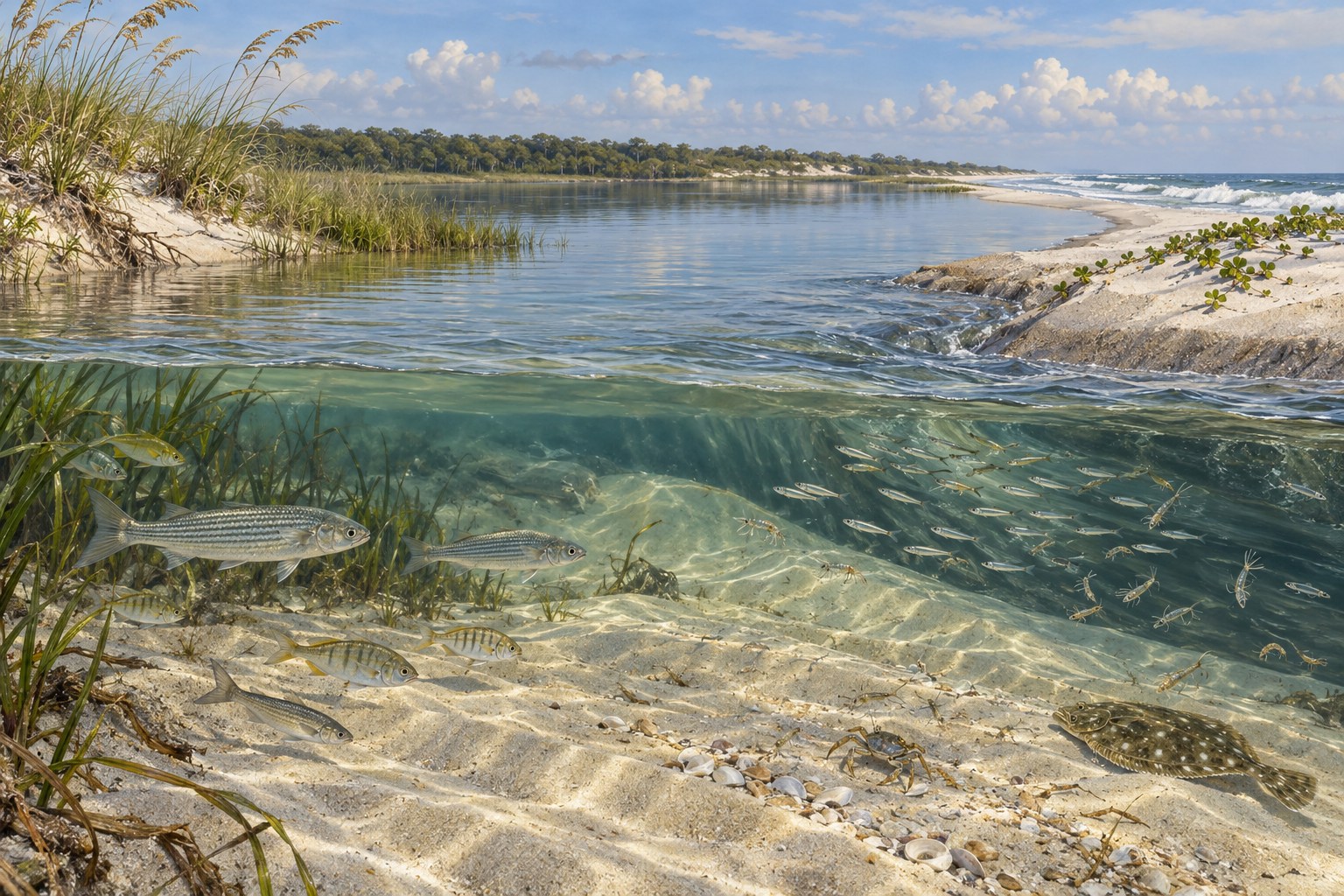
Whiting and seasonally passing pompano are reasonable targets for a Gulf sand presentation. Shrimp pieces, sand fleas and compact prepared bait strips provide different tests. Keep the offering secure without burying the hook point. Large soft bundles can be removed quickly by small feeders or washed off by a rough cast.
Keep the spare supply cool through the walk and while fishing. Expose only a few pieces to sun and salt at a time. Retrieve often enough to learn whether the bait remains intact. A rig with no offering left cannot tell you whether the chosen distance is productive, even if the rod stays quiet.
Choose equipment you can control and carry back
Match rod and line to the sinker needed for today's wash, staying within the outfit's rating. A small selection of holding weights gives more useful flexibility than carrying every accessory. If current requires a weight your rod cannot handle, reduce the plan instead of forcing a dangerous cast.
A measuring tool, pliers and a container for used line belong beside the bait. Keep drinking water separate from bait supplies. On a long beach approach, the return load matters too. The table offers straightforward adjustments without suggesting that a particular rig will produce fish on every visit.
| Condition | Starting move | Important limit |
|---|---|---|
| A nearby clear trough | Test a short shrimp cast | Keep the wash free of swimmers |
| Pompano interest | Compare a compact sand flea or strip | Use current harvest rules |
| Rolling lead | Reassess suitable weight and tension | Stay within the rod rating |
| A lake seen from a trail | Ask staff about specific permission | No improvised route through dunes |
Build a flexible plan for Panhandle conditions
Spring and fall often bring interest in pompano moving along the Gulf coast. Summer can mean intense heat and sudden thunderstorms, while winter fronts alter wind and clarity. Those are broad patterns rather than promises. Inspect the actual beach after the park is confirmed open and choose a manageable target for that day.
Tide predictions help arrange arrival and the return walk, but wind can dominate surf presentation. Watch line travel and drifting foam. A calm beginning may not last through the afternoon. Leave enough time to gather tackle, cross the boardwalk and reach the vehicle before the park's closing time or an approaching storm.
Keep a wide margin around dunes and nesting areas
Deer Lake's protected landscape supports more than fish. Avoid nesting enclosures and keep casts away from shorebirds following the wash. Loose bait can attract birds to your hooks. Secure it before moving, and do not feed wildlife after the session. Small discarded leaders can remain dangerous long after visitors leave.
Do not set equipment on dune vegetation or use plants to anchor a shelter. Stay on firm lawful sand and maintain a clear path for other beach visitors. A boardwalk's protected route is also the safest way back with tired legs. There is no need to invent a shorter crossing through fragile terrain.
Make a gentle landing part of the original plan
Prepare a safe place to unhook and measure fish before the first cast. Use current species rules for size, numbers and seasons. A similar-looking fish may follow different regulations, so confident identification matters. Release promptly if you cannot establish the species or its legal status.
Keep a released fish supported and minimize contact with dry sand. If surf becomes hazardous, do not follow a catch into a rip or return flow. Pack out every scrap and finish the boardwalk walk before the access closes. The best Deer Lake session respects both the fishing opportunity and the dune landscape that surrounds it.
Common questions
Is Deer Lake State Park confirmed open?
Its official page showed a storm closure notice on October 11, 2026. Confirm reopening before going; normal listed hours do not override that notice.
Does this guide recommend fishing Deer Lake itself?
No. It focuses on the Gulf beach fishing opportunity. Ask park staff about any separate lake access and permitted activity.
Can visitors enter when the park is at capacity?
The park warns that capacity closures affect day visitors, including pedestrians and bicyclists. Wait for reopening or use another open lawful destination.
What should I carry across the boardwalk?
A manageable rod, compact bait kit, water, pliers and a measuring tool make a useful starting load. Keep hooks secured during the walk.
Prepare for your visit
Check local tides and weather. Read more about florida pompano, whiting. Check current FWC saltwater fishing rules.