
PANHANDLE
East End Fishing Beach
fishing guide
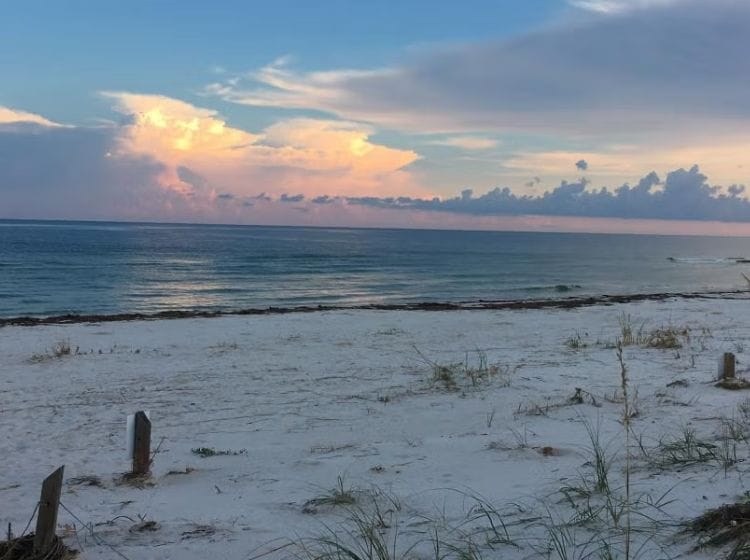
East End Fishing Beach is the remote pass-side fishing area at St. George Island State Park. It has a long approach and hazardous current, and park reopening must be confirmed before planning a visit.
Explore the guide ↓A closed park means no East End outing
East End Fishing Beach belongs to Dr. Julian G. Bruce St. George Island State Park. The official park page displayed an October 10, 2026 storm closure when reviewed. Confirm reopening with the ranger station at 850-927-2111 before arranging a trip to this remote part of the island.
County visitor information describes an approach on foot or bicycle, roughly five miles from the Sugar Hill Beach Use Area to the East End. Older references mention special vehicle access, but do not rely on them for a present-day drive. Ask staff about the current approved route, any permit and the condition of the approach after reopening.
Treat the journey as part of the fishing effort
A five-mile outward approach also leaves a long return. Heat, soft sand and the weight of tackle can make that distance much harder than a paved walk of equal length. Estimate the trip with water, food and realistic carrying capacity before deciding how many rods to bring.
Set a turnaround time that includes the journey back and the park's closing requirements. Check whether a bicycle can use the current route rather than assuming it can travel anywhere on the beach. Closed gates and posted habitat restrictions apply to walkers too. A distant fishing location is only useful if everyone can return safely.
Keep completely out of dangerous pass water
East Pass separates St. George Island from Dog Island. Moving water can concentrate prey, but the same flow creates dangerous depth and current near the beach. The official tourism description identifies this as a fishing-only area because swimming is hazardous.
Fish from stable approved ground. Do not wade toward a seam, swim for lost equipment or stand on an undercut sand edge. Observe how foam moves and where waves collide with outgoing current. If the rig sweeps uncontrollably, abandon that presentation. A strong bite does not justify entering water that can overpower a person.
Present food beside the current rather than fighting it
Redfish can use pass-side routes where current carries shrimp, crabs and small fish. A natural bait or compact soft plastic placed along a recoverable edge is a sensible way to test legal water. Keep the line away from boating traffic and out of closed habitat.
Avoid pinning the bait into the strongest flow simply because it looks dramatic. The quieter margin can provide a more controllable feeding lane. Match leader and drag to the bottom and expected fish, and identify a safe place to land it beforehand. Fish that are not legal to retain should be released promptly without a prolonged beach photo session.
Follow visible prey with a compact lure
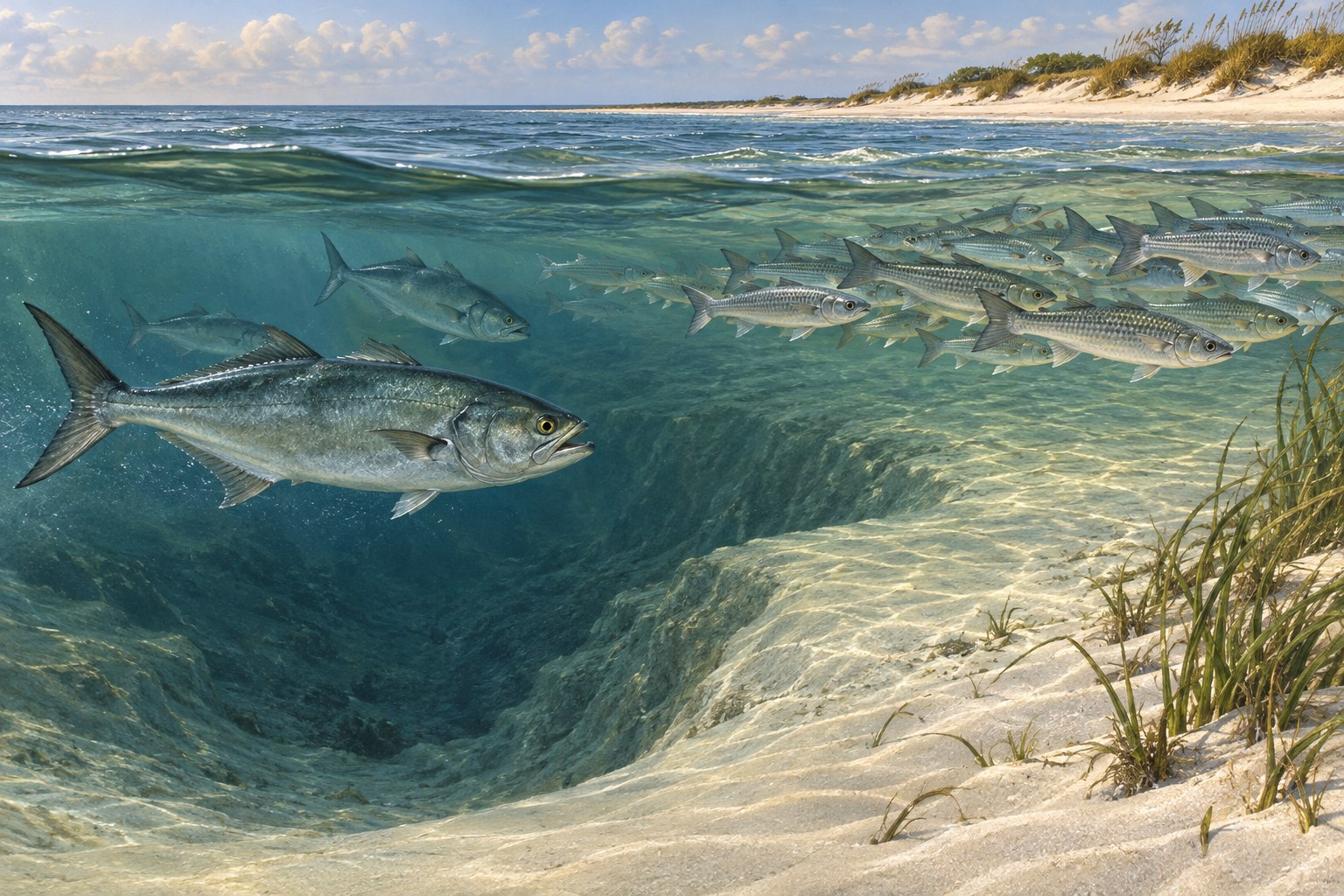
Spanish mackerel, bluefish and jacks can move through coastal pass environments with bait. A spoon or small fish-shaped lure lets you react to a visible chase. Cast beyond the activity and bring the lure through an open lane, checking first for diving birds.
Use pliers around toothy fish and inspect the leader frequently. Do not keep increasing lure size after every quiet retrieve. A sudden feeding burst can end quickly, and a fish that follows without striking may respond to a small pace change. Stay within a safe casting position rather than pursuing the school along an unstable channel bank.
Use sand-side water when the pass is too forceful
The nearby open beach can offer a less demanding sand-bottom presentation if that area is authorized and reachable. A small shrimp bait can test for whiting in a controllable trough. Pompano may also visit suitable coastal sand, though neither species is guaranteed by the remote setting.
Select modest tackle that holds without stretching across other users' space. The rig should come back clean enough to show whether the bait survived. If surf and pass current together prevent safe control, do not improvise a deeper wading position. The sensible result may be a shorter observation visit followed by the planned return walk.
| Situation | Useful choice | Reason to stop |
|---|---|---|
| Manageable current margin | Current-guided small bait | Rig crossing unsafe flow |
| Visible prey chase | Compact metal lure | Birds in the casting lane |
| Open legal sand trough | Small shrimp rig | Surf exceeding control |
Carry essentials before optional fishing equipment
Drinking water and sun protection take priority over a second heavy rod. Bring a compact food supply, first aid, pliers, spare leader and a means of communication. Keep hooks contained during the approach so a fall or a loose bag cannot turn into an injury far from the car.
Plan for all waste to come back with you. A remote beach should not be expected to provide ice, bait or a convenient trash container. Check license requirements and species rules before entering the park. If fish retention is planned, the chilling and carrying load must fit the entire return journey, not just the walk out.
A cooler day can help the walk without calming the pass
Spring and fall can make long-distance beach travel more comfortable than peak summer heat. They do not guarantee safe current or fishing success. Winter fronts can change wind and water conditions abruptly, while summer storms can leave a remote angler exposed before rain arrives.
Tide predictions indicate expected level, but pass flow does not necessarily peak at a nearby station's printed high or low time. Watch actual water movement before casting. Choose a weather window with a margin for the return. If the forecast becomes uncertain, a nearer open day-use beach is a more practical alternative than this distant location.
Let wildlife boundaries set the edge of the trip
Respect nesting markers, dune vegetation and any closed approaches. The East End is part of a managed barrier-island landscape. A fish school beyond a protected boundary does not create permission to cross it or cast into restricted water.
Walk back before fatigue turns a safe plan into a rushed one. Record the route approved by staff, the access status and the current conditions you actually observed. Keep those details distinct from older reports about vehicle entry. East End fishing depends on preparation and restraint as much as bait choice, and a good visit finishes with no abandoned line or missed closing time.
Common questions
Can I swim at East End Fishing Beach?
No. The area is described as fishing-only because deep water and strong currents make swimming hazardous.
Can I drive the five-mile approach?
Do not assume so from older reports. Ask the park about the current allowed route and any special permit after reopening.
What is the most important gear to carry?
Enough drinking water, sun protection, communication and return supplies come before optional extra rods.
Does a falling tide guarantee a good redfish bite?
No. Local current, wind, bait and safe access all matter. Observe the pass rather than trusting one predicted time.
Prepare for your visit
Check local tides and weather. Read more about florida pompano, whiting, spanish mackerel. Check current FWC saltwater fishing rules.