
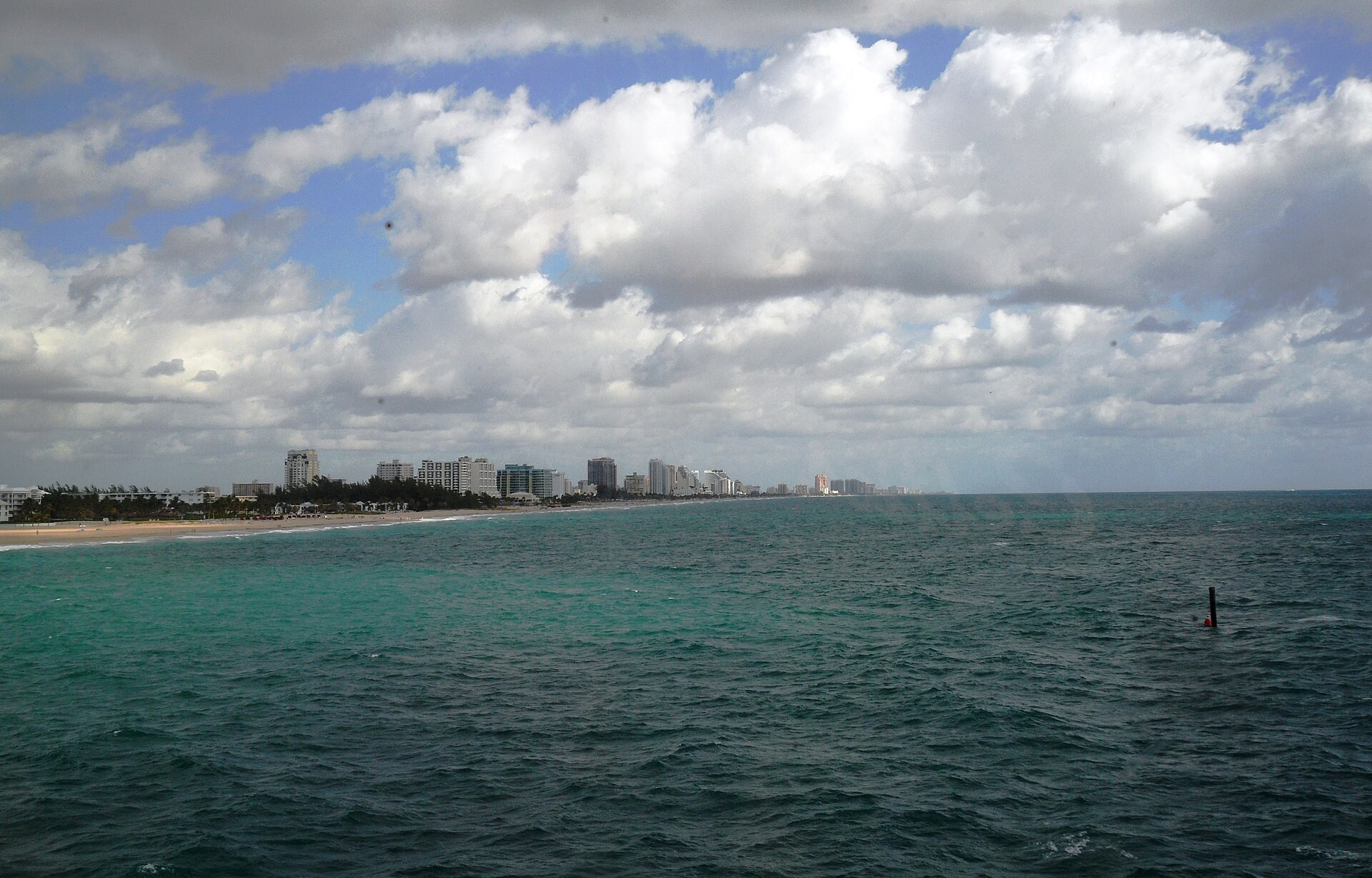
SOUTHEAST ATLANTIC
Fort Lauderdale Beach
fishing guide
Fort Lauderdale Beach requires a fishing plan built around the city's beach rules. Current Ocean Rescue guidance lists a limited evening-to-morning window, while a nearby state park offers a separate Intracoastal seawall option.
Explore the guide ↓Use current Ocean Rescue guidance rather than an old beach note
Fort Lauderdale's current Ocean Rescue beach rules list fishing between 6 p.m. and 8 a.m. Older official recreation material describes a different restricted daytime arrangement. Because the pages do not agree, confirm the current applicable guidance with Ocean Rescue before visiting.
The newer Ocean Rescue page is the starting point used here. Do not combine the most permissive parts of different old schedules into an invented all-day option. Follow posted directions and any temporary restriction at the actual beach section.
The permitted time does not remove the need to avoid swimmers, surfers and other users. Check the air and water path of the line before casting. A quiet-looking stretch can receive people later in the session.
Parking, beach access and fishing permission are separate arrangements. A paid parking stay does not extend the fishing window or authorize a cast from every waterfront feature.
Choose an approved route you can find in low light
A dawn visit should begin with a known public beach entrance. Check it in daylight first when unfamiliar with the area. Avoid crossing private hotel grounds or assuming that every beachfront path is public.
Allow enough time to finish within the applicable window. Packing, collecting line and returning to the car are part of the session. Do not make the final cast so late that equipment remains spread across the beach after fishing should end.
Keep light use modest around nesting habitat and other beach visitors. Secure hooks while walking from the vehicle. A rod with a swinging lure becomes harder to handle safely when the path is dim.
Find a clean trough before trying more distance
A permitted sandy lane can be tested for whiting or pompano habitat. Watch how the waves break and reform near shore. A trough inside the first bar may carry prey closer than expected.
Small shrimp pieces, sand fleas or prepared strip baits offer compact bottom presentations. Keep the point clear and the leader short enough to avoid repeated tangles. One watched rig is a sensible first approach.
Use enough sinker to remain controlled in the actual waves. Retrieve when the rig rolls toward another person's route. Moving to a cleaner approved lane can solve a problem that extra weight does not.
Check the bait and leader after a quiet interval. Weed or an empty hook can make a settled rod ineffective. Use those returned details to choose the next change.
Search close open water for snook
Snook can travel along suitable warm South Florida shorelines following small fish. A small swimming plug or soft plastic can cover a clear legal lane. Look for the route of prey before casting toward distant water.
Place the lure ahead of a cruising fish and keep it swimming above sand. Slow down if the fish follows without taking it. Repeated casts directly onto the fish can interrupt the opportunity.
Stop the retrieve when swimming use makes the lane unsuitable. A permitted hour does not make casting through people acceptable. Keep the plan mobile without crossing closed or private access.
Use a quick wet-hand release and support the fish's body. Prepare pliers before the first cast. Current harvest rules, rather than an old regional note, decide whether a snook can be kept.
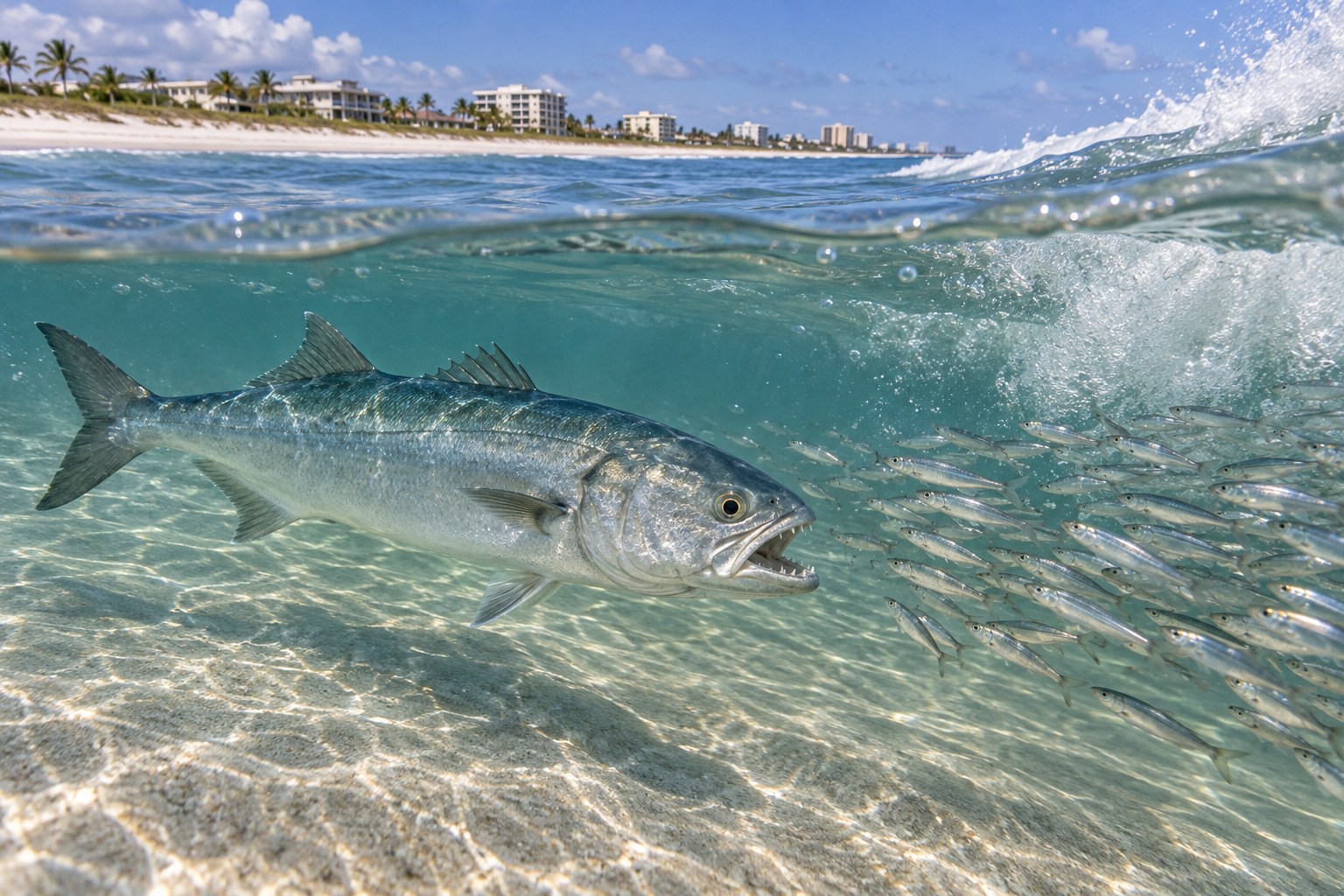
Let bait schools decide whether a metal lure is useful
Jacks, Spanish mackerel or bluefish may appear with concentrated prey along the coast. Surface splashes and scattered bait can offer a short opportunity. Their presence is not a guarantee for every morning window.
A compact jig or metal lure can reach a clear open lane. Cast along the school's edge and avoid birds or neighboring lines. Leave the opportunity alone when the activity moves into occupied water.
Toothy catches require leader checks and pliers. Do not grip an unfamiliar fish near the mouth. A strong jack also needs a drag setting and landing plan that suit the tackle.
Use Hugh Taylor Birch for a separate seawall plan
Hugh Taylor Birch State Park has an Intracoastal waterfront where official activity guidance permits fishing along its seawall and public access. Its interior lake and mangroves are not fishing areas. This is a different destination, not an extension of the city's beach permission.
The park lists a floating-dock closure and other facility work in its current notices. Check the available route and use the detailed park guide before visiting. A closed dock should not be treated as an open rail because water is visible around it.
Small bait beside a recoverable tidal edge can suit that setting better than a heavy surf rig. Watch boat wakes and line drift, and prepare safe release from the seawall. Change the method when changing the water.
Choose a plan with clear rules and usable space
The coast provides more than one kind of fishing water, but the access arrangement must be specific. Select the destination and its rules before deciding which bait bag to carry.
| Plan | Useful method | Check first |
|---|---|---|
| City beach during confirmed window | Small surf bait or shoreline lure | Current Ocean Rescue timing |
| Moving bait in clear legal water | Compact jig or metal lure | People and birds in the lane |
| Birch park Intracoastal seawall | Controlled small-bait presentation | Open public route and park notice |
| Interior state-park lake | Enjoy permitted park recreation | Fishing is prohibited there |
Keep the early or evening session manageable
Low light can reduce glare but also hides waves and footing. Learn the standing area before sending a lure out. Do not enter the water to overcome limited visibility or casting distance.
Check lightning and wind before departure and during the outing. A sea breeze can increase line drift as well as surf. Stop when the presentation or exit route no longer remains controlled.
Bring drinking water and secure the phone and key against waves. A compact kit is easier to pack inside a limited window. Keep spare hooks boxed rather than spread on sand that will be used by walkers after sunrise.
Finish within the rules and keep a useful local note
Verify current FWC licensing and harvest requirements and identify each potential keeper. Release fish promptly with suitable body support. Do not drag them up dry sand for an extended photograph.
Collect every line scrap before leaving and note the confirmed beach section, tide and visible bait. Accurate local observations are more useful than a general claim that the entire Fort Lauderdale shoreline fishes the same way.
Common questions
What beach fishing hours does current Ocean Rescue list?
The reviewed guidance lists 6 p.m. to 8 a.m. Confirm the applicable rules because older official recreation pages describe a different arrangement.
Can I use the older daytime schedule instead?
Do not combine conflicting pages into broader permission. Ask Ocean Rescue, follow current posted directions and use the applicable rule for that section.
Where is the nearby Intracoastal alternative?
Hugh Taylor Birch State Park permits fishing along its Intracoastal seawall and public access. Its interior lake and mangroves are excluded, and closure notices still apply.
Does an allowed time mean I can cast around swimmers?
No. The hook path must remain clear of people and other recreation throughout the session.
Prepare for your visit
Check local tides and weather. Read more about snook, florida pompano, whiting. Check current FWC saltwater fishing rules.