
SOUTHWEST
Goodland
fishing guide
Use the boating park as a clear starting point and learn to fish creek openings, oyster margins and small island points.
Explore the guide ↓A small village beside a large fishing landscape
Goodland sits on the quieter eastern side of Marco Island, close to mangrove shorelines and the waterways leading into the Ten Thousand Islands. Its appeal is access to sheltered habitat rather than a broad public Gulf beach. Snook, redfish and mangrove snapper are natural starting targets around suitable cover, with seatrout in nearby grass and sand settings.
The village is small, but the water beyond it is not simple. Channels bend around islands, shallow areas change with the tide, and similar-looking shorelines can make navigation confusing. Keep the first trip close and easy to reverse.
For a visitor without a boat, begin with a designated public fishing facility. For a boat or kayak outing, establish the launch, parking and return route before choosing distant fishing water. Private docks beside restaurants and homes are not extra public platforms.
Goodland Boating Park is the main public starting point
The county lists Goodland Boating Park at 740 Palm Point Drive. Facilities include a two-lane boat ramp, trailer parking, a fishing pier, fish-cleaning space and picnic areas. The reviewed listing also says the ship store is temporarily closed. Bring needed supplies rather than relying on buying them at the launch.
Check the current facility notice, fees and opening hours before travel. A listed amenity may be affected by maintenance or storm work. When arriving, distinguish the fishing pier from launch and boarding docks so your line does not cross a working boat lane.
If the fishing area is busy, keep tackle compact and avoid spreading rods across the railing. Decide how you will land and release a fish before casting. A high edge without an appropriate landing tool can make a modest fish difficult to handle safely.
Trailer spaces are for the users and purposes marked on site. Do not leave a vehicle in a launch lane while preparing tackle. Get equipment ready before backing down, then move clear so the next boat can launch.
Find the interruption in a long shoreline
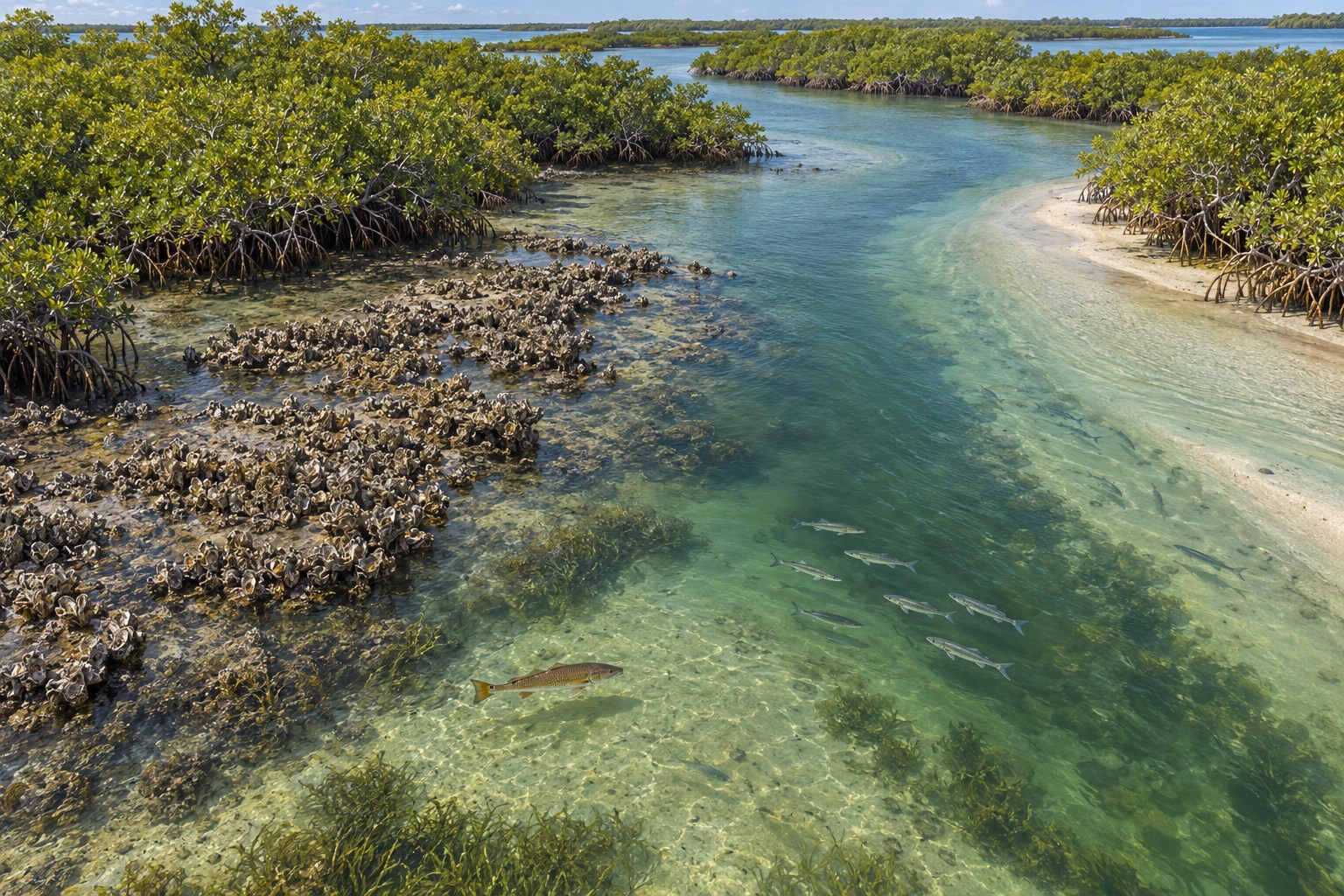
A continuous wall of mangroves may look equally promising for hundreds of yards. Start with the interruptions: a creek opening, an outward point, an oyster patch or a deeper bend. Those features change how food and current move past the cover.
On falling water, a small drain may carry prey out of flooded roots. On rising water, fish can spread farther into shallow edges. Neither stage guarantees a bite. Look for bait movement and enough depth for a fish to use the feature comfortably.
Keep the boat outside the area you want to fish. Cast toward the edge and retrieve across the opening. If a fish strikes close to roots, guide it toward clear water with steady pressure rather than allowing loose line to wrap the cover.
Useful fish and bait combinations
| Fish | Habitat worth checking | First presentation | What to refine |
|---|---|---|---|
| Snook | Creek mouth or shaded point with current | Weedless paddletail or suitable live bait | Bring it past the cover rather than deep inside |
| Redfish | Shallow oyster edge or mangrove opening | Shrimp or slow soft plastic | Use enough weight to reach the lane without digging in |
| Mangrove snapper | Permitted structure close to depth | Small shrimp or cut bait | Reduce bait size when fish steal it |
| Seatrout | Grass beside a clean sand pocket | Light jig or shrimp beneath a float | Keep the hook just above the grass tops |
| Jack crevalle | Channel edge with disturbed baitfish | Compact moving lure | Cast ahead of the traveling school |
A pier may give access to only some of these habitats. Do not expect a shore position to offer the same selection as a boat route through several islands.
Make a small public platform fish well
At a permitted pier, first watch current around the supports and any nearby depth change. A small bait allowed to settle beside the structure may be more useful than a long cast into featureless water.
Use a compact hook-and-bait combination. Mangrove snapper are quick to remove loose pieces. Keep gentle contact with the rig so you can recognize a bite without dragging the bait away constantly.
Do not drop a line where it will sweep into a boat berth or another angler. If current makes that unavoidable, choose a different side only where permitted, or wait for easier flow.
Check the leader after contact with rough structure. A damaged section may look acceptable until the next hooked fish puts pressure on it. Retie before fishing again rather than treating repeated break-offs as bad luck.
Keep a first island route modest
Pick a nearby channel edge and one sheltered shoreline. That gives you two different habitats without committing to a long route. Mark the return path while traveling out, especially at junctions that will look different from the opposite direction.
For kayaks, open water and pass crossings deserve more caution than a narrow protected creek. Wind can turn the return leg into the hardest part of the day. Choose a route that remains within your ability if the breeze increases.
For motorboats, follow marked navigation where provided and know the boat’s draft. Do not use visible mangrove roots as a depth guide for the whole channel. Oyster bars and shallow flats can extend well beyond what is obvious at the surface.
Carry required safety gear, dependable navigation and a communication plan. Tell someone where you intend to go. Mobile reception and a nearly discharged phone are not a complete plan for unfamiliar island water.
Seasonal choices around Goodland
After a cool front, concentrate on sheltered places with access to deeper water. Fish can become less willing to chase a fast lure across an open flat. A slower presentation close to cover is a reasonable adjustment.
Spring warming can make creek mouths and island points more active. Search for small baitfish and repeated movement rather than fishing every attractive tree. A short feeding period can explain why one stop outperforms several others.
Summer outings should allow an early return. Heat, insects and thunderstorms can make a remote shoreline uncomfortable quickly. Carry more drinking water than a short distance on a map might suggest.
Fall often produces changing bait locations and useful current edges. Be ready to move between a shallow feeding area and adjacent depth. A strong wind shift can also change which side of an island offers manageable water.
Watch the tide at your feet
Use the local tide and weather planner to choose a general window. Once on the water, watch exposed roots, oyster edges and the direction of drifting leaves. Those clues show what is happening at the place you are fishing.
If water is draining rapidly, do not push farther into a shallow pocket simply because a fish moved there. Keep enough depth for your return. Grounding a boat can turn a short session into a much longer wait.
A rising tide may open feeding space, but it can also spread fish across more cover. In that case, select a clear route along the outside edge and make accurate casts instead of searching blindly through branches.
Learn one small area well
For a first visit, set a limited fishing window and a definite return time. Spend the opening minutes observing current at the public facility or chosen boat stop. Start with one bait or lure that suits the depth.
If the first presentation fails, change its position before replacing the whole setup. Try beside the current seam, then slightly farther from cover. Record whether bites occur close to the bottom or higher in the water.
Leave while there is still time to unload, clean up and check the boat without rushing. The useful result of a first trip is not only the catch. Knowing one safe route and one productive tide stage makes the next visit much easier.
Fish carefully around living shorelines
Review the FWC saltwater fishing requirements before keeping fish. Identify each catch, confirm current limits and carry a measuring tool that suits your target.
Avoid stepping on oyster habitat or breaking mangrove branches to free tackle. Retrieve snagged line only when it is safe and lawful. Keep released fish wet, supported and away from hot decking.
Keep one useful observation from every stop
Instead of judging a stop only by the catch, note whether bait was present and whether the lure stayed near the feature. A quiet mangrove point with no visible prey gives different information from one where bait is active but the rig sweeps past too high. At the second place, a small weight adjustment may be worth testing. At the first, another nearby habitat may be the better use of time. This approach is especially helpful when learning the waterways outside Goodland because it limits aimless travel. Finish the outing with a small set of observations you can compare on the next tide.
Goodland questions
Can I fish without launching a boat?
The county lists a fishing pier at Goodland Boating Park. Verify its current condition and use the designated fishing area rather than boarding docks.
Will the park store have bait?
Do not depend on it. The reviewed listing says the ship store is temporarily closed.
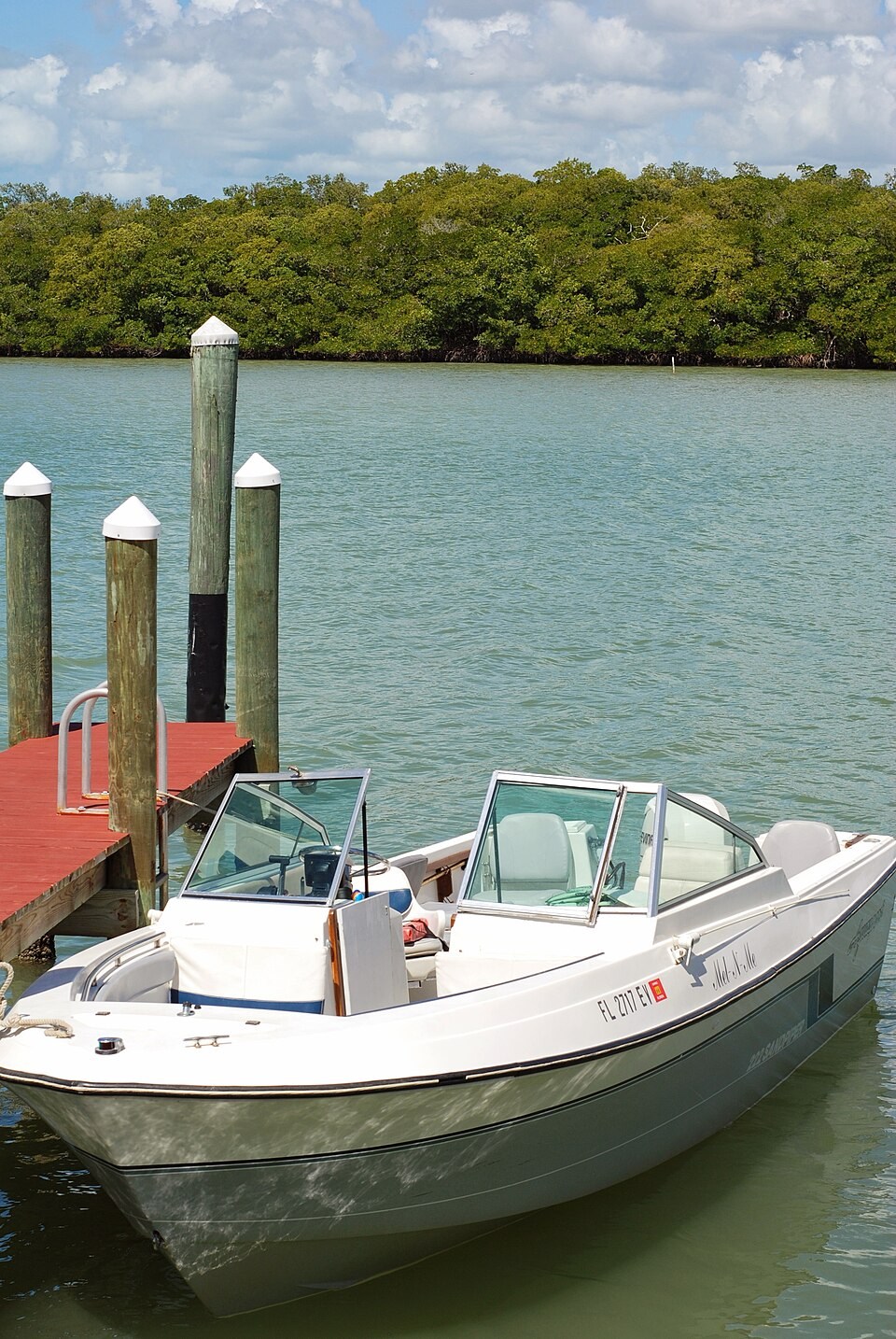
Is the pictured boat a charter recommendation?
No. The photograph shows the local mangrove-water setting. This page is an area fishing guide.
Where are the facility and photo details?
The Goodland reference page records the county source and image attribution.