

SOUTHEAST ATLANTIC
Hollywood Beach
fishing guide
Hollywood Beach allows surf fishing during a defined evening and morning period, with swimming use still deciding whether a lane is safe. Plan a compact session that respects the Broadwalk area, beach users and the city's current guidance.
Explore the guide ↓Use the surf-fishing hours, not another water-sport schedule
Hollywood's official water-sport guidance places surf fishing after 6 p.m. and before 9 a.m. Additional areas may be made available when conditions permit under lifeguard direction. Confirm the current rule and any temporary restriction at the section you choose.
Paddlecraft and other beach activities have different timing in the same guidance. Do not substitute those hours for the fishing window. A page covering several water sports still needs reading by activity.
The permitted period does not justify casting near bathers. Check the entire hook path and stop when swimmers or walkers overlap it. Follow lifeguard directions even when a clock suggests fishing would otherwise be allowed.
Use a public entrance and verify parking arrangements. A nearby hotel frontage or a gap between buildings should not be assumed to provide public equipment access.
Carry the rod safely through a busy oceanfront
Hollywood's Broadwalk area is used by walkers, cyclists and visitors headed to the beach. Keep the lure or bait hook secured during the approach. A long rod should remain under control rather than projecting unexpectedly into someone's route.
Choose a compact bag with one practical setup. Large carts and many rods can make a short early session difficult to move. Keep the walking path clear while assembling or packing equipment.
Learn the entrance in daylight before an unfamiliar dawn visit. Parking time should include rigging, cleanup and the return walk. End with enough margin to comply with the fishing window without rushing.
Try the close sand lane before chasing distance
Whiting and pompano can use suitable Atlantic surf troughs. Watch where waves break and reform to locate a clean lower strip near shore. Small prey may collect there even when the water farther out looks more impressive.
Use a compact shrimp piece, sand flea or durable strip bait. A short dropper above a holding sinker makes a simple test. Keep the point exposed and the leader untwisted.
The first retrieve shows whether the bait is clean, stripped or carrying weed. Adjust distance or bait size in response. Repeating a fouled cast for a whole window provides little useful comparison.
A rig rolling along the shoreline can reach people before a bite appears. Retrieve promptly and change the setup or choose another approved lane. More weight is useful only when it restores control.
Make a quiet shoreline search for snook
Suitable warm-water beach edges can attract snook following small fish. A swimming soft plastic or small plug lets an angler search a clear legal lane. Look along the shore before firing a long cast away from it.
Place the offering ahead of a visible fish's route and retrieve above sand. Adjust the pace if a fish follows without taking it. Repeated splashes directly beside a cruising fish can interrupt the feeding opportunity.
Pause when people enter the route. A fish moving through bathing water should be left to continue. A short allowed window is not a reason to force a cast through shared space.
Use wet hands and body support for release, with pliers prepared before fishing. Check current harvest guidance rather than assuming that a snook seen in another Florida region has the same retention rule here.
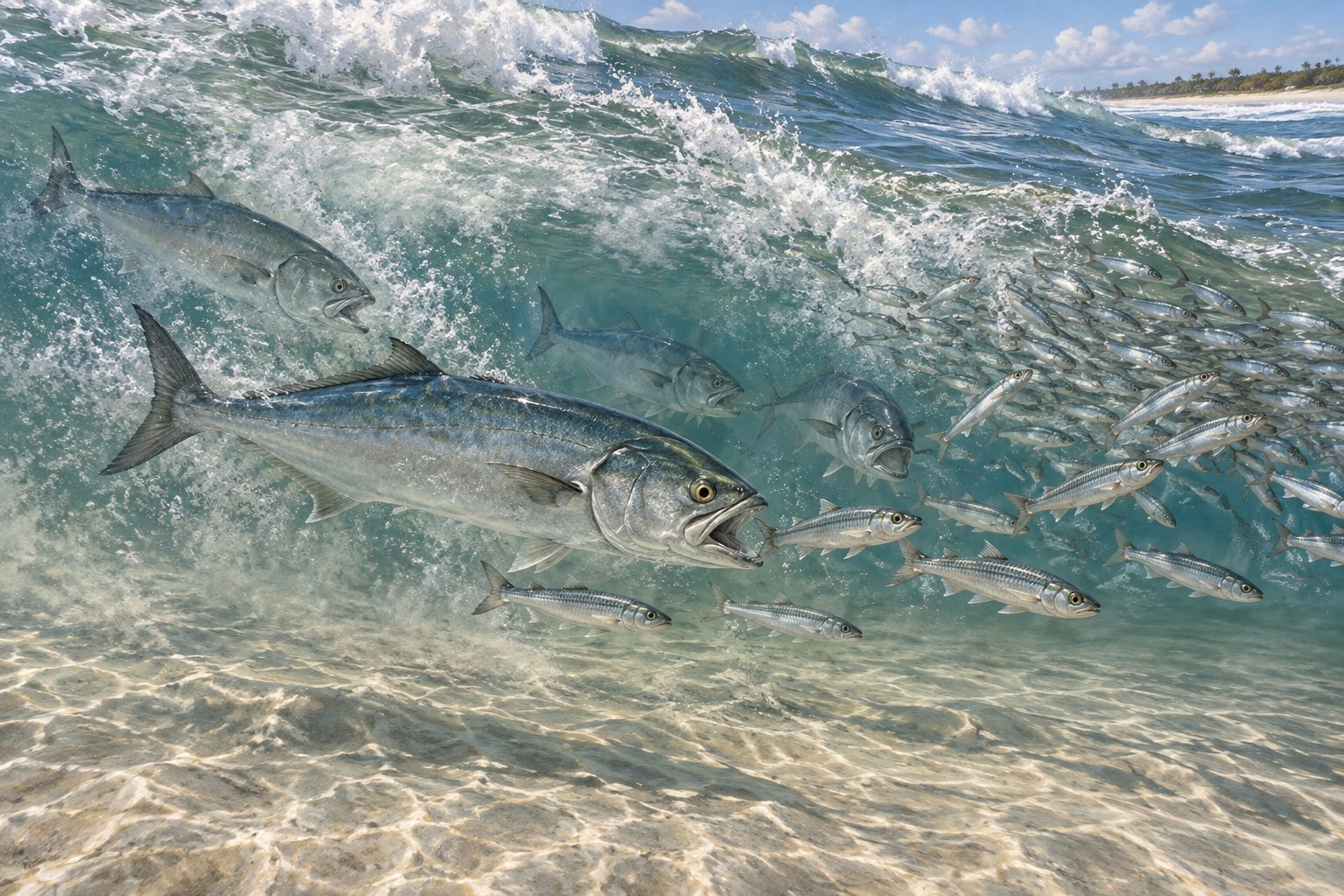
Use passing bait as a reason to change methods
Jacks, Spanish mackerel or bluefish may arrive with coastal bait schools. Look for small fish scattering and repeated feeding movement. One splash can be a passing fish rather than a school that will remain in reach.
A compact metal lure can cover clear open water efficiently. Cast across the school's edge without crossing neighboring lines or birds. Stop when the usable lane closes.
Inspect leaders after toothy strikes and keep handling tools close. Do not grip an unfamiliar fish around its mouth. A stronger fish also requires a sensible drag and enough clear space to guide it safely.
Fit the conditions inside the city window
An evening opening may coincide with an attractive tide, but wind and waves can still make fishing awkward. Check the whole forecast before choosing the visit. The legal time is only one part of the plan.
Early daylight can improve bait observation while low light may hide footing and people. Remain on secure shore and avoid using wading as a way to extend range. Keep lighting modest near turtle habitat.
Cooler-season fronts can change surf-fish activity, while warm beach water can suit a snook search. Local clarity and prey matter more than a calendar promise. Record the actual lane and conditions for the next visit.
Choose one controlled approach
A simple plan makes a short session easier to learn from and easier to end on time. Select the method that fits the permitted lane rather than spreading every available rod.
| Available sign | First method | What to monitor |
|---|---|---|
| Clean sandy trough | Small bottom bait | Sideways drift and bait condition |
| Prey moving close to shore | Swimming lure | People entering the route |
| Fast school in open water | Compact metal lure | Birds and neighboring lines |
| Busy or unsuitable section | Pause or choose another legal route | Lifeguard instructions |
Keep the visit friendly to people and wildlife
Bring water, sun protection and a closed container for spare hooks. Separate food from sharp tools and bait. A supervised child's lesson should focus on one safe cast and an orderly retrieve.
Keep bait secured against birds and leave turtle nests undisturbed. Remove holes and tackle from sand before departure. If an animal enters the hook lane, stop rather than casting through it.
Dispose of clipped line in a contained way and take packaging out with the kit. A hook dropped near the Broadwalk approach can injure someone who never saw the fishing session.
Finish with a clean beach and an accurate keeper decision
Check current FWC license and species rules before retaining fish. Identify a catch carefully, measure when required and support release fish for brief handling. Prepare any photograph ahead of time.
Pack before the applicable time limit and count hooks. Record the entrance, tide and workable method. Neighboring Hallandale and Dania have different arrangements, so do not transfer Hollywood's hours to another beach.
Common questions
What surf-fishing period does Hollywood list?
The reviewed city guidance lists after 6 p.m. and before 9 a.m., with any additional availability subject to conditions and lifeguard direction.
Can I use the paddlecraft hours for fishing?
No. Different activities have separate guidance. Use the section specifically addressing surf fishing.
Does the allowed window permit casting around swimmers?
The lane must remain clear of bathers and other users. Follow lifeguard directions and stop if the route becomes occupied.
What makes a first session manageable?
Use one compact setup, a known public entrance and enough time to pack before the cutoff. Let the actual water decide between bait and a lure.
Prepare for your visit
Check local tides and weather. Read more about snook, florida pompano, whiting. Check current FWC saltwater fishing rules.