
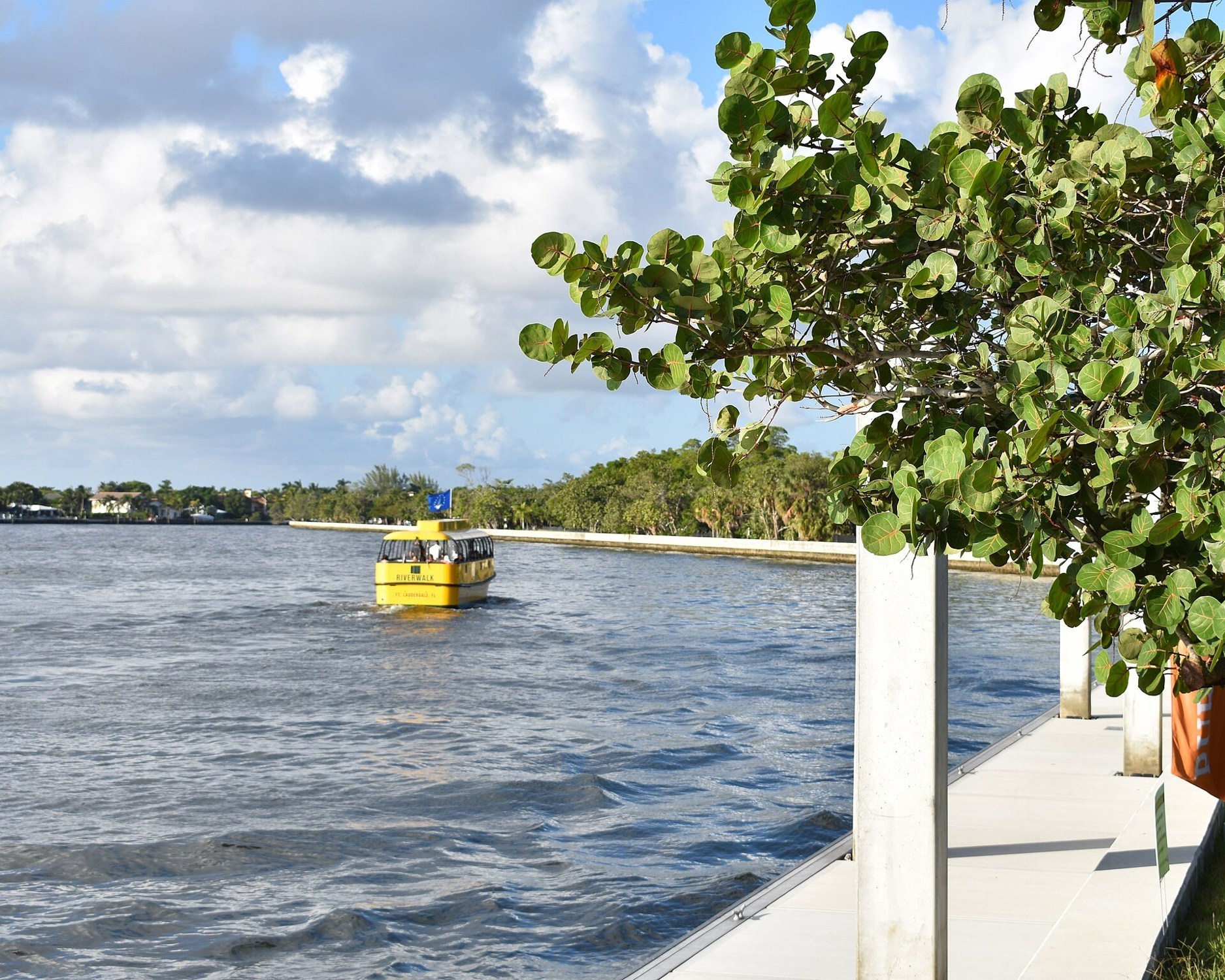
SOUTHEAST ATLANTIC
Hugh Taylor Birch State Park
fishing guide
Hugh Taylor Birch State Park offers fishing along its Intracoastal seawall and public access, while its interior lake and mangroves are excluded. Current dock and facility work make checking the open route especially important.
Explore the guide ↓Keep fishing on the authorized Intracoastal side
Hugh Taylor Birch State Park lies between Fort Lauderdale's oceanfront and the Intracoastal Waterway. Its official activity guidance permits fishing along the Intracoastal seawall and public access. Fishing is prohibited in the interior lake and mangroves.
The lake may appear calm and inviting from a trail or paddle route, but those other activities do not make it angling water. Choose the expressly permitted setting instead of using habitat appearance to override the rule.
The reviewed park notices list the floating dock as closed and identify work affecting large pavilions and associated restrooms. Check the current update at entry. A dock shown in an old photograph is not evidence that it can be used today.
General park hours are 8 a.m. to sunset. Verify entry charges, open facilities and the walking route before taking a large tackle load through the park.
Read the tidal edge without leaning over it
Intracoastal current can carry prey along a hard edge, while boat wakes alter the surface. Watch the direction and choose a recoverable line path. A quiet pocket beside movement may be easier to fish than the fastest lane.
Stand securely and keep loose gear back from the wall. Do not lean or climb to reach a slightly different angle. Plan where a fish can be supported and released before making a cast.
A bait lowered too close to a rough surface can snag or abrade the leader. Place it in open water beside the edge and keep enough contact to retrieve it. Change the angle when the current pulls it into cover.
Keep lines clear of vessel approaches and passing traffic. The seawall is not a place to stretch an unattended rig across the waterway.
Offer a small bait beside recoverable cover
Mangrove snapper can use suitable Intracoastal structural habitat. A small shrimp piece or compact baitfish offering can test the clear margin. Keep the point uncovered so a short bite can take the hook.
Use weight that maintains control under the observed flow. Too much can pin the rig in a rough spot, while too little may carry it out of sight. A simple short leader makes the movement easier to understand.
Check bait after slight taps or a quiet interval. Small fish can strip soft material quickly. Replace it or compare a firm portion before adding more rods.
Guide a hooked fish away from the edge with steady pressure. Inspect the leader after abrasion and identify the catch before harvest. The presence of mangroves nearby does not authorize casting into the prohibited mangrove area.
Use an open-water lure for passing predators
Snook and jacks may follow small fish along suitable tidal margins. A swimming soft plastic or small plug can cover the permitted open lane. Watch for bait movement rather than assuming that every seawall corner is productive.
Choose a cast angle that keeps the lure above rough contact and outside traffic. The current can help carry it through the lane if its path remains controlled. Retrieve early when it starts moving toward an inaccessible snag.
A cruising fish should meet the lure ahead of its route. Repeated splashes onto the fish's position can reduce the opportunity. Pause when another park user needs room beside the water.
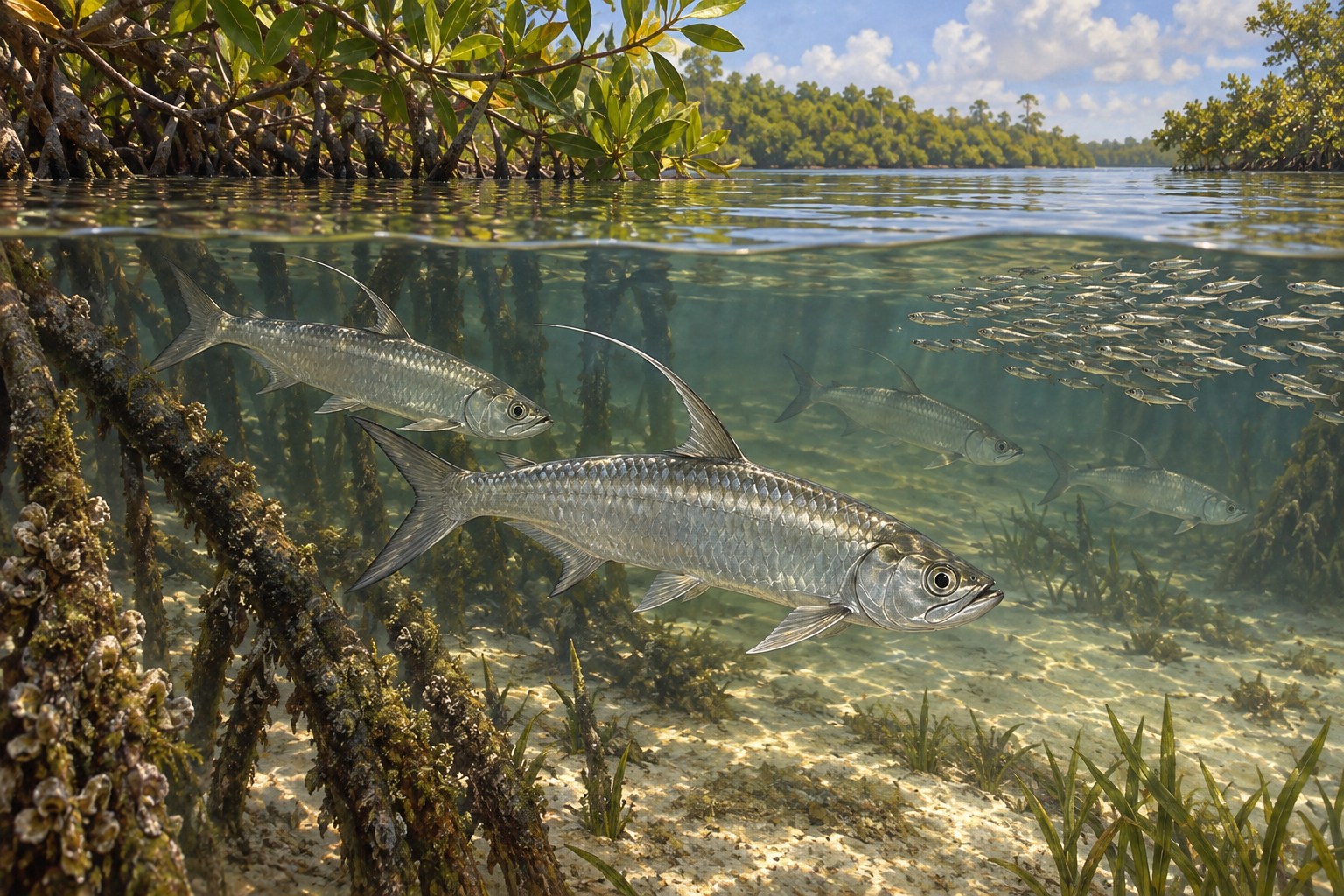
The habitat illustration explains an Intracoastal feeding edge. It does not depict the interior lake as a fishing destination or provide a surveyed depth chart.
Tarpon can travel through suitable Intracoastal water and feed on moving prey. Observing that movement from an open public route can be useful, but the park excludes fishing in mangroves. The root-edge habitat illustration is educational and does not identify an authorized casting station.
Solve seawall fish handling before the bite
Height above the water can make release difficult. Ask staff about suitable permitted handling equipment and choose a position with a realistic plan. Lifting a large fish by the leader risks injury and tackle failure.
Keep pliers and a measuring tool close before casting. A release fish should not wait on pavement while the angler searches the bag. Support the body, keep it wet and minimize air exposure.
If a hooked fish is too large for the available safe handling method, avoid climbing or leaning over the wall. The lesson for the next cast is to change the target setup or position, not to repeat an unplanned landing problem.
Use each park feature for the permitted purpose
The park's compact geography can make separate habitats look like one continuous fishing area. Its activity guidance draws important limits.
| Feature | Fishing plan | Key boundary |
|---|---|---|
| Intracoastal seawall and public access | Controlled bait or open-water lure | Use the authorized available route |
| Interior lake | Enjoy permitted non-fishing recreation | Fishing is prohibited |
| Mangrove area | Observe habitat without hooks | Fishing is prohibited |
| Closed floating dock | Choose another approved open position | No barrier bypass or assumed reopening |
Use tide and vessel activity together
Moving water can refresh a prey lane, but excessive flow makes light tackle hard to control. Watch the exact edge rather than treating a high or low tide time as a switch. Boat wakes can also affect the presentation unexpectedly.
The park's opening schedule may exclude a desired dawn tide. Plan within the actual access window and do not borrow Fort Lauderdale beach fishing hours for the state park. They are different destinations with different rules.
Check thunderstorms and wind before a long shoreline stay. Shelter on a trail does not remove exposure at the seawall. Keep enough time to pack and leave under the park's schedule.
Plan around current facility work
Confirm which restrooms and pavilions are usable before promising a long family outing. The current closure notices matter more than a general amenities list. Carry drinking water and keep the fishing load manageable.
The park offers ways to observe coastal habitat without fishing its interior water. A short supervised seawall lesson can be one part of the day if the authorized position remains clear. Secure hooks before returning to trails or other activities.
Keep food and bait contained against wildlife. Do not leave line fragments along the wall or roots. An orderly kit makes stopping for a wake or passing visitor much easier.
Leave with a clean edge and a useful current note
Verify current FWC licensing and species harvest rules before retaining a catch. Identify unfamiliar fish carefully and use a brief supported release when not keeping them. Do not treat a common name as sufficient identification.
Take used leaders and packaging out with the bag. Note the approved position and current stage that allowed clean retrieval. Check the closure notice again before returning because an old photo cannot confirm a reopened dock.
Common questions
Can I fish the park's interior lake?
No. Official guidance prohibits fishing in the interior lake and mangroves. The permitted setting is the Intracoastal seawall and public access.
Is the floating dock available?
The reviewed park notice lists it as closed. Check for a current update and use only an approved open position.
Do Fort Lauderdale's beach fishing hours apply here?
No. The state park has its own access schedule and activity boundaries. Plan the seawall visit under those rules.
What is important about landing from a seawall?
Arrange suitable permitted handling and release before casting. Avoid lifting large fish by the leader or climbing over the edge.
Prepare for your visit
Check local tides and weather. Read more about snook, mangrove snapper, permit. Check current FWC saltwater fishing rules.