
PANHANDLE
Inlet Beach
fishing guide
Inlet Beach has one of South Walton's most substantial public Gulf access areas. It gives shore anglers a practical starting point near the county's eastern edge. Separate the surf, Lake Powell and nearby private beaches, then choose one clear fishing plan.
Explore the guide ↓Find the public regional access on Park Place
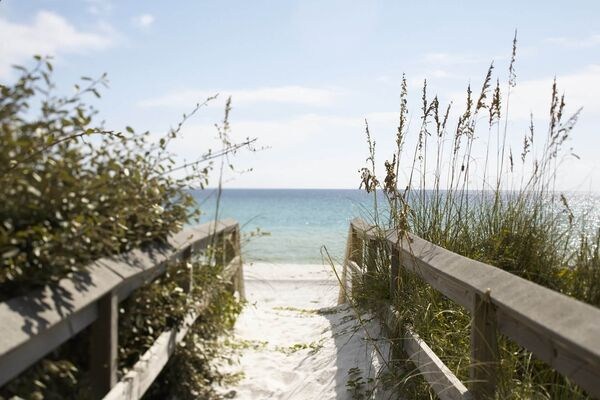
Visit South Walton lists Inlet Beach Regional Access as points 2a, 2b and 2c, with the central address at 303 West Park Place Avenue. Its directory identifies a boardwalk, accessible parking and restrooms, water fountain, seasonal lifeguards and beach flags. Choose the actual signed entrance rather than a neighboring private walkover.
The area offers more than one public arrival point, but facilities and available parking should be confirmed for the one you use. Walk out first and assess the fishing lane. A large public access still shares its shore with swimmers. Keep rods, hooks and coolers outside the corridor used by visitors reaching the water.
Separate the beach from Lake Powell
The neighborhood sits near Lake Powell, a coastal dune lake with its own access opportunities. Visit South Walton lists a Lake Powell fishing pier at 620 North Walton Lakeshore Drive. That is a different setting from a Gulf surf session, with different bottom conditions, space and rules to check.
Nearby Camp Helen State Park also offers lake and Gulf fishing when open, but its current storm notice and other access conditions need a separate check. Do not assume an open Inlet Beach access means the park has reopened. Decide which lawful location you intend to fish before choosing a tackle load.
Watch the bars to find your first bait position
Successive waves breaking along the same strip often show a shallow bar. The trough beside it can provide a route for fish feeding on small crustaceans. Start with a manageable cast into that nearer lane. A distant offshore feature is not automatically more productive than the sand change close to the wash.
Look for a pattern that remains through shifting light and several wave sets. Dark water can come from cloud shadows or stirred sand as well as depth. Gaps through bars may move food and returning water. Observe them from firm sand rather than stepping into a channel to extend the cast.
Compare compact offerings for seasonal pompano
Pompano are a possible surf target along this coast during favorable movement and conditions. A sand flea, modest shrimp piece or narrow strip bait is a useful starting comparison. Choose a hook suited to the offering and leave its point clear. A bulky mass can spin or conceal the point.
A small floated dropper can lift bait above shifting sand, while a plain hook presents another test. Keep both versions simple. Inspect the bait regularly and note the casting range that draws attention. Seasonal reputation provides a reason to try, not a guarantee that a particular rig will produce a fish.
Keep a nearshore option and watch for prey
Whiting can feed near the sandy bottom within a short casting range. A small peeled shrimp piece may be enough to test them. Light taps can be hidden by waves, so watch for movement that continues afterward. Gather slack smoothly and feel for weight without dragging the rig across the sand constantly.
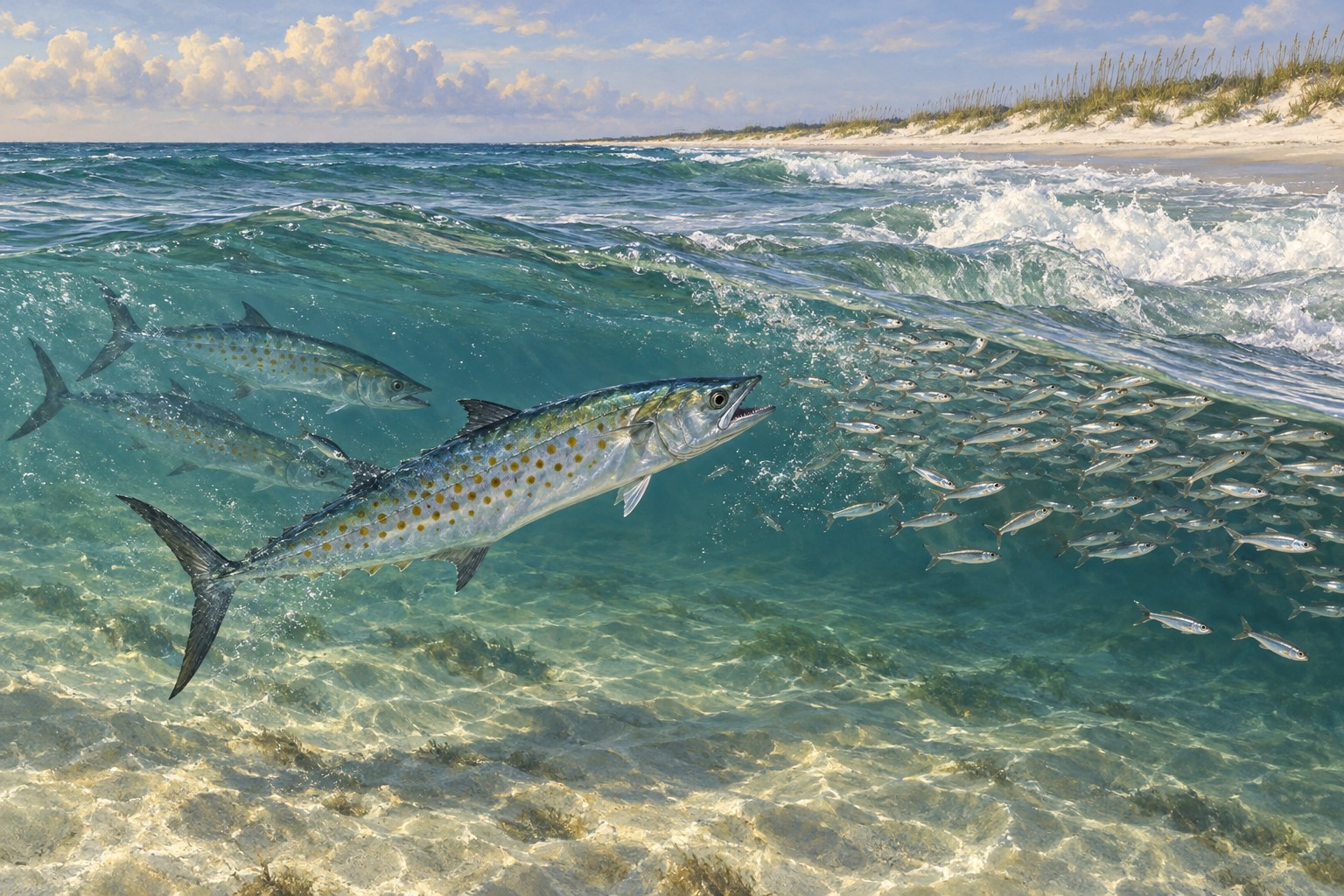
Passing baitfish may attract ladyfish, bluefish or mackerel when conditions suit them. A small spoon or swimming lure can search visible activity, but only with a clear lane. Do not cast toward snorkelers, swimmers or paddle craft. An interesting surface chase is a reason to evaluate space before reaching for a lure.
Choose a shore rig that stays where it belongs
Select an outfit that safely casts today's holding weight. Inspect the rod's rating and the condition of the line before increasing lead. Wind-driven line bow can move a rig sideways, even if the sinker initially lands in a clean gap. Take up excess slack and keep watching where the line travels.
Pack a few spare leaders and weights alongside pliers and a measuring tool. Keep bait cool and used tackle contained. A light kit also helps if the selected access fills or swimming activity grows. The table connects the main local choices with the check each one needs before fishing begins.
| Plan | First approach | Check before casting |
|---|---|---|
| Gulf surf | Small crustacean bait in a trough | Flags and swimming space |
| Lake Powell pier | Presentation suited to current pier rules | Exact facility access and permitted tackle |
| A nearby park outing | Separate lake or beach plan | Current park reopening and route |
| Active prey on the Gulf | Compact casting lure | Clear room for the complete retrieve |
Choose a manageable day rather than a fixed tide rule
Inlet Beach faces open Gulf weather. Wind direction and surf can decide whether a small rig holds its lane. Compare the forecast with actual flags, foam and breaking waves when you arrive. Tide predictions can organize the schedule, but they do not describe every bar current or a sudden gust.
Spring and fall often draw interest in pompano along the Panhandle. Summer brings heat, storms and more swimming use. Cooler-season fronts can abruptly change water clarity. Keep a short session and a legal alternative in mind. A fishless but well-observed outing still teaches useful details about casting range and bait survival.
Keep shore fishing separate from water recreation
Tourism information describes an offshore snorkeling reef in the Inlet Beach area. It is a different recreation setting, not a reason to cast through swimmers or paddle out beyond your ability. This guide's beginner plan stays with accessible surf sand and clear water space. An offshore attraction does not establish a safe fishing route.
Keep dunes and nesting enclosures undisturbed while moving along the public frontage. Confirm assistance arrangements if beach access requires support. The listed accessible amenities help planning, but loose sand and weather still affect a visitor's comfort. Carry a smaller load and use the designated routes in both directions.
Prepare for the catch before putting the bait out
Carry a reliable identification aid and use current harvest rules for the fish you actually catch. Similar surf species may have different conditions. Measure accurately and release promptly when identity or legality remains uncertain. Keep wet hands, pliers and a suitable landing plan ready rather than searching through bags while the fish dries.
Remove broken hooks, clipped leaders and every bait packet from the sand. Avoid leaving equipment overnight or in a walking corridor. A careful departure keeps Inlet Beach's public entry useful for the next group, whether they arrive with rods, beach toys or a plan to explore the coast without fishing.
Common questions
Where is the central Inlet Beach regional access?
Visit South Walton lists 303 West Park Place Avenue as the central address for regional access points 2a, 2b and 2c.
Is Lake Powell fishing the same outing as the beach?
No. Its listed pier and other lawful lake routes are separate access decisions with different conditions and rules.
Does an open public beach mean Camp Helen is open?
No. Check Camp Helen's current notice separately before making a park visit.
Should a beginner target the offshore snorkeling reef?
This guide recommends a controlled surf plan from firm sand. Keep lines away from swimmers and do not treat a recreation reef as an automatic fishing route.
Prepare for your visit
Check local tides and weather. Read more about florida pompano, whiting. Check current FWC saltwater fishing rules.