
SPACE / TREASURE COAST
Jensen Beach
fishing guide
Jensen Beach fishing guide with Indian RiverSide Park pier, causeway considerations, trout and redfish methods, and Atlantic surf options.
Explore the guide ↓Choose the Indian River or Atlantic side
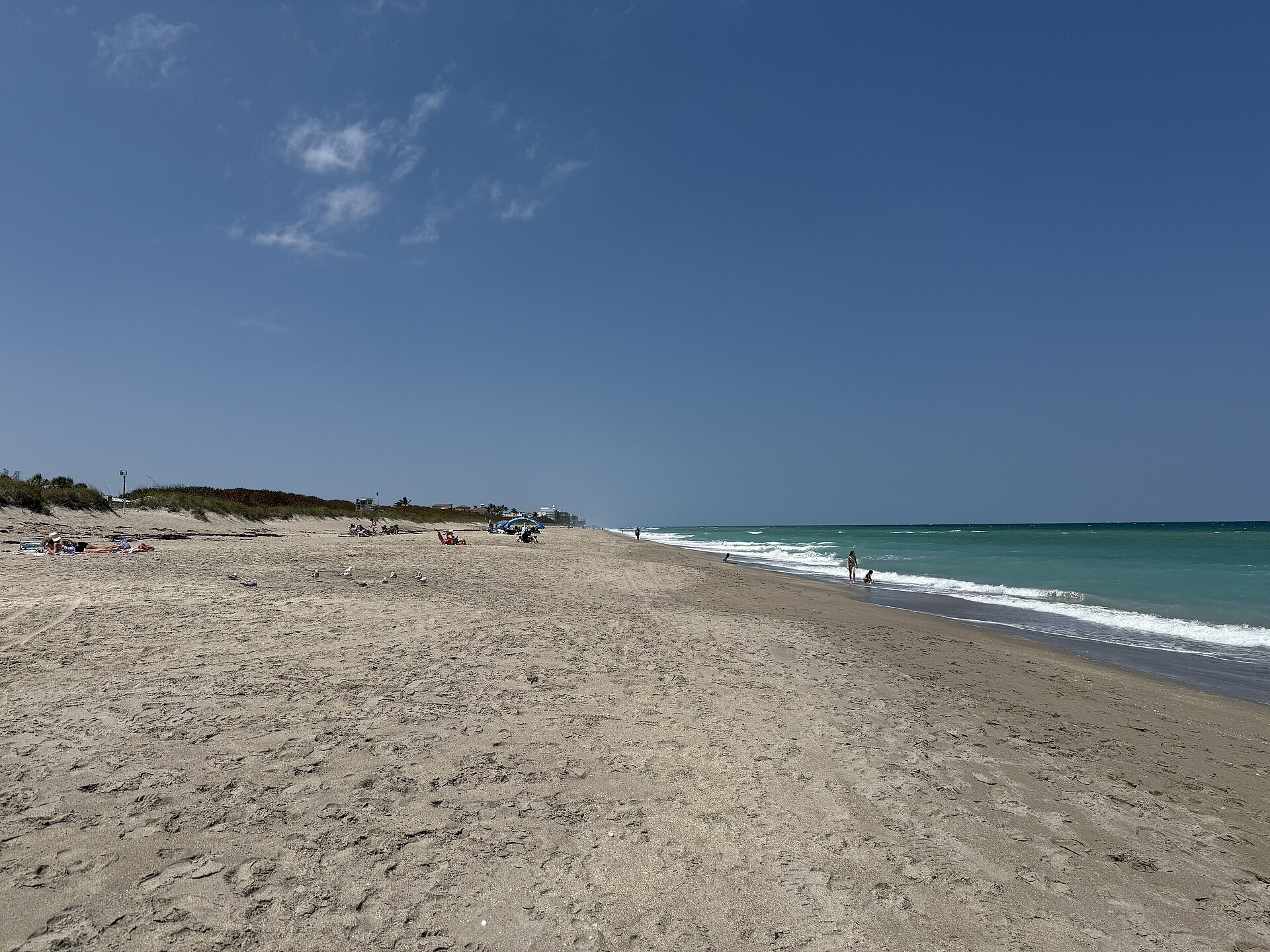
Jensen Beach offers two different fishing experiences. The Atlantic beach is a sand-and-surf setting, while the Indian River side provides public pier and causeway options. Choosing one side first makes the visit easier to plan.
Whiting and pompano are useful ocean targets when the surf is manageable. Spotted seatrout and redfish fit suitable estuary habitat, while structure can attract other fish. No single rig is ideal for all of those situations.
Begin with a verified public access and a realistic casting lane. Private docks, boat approaches and swimming areas should not be treated as extra fishing space.
Indian RiverSide Park provides a defined pier option
Martin County lists Indian RiverSide Park at 1707 Northeast Indian River Drive. Its facilities include a 780-foot fishing pier. Check current notices before planning around that structure, and use the posted hours and routes.
A defined pier can simplify a first river visit, but it still requires observation. Look at the water movement, nearby pilings and the height above the surface before selecting tackle.
Keep walking space clear for other park visitors. Carry a compact bag and secure the hook while moving. Do not spread spare rods and open tackle boxes across the path.
Bring a landing tool suited to the position. A fish should not be lifted by a light leader simply because the angler is above the water.
Use only the permitted causeway areas
The Jensen Beach Causeway is another recognized fishing setting, but individual shore sections, docks and boat-use areas need their own rule check. Read the signs at the exact position rather than assuming the entire causeway is open for casting.
Keep lines away from launch approaches and moored boats. The nearby mooring field is an operating boating facility, not an invitation to fish across vessel access.
Watch wakes and footing along the water. A low bank can be wet or soft even when the surface appears calm. Do not step into unknown mud to extend reach.
Choose a place with a clear retrieval and landing route. An attractive piece of water is less useful if every fish or rig must pass through an obstruction.
Search the open side of a shallow edge
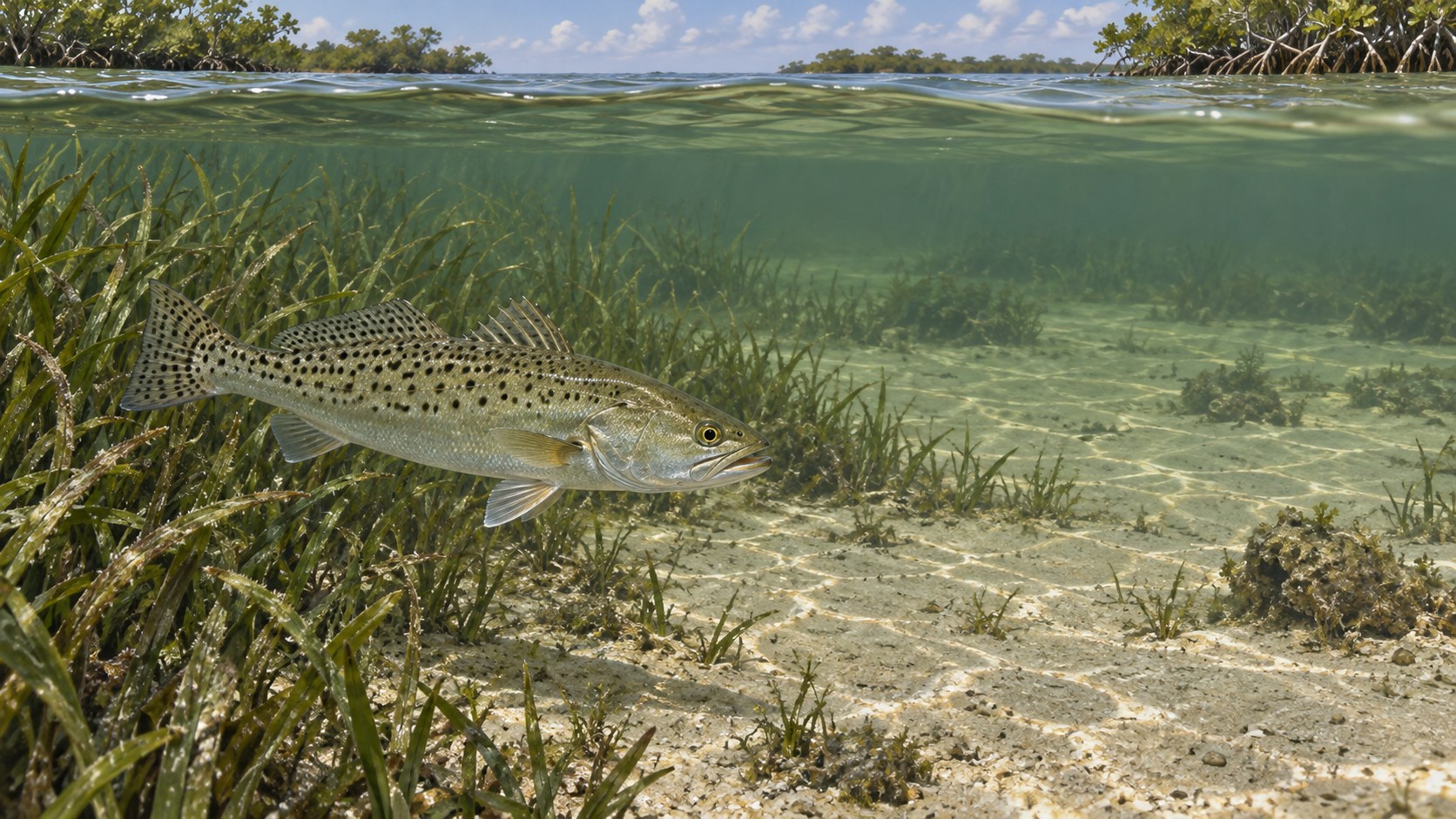
Look for bait along a depth change or vegetation boundary. A small swimming lure can cover that lane without staying in one place. Keep it above the bottom rather than dragging through plants on every retrieve.
Try a steady pace first, then a slower pass if the lure remains clear. Depth and route often matter more than immediately changing color. A lure that never reaches useful water cannot test the location well.
Live shrimp under a float can hold in the same general layer. Adjust the hanging depth for the actual water and watch the drift continuously. Retrieve before it crosses another line or reaches a piling.
Use gentle pressure with a hooked trout and support it carefully during release. Wet hands and brief handling help protect the fish.
Approach a redfish lane quietly
Redfish may move along shallow margins searching for food. A point, small drain or break in cover can make a route more interesting. Cast ahead of the likely movement instead of splashing directly into it.
A weedless plastic is useful near vegetation where an exposed hook would snag. Bring it along the open boundary and adjust the angle if it catches cover repeatedly.
From a craft, reduce noise and avoid pushing into the shallowest habitat. Propeller damage and unnecessary grounding harm the area and can also ruin the fishing approach.
From shore, accept the limits of the public position. Do not cross private property or walk through plants to gain a few more yards.
The public beach is a separate surf plan
Martin County lists Jensen Beach at 4191 Northeast Ocean Boulevard. Guarded areas and staffed hours vary by tower, so check the current beach conditions and keep fishing away from swimming activity.
Watch for the first sandbar and the trough inside it. A small shrimp bait can reach whiting with a moderate cast. If the close lane receives bites, repeat it rather than assuming farther is better.
Pompano may take compact bait above the sand. Keep the hook point clear and check for weed or tangles. Use sand fleas only where gathering is permitted, with other suitable baits available as a backup.
Stay on stable sand and avoid wading into outward-flowing gaps. A fishing rod does not make uncertain surf safer.
Choose a method for the access you have
| Access or habitat | Starting method | What to watch |
|---|---|---|
| River pier with open water | Light lure or suspended shrimp | Depth and the direction of drift |
| Permitted shallow river edge | Weedless lure along cover | Bait movement and quiet approach |
| Hard structure within reach | Compact bait beside the support | Leader abrasion and a clear landing path |
| Atlantic trough | Small surf bait | Waves, weed and distance from swimmers |
Keep the first plan narrow enough to learn. A well-presented bait in one useful lane is more informative than several poorly controlled rigs.
Prevent a structure bite from becoming a tangle
Cast beside pilings rather than between several of them. A fish can turn toward cover quickly, and the line needs a clear route back. Keep a controlled angle from the start.
Use only enough weight to maintain the intended depth. Too much can lodge in bottom debris, while too little may let the rig wrap around a support. Adjust after watching the first drift.
Inspect leader after rough contact and replace worn sections. Keep pliers ready for sharp-spined or toothy fish. Do not handle a catch casually while a loose hook can reach the hand.
If the position cannot support safe landing, change the target or move to another permitted place.
Plan for wind across the river as well as surf
The river can be rough enough to affect a small craft even when the beach is the main concern in the forecast. Consider the full return route and the wind direction across open water.
Paddlers should wear their flotation gear throughout the trip and carry an accessible means of calling for help. Watch wakes and give other vessels room. A short first route is a sensible way to learn the area.
Check the local tide and weather information before choosing a side. Summer storms and strong fronts can change either plan quickly.
For a nearby ocean-focused comparison, see Stuart Beach’s surf-fishing guide. Its beach access is separate from Jensen’s river facilities.
Keep the first visit organized
Bring water, sun protection, pliers, a ruler and a small container for clipped line. Keep bait cool and the tackle bag closed when not in use. An uncluttered position is easier to share and easier to leave when weather changes.
Use FWC’s current saltwater fishing rules for licensing and harvest decisions. Public pier access does not automatically establish license coverage.
Support released fish properly and minimize time on a hot deck or sand. Chill any legal retained catch and remove scraps that could attract birds.
Write down the productive depth or drift angle after the session. Those observations make a return more useful than simply noting whether the day produced fish.
Use the pier visit to learn depth and drift
Start with a short presentation in front of the chosen position. Watch the line angle as the bait sinks or drifts. If it moves rapidly toward a support, retrieve before it wraps and try another angle.
A float can help keep shrimp above clutter, but its setting needs to match the actual depth. Move it a small amount at a time and watch whether the bait remains free. A float pulled under by a snag should not be mistaken for proof of feeding fish.
With a lure, begin above the bottom and lower the retrieve gradually if needed. A clean pass beside a depth edge is more informative than dragging through plants on every cast.
Keep the landing net prepared for the pier’s height and water level. Check the reach before the first fish, and leave enough room for another visitor to pass while it is stored.
At the end of the outing, record the useful angle and depth rather than only the catch count. Those observations can help on a return, provided the current and access are checked again. A river pier is a changing fishing setting, not a fixed recipe.
Put the plan into practice
Keep the ocean and river observations in separate trip notes. A successful wind direction or bait depth on one side does not automatically describe useful conditions on the other.
Jensen Beach fishing questions
Where is a designated river fishing pier?
Indian RiverSide Park on Northeast Indian River Drive lists a fishing pier. Check its current facility status before visiting.
Is the public ocean beach the same location?
No. The Atlantic beach uses the Ocean Boulevard access, while the river park is a separate destination.
Can I fish across the causeway boat areas?
Keep lines clear of launch approaches and vessel access, and use only permitted fishing positions.
What is useful for trout near an edge?
A small swimming lure or shrimp held above bottom cover can work. Adjust the depth to the water actually within reach.