
SOUTHEAST ATLANTIC
Juno Beach
fishing guide
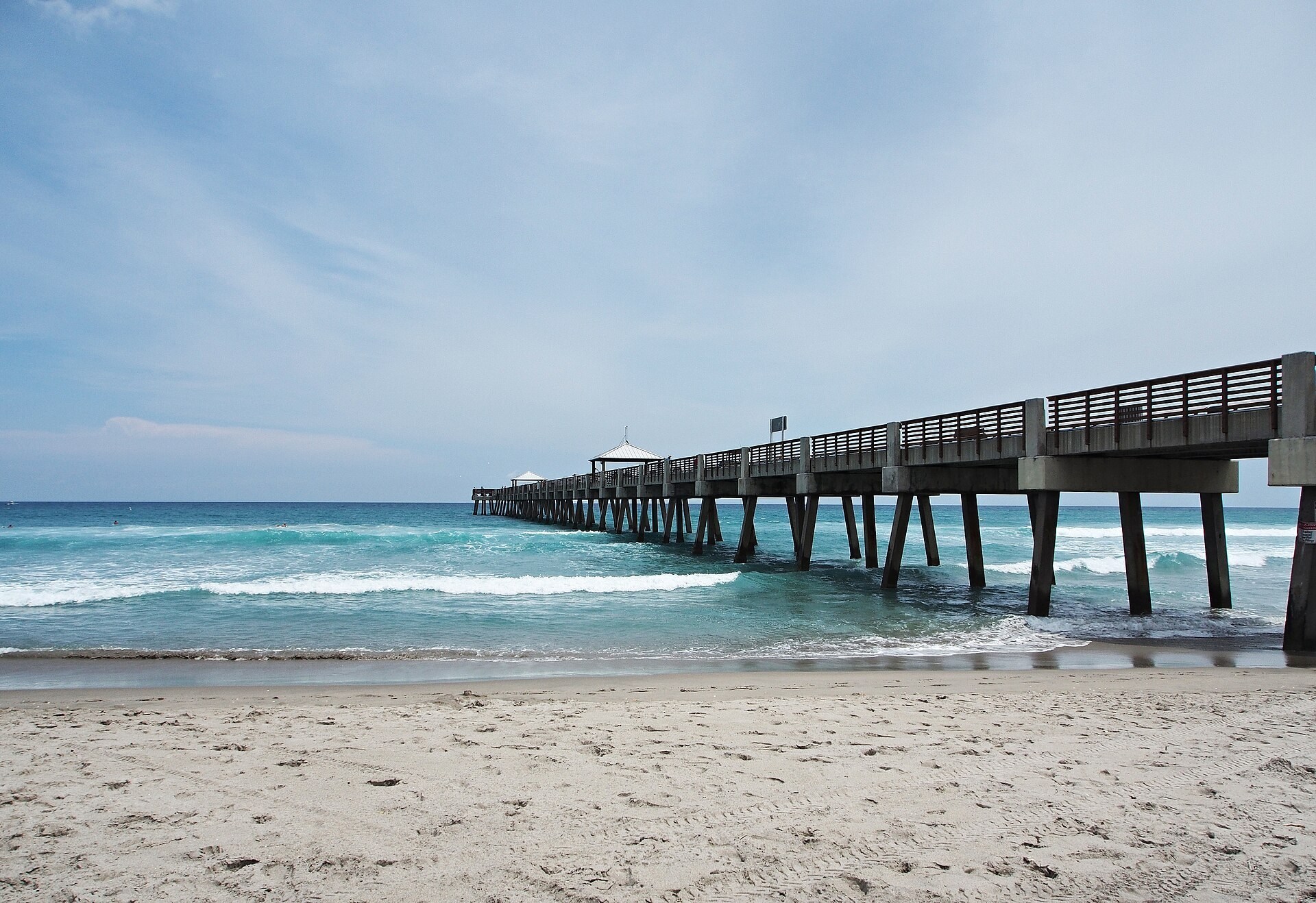
Juno Beach offers a long Atlantic shoreline where the surf, sandbars and small baitfish help shape a fishing plan. Choose a legal stretch outside swimming areas and treat the town beach and the fishing pier as separate options.
Explore the guide ↓Start with the right beach entrance
Juno Beach is a coastal town in northern Palm Beach County. Its ocean shoreline includes public beach entrances and county park frontage. A place where you can walk onto the sand is not automatically a place where hooks can be used around bathers.
Ask the managing beach staff about the fishing boundary at your chosen entrance. Stay outside guarded swimming water and keep your casting lane clear. Do not walk through private property because it appears to offer a shorter route.
The Juno Beach Pier is a separate fishing facility. Its repair project began in June 2026, and construction resumed in October. Available sections may change during the work, so check access before planning a pier day.
A town surf trip works best with a light load. Bring enough water for the return walk and pack hooks so they cannot fall into the sand. Leave a clear path for beach walkers behind your rod.
Look for fish inside the first sandbar
A trough is a lower strip of seabed between the beach and a sandbar. Small surf fish can feed there as waves move prey through the sand. That useful water may be much closer than the longest cast you can make.
Watch several wave sets before placing a bait. A darker lane, a break in the foam or a wave that reforms near shore can help reveal changing depth. Glare and cloud shadows can imitate those signs, so compare them with the breaking waves.
Begin with a short cast into the clean lane. Check whether the sinker settles or rolls. Move the presentation gradually farther out only when the nearby water has had a fair test.
If weed collects on every retrieval, inspect a different opening along the beach. More weight may hold the rig but still leave the bait buried in drifting vegetation.
Use compact bait for pompano and whiting
Florida pompano and whiting feed on small prey over suitable sand. Sand fleas, small shrimp pieces and prepared strip baits are practical surf choices. A tidy portion usually fishes better than a large bundle hiding the hook.
Use a small dropper rig when comparing bait heights. Keep the lower bait above the sand without making a long, tangled leader. A single hook is a sensible option for a child learning to cast and retrieve.
Start with enough sinker to hold against the current. A rig that continually drags sideways can cross other lines or roll into shells. Shift position when the drift cannot be controlled safely.
Light bites are easier to detect with a clean line and manageable tension. Examine bait after a quiet period rather than assuming nothing is feeding. Tiny bait thieves may leave an empty hook looking perfectly settled.
Follow snook along a clear shoreline
Snook can travel along South Florida beaches, particularly in warm conditions. Look for small baitfish and a clean nearshore lane instead of relying on a season alone. A visible fish may be cruising without feeding.
A small swimming plug or soft plastic can be worked parallel to the beach. Cast beyond the fish's route when the lane is clear and bring the lure toward its path. Landing a lure directly on a fish often interrupts the opportunity.
Keep the retrieve high enough to avoid dragging through sand. A leader that rubs shells or hard patches needs checking even if no fish has struck. Use equipment that gives control without turning a shoreline outing into a heavy offshore setup.
Release snook with wet hands and body support. Prepare the pliers before the bite and keep any photograph brief. The current rules, rather than the fish's apparent size, determine whether harvest is allowed.
Change methods when baitfish gather
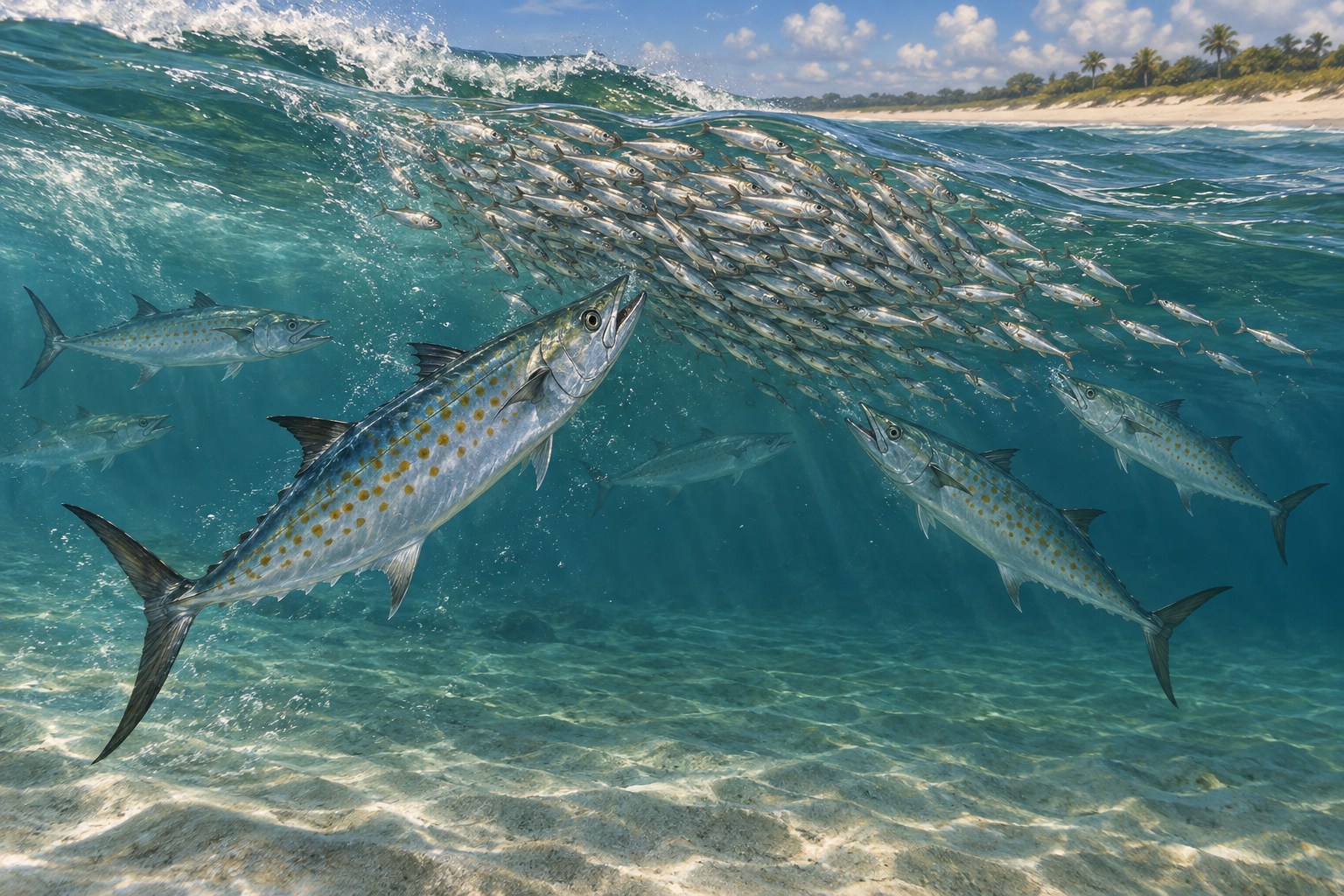
A school of bait close to shore can attract bluefish, jack crevalle or Spanish mackerel. Watch for scattered bait, birds dipping repeatedly or fish driving prey through the surface. Those observations offer more useful information than a fixed promise about species.
A compact metal lure reaches a moving school efficiently. Retrieve through the edge without sweeping hooks toward walkers or another angler. End the cast if the school enters guarded swimming water.
Toothy fish can cut ordinary leader material. Inspect damage after a strike and choose a suitable bite-resistant section when needed. Stronger leader is useful only when the rest of the rig is tied and handled properly.
Do not chase a school across private access or a crowded stretch. Often the better choice is to wait at a safe opening where bait may return.
Choose a session by wind and water movement
An early start can provide cooler sand and fewer people, but opening hours and local restrictions still apply. Check the weather forecast for thunderstorms and the wind direction before unloading the car.
Onshore wind can increase shorebreak, push weed inward and make light tackle difficult. A sheltered-looking patch beside a building does not necessarily mean the water itself is safe. Stay on land when the surf or footing is beyond your ability.
Moving tide may refresh a trough or carry bait along the beach. The best stage varies with its depth and the day's swell. Record the tide, clarity and bait activity so the next visit starts with something you actually observed.
A short unproductive session can still teach useful details. Note where the rig held, where weed accumulated and which section remained clear of swimmers.
Pack for a moving beach session
Carry a rod suited to the sinker or lure you expect to use. A small bait container, pliers, spare leaders and drinking water are easier to move than an oversized cart. Add a measuring tool if you might keep a legal fish.
A rod holder needs to remain visible and out of the walking route. Retrieve loose line promptly and remove every hook before packing. Lost tackle on a public beach can injure people and wildlife long after you leave.
Use sun protection that remains useful while walking. Keep a dry bag for the phone and car key, and remember that beach showers do not provide drinking water.
Leave the nesting beach undisturbed
Juno Beach is an important sea turtle nesting shoreline. Give marked nests space and keep holes or gear from becoming obstacles. Do not use bright lights to inspect nesting turtles or follow a hatchling toward the water.
Keep food scraps and discarded bait contained. Birds and other animals can be drawn toward hooks even when you are watching the rod. Stop fishing rather than trying to cast through animals feeding nearby.
If a turtle or bird becomes entangled, contact local wildlife assistance and follow its instructions. Cutting visible line and leaving the animal to swim away may leave a dangerous length attached.
Try one clear stretch before changing beaches
Choose an approved fishing section and study its waves. Test a small bottom bait in the close trough, then adjust the distance only when the rig and bait remain clean. Keep a lure ready if baitfish begin moving along shore.
Finish while there is time to rinse, collect tackle and walk back comfortably. Compare the day's observations with HookCurrent's weather and tide information before deciding when to return.
Common questions
Is Juno Beach the same as Juno Beach Park?
The town shoreline and the county park are related places with different access details. The park also provides the fishing pier, which has its own rules and repair notices.
Do I need to cast far to catch pompano?
Not always. A trough inside the first bar can hold feeding fish. Test close, clean water before assuming distance is the missing ingredient.
Can I fish beside people swimming?
Keep hooks outside guarded swimming areas and follow the beach staff's directions. Public beach access does not override swimming boundaries.
Is the pier fully open during repairs?
Do not assume that every section is available. The 2026 refurbishment can change access, so check the current pier notice before visiting.
Prepare for your visit
Check local tides and weather. Read more about snook, florida pompano, whiting. Check current FWC saltwater fishing rules.