
SOUTHEAST ATLANTIC
Jupiter Beach
fishing guide
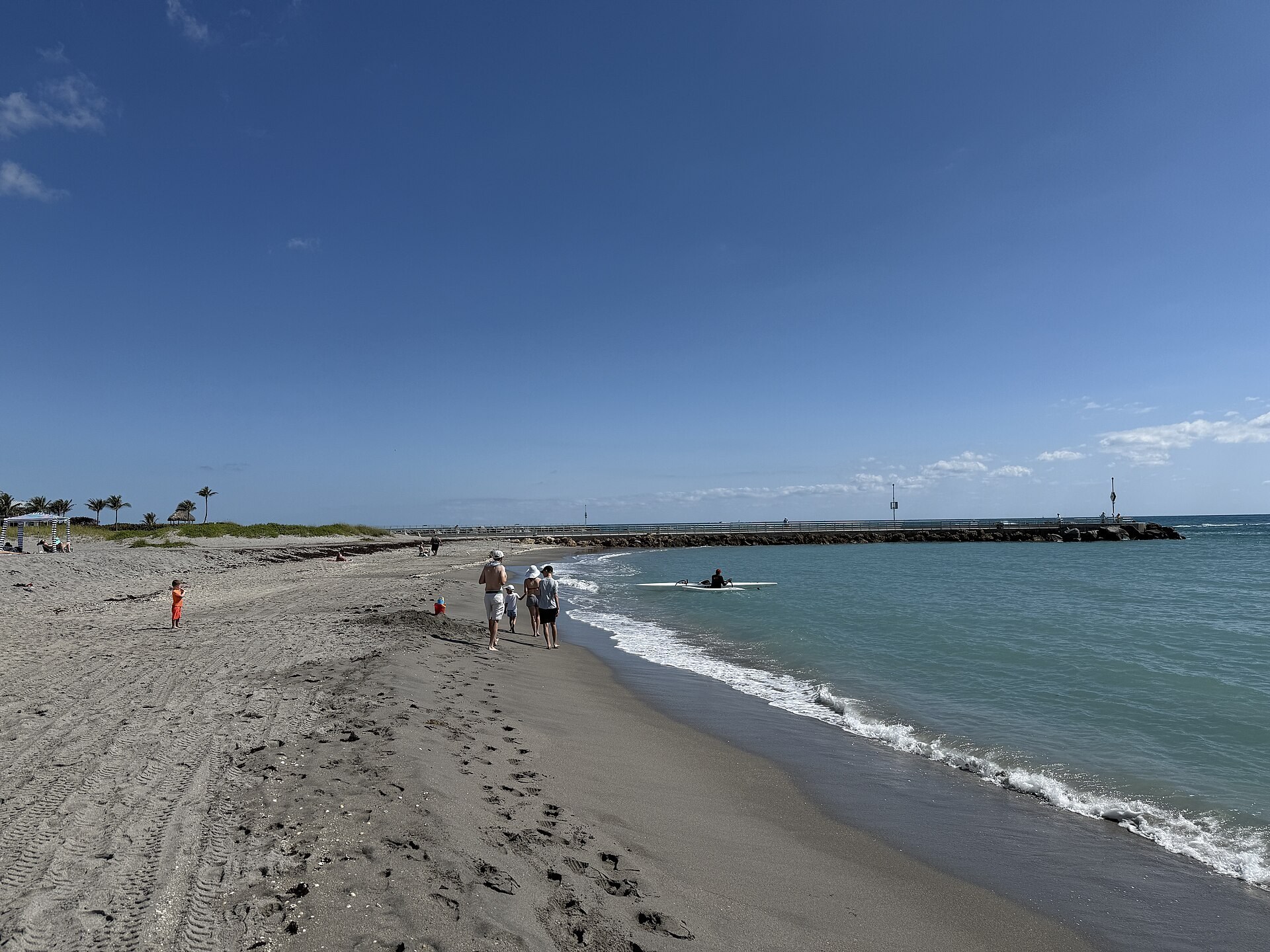
Jupiter Beach is best approached as a changing surf shoreline. Public crossovers, sandy gutters and bait moving close to land matter more than a single famous fishing spot.
Explore the guide ↓Use a public crossover that fits your plan
Jupiter's numbered beach crossovers help visitors find the ocean, but some entrances on the town map are private. Choose a confirmed public route and note its number before leaving the car. That small detail helps you return without wandering through another property.
The broad beach name does not give every section the same rules. County parks, guarded swimming areas and the designated dog beach have their own boundaries. Ask about fishing at the specific stretch rather than relying on a general beach recommendation.
Jupiter Beach Park sits beside the inlet and has different access arrangements. This guide focuses on the wider town shoreline, where reading sand and moving bait is the main task. Use the separate park guide when planning around the jetty.
Check parking signs and crossing points before carrying equipment over the road. A long rod, loose hook or cart can make an otherwise simple crossing awkward.
Make room for dogs and their owners
Jupiter's designated dog-friendly beach runs between markers 26 and 57, subject to the town's current guidance. That designation does not extend to every nearby county park. Dogs can move quickly toward scented bait or a fish being handled.
Keep bait in a closed container and put spare hooks in a box. An unattended rod with exposed bait can create a problem before you notice an approaching dog. If the area is busy, choose a different approved fishing section.
Leave the sand passage behind the rod unobstructed. Anglers, walkers and dog owners need to see each other's route clearly. A courteous pause in casting is often all that is needed.
Watch a fish's route rather than its shadow alone
Warm-weather snook can move along the beach edge looking for small prey. Spotting one in clear water is exciting, but the useful question is where it is going. A lure placed ahead of that route is less intrusive than one dropped on its head.
Walk slowly along an approved open stretch with a small plug or swimming soft plastic. Search the shallow lane before firing a cast toward the outer bar. Polarized glasses help separate glare from the shapes beneath it.
Match the lure to the visible bait's size and swimming level. A bulky offering dragging through sand can be less convincing than a small one passing cleanly. Slow down when fish follow without taking it.
Stop pursuing a fish when its route enters swimming water or a crowded area. A promising sighting does not create a safe casting lane.
Choose bait according to the bottom lane
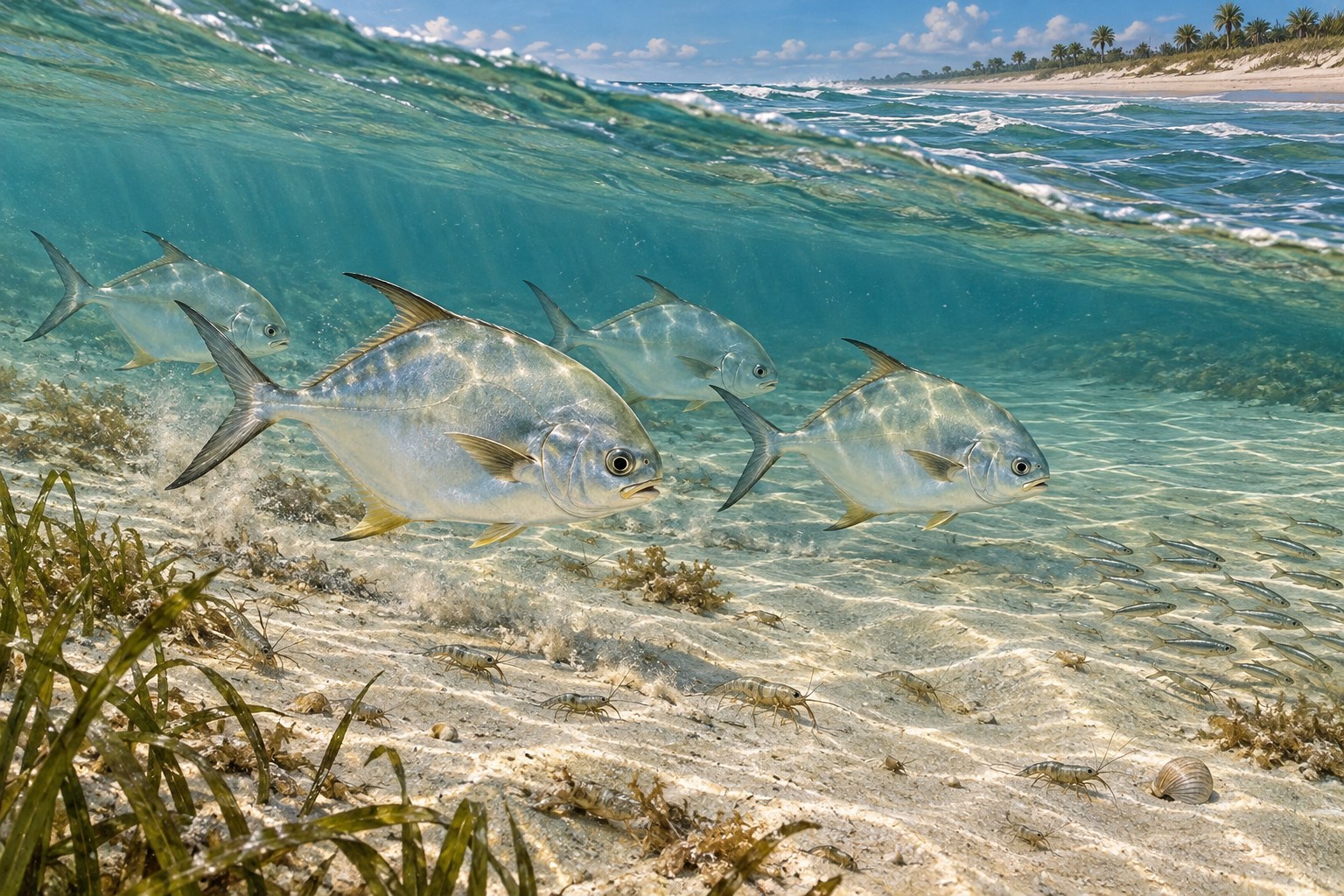
Pompano and whiting are reasonable sand-habitat targets. Use a small bait where the sinker can settle cleanly, then check what comes back. Weed and shell fragments help explain why one cast differed from the previous one.
Sand fleas suit a natural beach-prey approach when legally collected and available. Shrimp pieces are convenient for a quick test. Prepared strip bait can remain on the hook longer when small fish are stealing soft bait.
| Visible condition | Useful starting method | Adjustment |
|---|---|---|
| Clean close trough | Small shrimp piece on a short dropper | Try a slightly different depth |
| Bait traveling along sand | Small swimming lure | Keep it above bottom |
| Soft bait disappearing fast | Firm strip bait or smaller portion | Inspect the hook point |
| Weed rolling through each cast | Move to a clearer legal opening | Do not simply add weight |
Be ready when the surf changes suddenly
Jacks, bluefish and Spanish mackerel can appear with concentrated bait. A quiet beach may become active for only a few minutes. Keep one suitable lure ready rather than spreading several rigs across the sand.
Cast along the edge of the activity from a clear position. Repeated long casts through the center may cross another angler's line or put hooks near birds. A controlled retrieve is more useful than frantic speed.
A cut leader or damaged lure is a clue that teeth may be involved. Recheck the tackle before trying again. Fish identification should happen before fingers move near the mouth or a catch goes into the cooler.
If the school moves out of reach, return to the original method or watch patiently. Chasing it into waves with loose tackle creates little advantage and much more risk.
Use the season as a clue, not a promise
Warmer months make beach snook a worthwhile possibility, while cooler periods can bring better opportunities for some surf and migratory fish. Local water temperature, bait and fronts can shift those patterns. One date on a calendar cannot predict the catch.
After a weather change, look at clarity and debris before choosing the first bait. A colored surf can still hold fish, but visibility-based lure methods may need a different pace. A strong wind can erase the comfortable shore conditions you expected.
Moving water often refreshes a feeding lane. The useful tide stage depends on how deep that lane is and how the waves are breaking. Keep notes specific to the crossover and day rather than applying an inlet tide rule to the entire beach.
Keep a short session easy to finish
Take drinking water even for a brief early visit. Sand walking and direct sun can be tiring before the fish begin feeding. A small tackle bag leaves one hand free to control the rod and keep hooks away from passersby.
Watch the sky behind you as well as the sea. Thunderstorms can approach from inland while the horizon looks clear. Leave enough time to return to the car before the weather reaches the beach.
Do not climb dunes or cross marked nests for a better fishing angle. The established crossover is the intended way through sensitive beach vegetation.
Handle a beach catch without dragging it
Prepare pliers and a measuring tool before a fish is landed. Keep a release fish wet and support its body rather than pulling it up the dry sand. A fish that must be chased across the beach has been out of the water too long.
Snook harvest rules vary with season and management region. Other beach catches have their own requirements. Check current FWC guidance and your license before deciding that a familiar-looking fish can be kept.
Remove line scraps immediately. On a dog-friendly shoreline, a nearly invisible leader can entangle an animal even if its hook has already been removed.
Build a useful memory of one crossover
Begin at one approved entrance and test its nearest clean water. Note the sandbar shape, wind direction and any bait route. That gives the next visit a better starting point than a claim that all of Jupiter Beach fishes alike.
Try a different public crossover only when the access, crowds or conditions justify moving. Use the Locations directory to compare the town beach with Jupiter Beach Park, Carlin Park and nearby Juno access.
Common questions
Are all Jupiter crossovers public?
No. The town's crossover map distinguishes public and private entrances. Choose a confirmed public route and record its number.
Can I take fishing bait to the dog beach?
Keep it secured and follow the applicable fishing rules. Loose bait and exposed hooks can attract dogs, so a quieter approved section may be easier.
What lure should I try for beach snook?
A small swimming plug or soft plastic is a practical starting choice. Match the baitfish and keep the retrieve clear of sand, people and swimming areas.
Does an inlet tide prediction tell me exactly when the surf will bite?
No. Trough depth, swell, wind and bait movement affect the beach. Use the tide as one part of the plan and record what the shoreline actually does.
Prepare for your visit
Check local tides and weather. Read more about snook, florida pompano, whiting. Check current FWC saltwater fishing rules.