
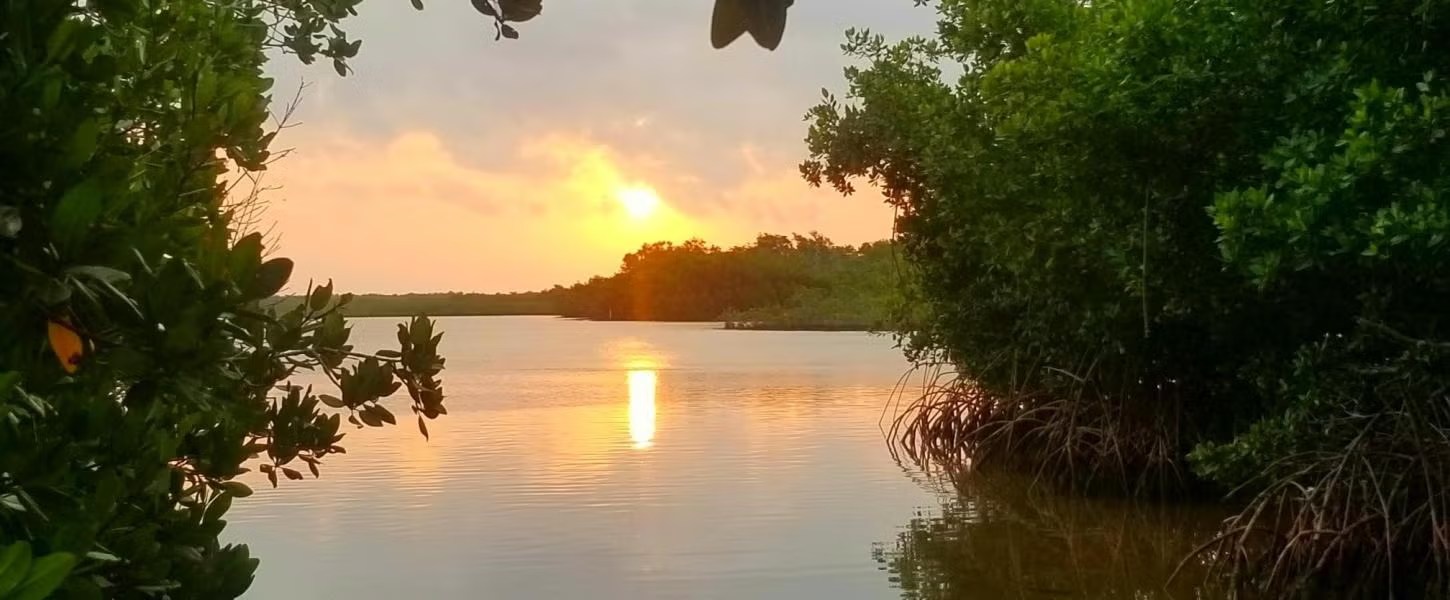
FLORIDA KEYS & EVERGLADES
Long Key State Park
fishing guide
Long Key State Park is a shallow-flats destination where light tackle and careful observation matter. Flooding and construction can limit access. Check the latest opening notices before planning a fishing session or an overnight stay.
Explore the guide ↓Check flooding and construction before traveling
Long Key State Park is at 67400 Overseas Highway, near mile marker 67.5. Its current notices include possible day-use closures during king-tide flooding and construction closures affecting primitive camping and the Golden Orb Trail. Those limits matter more than an older brochure describing unrestricted facilities.
Confirm current conditions at 305-664-4815 before a trip built around access or camping. A camping closure does not automatically mean every day-use activity is closed, but it does mean an overnight plan needs separate verification. Do not drive past a flood closure or assume shallow road water is harmless. If the park is unavailable, choose another confirmed open destination rather than improvising access from the highway.
Understand why shallow water changes the approach
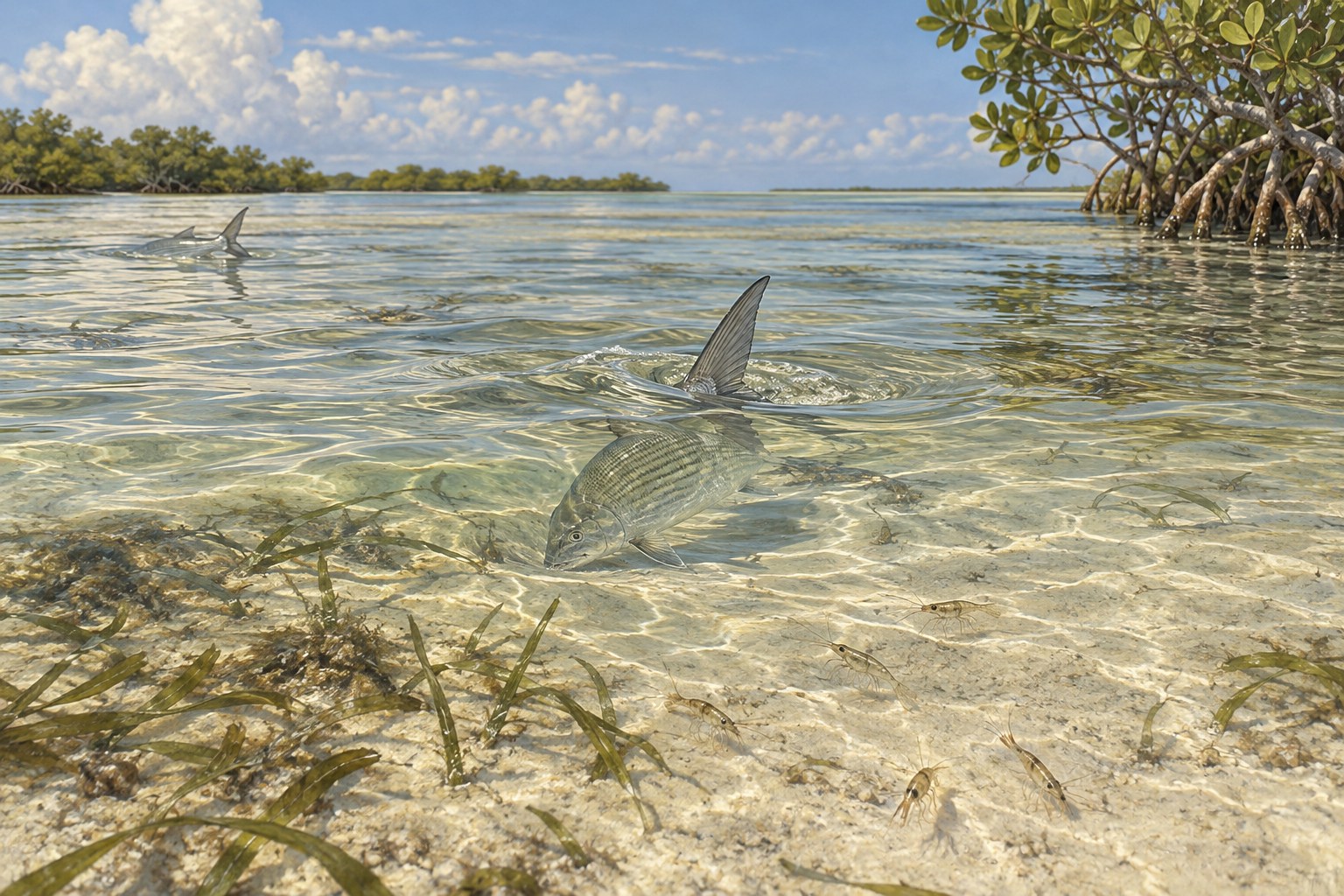
Long Key's fishing appeal lies in its shallow coastal flats rather than a high pier or deep offshore drop. Water level determines which areas fish can enter. Sand patches and submerged vegetation form feeding space for shrimp, crabs and other small animals.
Spend time looking before casting. A flat can appear empty until glare clears or a fish turns over a pale patch. Approach only through permitted access and do not cross plants to reach a better-looking lane. A quiet stationary position can reveal more than repeated steps through the water. The useful question is where prey is accessible at the present level, not how far out you can travel.
Treat bonefish as a careful sight-fishing project
The park lists flats fishing and identifies bonefish among its angling interests. Bonefish search for small prey and can be difficult to notice over mixed bottom. Look for a moving shape, a deliberate feeding pause or repeated travel along an edge rather than chasing every dark mark.
Florida's bonefish fishery is catch and release. Plan accordingly before choosing tackle or bait. A successful encounter ends with a healthy fish returned promptly, not a prolonged photo session. Other fish using suitable nearby habitat may provide action, but do not replace identification with a broad flats label. Know which animal is on the line before applying a handling or retention rule.
Present small food ahead of the fish
A small shrimp imitation or an appropriate flats fly can imitate prey over clean sand. Place it ahead of the fish's direction of travel so the animal can find it naturally. A noisy landing directly beside the fish often creates alarm instead of interest.
Let the offering settle where allowed, then add restrained movement. Heavy tackle that digs into grass is poorly matched to this method. Legally sourced natural shrimp may also be useful where permitted, with a hook arrangement that meets current species rules. Florida restricts multiple-hook setups with natural bait when attempting to catch bonefish. Check that detail before rigging rather than discovering it after an encounter.
Prepare for a strong run on a light outfit
A shallow-water target can accelerate quickly even when the first bite seems delicate. Use a smooth drag and inspect the connection between line and leader. Tackle should allow control without exhausting a fish through an unnecessarily long fight.
Keep spare line, pliers and a safe cutter within reach. Plan a release while the fish remains supported in the water wherever practical. Avoid dragging it across sand or holding it out for repeated photographs. A fly line or loose leader can tangle around legs and nearby gear, so organize the area before casting. Light tackle is about a suitable presentation, not using equipment too weak for humane control.
Watch the actual edge instead of relying on a label
A rising level can let feeding fish use areas that were too shallow earlier. As water falls, fish may move toward deeper routes. These patterns are useful starting points, but wind and local shape can change what happens at a particular shoreline.
Choose a fixed sand or vegetation edge and compare it over time. Notice whether small fish are spreading out or concentrating. Do not walk farther out just because the first area becomes shallow. Flooding notices show that high water also affects land access. A favorite tide stage is useful only when the route remains open and a safe position is available throughout the planned session.
| Trip element | Best preparation | Common mistake |
|---|---|---|
| Access | Read flooding and construction notices | Relying on an old camping brochure |
| Presentation | Small prey over clean sand | Dragging heavy tackle through grass |
| Fish care | Smooth drag and release tools | Extending handling for photographs |
Check the route before adding a kayak to the plan
A small craft can change the view of shallow habitat, but it adds wind exposure and return-distance concerns. Confirm current permitted launch arrangements and conditions with park staff. Do not assume a past rental or launch description reflects construction-era access.
Choose a route that avoids grounding on seagrass and keeps a manageable return. Carry proper flotation and keep the paddle available while handling tackle. Wind can push a boat away from its starting point much faster than an angler expects. Check any sanctuary zone boundaries along the intended route before fishing or anchoring. If the trip depends on an uncertain facility, leave the craft plan for a later verified visit.
Choose visibility and comfort together
Warm periods can support active shallow-water feeding, but glare and heat can make a long flats session tiring. Bright conditions may help spot fish while also increasing exposure. Bring enough water and protection to keep attention sharp rather than extending the outing until discomfort takes over.
Cooler fronts can create wind and changing water level. A sheltered-looking margin may still be inaccessible or closed. Summer thunderstorms can develop before a short session feels complete. Keep the return simple and leave open water early when conditions deteriorate. The most productive season for a particular visit is the one with open access, a manageable breeze and enough clarity to make accurate observations.
Make a short legal visit the first goal
Start with one approved shoreline area and a small selection of presentations. Do not pack as though every habitat and facility will be available. A clear, short plan makes it easier to adjust to flooding notices, construction boundaries or crowded access.
Record the actual water level, light angle and prey movement. Note which tackle stayed clear of plants and which approach caused fish to turn away. These observations are valuable even without a catch. Carry away line, packaging and unused bait. A return trip can build on those details once access is confirmed again. Learning the flat gradually is more dependable than trying to cover it all in one visit.
Common questions
Is primitive camping currently an assured option?
No. Current construction notices close primitive camping. Verify any overnight arrangement before traveling.
Can king tides affect entry?
Yes. The park warns that flooding can lead to day-use closures. Check current notices and staff guidance.
Can I keep a bonefish caught here?
Florida bonefish are catch and release. Follow the current handling and gear rules.
What is a useful first presentation?
A small shrimp imitation or suitable flats fly placed ahead of a fish over clear sand can match the shallow food base.
Prepare for your visit
Check local tides and weather. Read more about permit, bonefish. Check current FWC saltwater fishing rules.