

TAMPA BAY / SUNCOAST
Manasota Key
fishing guide
Choose a public Gulf entrance or a separate Lemon Bay outing. Learn how grass pockets, beach troughs and pass water change the approach.
Explore the guide ↓Pick a side of Manasota Key
Manasota Key separates the Gulf from Lemon Bay. That gives an angler a real choice: work the beach for fish moving along sandbars, or explore sheltered bay habitat from a suitable launch. Those trips may begin only a short drive apart, but the wind and tackle that suit one can be wrong for the other.
The island also spans different park systems. Manasota Beach and Blind Pass Beach are Sarasota County facilities, while the southern end includes Englewood Beach and Stump Pass Beach State Park. Read the notice for the exact place you intend to use. One reopened beach does not establish that every ramp, trail or restroom on the key is available.
For a first visit, choose one side and one target. A beach walk for whiting or snook is easier to plan than trying to combine surf, a long paddle and an inlet stop in a single morning. Keep the other side as an alternative only if its access and conditions also work.
Beach entrances and bay-side possibilities
Manasota Beach
At the north end of the developed key, Manasota Beach provides a public Gulf entrance. The nearby bay-side boating access is a separate part of the day’s planning. Check its current ramp and parking status before arriving with a trailer or kayak. Do not assume a beach parking space allows trailer storage.
Blind Pass Beach
Despite the name, this Sarasota County beach should not be confused with Blind Pass between Sanibel and Captiva. Use the Manasota Key location when checking directions. Walk the open sand and look for legal fishing space outside concentrated swimming activity.
Stump Pass Beach State Park
The southern state park offers a more natural shoreline and access toward the pass. Beach and trail conditions can change after storms. Confirm the park’s current notice and ask about the usable fishing areas on arrival. The inlet itself carries boat traffic and strong currents; it is not a place to wade across.
Why Lemon Bay is a different fishery
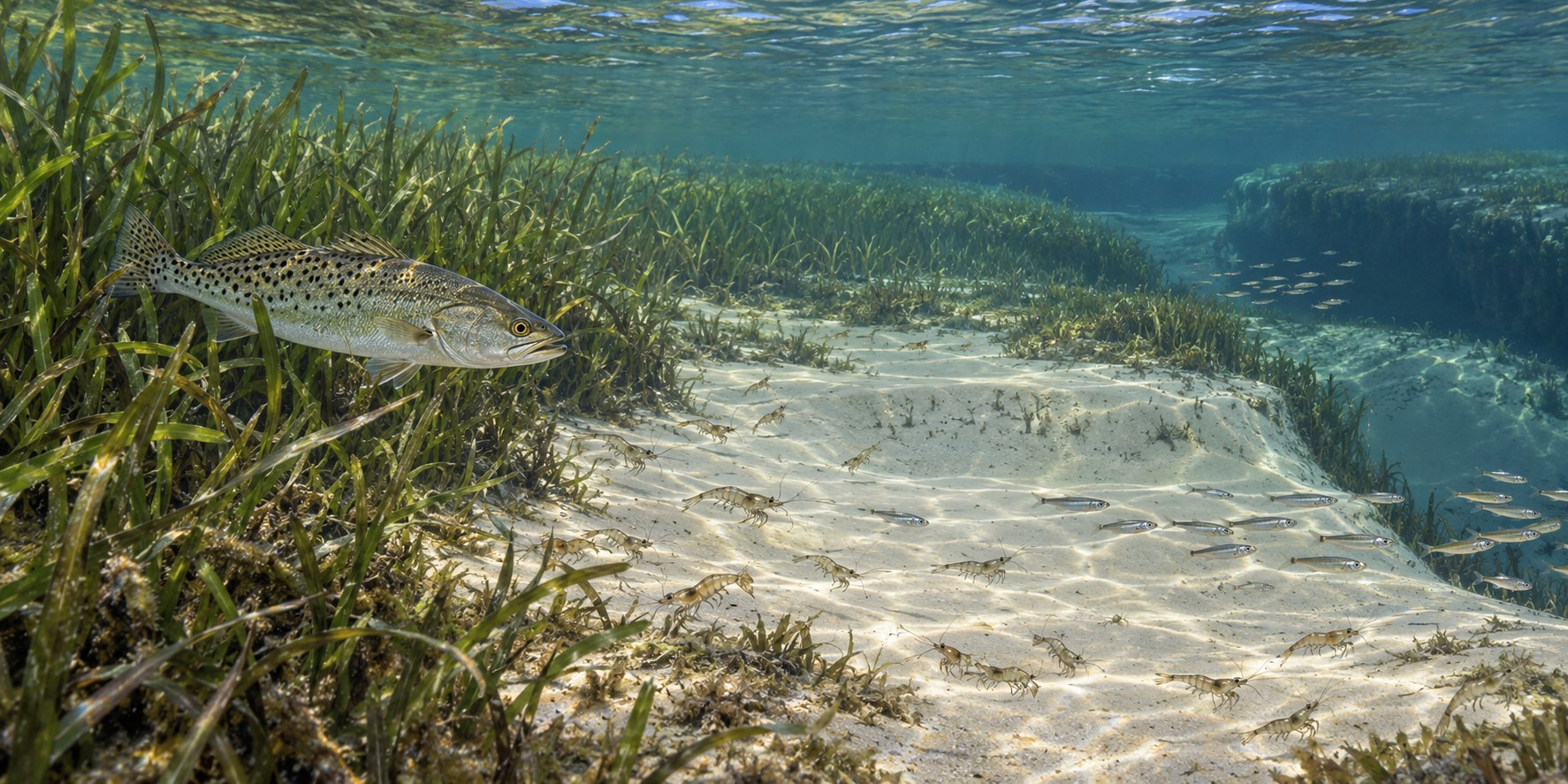
Inside the key, seagrass, mangrove edges and sand pockets create feeding habitat for spotted seatrout, redfish and snook. You are looking for a change in cover or depth rather than a wave pattern. A pale opening in grass can hold prey and provide an easy place for a predator to intercept it.
Approach a shallow flat quietly. Stay outside the grass with the boat and cast toward the edge before moving closer. If you drift over the exact patch you hope to fish, the next cast may only reach fish you have already disturbed.
Use marked channels for travel and do not power over a flat because the water appears clear enough to cross. Seagrass scars last far longer than a fishing trip. Paddle, pole or reposition in adequately deep water when the route becomes shallow.
Choose a fish before choosing a rig
| Target | Habitat to inspect | Useful approach |
|---|---|---|
| Spotted seatrout | Lemon Bay grass edges and sand holes | A light paddletail or shrimp held above the vegetation |
| Redfish | Mangrove shorelines and mixed sand bottom | A shrimp or weedless soft bait presented quietly |
| Snook | Warm beach shallows and bay points | A small swimming lure across the fish’s travel lane |
| Whiting | Gulf beach wash | Small fresh shrimp pieces on a light bottom rig |
| Pompano | Clean surf troughs | Sand fleas or a compact bouncing jig |
| Ladyfish | Open bay water holding little baitfish | A small jig retrieved with short pauses |
A trout rig that stays above grass is not the same as a surf rig anchored on sand. Change the presentation when you change sides of the island. Keeping the same heavy sinker on every outfit usually limits what the bait can do.
Walk the Gulf with a purpose
Look for a darker trough running parallel to shore. Test it with a short cast before trying the outside bar. A small gap in the breaking waves may mark a deeper opening, but stay on dry sand rather than stepping into a possible current channel.
For beach snook, slow down and look ahead through polarized glasses. The fish may be within a rod length of the wash. Cast beyond its path and retrieve into view. Walking directly along the waterline can spook the fish before you notice it.
If the shore is busy, move to another permitted stretch or fish at a quieter time. Long lines angled across a swimming area are not acceptable simply because you cast from outside it. Consider where the bait and line will drift, not only where you stand.
Plan around fronts, heat and bait
During cooler weather, the Gulf beach can provide whiting and pompano opportunities when the surf is manageable. Inside Lemon Bay, fish may shift toward deeper pockets after a sharp temperature drop. Work a small bait slowly before assuming the whole bay is empty.
Spring often improves the range of options. Warming water encourages movement along mangrove edges, and bait schools can draw predators toward passes. Choose a wind-protected route that still reaches moving water instead of crossing an exposed bay for a familiar waypoint.
Summer favors early starts, light loads and a clear thunderstorm escape plan. Snook along the beach are an appealing target, but long handling and repeated fights in hot water add stress. Keep release equipment ready and stop if fish cannot recover promptly.
Fall fishing can follow bait leaving sheltered water and moving along the coast. Watch what is actually present. A quiet grass flat, a beach full of minnows and a muddy inlet may all require different tactics on the same day.
Use water level to plan the return
On a bay paddle, the falling tide affects more than the bite. A shallow route that was easy on the way out can become a mudflat before you return. Keep a deeper alternative in mind and avoid committing to a creek you have not checked.
Wind can raise or lower water against the key and can make the return leg much harder. Start into a manageable breeze when possible, but do not rely on it staying steady. Open Lemon Bay is still exposed water even though the Gulf is hidden behind the island.
Check the Manasota-area tide and weather options and compare the times with your launch hours. A late tide is not useful if the parking area closes before you can get back.
Bring different essentials for shore and kayak
A beach bag can stay simple: spinning outfit, leader, a few hooks and jigs, fresh shrimp, pliers and water. A kayak requires a worn life jacket, a working way to call for help and a route suited to the forecast. Keep the tackle secured so a wake or awkward landing cannot scatter it.
For grass fishing, start with a light jig head or weedless lure. Retrieve just above the blades and pause over sandy gaps. If every cast returns wrapped in grass, reduce weight or move to the edge rather than tearing through the meadow.
For surf bait fishing, adjust the sinker to wave action and use a hook that fits the bait. Keep a second leader ready. Rough shell and the occasional toothy fish can damage the final section even when the main line looks perfect.
A manageable first visit
Arrive at your chosen public entrance with a single fishing plan. Spend ten minutes looking at the water before rigging. On the beach, identify a trough with room to cast. On the bay, locate a reachable grass edge and a safe return route.
Fish that feature from more than one angle before moving. A lure traveling with the flow may look much more natural than the same lure pulled against it. Record the tide stage and wind when you get a bite so the trip teaches you something even if the catch is small.
End before fatigue makes the walk or paddle unpleasant. Leave time to rinse equipment and dispose of bait responsibly. A short trip that you can repeat is a better starting point than an ambitious circuit that depends on perfect weather.
Rules and habitat care
Check Florida’s recreational saltwater fishing rules before taking fish home. Fishing success and an open harvest season are separate questions, especially for snook and regionally managed species.
Do not step on oysters, damage mangroves or run a propeller through seagrass. Use a wet hand and gentle support for trout, whose mouths and bodies can be damaged by rough handling. The Manasota Key source notes distinguish the public facilities from the broader fishing habitat described here.
Manasota Key trip questions
Can I fish the bay when the Gulf is rough?
Sometimes, but assess Lemon Bay’s own wind and wave conditions first. A sheltered launch does not guarantee a sheltered route after you leave it.
Are the two Blind Pass beaches the same place?
No. The beach on Manasota Key is far north of the pass between Sanibel and Captiva. Check the county and island name in your directions.
What lure works around bay grass?
A lightly weighted paddletail is a useful starting choice. Keep it above the grass and let it pass through open sand pockets without scraping the bottom.
Should I take a kayak through Stump Pass?
Only with suitable skill, equipment and conditions. Strong current, waves and boats make the pass a different undertaking from a quiet shoreline paddle.