
SOUTHEAST ATLANTIC
Mid Beach
fishing guide
Mid-Beach is Miami Beach's central ocean neighborhood, with hotels, walking routes and an active swimming shore. Any fishing visit needs a confirmed local position. Learn the ocean's moving bait patterns without treating its beachwalk or canals as unrestricted rod access.
Explore the guide ↓Separate public walking from fishing permission
Mid-Beach is a neighborhood rather than a dedicated fishing park. Its beachwalk, ocean entrances and canal views serve different activities. Ask city staff about the actual place you intend to fish.
Swimming space is unsuitable for hooks, and waterfront visibility alone does not authorize casting. The city prohibits land-based shark fishing. Check other local restrictions before unpacking tackle.
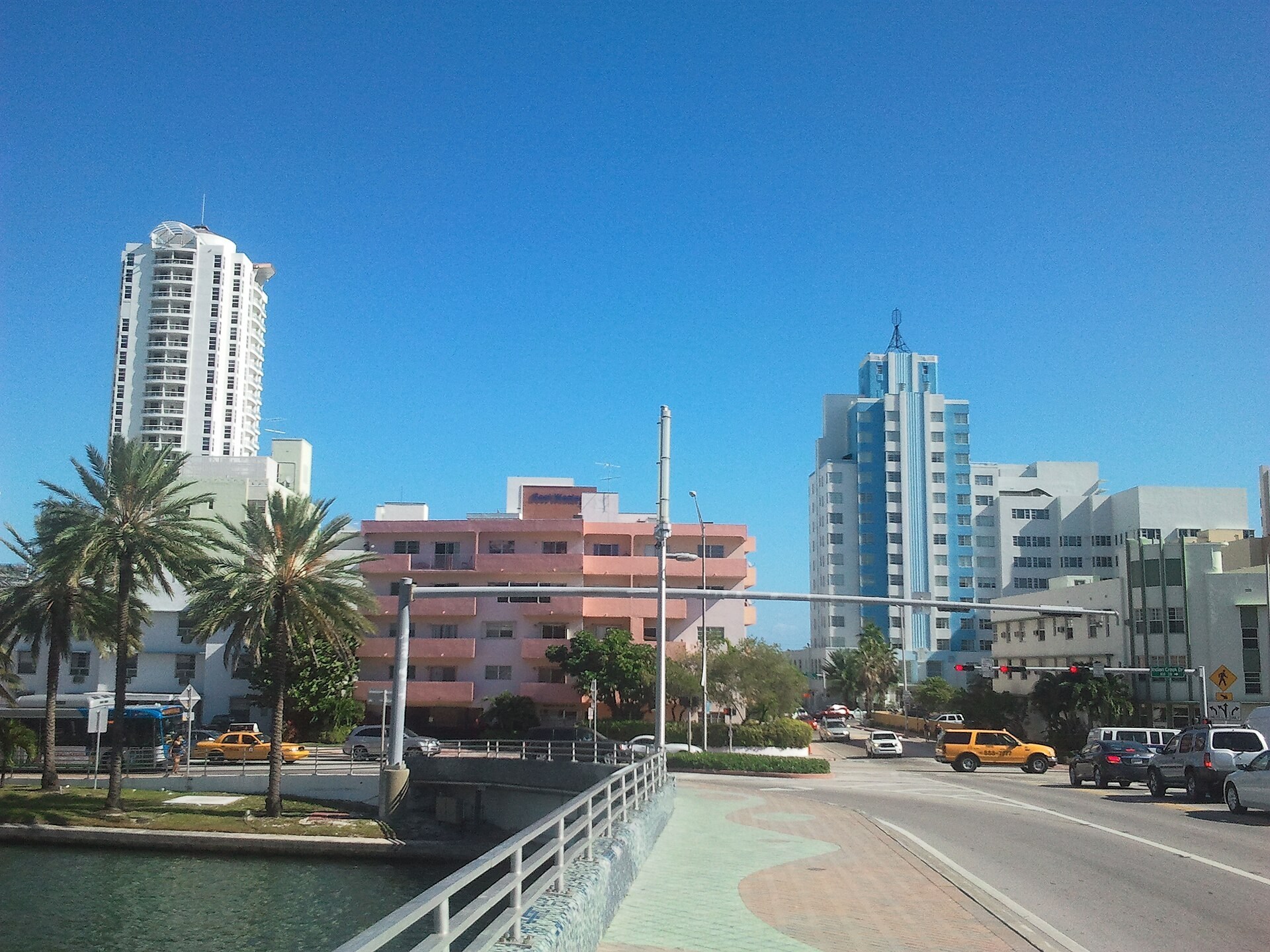
A canal photograph can describe the neighborhood without showing a fishing position. Do not enter a private dock or treat a pedestrian bridge as a casting platform. Choose an explicitly authorized alternative when permission is uncertain.
Read the direction of the small fish first
A nervous bait school can reveal a predator before the larger fish becomes visible. Look for repeated small splashes, a sudden turn or a ripple moving against the general water. Compare the behavior over several moments.
The school may be traveling along shore rather than staying in one place. At an authorized position, prepare a controlled cast ahead of its route. Repeatedly casting at the old splash can miss the moving opportunity.
Avoid assuming that every diving bird means fish within safe casting range. Birds can work beyond the usable lane. Observe without forcing a lure across occupied water.
Give a small metal lure a simple first pass
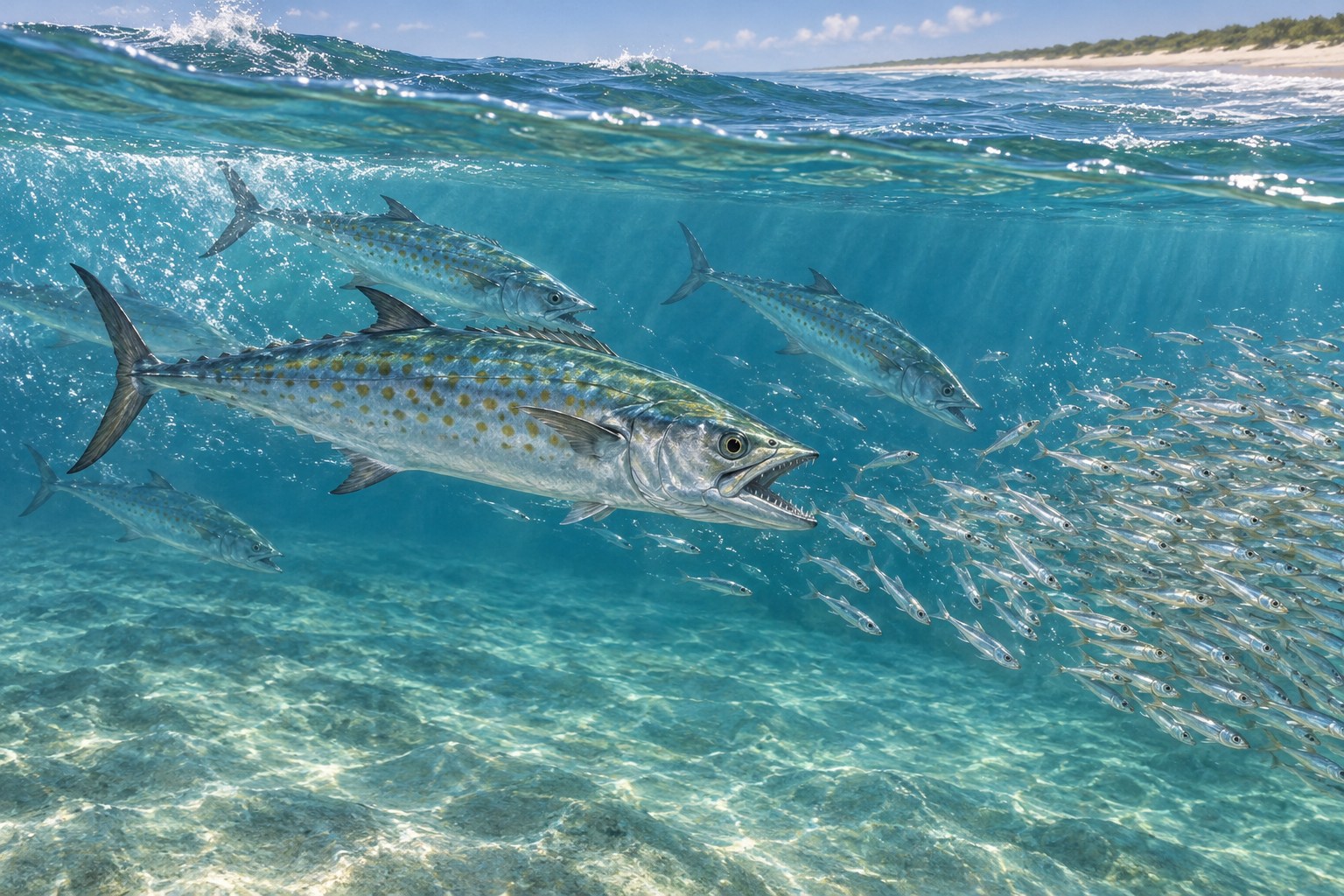
Spanish mackerel may chase small fish in suitable coastal water. A compact metal lure can imitate that prey with a steady retrieve. Adjust pace if a fish follows without striking.
Keep the lure high enough to avoid dragging a sandy bottom unless the chosen method requires it. Watch where the retrieve finishes so exposed hooks do not arrive beside a passerby. Inspect leader wear after a strike.
The illustration shows a general open-water bait chase. It does not portray the exact depth off Mid-Beach or confirm that shore fishing is authorized in the pictured setting.
Plan the fight before targeting a moving jack
A jack can pull strongly even when the surface activity appears small. Use an outfit that can control the fish within the permitted water. Leave a sensible drag margin rather than locking the reel to stop every run.
Choose a landing method that does not require entering swimming space or lifting the fish by its leader. Prepare pliers before the bite. If handling would be unsafe, observe the school instead of casting.
A clean lure pass is preferable to a tackle spread when the opportunity moves quickly. One attended rod keeps the line path easier to manage.
Use surf bait when the ocean is quiet and access allows
A sandy trough can offer a different method from chasing bait schools. A small shrimp piece or firm strip bait may suit whiting habitat, while sand fleas can be considered for pompano. Confirm current collection rules before using locally gathered bait.
Test the nearer channel and inspect the rig frequently. Weed or a bare hook can explain a quiet rod. Change the placement in small steps rather than adding distance automatically.
Stop if the line drifts toward beach users. A workable bottom rig needs a clear authorized lane throughout the soak, not only at the moment of casting.
Choose between observation, lure and bait
The ocean may offer several clues, but access remains the first decision. Select the method that keeps control from cast to landing.
| Clue | Possible authorized-water method | Control check |
|---|---|---|
| Small fish moving near a clear lane | Compact metal or swimming lure | Retrieve remains away from people |
| Stable sandy trough | Small bottom bait | Sinker holds without sideways travel |
| Strong fish following a school | Attended lure outfit with sensible drag | Safe landing plan exists |
| Crowded or uncertain shoreline | Habitat observation | Choose another confirmed fishing place |
Use wind to judge visibility and line travel
An onshore wind can change waves, bring weed and push a line toward the sand. A calmer window may make bait easier to observe. Neither condition guarantees a bite.
Watch the effect on the actual cast and retrieve. Shortening distance can improve control when crosswind bows the line. If the permitted water cannot be kept clear, change the trip instead of casting harder.
A boat option requires its own launch and offshore or bay safety plan. It is not simply a way to ignore difficult shore conditions.
Keep the hotel-area approach compact
Verify public access and parking rather than using a hotel entrance without permission. Carry hooks secured inside the bag. Leave beachwalk movement, bicycles and emergency routes unobstructed.
Bring drinking water and sun protection. Keep enough time for the return walk and current parking arrangement. Thunderstorms can end the visit quickly, so know the nearest safe route back.
Do not leave bait waste beside seating or public bins where animals can reach it. Pack the rig as carefully as it was assembled.
Finish with current rules and careful handling
Use current FWC information for licenses, identification and harvest decisions. Mackerel, jacks and bottom fish need correct identification rather than a shared assumption. Measure before keeping a regulated catch.
Keep release fish supported and avoid dry sand. Pick up small line fragments from the standing area. Record the lawful position and observed bait movement for a more informed future visit.
Common questions
Does the beachwalk make Mid-Beach open to fishing?
Walking access does not establish fishing permission. Ask about the exact shore position.
Can I fish from a canal bridge shown in a neighborhood photo?
Do not assume it. Bridges, docks and canals have their own restrictions and property boundaries.
What is a useful first lure for suitable mackerel water?
A compact metal lure retrieved steadily can match small moving prey in an authorized clear lane.
What if a school travels beyond my safe casting space?
Let it pass. Do not follow it with hooks into swimming space or restricted water.
Prepare for your visit
Check local tides and weather. Read more about florida pompano, whiting, spanish mackerel. Check current FWC saltwater fishing rules.