

SOUTHEAST ATLANTIC
Ocean Reef Park
fishing guide
Ocean Reef Park on Singer Island offers Atlantic beach access beside a mixed sand and nearshore hard-bottom setting. Fishing must stay beyond guarded swimming water, with methods adjusted to avoid repeated snags.
Explore the guide ↓Find the Singer Island park and its beach boundary
Ocean Reef Park is at 3860 North Ocean Drive in Riviera Beach on Singer Island. It is separate from Ocean Reef in the Florida Keys. The county park includes dune access and guarded ocean frontage.
The general schedule is sunrise to sunset. Confirm the exact angling boundary with beach staff and keep the entire cast outside guarded swimming water. A quiet moment within that boundary does not turn it into a fishing section.
A beach-access mat and dune overlook help visitors reach and view the shore. They are access features rather than designated casting platforms. Keep equipment controlled while passing other visitors.
Check the day's shore conditions before committing to a long stay. Hard features and swimming use can reduce the available safe fishing lane even when the beach appears spacious.
Learn the difference between sand and hard bottom
A sandy lane lets a bottom rig settle and be recovered more easily. A hard patch can shelter prey and attract feeding fish, but hooks and sinkers can also lodge in its cracks. Fish beside the feature rather than assuming that landing directly on it is better.
Look at wave breaks, exposed features and the material returned on the line. None provides a complete underwater map. Test gently and move when the rig repeatedly catches instead of forcing it free with more casts.
A lure worked above the bottom can search an edge without resting in every gap. Its depth should be adjusted to the water and retrieve speed. Check the leader after any hard contact.
Do not walk onto wet rock to gain a few feet of reach. A slippery surface and a larger incoming set can create a problem without warning.
Start with compact bait in a recoverable lane
Whiting and Florida pompano can use suitable clean sand along Singer Island. Small shrimp pieces, sand fleas and prepared strip baits offer simple surf choices. Select a portion that stays attached while leaving the hook point usable.
Place the bait in a visible sandy opening where the sinker can hold. A short dropper rig can keep it slightly above the bottom. If the rig rolls into rough material, change the cast angle or lane.
Clean bait is worth checking regularly. Weed, shell and small bait thieves can make a settled rod ineffective. Replace damaged tackle before another cast carries it over the same edge.
Avoid treating the park name as a promise of reef fish from the beach. The catch depends on the habitat within reach and the day's conditions, not the label on the entrance sign.
Work a swimming lure through open water
A clear beach edge can be a route for snook and other coastal predators. Look for baitfish near a sand-and-hard-bottom transition. Place a small lure where it can pass through open water without dragging across the feature.
A soft plastic with a suitable swimming action is easy to vary in depth. Start high enough to avoid contact, then adjust carefully if fish are following beneath it. Repeated bottom strikes usually call for a shallower retrieve.
Watch for fish moving near the shore before casting to the horizon. A short angled pass may keep the lure in useful water longer. Give fish space rather than landing the offering on their backs.
Do not cast over swimmers, snorkelers or wildlife to reach the edge. If that open lane disappears, put the rod away or move to another approved position.
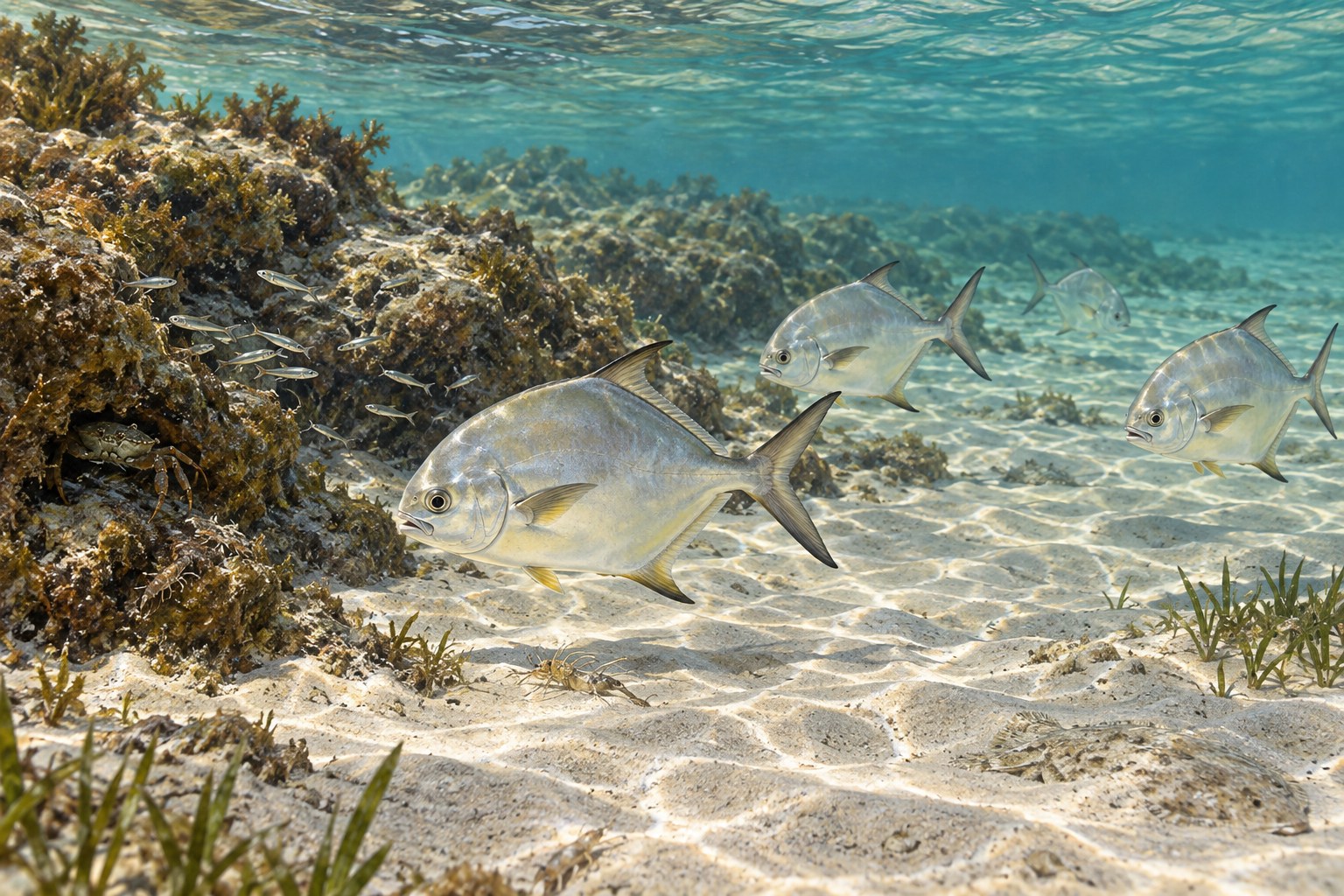
Treat snapper habitat as a careful placement problem
Mangrove snapper can feed near suitable coastal structure. A small neat bait beside a clear hard edge may be more useful than a large offering inside it. Confirm that the chosen fishing position is legal before testing that habitat.
Watch the line closely enough to retrieve before it enters a crack. Use tackle that can guide a hooked fish into open water with steady pressure. Lost rigs are a warning that the placement is not working.
The habitat illustration explains this relationship between prey, sand and cover. It does not show an exact casting coordinate or the park's current bottom layout. Use actual water observations to decide whether the idea fits the day.
Choose a recoverable presentation
The first aim is a bait or lure that can return cleanly. A method that repeatedly leaves hooks on hard bottom needs changing, even if fish can be seen nearby.
| Target habitat | First method | Useful adjustment |
|---|---|---|
| Clean sand trough | Small dropper bait rig | Move if it rolls into rock |
| Open edge beside hard bottom | Swimming lure above the feature | Raise the retrieve after contact |
| Clear structural margin | Compact bait beside cover | Shorten the time allowed to drift |
| Occupied swimming water | Observe without casting | Wait or choose another approved section |
Let wave size and visibility shape the outing
Clear water can help you see bait and hard features, but it does not guarantee feeding. Cloud cover and surface glare may change what is visible within minutes. Read several wave sets before trusting one apparent opening.
Onshore wind can make a hard-bottom edge rougher and scatter floating weed. A heavier sinker does not solve unsafe shorebreak. Keep the session on dry secure ground and leave when the conditions remove that option.
Use a tide prediction together with the local surf response. Some shallow features become easier to observe at lower water, while other lanes need more depth. Those observations are for planning from shore, not an invitation to explore the rocks on foot.
Carry less equipment and more useful essentials
Pliers, spare leader, drinking water and sun protection matter on a mixed-bottom beach. Pack a few rigs with different weights rather than several rods that all need watching. A manageable load makes changing position easier.
Keep the dune route open and protect bare feet from loose hooks. Store clipped leader immediately and count rig components at the end. The beach's access mat is not a place to spread a tackle repair kit.
A family visit can combine a short legal fishing session with the park's beach and picnic setting. Separate the activities when swimming use is busy. Keep sharp tools away from food and play areas.
Identify and release fish with care
Mixed coastal catches may include fish with different rules and handling needs. Check the current FWC requirements before harvest. Keep a release fish supported and wet rather than dragging it over sand or rock.
Finish by removing bait waste and recording which lane allowed clean retrievals. That note is more useful for a return visit than a claim that every hard patch at Ocean Reef Park produces the same catch.
Common questions
Is this Ocean Reef Park in the Keys?
No. This guide covers the Palm Beach County park on Singer Island in Riviera Beach.
Can I fish inside the guarded beach area?
Keep fishing outside guarded swimming water and confirm the boundary with staff. An empty-looking part of the swimming area is not automatically open to hooks.
Should I drop bait directly onto the hard bottom?
A clear sandy lane or open edge is usually easier to fish and recover. Repeated snags mean the presentation needs changing.
Does the illustration show the exact reef?
No. It explains a habitat relationship. Current bottom features, legal access and safe positions must be judged on site.
Prepare for your visit
Check local tides and weather. Read more about snook, florida pompano, whiting. Check current FWC saltwater fishing rules.