
SOUTHEAST ATLANTIC
Ocean Ridge Hammock Park
fishing guide
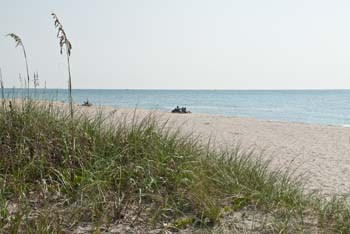
Ocean Ridge Hammock Park is a small Atlantic beach access with an unguarded shoreline and limited facilities. It suits a compact, carefully planned surf visit rather than a long outing that assumes full beach services.
Explore the guide ↓Do not confuse the beach park with the natural area
Ocean Ridge Hammock Park is at 6620 North Ocean Boulevard in Ocean Ridge. The county describes an unguarded ocean beach with parking and an outdoor shower. It is not Ocean Ridge Natural Area at the separate Corrine Street address.
The beach park's listed hours are sunrise to sunset. Check entrance signs and any current beach advisory before carrying tackle to the water. An unguarded beach still has rules and is not free of swimming or wildlife considerations.
There is no on-site restroom listed for this park. That practical detail should shape the length of the visit, particularly with children. An outdoor shower is not a substitute for drinking water or a toilet.
Use the established access route and leave the coastal vegetation alone. A small park can be affected quickly by gear spread across the path or visitors cutting through plants.
Make a land-based plan for unguarded water
Unguarded means a lifeguard is not stationed to supervise the beach. It does not mean that the ocean is mild or that wading is the best way to reach fish. Start from dry shore and study the waves before casting.
Look for shorebreak that remains manageable throughout several sets. A temporary lull can hide a larger incoming group. Avoid a position where the retrieve would require standing in a breaking channel.
Bring a companion for an unfamiliar early session and keep the phone secure. Know how to return to the road without climbing a dune. Leave if lightning, stronger surf or unexpected crowding removes the clear lane.
Keep the hook path clear of other beach users even without a guarded swimming boundary. A small access beach can still receive swimmers and walkers during the session.
Find a small feeding lane you can actually fish
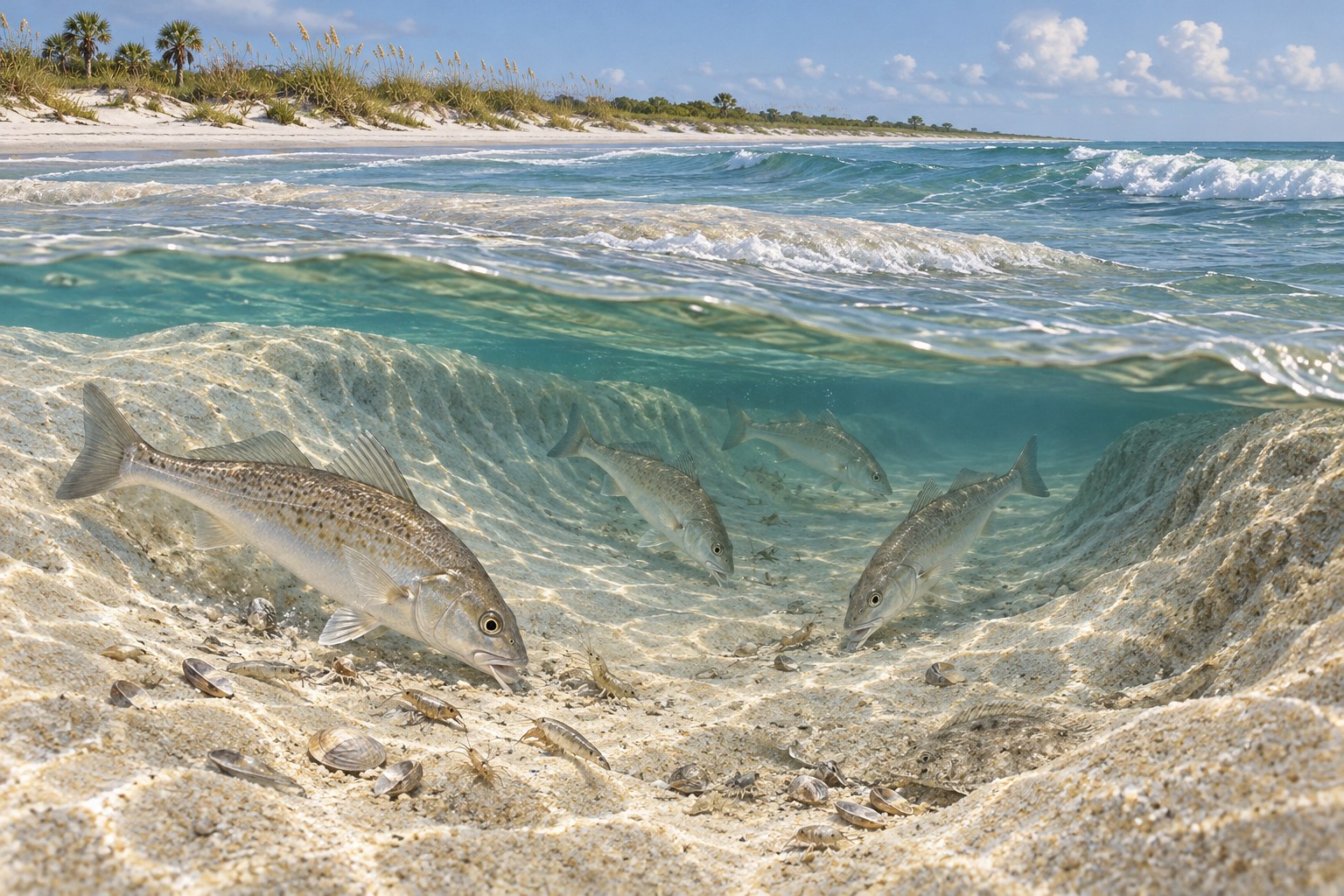
A sandy trough close to the beach can collect prey stirred by waves. Watch where waves reform and where foam travels along the shore. Use that pattern to choose a lane rather than casting toward the darkest distant patch automatically.
Test near water first with a small bait and controlled sinker. If the rig holds cleanly, allow enough time to see whether fish are feeding there. Change one variable, such as distance or bait size, when the result is unclear.
Weed on the hook and worn leader explain a poor presentation. Retrieve and inspect instead of waiting indefinitely on a fouled rig. A shorter cast into clean water can outperform a long one into drifting material.
Sandbars shift after fronts and storms. A lane remembered from last month should be rediscovered rather than treated as a permanent feature.
Keep bait small enough for the likely surf feeders
Whiting and Florida pompano are appropriate sand-habitat targets to consider. A small shrimp section gives an easy first test. Sand fleas or prepared strip baits provide alternatives when legally available and suitable for the conditions.
Leave the point of the hook exposed. A bait parcel that spins or hides the point can reduce the chance of a clean hook-up. Retie a twisted leader before it tangles around the main line.
A short dropper arrangement keeps the bait slightly above the sand. Select enough sinker to hold without making the cast difficult to control. For a first outing, a single hook simplifies checking and packing.
If tiny fish repeatedly remove soft bait, compare a firmer offering. Do not assume that more bait solves theft. Sometimes a smaller neat piece is easier for the target fish to take.
Make a short lure search only when the lane stays clear
Snook and jacks can use suitable beach edges when small baitfish are present. A swimming lure lets you search a limited permitted stretch with a small bag. Keep the route short enough to return comfortably within park hours.
Cast ahead of a visible fish's movement, then swim the lure through its lane. A quiet close presentation may be more useful than repeated overhead casts. Adjust depth when the lure drags sand.
Pause when beach users enter the route. A fish moving toward occupied water should be left alone. Keep treble hooks secured while walking between positions.
The conceptual habitat view illustrates an open sand lane and nearby prey. It should help explain the method, without suggesting that the park has fixed depths or guaranteed fish at a specific point.
Read the day's conditions before using a seasonal idea
Cooler periods and passing fronts can change surf-fish opportunities. Warm conditions can make a snook shoreline search worthwhile. Those patterns are useful only when the beach's access and actual water allow the method.
Onshore wind can bring weed and increase the shorebreak. An offshore breeze may improve casting while still leaving residual waves. Check the surf directly rather than interpreting one wind direction as a promise of safety.
Use the tide forecast to anticipate changing depth, then observe the trough itself. The same time of tide can produce a different usable lane after a sandbar has shifted. Keep a brief note of water clarity and rig behavior.
Pack for the facilities the park really has
Carry drinking water, sun protection, pliers and enough spare leader for a few reties. Avoid loading a cart for an all-day visit without a restroom plan. A short light session fits the limited-facility setting better.
Bring a closed bag for bait waste and line. The shower may rinse sand from feet, but use of facilities must follow the posted instructions. Do not leave fish scraps where people pass through.
Keep the car key and phone dry. An unexpected wave reaching the bag should not remove the ability to call for help or leave the park.
Know when changing the plan is the better choice
The guide is intended to help select a manageable outing, not to persuade an angler to stay through unsuitable conditions. A clear stopping point keeps the small park visit straightforward.
| Situation | Reason to reconsider | Better choice |
|---|---|---|
| Restroom needs exceed the plan | No on-site restroom is listed | Shorten the visit or use another park |
| Shorebreak reaches the standing lane | Unguarded water and uncertain footing | Observe from dry shore or leave |
| Every bait returns weed-covered | The feeding presentation is fouled | Try another clear legal lane |
| Walkers enter the hook route | The beach is shared space | Pause and pack exposed hooks |
Leave no tackle hidden in the sand
Support release fish with wet hands and avoid sliding them up the dry beach. Check current FWC rules before harvest and identify unfamiliar fish carefully. A brief trip still needs the correct license unless an exemption applies.
Count hooks and retrieve any clipped line before heading back. Note whether the lane was clean and how much gear you actually used. Nearby Ocean Inlet Park offers a different, current-focused setting for a future visit.
Common questions
Is this the Ocean Ridge Natural Area?
No. Ocean Ridge Hammock Park is the ocean beach access on North Ocean Boulevard. The natural area has a different address and purpose.
Does the park have a restroom?
No on-site restroom is listed in the county information. Plan the trip length and family needs accordingly.
Is an unguarded beach safer for fishing because fewer rules apply?
Unguarded means there is no lifeguard supervision. Follow beach rules, keep clear of people and avoid using wading as a way to reach fish.
What is a sensible first session here?
Use a short daylight visit with light gear, drinking water and a small bait in a clear sandy lane. Leave if surf or shared use removes that lane.
Prepare for your visit
Check local tides and weather. Read more about snook, florida pompano, whiting. Check current FWC saltwater fishing rules.