
SPACE / TREASURE COAST
Playalinda Beach
fishing guide
Playalinda Beach fishing guide with launch-related access changes, park hours, whiting and pompano methods, and natural-beach planning.
Explore the guide ↓Plan for the Titusville side of the seashore
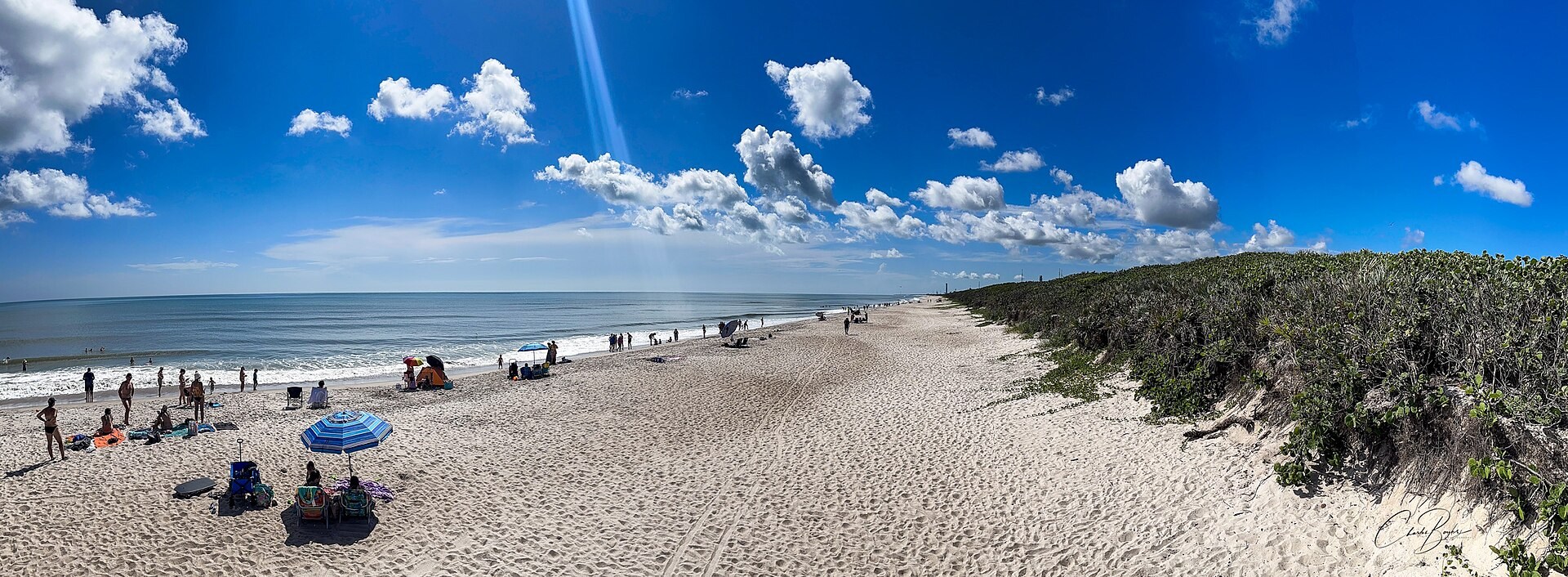
Playalinda Beach is the southern beach entrance area of Canaveral National Seashore, reached from the Titusville side. It offers a natural Atlantic shoreline where surf fishing can be part of a quiet coastal visit when access and conditions allow.
It is not connected by a public through-road to Apollo Beach at the northern entrance. Check the route before leaving, especially if a map result shows the national seashore without identifying the entrance.
Whiting and passing pompano are practical targets over sandy bottom. The beach’s appeal is the chance to read a natural trough and make a careful presentation, not a guarantee of remote or uncrowded fishing every day.
Rocket operations can change the visit
Playalinda access can be restricted for launch operations. The park’s management rules allow road and area closures, and inbound access may stop before a launch. NASA-related safety decisions can also close the beach.
Check current National Park Service alerts before traveling and follow staff directions at the entrance. A launch schedule by itself does not tell you which lots will be available to anglers.
Do not plan to cross a barrier or remain in a closed area because you arrived before the restriction began. Fishing equipment does not provide an exception to an operational closure.
Have a backup that does not depend on driving through the seashore to Apollo. That route does not exist for public travel. A changed access plan may require a substantial drive outside the park.
Check the open lots and the closing time
The reviewed 2026 compendium closes the park beginning at 6 p.m. to 6 a.m. Confirm the current schedule and any temporary adjustment. Leave enough time to walk back, load gear and exit before closing.
Not every numbered lot should be assumed open. Storm effects, restoration work and wildlife protection can change the available beach sections. Use an open designated crossing and do not bypass a closed route through the dunes.
Bring an accepted electronic payment method for the seashore entrance fee. Bring an accepted payment method or applicable pass. Entry arrangements are separate from fishing-license requirements.
Facilities are limited compared with a developed resort beach. Bring the water and supplies needed for the full visit instead of expecting a nearby shop.
Begin with the inside trough
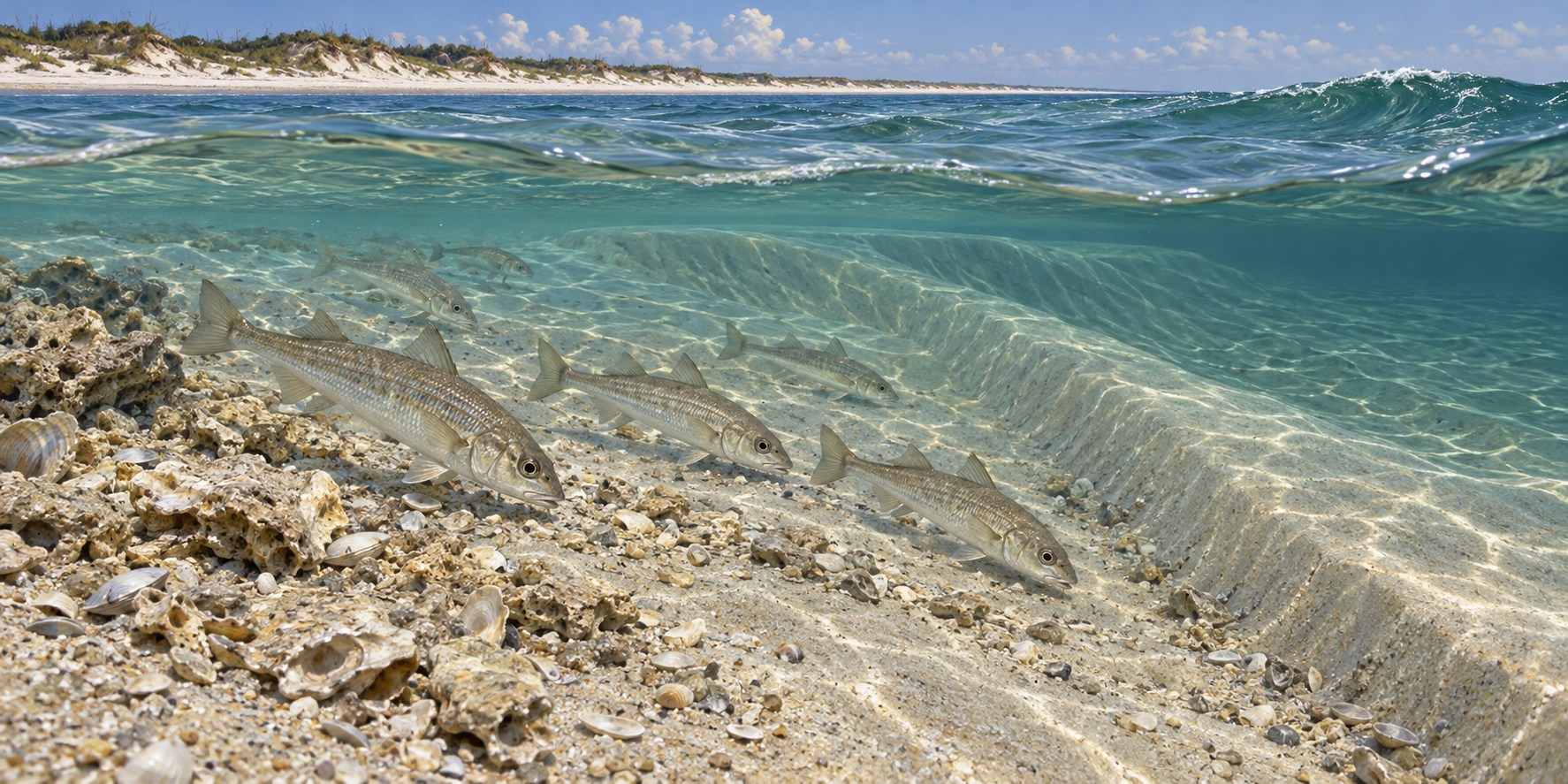
Watch several sets of breakers from shore. A regular breaking line may mark the first bar, with a deeper strip between it and the beach. That inside water is worth testing before making a long cast.
A short shrimp bait on a small hook is a practical whiting presentation. Keep the point exposed and inspect the bait after light taps. A fish may remove soft flesh without bending the rod dramatically.
Repeat a productive distance instead of immediately casting farther. The feeding lane can be narrow, and consistency helps reveal it. If the first lane is quiet, move the next cast in a deliberate step.
Use a holding weight within the rod’s rating. Rough conditions that require an uncomfortable or overloaded cast are a reason to stop, not to force the outfit.
Keep a pompano presentation compact
Pompano may travel through clean surf in search of small prey over sand. A short dropper rig can hold bait above the bottom. Avoid large pieces that fold over the hook or make the leader twist.
Sand fleas are a familiar option, but confirm park rules before collecting bait. Small shrimp pieces or suitable prepared bait can avoid making the outing depend on gathering anything from the beach.
Try a nearer and a farther lane over successive casts while keeping other parts of the rig similar. If one receives attention, spend more time learning that distance. Fish movement may change with the tide.
Clear weed from the line as soon as it accumulates. The added drag changes the presentation and can pull the rig toward another visitor’s area.
Use the beach’s clues carefully
| Clue | What it may mean | Fishing response |
|---|---|---|
| Repeated breaking line | A shallow bar | Test the water inside or beyond it from shore |
| Darker inside strip | A possible trough | Begin with a small bottom bait |
| Foam rushing outward through a gap | A potentially strong outward current | Stay on dry sand and avoid entering |
| Small bait scattering | Possible feeding predators | Try a lure only with a clear safe lane |
| Constant sideways line movement | Too much current or weed drag | Retrieve and change the plan |
These are observations to investigate, not precise measurements of depth or safety. When the water is uncertain, a conservative shore position is the appropriate choice.
Know where fishing is excluded
National Park Service guidance prohibits fishing in designated swimming, surfing and boat-dock areas, from road bridges and within 200 feet of watersports floats. Follow posted boundaries even when the area appears quiet.
Give other visitors more room than the minimum needed to swing a rod. Lines extend under the water and may be difficult to see. Reel in when someone enters the lane.
Protect nesting areas and dune plants. Use marked crossings and do not move barriers or signs. A promising piece of water beyond a closure is not available for the session.
Carry hooks secured while walking from the lot. Keep tackle contained so a dropped item does not become hidden in sand.
Prepare for exposure and a longer walk back
Bring drinking water, sun protection and a comfortable way to carry the equipment. An exposed beach can feel cooler in a breeze while still causing substantial sun exposure.
Summer thunderstorms require a quick response. Watch the sky and leave before the storm is overhead. A long walk with rods makes waiting until the first heavy rain a poor plan.
Cooler months may offer pleasant fishing between fronts. Strong wind can quickly change the surf, so review the weather and tide outlook before departure and assess the beach again on arrival.
Keep the first visit within a modest walking distance. Learning one open section well is better than exhausting the group while searching for an imagined perfect spot.
Let wildlife remain part of the background
Birds may point to bait activity, but do not cast into a flock. Wait for a clear opening or choose another lane. Keep scraps contained so birds are not drawn toward hooks.
Respect sea-turtle protection measures and any marked nesting boundaries. Avoid disturbing tracks, nests or animals. The beach’s natural character is part of its value as a fishing destination.
Do not leave baited rigs unattended while exploring. A line can drift, a bird can become entangled or a visitor can approach without seeing it. Remain responsible for the equipment throughout the outing.
For a comparison with the northern entrance, see Apollo Beach’s Canaveral guide. Its access route should remain a separate travel plan.
Keep the catch and cleanup routine ready
Use a ruler and identify fish before deciding to retain them. Check FWC’s saltwater recreational requirements for licensing and current harvest rules, alongside the national seashore’s restrictions.
Handle released fish with wet hands and body support. Avoid leaving a fish on dry sand while arranging a photograph. Keep a legal retained catch chilled and separate from bait.
Inspect the sand around the rod holder before leaving. Carry out clipped line, hooks and packaging in a secure container. A clean departure is especially important on a natural beach with few staff nearby.
Record the open access used and the time needed for the return walk. That information makes a later visit easier to fit within park hours.
Keep the return route visible in the plan
Note the entrance number and a clear landmark before walking down the beach. Natural shoreline can look similar over a long distance, especially when light or weather changes. Keep the chosen access in mind rather than relying on a phone battery to find the vehicle.
Pack used tackle into a closed container as the session progresses. That makes a sudden weather-related departure faster and reduces the chance of leaving a hook behind. Keep one prepared replacement rig available instead of carrying many loose components onto the sand.
When planning around a launch day, allow for delays outside the park as well as restrictions inside it. A backup should be a genuinely separate destination with confirmed access, not an assumption that another numbered lot will remain open.
Put the plan into practice
An insulated bait container helps on a long beach visit. Open it briefly for each replacement rather than leaving the supply in direct sun while waiting for the next bite.
Playalinda Beach fishing questions
Can launch activity close the beach?
Yes. Operational restrictions can change road and beach access. Check current park alerts and follow entrance staff directions.
Can I drive north through the park to Apollo?
No. The two beach entrance systems do not have a public connecting road.
Should I rely on every numbered lot being open?
No. Use current notices for the available lots and crossings. Closures can reflect storms, work or wildlife protection.
What is the simplest first fishing method?
A compact shrimp bait in the nearshore trough is a useful test for whiting when the surf is manageable and the area permits fishing.