
SPACE / TREASURE COAST
Round Island
fishing guide
Round Island fishing guide comparing riverside and oceanside parks, the fishing pier, redfish tactics, launches and wildlife care.
Explore the guide ↓Choose the riverside or oceanside park
Round Island has two neighboring public settings on opposite sides of A1A. The riverside park reaches the Indian River Lagoon, while the oceanside park reaches Atlantic sand. They share a name but should be treated as separate fishing plans.
The riverside option includes a designated fishing pier and launch facilities. The ocean side offers surf fishing outside guarded areas. Check the current signs for the exact section you intend to use.
Redfish and trout fit suitable lagoon habitat, while whiting and pompano are practical surf targets. Choosing one side first helps keep the equipment and expectations realistic.
Use the public riverside routes
Indian River County lists Round Island Riverside Park at 2200 South Highway A1A. Its facilities include boat ramps, a canoe launch, a boardwalk and trails leading across a footbridge to a fishing pier and observation tower.
The boardwalk is also used for wildlife viewing. Keep gear contained and leave room for people walking through. Do not assume every viewing rail is a fishing position when a designated pier is available.
The county’s riverside listing gives 24-hour operation, but temporary closures and individual facility restrictions can still apply. A first visit in daylight is easier for learning the route, footing and landing arrangement.
Use authorized launches and keep ramps clear. Shoreline fishing should not obstruct a boat being placed in the water or retrieved.
Work the edge without entering it
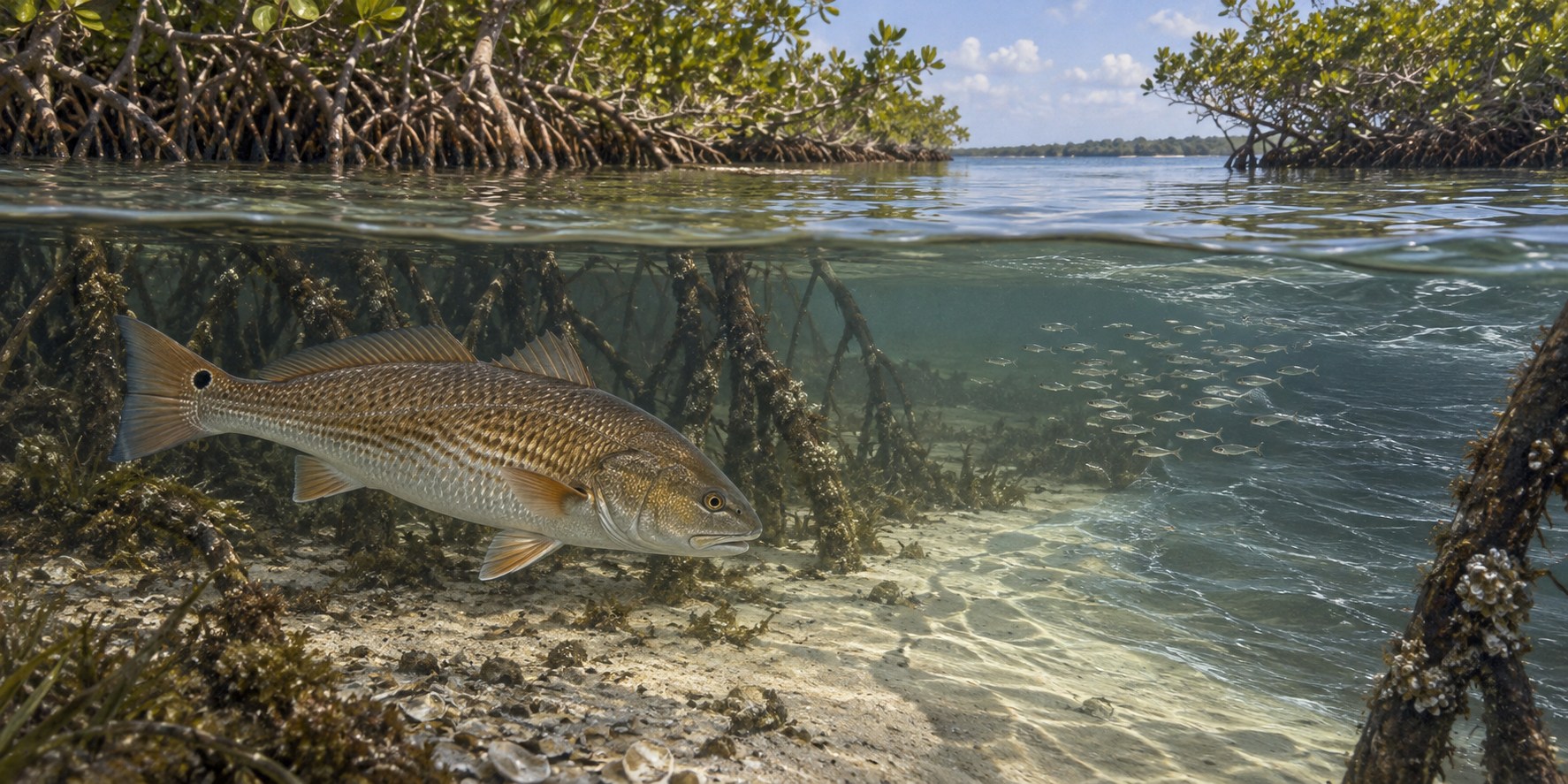
Redfish may move along shallow boundaries searching for prey. Look for a point, opening or change in depth that gives the fish a route. Cast ahead of that path instead of dropping the lure directly into cover.
A weedless soft plastic helps where roots or plants would catch an exposed hook. Bring it along the open side of the edge. If it repeatedly snags, change the angle rather than pulling through the same obstruction.
Live shrimp can also be useful when it remains controlled and natural. Add only enough weight for the depth and movement. A bait pinned heavily into soft bottom may be less visible than one presented just above it.
Do not push a craft into roots or step through shoreline vegetation. Fish the habitat from an appropriate distance and let the edge remain intact.
Search open water beside cover
Spotted seatrout can use a nearby open lane where small bait passes. A swimming soft plastic lets you explore that water at a chosen depth. Begin with a steady retrieve and adjust after seeing whether it touches bottom.
Shrimp beneath a float offers another way to stay above clutter. Set the depth for the particular location and shorten it if the bait drags. Watch the full drift so it does not cross another person’s line.
Small prey movements can be more useful than distant splashes. Look for bait gathering along a seam or a shallow boundary. Give a promising lane several careful presentations before moving.
Handle trout with wet hands and gentle body support. Avoid squeezing or leaving the fish on a hot surface while looking for a camera.
The ocean side needs a separate assessment
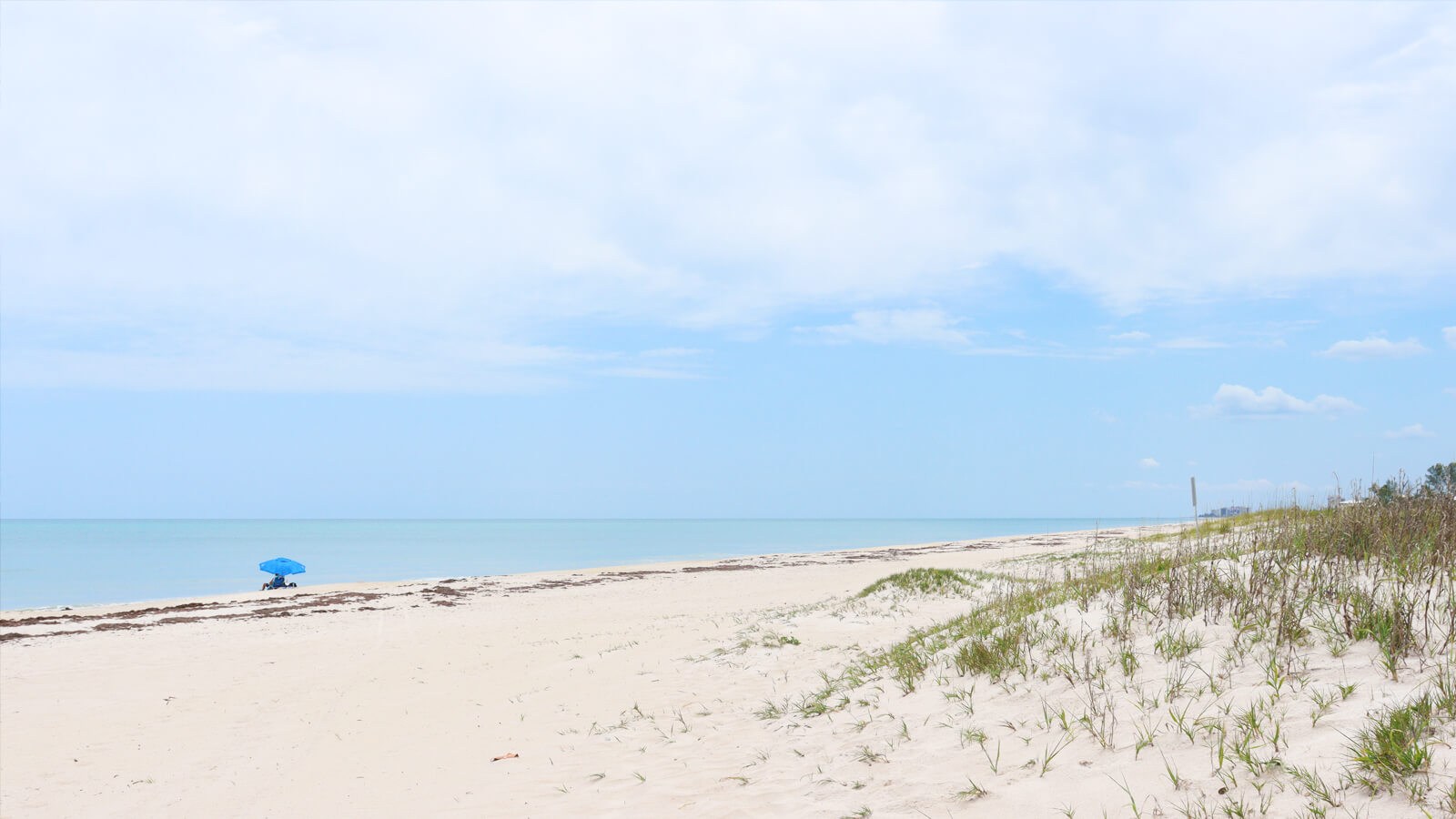
Round Island Oceanside Park is across A1A from the river setting. County information allows fishing outside guarded zones. Follow the marked access and current signs rather than walking directly from one park’s water to the other.
On the beach, study the first bar and the trough inside it. A small shrimp bait can test that lane for whiting. Pompano may respond to a compact dropper presentation over clean sand.
Historic coastal obstacles and changing bottom conditions are another reason to avoid wading into unfamiliar water. Stay on a stable shore position and do not assume the seabed is uniformly smooth.
Keep lines far from swimmers. A guarded area remains a separate use even when an appealing trough lies within it.
Keep the two plans distinct
| Feature | Riverside plan | Oceanside plan |
|---|---|---|
| Primary water | Indian River Lagoon | Atlantic surf |
| Starting method | Light lure or shrimp near a legal edge | Small bait in a sandy trough |
| Useful targets | Redfish, trout and suitable structure fish | Whiting and passing pompano |
| Access concern | Keep launch and viewing routes clear | Stay outside guarded swimming zones |
| Conditions to watch | Wind, wakes and shallow habitat | Waves, current and beach crowding |
A calm view on one side does not establish conditions on the other. Check the water you will actually fish.
Give manatees space around the lagoon
Round Island is well known as a wildlife-viewing setting. If manatees are nearby, stop and allow them room rather than casting toward their movement. Never use food or bait to attract them.
From a craft, travel slowly where required and watch the water ahead. Keep a predictable route and avoid following animals into shallow corners. Fishing can wait while wildlife passes.
Birds may gather near bait or fish handling. Keep scraps contained and do not leave a baited hook unattended. A tidy pier position reduces accidental entanglement.
The presence of wildlife is not permission to leave the public trail. Observe from designated routes and keep vegetation undisturbed.
Use a short first paddling route
Before launching, consider wind across the return journey and how shallow areas may change. A route that feels easy with the breeze can become difficult in reverse.
Put on a properly fitted life jacket before launching, with a phone or radio within reach. Secure spare hooks and rods before moving. If a wake approaches, prioritize balance and control over finishing a retrieve.
Do not run a motor over shallow vegetation or step into unknown mud after grounding. Choose enough depth for the craft and turn around while the route remains clear.
Keep the first trip close to recognizable landmarks. Learning one small section of lagoon carefully is more useful than covering a large distance without understanding the return.
Improve placement before adding complexity
Whether on the pier or sand, begin with a rig you can inspect easily. Check for tangles and bait loss after the first few casts. A clean presentation is the foundation for any later adjustment.
Near structure, retrieve before the line wraps around a support. On the beach, retrieve before current carries it across a swimming or walking area. The same principle applies in different water: remain in control.
Use small changes in depth or distance to learn where fish respond. Changing bait, weight and location all at once leaves little useful information about what mattered.
Keep leader in good condition. Roughness after shell or piling contact is a reason to replace it before the next cast.
Let weather decide the length of the visit
Summer heat calls for drinking water and a short path to shelter. Lightning should end both a pier session and a beach session before the storm is overhead. Keep the gear organized for a quick departure.
Cooler weather may be comfortable, but strong wind can affect both sides of the park. Check the local tide and weather outlook and inspect conditions on arrival.
For a broader area comparison, see Vero Beach’s ocean and lagoon fishing guide. Its parks have separate access arrangements.
Do not use the riverside operating schedule to assume the oceanside park has identical hours. Read each entrance’s current signs.
Make a careful catch part of the plan
Have a net suitable for the pier, pliers and a measuring device ready. Support fish rather than suspending a heavy catch by the jaw or line. Keep release handling brief.
Check FWC’s current recreational saltwater rules for licensing and harvest decisions. Public park entry does not automatically cover those requirements.
Keep a legal catch chilled and collect every line clipping. Before leaving, inspect the pier position or sand for hooks and wrappers. The next visitor may be there only to watch wildlife.
Separate a wildlife stop from an active fishing position
The boardwalk and observation areas attract people who may stop suddenly to watch an animal. Keep a rod secured while walking through those spaces and move to the designated fishing area before handling loose hooks.
If wildlife gathers near the pier, pause the presentation rather than casting through it. A manatee or bird passing close to a line needs room, and visitors may also step closer to see it. The situation can change quickly even when the fishing lane was clear moments earlier.
Keep the landing tool and tackle within a compact footprint. That allows the fishing session to coexist with the park’s other uses without making the whole boardwalk feel occupied by equipment.
Put the plan into practice
Before choosing a riverside position, watch for moving paddlers and wildlife. A quiet gap in boat traffic should not be mistaken for a permanently clear casting corridor.
Round Island fishing questions
Are there two Round Island parks?
Yes. Riverside faces the lagoon and Oceanside faces the Atlantic, with A1A between them.
Does the riverside park have a fishing pier?
The county lists one reached through the park’s island trail system. Check current notices and use the designated route.
Can I fish inside the guarded ocean area?
The county permits fishing outside guarded zones. Keep the activity separate from swimmers.
What should I do if a manatee approaches?
Stop any presentation that could interfere and give the animal room to pass. Do not feed, follow or cast toward it.