
SOUTHEAST ATLANTIC
South Beach Park
fishing guide
South Beach Park in Boca Raton provides an Atlantic beach route near the Palmetto Park Road oceanfront. It is a different location from Miami's South Beach, with its own parking, park schedule and swimming restrictions.
Explore the guide ↓Choose the Boca Raton park
This South Beach Park is at 400 North Ocean Boulevard in Boca Raton. It is not South Beach in Miami Beach and it is not South Inlet Park beside Boca Raton Inlet. The names lead to different routes, parking and fishing settings.
The city's current park page lists 8 a.m.-to-sunset access. The nearby pavilion has separate arrangements, so do not use its schedule to assume the main beach park is open earlier. Check the exact entrance being used.
An annual permit or daily payment is required under the city's parking arrangement. From October 1, 2026, Boca beach gatehouses no longer accept cash for daily and weekend payments. Bring an accepted card or digital payment method and verify current fees.
Boca's beach rules prohibit fishing in designated swimming areas during normal swimming hours. Ask staff about the permitted section rather than treating the whole park as a surf-fishing station.
Study the beach from the established access
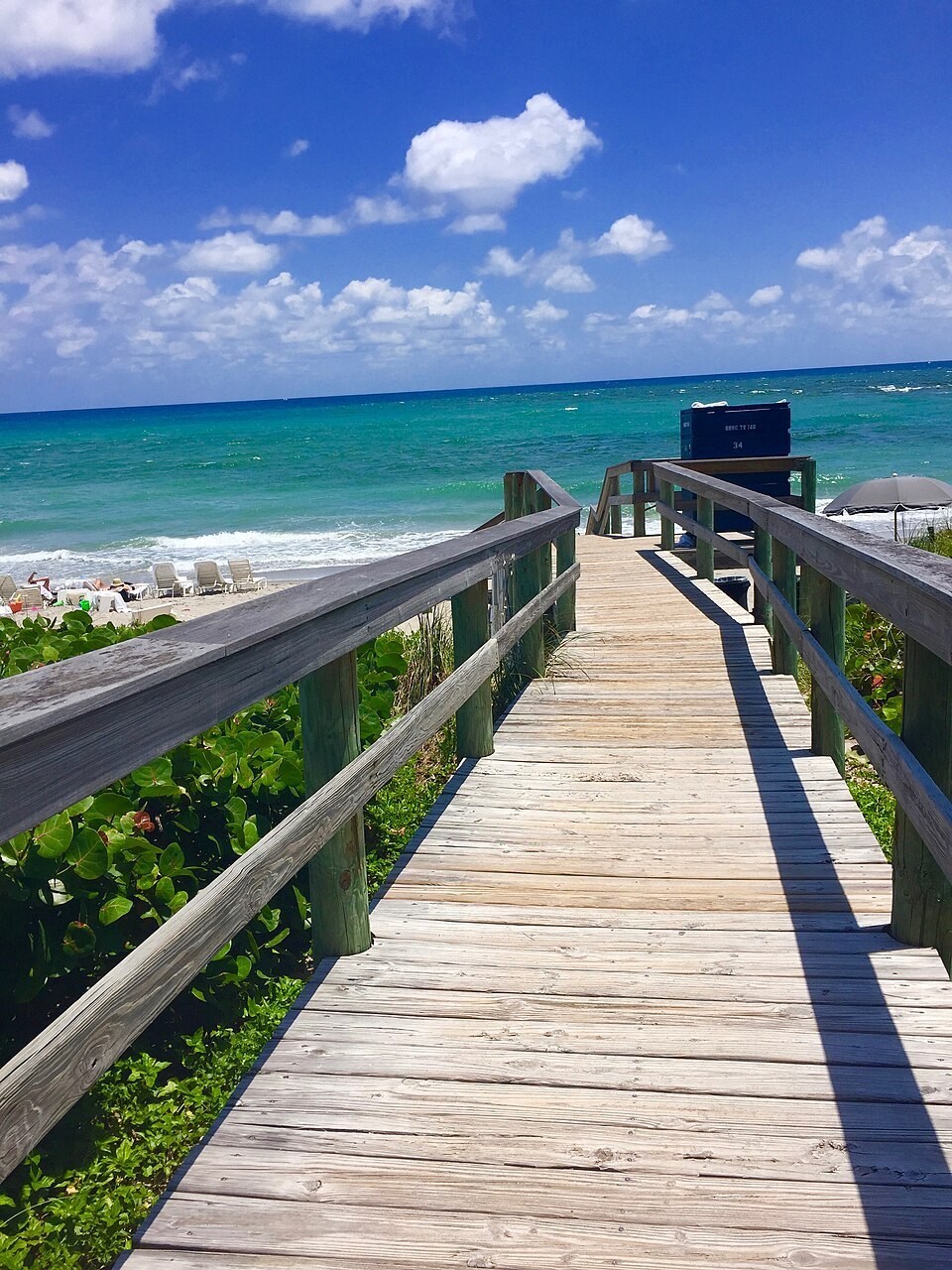
Use the authorized dune route and look at several wave sets before placing the rod. A trough close to shore may carry small prey along the sand. It can be more useful than deeper-looking water beyond the outer break.
Find a lane where the rig can hold without entering the swimming boundary. A wave gap or darker strip is only a clue, so compare it with the way foam and debris move. Shadows should not be treated as exact depth readings.
Begin with a short test and examine what comes back. Weed indicates fouling, while shell and scuffed leader suggest harder contact. Those observations help decide the next distance or angle.
Do not enter an unfamiliar trough on foot to improve range. A beach rod can test the water from a permitted secure position without exposing the angler to a hidden channel.
Keep the bottom offering tidy
Whiting and Florida pompano may feed over suitable Boca beach sand. Small shrimp pieces, sand fleas or prepared strip bait are practical choices. Use a compact portion rather than covering the hook in a large bundle.
A short dropper holds bait slightly above bottom. Keep the leader untangled and choose enough sinker for a controlled placement. One hook is a useful first setup when learning to cast around a shared public beach.
Inspect soft bait regularly. A quiet rod can be sitting over an empty hook after small fish have taken the material. Replace it or compare a firmer bait before changing the entire fishing plan.
If the rig rolls along shore, retrieve while its route is clear. Increase weight only if that creates a manageable presentation inside the approved space. Moving to another legal lane may be a better answer.
Search the shoreline without crowding a fish
Snook can cruise suitable warm-water beach edges. A small swimming soft plastic or plug can cover a clear permitted lane. Look for bait and a fish's direction rather than repeatedly casting at the first shape seen.
Place the lure ahead of the route and keep it above sand. A short angled presentation can give the fish time to meet it. Change retrieve speed gradually when a fish follows without taking the offering.
Do not follow the target into supervised swimming water. A sighting is useful information for another day if the lane is unavailable now. Keep the method mobile without crossing private or protected access.
Use a leader that can tolerate the fish and any rough contact encountered. Check knots and wear before the next cast. Prepare wet-hand handling and a quick release before a fish is landed.
Change tactics when a bait school arrives
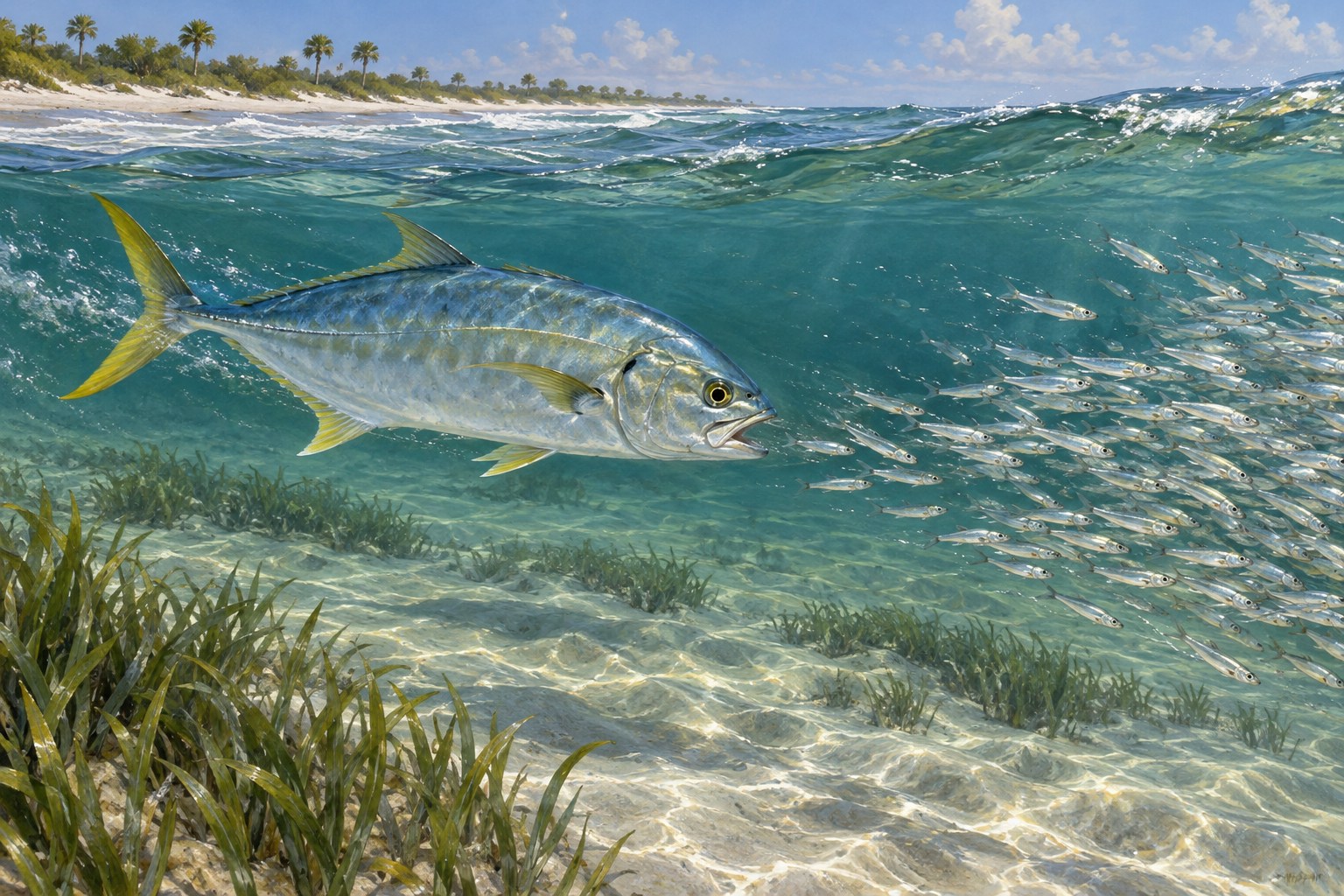
Jacks, bluefish or Spanish mackerel can appear around concentrated baitfish. Observe the activity from a clear place and select a compact lure that can be retrieved under control. The best method is the one that fits the available lane.
Avoid casting through birds or across neighboring anglers. Let a feeding school pass if it reaches the swimming area. A brief opportunity does not justify exposing other people to hooks.
Toothy fish require careful identification and handling. Use pliers and inspect the leader after a strike. Do not place fingers near an unfamiliar fish's mouth while concentrating on its size.
Use simple changes instead of adding more rods
A short beach visit can teach more with one watched presentation than several unattended rigs. Let the returned tackle and current conditions explain the next move.
| What you notice | Useful adjustment | Reason |
|---|---|---|
| Bait stripped without a hook-up | Smaller portion or firmer bait | Keeps the point available |
| Rig gathers weed | Try another clear approved lane | Restores a clean presentation |
| Fish follow a lure | Vary pace or profile | Tests the response without crowding |
| Bathers enter the route | Stop and secure the hooks | Keeps shared water safe |
Fit the tide inside the actual park schedule
A prediction of favorable early water does not open the gate before the listed schedule. Choose a session that fits both park access and permitted fishing times. Do not use the pavilion's different hours as a workaround.
Wind, swell and floating weed can change a trough's usefulness. A tide stage that worked under calm conditions may be difficult after a front. Watch the local response and keep a note tied to this beach.
Warmer periods can suit a snook search, while cooler conditions may change the surf-fish mix. These patterns help select tackle but do not guarantee a catch. Bait movement and a clean lane remain the immediate clues.
Make the beach lesson easy to pack away
The park provides walking paths, benches and beach recreation. A supervised fishing lesson should stay separate from swimming and playground use. Keep a closed box for hooks and sharp tools rather than spreading them beside snacks.
Bring drinking water, sun protection and a dry place for keys. Allow paid parking time for both setup and the return walk. A compact bag makes it easier to stop when the approved section becomes busy.
Count tackle pieces before leaving the sand. A forgotten hook can be hidden where the next family walks barefoot. Leave the access route clear for visitors using mobility aids or carrying beach equipment.
Check rules before keeping a beach catch
Identify a catch accurately and verify current FWC harvest and licensing requirements. Support release fish with wet hands and avoid dragging them across dry sand. A quick prepared photograph is better than a long search for the phone.
Write down the entrance, trough and bait that were actually used. The separate South Inlet guide explains a different Boca setting where tidal current and jetty access become central to the plan.
Common questions
Is this guide for Miami's South Beach?
No. It covers South Beach Park in Boca Raton at 400 North Ocean Boulevard.
Can I arrive under the pavilion's hours to fish the main park?
Check the specific entrance and activity schedule. The pavilion and main park have different published arrangements.
Can I bring cash for daily parking?
The city announced cashless beach gatehouse payments from October 1, 2026. Verify the accepted card or digital payment methods before visiting.
Is fishing allowed throughout the bathing beach?
Boca prohibits fishing in designated swimming areas during normal swimming hours. Confirm the approved section with staff.
Prepare for your visit
Check local tides and weather. Read more about snook, florida pompano, whiting. Check current FWC saltwater fishing rules.