
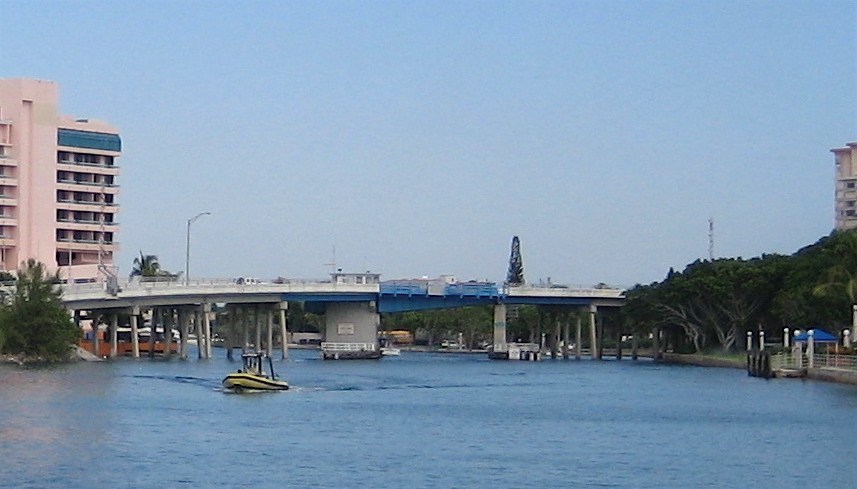
SOUTHEAST ATLANTIC
South Inlet Park
fishing guide
South Inlet Park sits beside Boca Raton Inlet and offers a different fishing setting from Boca's central beach parks. Plan around the permitted jetty, changing inlet current and a guarded beach that must remain clear of hooks.
Explore the guide ↓Separate the park day from the listed jetty access
South Inlet Park is at 1100 South Ocean Boulevard in Boca Raton. The county park lies beside the inlet and includes ocean recreation space. It is not the city-operated South Beach Park farther along the shore.
County information gives the general park sunrise-to-sunset hours and separately lists jetty fishing for 24-hour access. Verify the intended entry and parking before relying on an evening visit. The jetty schedule does not make every park feature available all night.
Parking rates differ between weekdays and weekends or holidays under the reviewed county information. Check current rates and payment instructions on arrival. Nearby city beach permits should not be assumed to cover this county facility.
A September notice announced playground renovation with an estimated short work period. Completion was not confirmed in the reviewed information. Families should check the current notice rather than assuming that the estimated finish guarantees use.
Study the inlet flow before choosing weight
Boca Raton Inlet exchanges water between the ocean and inland waterways. Current around a structural edge can move differently from the main channel. Watch foam and drifting material at the exact fishing position.
Choose a lane where the rig remains visible and recoverable. A heavy sinker may stay down while its leader wraps around rock. Placement and drift length are therefore as important as weight.
A slower seam beside moving water can offer a manageable feeding lane. Test it with a simple setup and retrieve before it passes behind an edge. Keep lines out of vessel approaches and navigation routes.
Do not wade into inlet water or climb to an outer rock position to improve the angle. Strong current, wave wash and uneven surfaces can remove safe footing quickly.
Present bait where snook can intercept it
Snook can follow small fish around suitable inlet edges. A live baitfish or swimming lure can be worked through a clear seam where angling is permitted. Obtain bait lawfully and use tackle that can control a fish near the structure.
Keep enough line contact to guide the drift without pinning the bait unnecessarily. Letting it disappear into a rock gap creates a snag rather than a natural feeding presentation. Adjust the starting angle when the current pulls too fast.
A lure should travel above the roughest bottom. Raise the retrieve after contact and inspect leader wear. A repeated scrape is a useful warning before a hooked fish reveals a weakened connection.
Prepare the landing and release route while the rod is still dry. Avoid hooking fish from a position where handling would require climbing or dragging them over stones.
Use a compact bait beside a clean hard edge
Mangrove snapper may feed around suitable structure near coastal inlets. A small shrimp piece or baitfish portion with the point exposed is a practical test. Oversized bait can be stripped without a clean hook-up.
Place the offering beside cover, not in its deepest crack. Watch for short bites and retrieve before the current wedges the rig. A recoverable lane helps protect both tackle and habitat.
Use steady pressure to guide a fish toward open water. Excessively tight drag can break a weak connection, while too little control can let the fish reach cover. Set it deliberately before the bite.
Identify the snapper and check current limits before retention. Mixed small catches can be difficult to sort accurately when an angler is rushing for another cast.
Use the ocean sand only beyond the swimming boundary
The park's guarded beach is a separate recreation space. Follow county guidance that keeps shoreline fishing outside guarded swimming water. Ask staff where the available fishing lane begins.
In an approved sandy section, whiting and pompano habitat can be tested with small surf bait. Look for a clean trough and use enough sinker to hold without rolling sideways. Retie for waves rather than using an inlet drift rig unchanged.
Snook or jacks can pass along a clear beach edge when bait is present. A small swimming lure is manageable only while the whole route remains free of bathers. Leave a school alone when it enters occupied water.
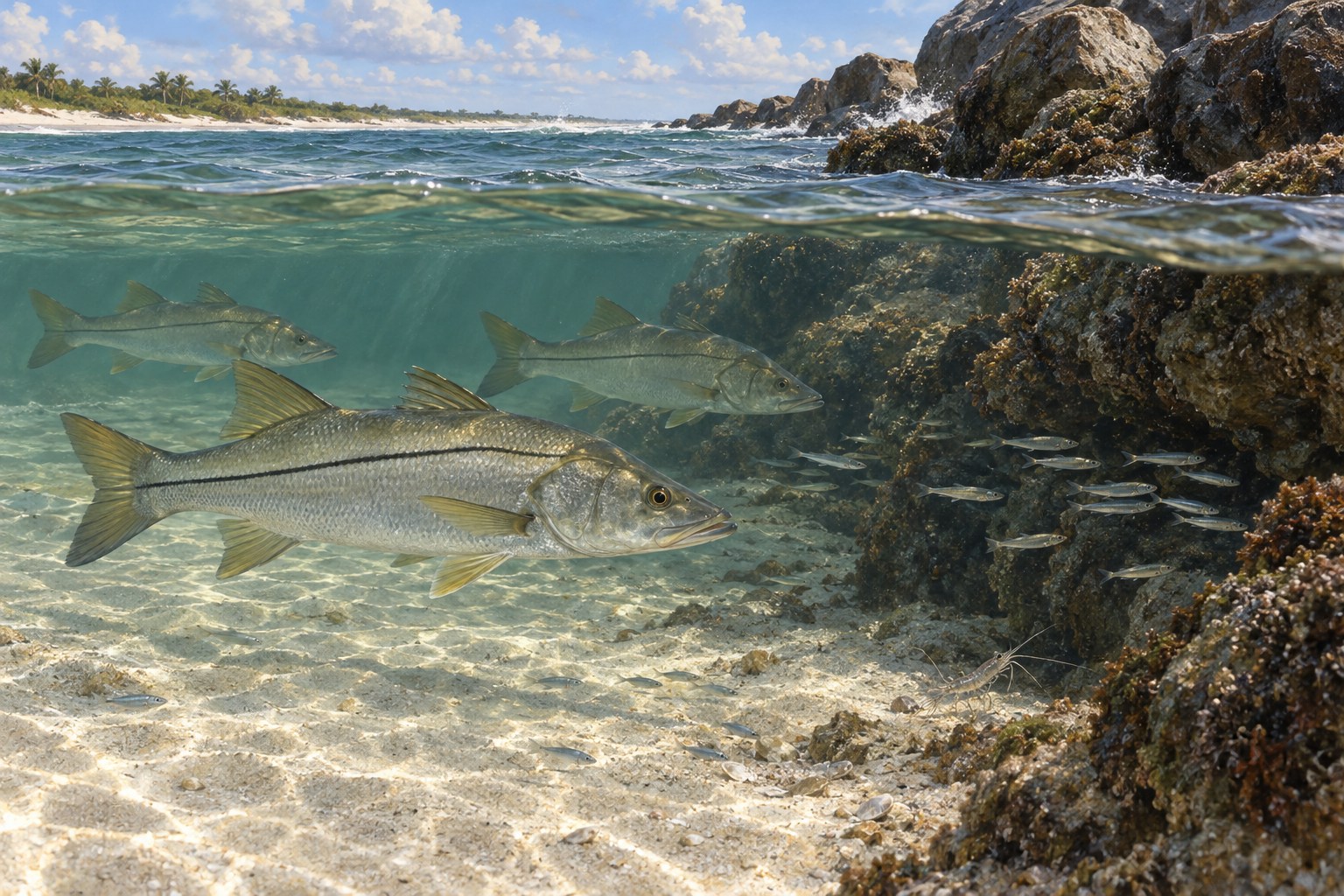
The habitat view explains inlet-edge feeding without showing exact depths or a legal station. Observe the actual water and barriers before applying the idea.
Choose the controllable water rather than the strongest flow
The inlet and beach offer different problems to solve. Select a method that fits the legal standing position and allows clean retrieval.
| Setting | Possible presentation | Check continuously |
|---|---|---|
| Permitted slow inlet seam | Controlled baitfish drift | Rock contact and boat movement |
| Clear structural margin | Small snapper bait | Leader wear and short bites |
| Approved sand trough | Compact surf dropper rig | Swimming boundary and sideways drift |
| Wave-washed jetty edge | Observe from a safe position | Footing and larger sets |
Prepare an evening visit with daylight knowledge
The listed jetty fishing access can support an evening plan, but learn the entry and return route in daylight first. Check current signs and any temporary restriction. Darkness reduces visibility of wet rock and line movement.
Keep lighting modest around turtle habitat and avoid spreading tackle on a dark walkway. A companion, secure footwear and an organized bag are useful parts of the plan. Do not climb barriers to recover a lost lure.
Monitor wind, waves and lightning through the session. The ability to stay under a fishing-access schedule does not require staying when conditions become unsafe.
Check the playground notice and plan a short first visit
Verify the latest renovation notice before promising a playground stop. Estimated work periods can pass without an explicit completion update. Keep a backup family plan that does not depend on that amenity.
Bring drinking water, sun protection and a small kit with pliers and spare leader. Separate hooks from picnic gear. A first visit can focus on understanding one seam instead of trying the jetty, beach and every facility.
Allow parking time for packing and walking out. A last cast should not leave the return rushed through a busy or dim access route.
Leave the inlet without line or uncertain keepers
Check current FWC guidance for identification, licenses and harvest. Keep release handling brief and support the fish rather than lifting a large catch by its leader. Have the measuring tool ready before deciding to retain one.
Take clipped line and bait packaging out with the tackle. Record which current stage allowed a clean drift and where the safe landing position was. Those observations make a return more useful than a general claim that inlet fishing is always better at one tide.
Common questions
Is South Inlet Park the same as South Beach Park?
No. South Inlet is the county park beside Boca Raton Inlet. South Beach Park is a separate city beach facility.
Does the whole park have 24-hour access?
The county separately lists jetty fishing for 24 hours and general park use for sunrise to sunset. Check the current entry and parking arrangement.
Is the playground renovation finished?
Completion was not confirmed in the reviewed notice. Check the current update rather than relying on its estimated work period.
What should I do when every inlet bait snags?
Change the angle, shorten the drift or choose another clear seam. More sinker weight alone may leave the leader deeper in the same rough cover.
Prepare for your visit
Check local tides and weather. Read more about snook, florida pompano, whiting. Check current FWC saltwater fishing rules.