
SOUTHEAST ATLANTIC
South Pointe Park
fishing guide
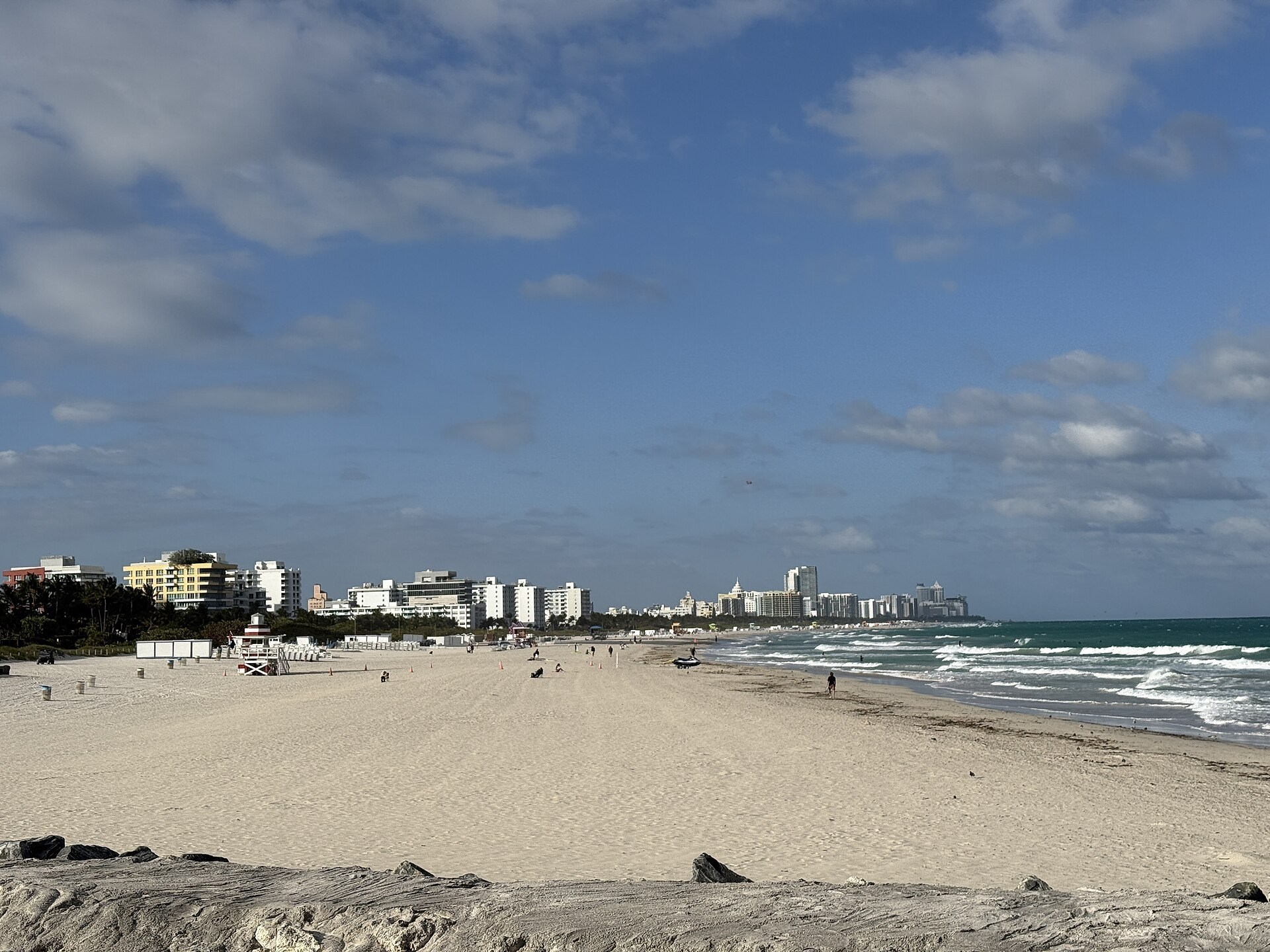
South Pointe Park overlooks Government Cut at the southern end of Miami Beach. Plan fishing around a confirmed designated pier section and current staff guidance. Its cutwalk, swimming shore and exposed rocks should not be treated as interchangeable rod positions.
Explore the guide ↓Confirm the current designated pier use
The city identifies South Pointe Park at 1 Washington Avenue with a sunrise-to-sunset park schedule. Its current visitor information does not settle every pier-specific fishing arrangement. Ask park staff about the approved section and applicable hours before setting up.
Do not interpret an open Cut-side walkway as permission to fish along its full length. Exposed rocks and other waterfront structures are separate from a designated pier position. Follow barriers and current signs.
Miami Beach prohibits land-based shark fishing. Keep any approved angling plan within other local activity and swimming restrictions as well. A statewide license does not authorize every waterfront use.
The photograph provides a view of the park's coastal setting. It cannot confirm today's rail access or whether a specific part of the pier is available.
Leave the shipping route clear
Government Cut is a working vessel passage. Ships and smaller boats need unobstructed water, and their movement can create wakes. Watch several passing conditions before selecting a position near the edge.
Keep the bait or lure within the authorized controllable water. A long cast toward a distant feeding splash can put line where it does not belong. Retrieve before a presentation drifts into traffic.
A slower seam beside moving water can be easier to fish than the strongest stream. Look at actual line travel rather than trying to hold an unsuitable route with more weight.
Test a recoverable lane with compact bait
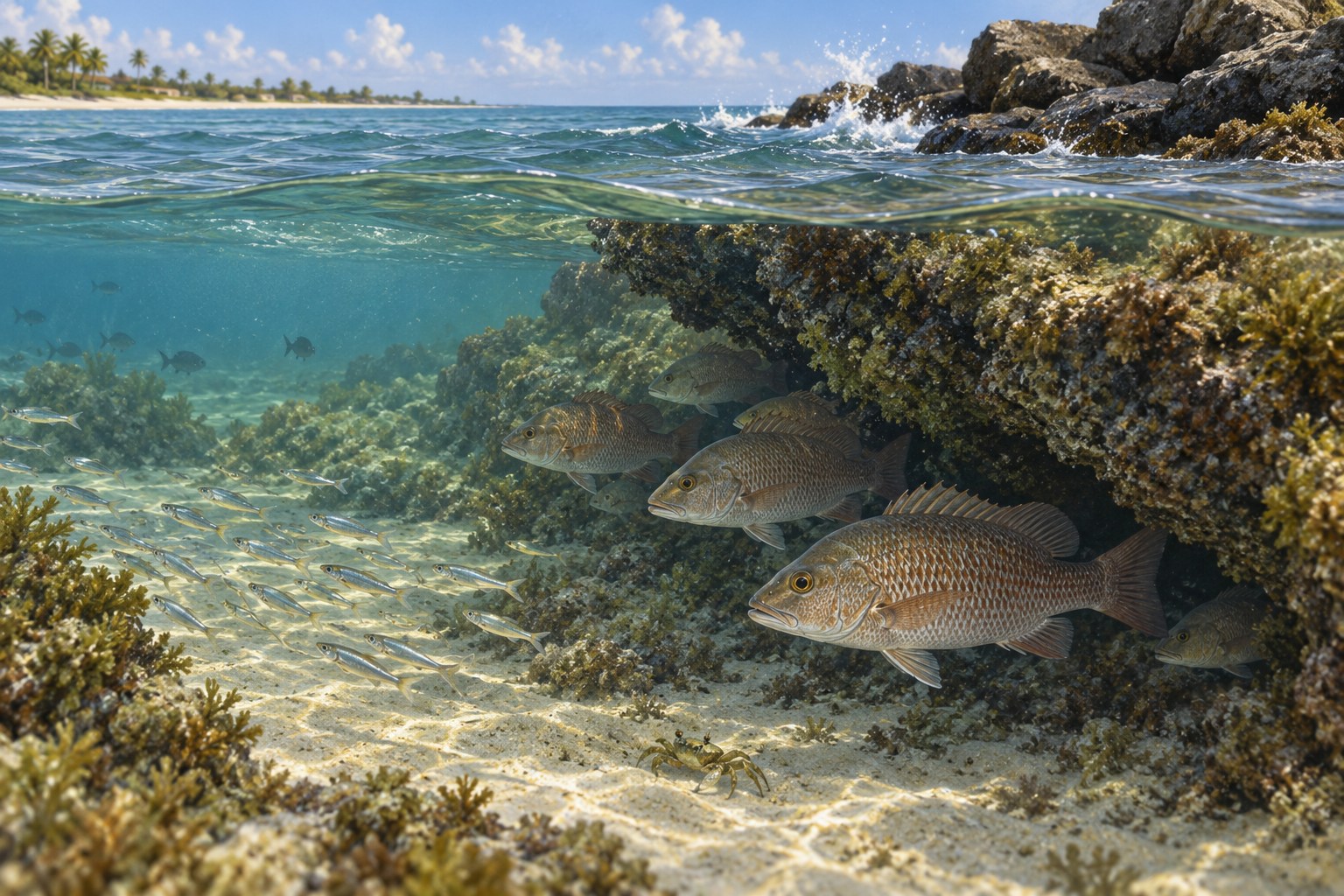
Mangrove snapper can feed beside suitable hard cover in coastal water. From an approved pier position, a small shrimp portion or neat baitfish piece can test a clear edge. Leave the point exposed and attend the rod.
Use weight that keeps enough contact to follow the offering. Bring it back before it settles behind cover or an inaccessible corner. Repeated lost rigs mean the placement needs changing.
A short bite may strip soft bait without a strong pull. Inspect promptly and try a firmer little portion when needed. The illustration explains a general cover-feeding situation rather than surveyed water beneath the pier.
Choose a lure pass with a clear finish
Jacks, snook or mackerel may follow prey through suitable moving coastal water. A compact lure can search an approved lane while avoiding bottom snags. Observe the prey route before choosing the cast angle.
Check the retrieve's finish as well as its starting point. Keep hooks away from people standing or walking near the rail. Avoid swinging a lure or hooked fish through a shared space.
If the school moves into the shipping channel or restricted water, let it go. A brief feeding chance does not justify extending the fishing lane beyond what is safe and allowed.
Solve the landing problem before the bite
A pier can leave a fish well below the angler. Ask which landing equipment and methods are permitted, then choose targets the position can handle. Do not lift a large fish by its leader.
Keep pliers, a measuring tool and release equipment ready. A helper should know the intended steps before the fish arrives. Avoid blocking public movement while preparing the landing.
Do not climb the rail or move onto exposed rocks to complete the catch. Change the target or position if supported handling cannot be done from the authorized area.
Check the whole fishing sequence
A suitable rail needs more than fish nearby. The cast, drift, fight and release must all fit the approved space.
| Stage | Useful check | Reason to stop or change |
|---|---|---|
| Before casting | Approved section and clear backcast | No permission or crowded hook route |
| During drift | Line remains beside legal open water | Current carries it toward vessels |
| During fight | Enough clear room and controlled drag | Run crosses people or traffic |
| During landing | Permitted supported handling method | Only option is lifting or climbing |
Use the park facilities without spreading tackle
The city lists paid parking and restrooms near the concession area. Check current arrangements and leave enough time for the walk to the intended position. Keep sharp gear enclosed while crossing the park.
A small bag and one attended rod can be easier to manage than a large cart. Leave public paths and visitor viewing space clear. Do not set bait containers on a route where people or animals can reach them.
Bring water and protection from the sun. Facility convenience does not replace a plan for heat or a longer-than-expected return walk.
Watch changing waves, wakes and light
Wind and a passing vessel can alter the edge even when the wider sea looks calm. Keep gear back from wash and maintain a clear retreat. Stay on secure authorized ground.
The actual current at the Cut may not switch at the same minute as a nearby tide prediction. Observe before choosing the drift. A gentler manageable period may be more useful than maximum flow.
Pack before thunderstorms or worsening conditions make departure difficult. Do not let one final bait drift remove the comfortable weather window.
Leave the rail clear and the fish properly handled
Check current FWC licensing and species rules before retaining a catch. Identify fish carefully and release unwanted ones with support. Keep air exposure brief rather than extending it for a photo.
Collect loose leader, bait waste and packaging from the rail area. Secure hooks for the park walk. Verify the designated section again before another visit because access and temporary arrangements can change.
Common questions
Can I fish anywhere along South Pointe's cutwalk?
Do not assume so. Ask about the current designated pier fishing section and keep other waterfront routes separate.
Are the park hours also the exact fishing hours?
The city publishes the park schedule, but staff should confirm any pier-specific arrangements.
Can I land a fish by climbing down onto rocks?
No. Prepare a permitted supported landing method from the authorized position or change the plan.
What if current carries the bait toward a ship route?
Retrieve promptly and choose a different controllable legal lane. Leave the passage clear.
Prepare for your visit
Check local tides and weather. Read more about snook, mangrove snapper, permit. Check current FWC saltwater fishing rules.