
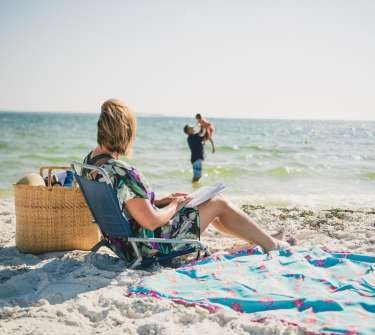
PANHANDLE
St. Joe Beach
fishing guide
St. Joe Beach gives shore anglers a Gulf-coast beach plan near Port St. Joe. Look for a safe public crossing, then work the sand with small baits rather than assuming deeper water is always better.
Explore the guide ↓Use a public crossing to reach the sand
St. Joe Beach is the coastal community along the Gulf shore north of Port St. Joe. Choose an established public beach crossing and a lawful parking place. Private stairs, rental-house paths and a gap between buildings are not substitutes for a recognized access route.
Check for current closure notices and damaged crossings after coastal storms. Once on the sand, read signs and look for swimmers before choosing a casting position. Keep access paths open for families carrying beach equipment. A productive-looking lane loses its value when your line crosses the route people use to enter the water.
Let the moving foam show the trough
Stand where you can watch several wave sets. The first shallow bar may produce regular breakers while a deeper trough between it and shore stays quieter. Small fish can search that trough for food loosened by wave action. Your opening cast need not be the longest one possible.
Walk a little along the legal open shoreline and compare the water. A slight bend or change in breaking pattern may give a different bait drift. Keep the comparison small and manageable. Avoid wading out to confirm a dark patch; darkness can come from water depth, vegetation or light rather than a safe firm bottom.
Use a plain shrimp rig to establish what is feeding
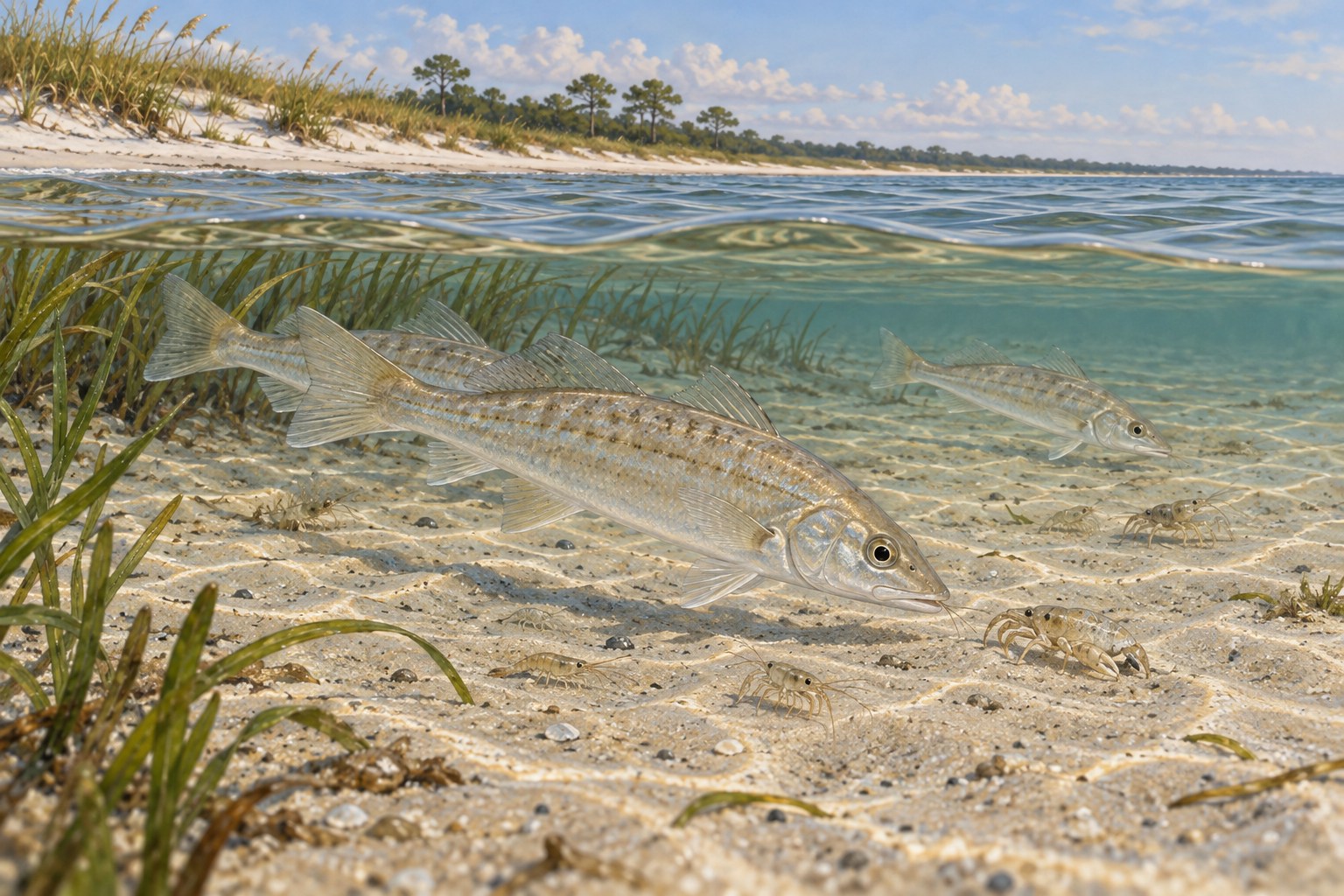
Whiting and other smaller surf feeders can take a trimmed shrimp piece. Fit the bait neatly to a small hook with its point exposed. Place the sinker so the bait remains close to the sandy bottom while the line stays under control.
Give the first location enough time to show a pattern of bites. If the bait disappears immediately, reduce its size or use a tougher piece. If nothing touches it, shift to another reachable distance before changing every component. Keep the rod attended, because moving waves can loosen a holder and a sudden bite can pull the setup toward the water.
Think of pompano as a passing opportunity
Pompano travel rather than occupying every beach crossing continuously. Spring and fall commonly attract surf anglers to Gulf beaches, but local weather may shift the timing. A recent change in water temperature, clean sand and a manageable surf can matter more than the date on the calendar.
Small crustacean baits fit pompano feeding habits. Try legally obtained sand fleas, shrimp or an appropriate prepared bait. Work a clean trough instead of hiding the bait inside drifting weed. Learn the fish's body shape and fins before keeping it. Similar-looking small surf fish should not be identified only by silver color.
Reserve fast lures for actual feeding signs
Jacks, bluefish and Spanish mackerel can move with bait along this broader coast. Look for small fish scattering or an organized chase rather than reacting to every isolated splash. A compact metal lure can cover such a short-lived opportunity quickly.
Cast only with an empty travel path behind and in front of you. Replace damaged leader after a toothy fish or a rough retrieve. Pliers keep fingers away from a fish's mouth and a swinging hook. If birds are diving through the same bait patch, pause until a safe cast is possible rather than competing for the exact center of the activity.
Match sinker control to the beach conditions
A medium spinning rod suits light bait and lure work close to shore. A rated surf outfit gives more control over heavier sinkers when modest wave action demands it. Choose by the day's presentation, not by a story about the largest fish ever caught nearby.
Use enough weight to limit sideways drift without overloading the rod. Keep a few spare leaders and hooks in a closed box. A measuring tool, pliers and a waste bag complete most short beach kits. Bring bait and drinking water separately. Wet bait odors and loose hooks have no place among a child's lunch or towels.
| Observation | Useful change | Avoid |
|---|---|---|
| Bait untouched | Try a different trough distance | Changing everything at once |
| Shrimp stripped quickly | Trim or toughen the bait | Covering the hook point |
| Line sweeping sideways | Adjust weight within rod rating | Casting through occupied water |
Expect fronts and storms to reset the beach
A cold front can change wind, wave height and water clarity in a few hours. A calm morning forecast does not describe the entire afternoon. Check for lightning and tropical weather before driving, then assess the actual beach after arrival.
Water level affects which sand lanes remain reachable. Compare a tide prediction with visible current and wave behavior rather than expecting the exact chart time to start the bite. Stop when surf reaches the tackle area or the rig sweeps beyond your control. A quieter public beach session on another day is preferable to rescuing equipment from dangerous water.
Keep the public beach usable for everyone
Choose a casting lane away from occupied swimming space. A fish feeding close to a family in the water is a reason to reel in. Do not leave hooks in the sand while retying, and remove unattended bait lines before taking a meal break.
Respect dune plants and nesting markers along the shore. Dispose of bait scraps in an appropriate waste container rather than drawing birds into a hook-filled working area. If you use a light during a permitted evening activity, keep it restrained and follow turtle-protection rules. Public access works best when anglers leave less evidence than they arrived with.
Record the distance and drift, not just the catch
For the first visit, make a small experiment: use one bait at two reachable distances and note the direction of line drift. A difference in bite rate may reveal the useful trough. Even a fishless session can show which sinker held and where people concentrated.
Confirm license needs and current harvest limits before retaining fish. Photograph an uncertain fish briefly for identification, keeping handling gentle and release prompt when needed. Finish with a check around the rod holder for dropped line and hooks. St. Joe Beach rewards a repeatable, considerate approach more than a complicated beach camp spread across the public sand.
Common questions
Is all beachside parking public at St. Joe Beach?
No. Use a lawful space and an established public crossing rather than a private property route.
How far should I cast a shrimp rig?
Begin with the closest manageable trough. Increase distance only after testing that nearshore water.
Is fall always the best time for pompano?
Seasonal timing varies with weather and water temperature. Traveling schools are never guaranteed by a month alone.
What should make me stop fishing?
Lightning, dangerous surf, uncontrolled line drift or people entering the casting lane are sound reasons to stop.
Prepare for your visit
Check local tides and weather. Read more about florida pompano, whiting, spanish mackerel. Check current FWC saltwater fishing rules.