

SPACE / TREASURE COAST
Stuart Beach
fishing guide
Stuart Beach surf-fishing guide with county access, guarded-area planning, pompano rigs, whiting bait and simple ways to read the waves.
Explore the guide ↓Keep this visit focused on Atlantic sand
Stuart Beach is an oceanfront fishing setting, distinct from the rivers, inlets and offshore waters associated with the broader Stuart area. A visitor arriving here with a rod should plan for surf, sandbars and shared beach space.
Whiting and pompano are practical starting targets. Passing bluefish or other predators may appear around bait, but a small bottom-bait plan gives the session a purpose even when the surface is quiet.
The key is choosing a clear lane outside swimming activity. A convenient public entrance is useful only if the water in front of the fishing position can be used safely.
Use the county’s Stuart Beach access
Martin County lists Stuart Beach at 889 Northeast Ocean Boulevard. The beach has guarded areas with tower-specific staffed hours. Check current conditions and follow signs separating fishing from swimmers.
The county provides current beach information through Safe Beach Day rather than its former beach hotline. Use the current service for flags, hazards and closures before traveling.
Beach wheelchairs are available through lifeguards at listed guarded locations, subject to availability. If mobility access is essential, confirm the practical arrangement before the visit rather than assuming equipment is reserved.
Use designated crossings and keep carts off dune vegetation. Carry a manageable load so the group can relocate or leave without difficulty.
Place a compact bait in the feeding lane
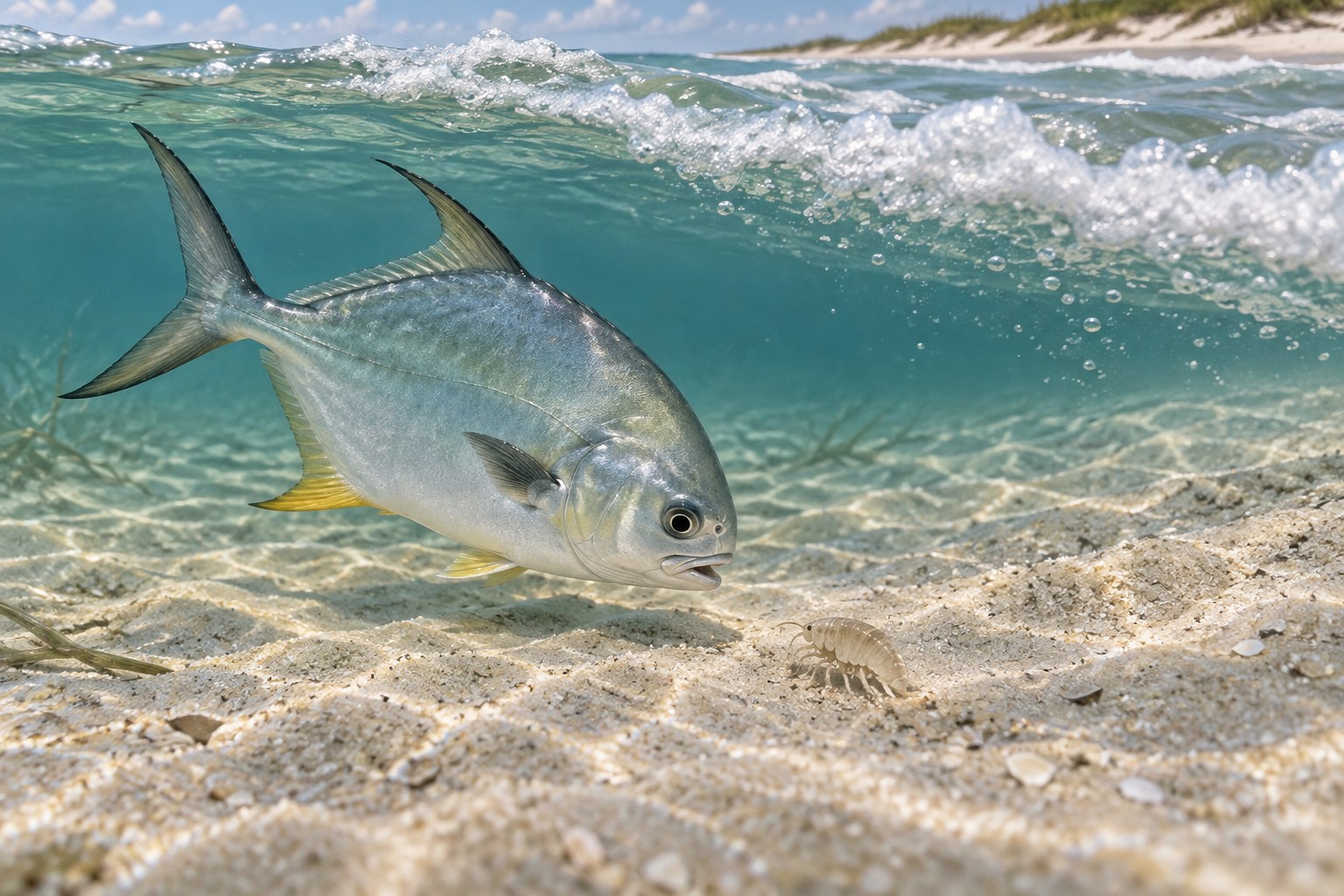
Pompano can travel along sandy coastal lanes in search of small prey. Watch the waves to locate a bar and the water inside it. Begin with a moderate cast rather than assuming the fish are beyond the farthest breaker.
A dropper rig holds bait above the sand. Keep shrimp pieces, prepared bait or permitted sand-flea bait compact enough to leave the hook point clear. Oversized bait can twist and obscure the hook.
Check the first casts for tangles. A rig that lands poorly is not giving the bait a fair chance. Smooth casting and proportionate components are more useful than extra force.
If a particular distance receives attention, repeat it. A passing group of fish may use the same lane for a short period before moving on.
Use small bites as useful information
Whiting may feed close to the beach in the inside trough. A small shrimp piece near bottom is a straightforward test. Keep the bait short enough that a fish reaches the hook while taking it.
Light taps can be meaningful even when no fish is landed. Retrieve and inspect the bait. If the loose end has vanished, shorten the next piece or use a firmer section.
Hold the rod briefly if the wave rhythm makes bites difficult to see from a holder. Learn the regular motion and watch for a different signal. Avoid striking at every movement of the surf.
Keep the presentation at a manageable distance. The lesson is where the bait works, not how far the angler can cast.
Watch the lane change through the tide
A rising tide may deepen the near trough and reduce the dry beach. Falling water can expose a bar and shift the useful lane. Reassess the cast as the shoreline changes.
Look for repeated wave patterns rather than one calm moment. A gap in breakers can carry outward current. Stay on shore and do not use it as a path into deeper water.
Keep equipment above the active wash. A cooler or tackle bag surrounded by rising water creates a distraction when attention should remain on hooks and other visitors.
When current pulls the rig rapidly sideways, retrieve before it leaves the clear lane. Weight changes must remain within the rod’s rating, and some days simply exceed a light outfit’s capability.
Make a small adjustment with a clear purpose
| What the rig tells you | Adjustment | Question it answers |
|---|---|---|
| Bait stripped after light taps | Use a smaller or firmer piece | Can fish take the hook as well as the bait? |
| No bites at one distance | Test the next visible lane | Are fish traveling at another depth? |
| Repeated tangles | Simplify and cast more smoothly | Is the bait landing cleanly? |
| Weed pulling the line | Clear it and try a cleaner section | Can the rig remain controlled? |
| People entering the lane | Reel in and pause or move | Is there still safe room to fish? |
One deliberate change helps you learn. Replacing every component at once makes the next result harder to interpret.
Keep a lure ready for visible activity
Small bait scattering repeatedly can signal a predator passing through. A compact metal lure can be tried from a safe open position. Check for birds and people before casting.
Bring the lure through the edge of the activity at a controlled pace. If it sinks well below the prey, retrieve sooner or change the speed. A small adjustment can keep it in the useful layer.
Toothy fish require an appropriate leader and handling tools. Inspect the line after a hit, including a missed strike. Keep fingers outside the mouth when removing the hook.
Do not follow a school into crowded water or uncertain surf. A brief opportunity is worth taking only while the lane remains safe.
Keep offshore expectations separate
The Stuart area is known for a broad range of saltwater fishing, but standing at Stuart Beach does not provide access to all of it. Offshore reefs and pelagic fish require a different boat, route and marine plan.
Do not treat a nearby reef listing as a safe swimming or paddling destination. Distance, current and vessel traffic can make that a serious undertaking. This guide’s beginner methods remain shore-based.
For a river-side comparison, see Jensen Beach’s public pier and estuary options. Their access and tackle needs differ from this ocean session.
A focused beach outing can be worthwhile without trying to reproduce the area’s offshore reputation.
Choose manageable surf over a fixed fishing time
Check the local weather and tide forecast before leaving. Strong onshore wind and heavy weed can make a favorite tide stage unhelpful.
Cooler periods may bring comfortable beach weather between fronts. Summer mornings can reduce heat, but thunderstorms need an early response. Keep a clear route to proper shelter.
Use the actual beach conditions as the final decision. Warning flags and closures are more immediate than a general fishing forecast. Do not enter the water to compensate for an awkward cast.
Bring water and sun protection even for a short visit. A breeze does not prevent sun exposure or dehydration.
Measure, identify and handle the fish carefully
Have a ruler and pliers ready before the first bite. Use FWC’s current recreational saltwater rules to verify licensing and harvest requirements for the actual species.
Support released fish with wet hands and avoid a long delay on dry sand. Keep a legal retained catch chilled. Separate bait from food and drinking supplies.
Before leaving, inspect the sand for hooks, clipped line and wrappers. Remove the rod holder and leave the crossing clear.
Note the bait size and distance that worked. A short record turns one beach session into a useful starting point for the next.
Keep a surf rig within its intended load
Check the rod’s printed casting range before selecting a sinker, and remember that bait and attachments add weight. A smooth cast within that range gives better control than an overloaded swing. Keep the space behind clear throughout the motion.
If the rig fails to hold despite suitable weight, investigate weed and current before adding more. A different lane or shorter session may solve the problem more safely. The goal is to keep bait working in useful water, not to keep increasing the load until something stays put.
Put the plan into practice
Decide how long the return walk will take before settling far from the access. Increasing wind and heavy gear can make that walk slower than the outward approach.
Stuart Beach fishing questions
Is this guide about offshore Stuart fishing?
No. It focuses on the public Atlantic beach and shore-based surf methods.
Where is the county’s listed beach access?
Stuart Beach is listed at 889 Northeast Ocean Boulevard. Check current entrance signs and guarded areas.
Can I fish beside swimmers if I cast farther?
No. Keep a clear separate lane, since the line and hook still travel through the water and landing area.
What should I change after small missed bites?
Inspect hook exposure and reduce oversized bait first. That can help a fish reach the hook instead of only removing a loose end.