
PANHANDLE
Tahiti Beach
fishing guide
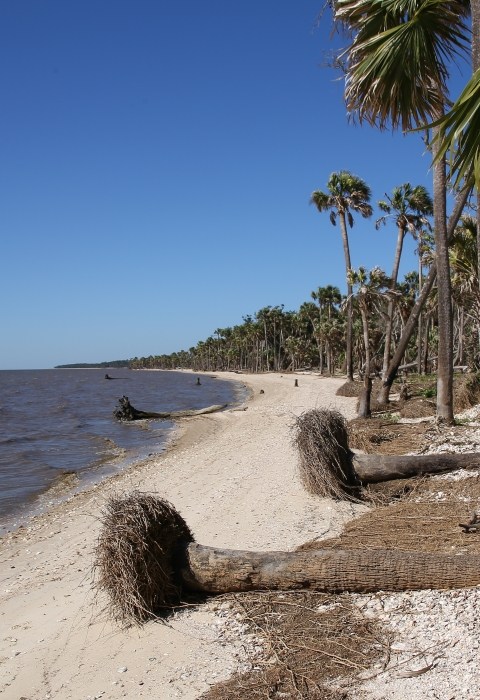
Tahiti Beach is a name used for beach habitat on St. Vincent National Wildlife Refuge. It is not a drive-up mainland park or a separate Caribbean-style resort beach.
Explore the guide ↓Use the St. Vincent refuge identity to plan the visit
The U.S. Fish and Wildlife Service identifies Tahiti Beach as a beach area on St. Vincent National Wildlife Refuge. The name can otherwise lead to confusion with beaches elsewhere. This guide concerns the Franklin County refuge island, not an unrelated destination with a similar name.
An agency photograph confirms the place name and habitat; it does not prove that a specific landing, route or fishing position is open today. Contact the refuge for current access before arranging boat travel. Fishing must remain in designated permitted areas. Treat Tahiti as part of the refuge's rules rather than a separate public beach with unrestricted access.
Arrange a legal landing and a return that includes the walk
St. Vincent is an island reached by water, with no mainland road bridge. Boat transport is only the first step. Confirm where landing is allowed and which open route reaches the beach you intend to visit. Do not improvise a dune crossing because it seems shorter.
Agree on the return place and time before departure. The weight of water, bait and a cooler affects how far a visitor can comfortably walk. Keep spare time for a slow return or a weather change. A remote shoreline is not a place to assume someone else will provide supplies, shade or an unplanned pickup.
Read the beach without treating the photograph as a map
Barrier-island beach shapes change with waves and storms. A scenic image can show the type of sand and coastal setting, but not today's bar positions or bottom depth. Watch the actual breakers and foam before choosing a cast.
A quieter strip between breaking water and dry sand can mark a useful trough. A calm gap may instead be a deeper current channel. Use those clues from a secure permitted shore position. Do not enter the water to verify a dark patch. At a remote beach, a cautious readable lane is more useful than a spectacular-looking but uncontrolled current seam.
Begin with small food near the bottom
Whiting and possible passing pompano suit a compact sand-bottom bait plan where fishing is authorized. Shrimp trimmed to a small hook is an approachable starting choice. Legally obtained shellfish-style baits can offer another option without requiring a huge mouthful.
Keep the hook point clear and use sufficient weight for control. Test the closer lane before the longest cast. Retrieve regularly to check whether the bait survives or catches weed. A few thoughtful comparisons reveal more than placing several unattended rods across the shore. If conditions will not let the rig hold safely, stop the attempt rather than wading farther out.
Use visible prey to justify a lure change
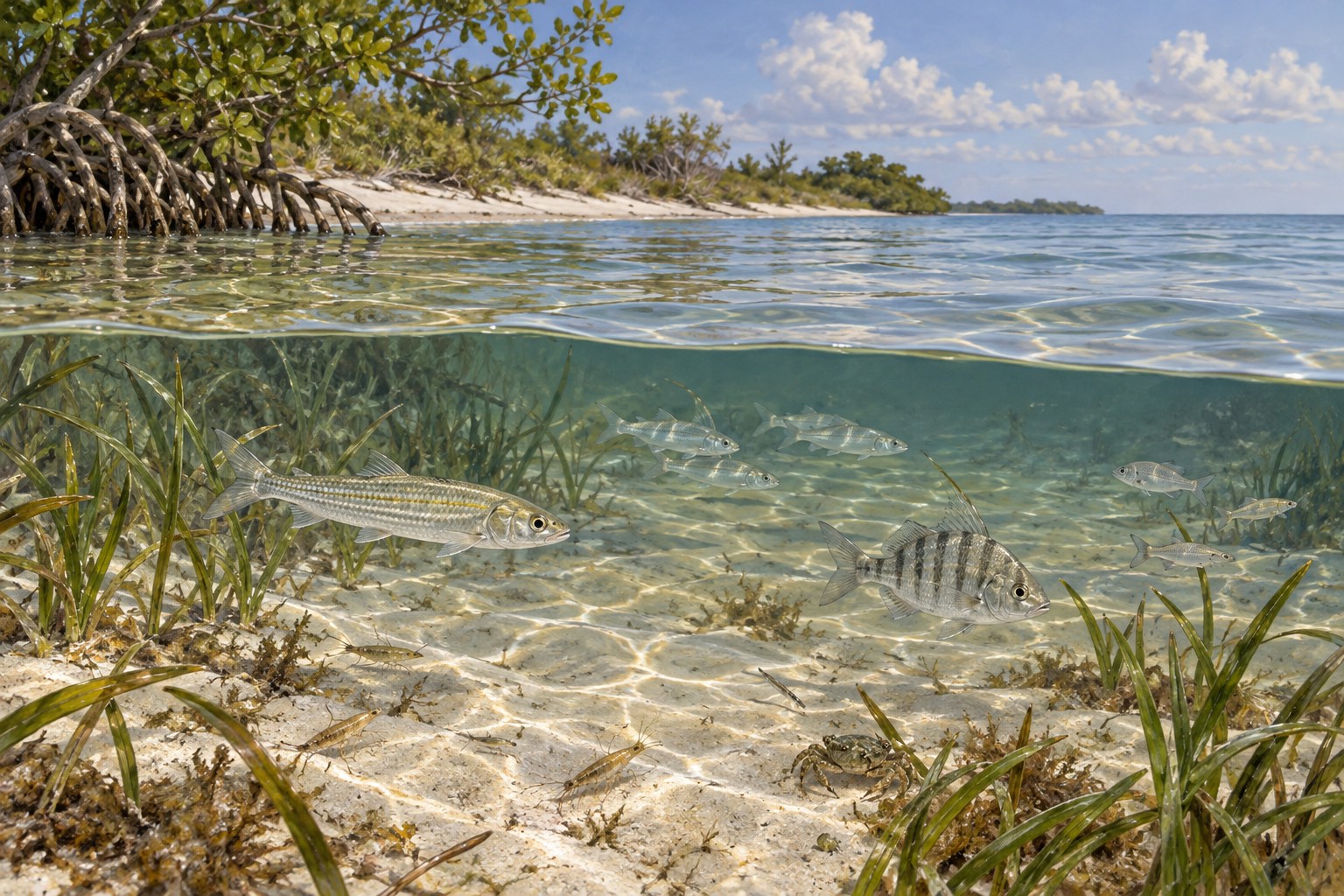
Jacks, bluefish and Spanish mackerel can follow small fish along the wider coastal environment. Look for organized scattering or repeated surface strikes. A compact spoon lets you test that sign from an open legal position without abandoning the shore plan.
Do not cast through diving birds or toward wildlife resting beside the water. Check the leader after a toothy catch and handle the hook with pliers. A feeding burst may move out of reach quickly. Let it go rather than following it along a closed beach section or into a dangerous landing situation. Regional possibility is not the same as a guaranteed Tahiti catch.
Balance the fishing kit against the transport load
A medium outfit with a few small bottom rigs and one compact lure can cover a first surf visit. Match the sinker to the rod's stated casting capacity. Keep spare leader and hooks sealed during the boat ride and beach approach.
The essential cargo also includes drinking water, sun protection, first aid and a way to communicate. Bring a waste container large enough for all food and tackle scraps. Any retained fish needs suitable chilling, and that adds weight to the return. Check licenses and current harvest limits on the mainland, before a rule question becomes a problem on the island.
| Decision | Useful evidence | Avoid assuming |
|---|---|---|
| Correct destination | St. Vincent refuge identification | A similar beach name elsewhere |
| Fishing position | Current designated-area guidance | Permission from a scenic photo |
| Return crossing | Forecast and confirmed transport | A last-minute pickup |
Choose weather that leaves room for a calm return
Comfortable spring or fall temperatures can reduce the strain of a remote beach walk. Summer heat and afternoon storms make the same plan more demanding. A winter front can quickly roughen the water used by the transport boat.
Read the marine forecast for the entire visit and assess the pass or crossing separately from beach surf. Tide predictions help anticipate level, but actual local current and wind determine travel safety. A short legal visit in stable weather is a better introduction than trying to use every hour before a deteriorating return. Do not rely on a distant rain cloud remaining distant.
Give the beach's wildlife its full space
Stay outside nesting boundaries and keep to permitted routes. A secluded beach can be especially important for feeding and resting birds because fewer people normally disturb it. Quiet is part of the habitat's value, not a reason to spread gear farther.
Avoid food scraps that draw birds to hooks. Keep line trimmings enclosed, and retrieve small wrappers before the breeze takes them. Do not collect natural or historic objects as souvenirs. Leave dune plants undisturbed and preserve the boat landing for the next visitor. These small choices make fishing compatible with a wildlife refuge rather than competing with its purpose.
Write down what was verified, not what was assumed
After a visit, note the authorized landing and the exact open beach section used. Record waves, water clarity and which small bait remained workable. Keep that observation separate from a photograph showing a different day or a broad refuge fishing species list.
Support caught fish gently and release uncertain identification promptly when needed. Count equipment before the return crossing and inspect the shore for hooks. Tahiti Beach becomes easier to understand through a modest, accurate visit. Its remote name is less important than correct access, protected habitat and a fishing presentation you can safely control.
Common questions
Where is this Tahiti Beach?
The Fish and Wildlife Service identifies it on St. Vincent National Wildlife Refuge in Franklin County.
Is there a public road to the beach?
No mainland road bridge reaches St. Vincent Island. Arrange lawful water transport and an approved route.
Does an agency beach photo establish current fishing access?
No. Confirm current refuge landing, route and designated fishing boundaries separately.
What is a sensible first fishing setup?
Where fishing is authorized, one supervised small shrimp bottom rig offers a manageable sand-trough trial.
Prepare for your visit
Check local tides and weather. Read more about florida pompano, whiting, spanish mackerel. Check current FWC saltwater fishing rules.