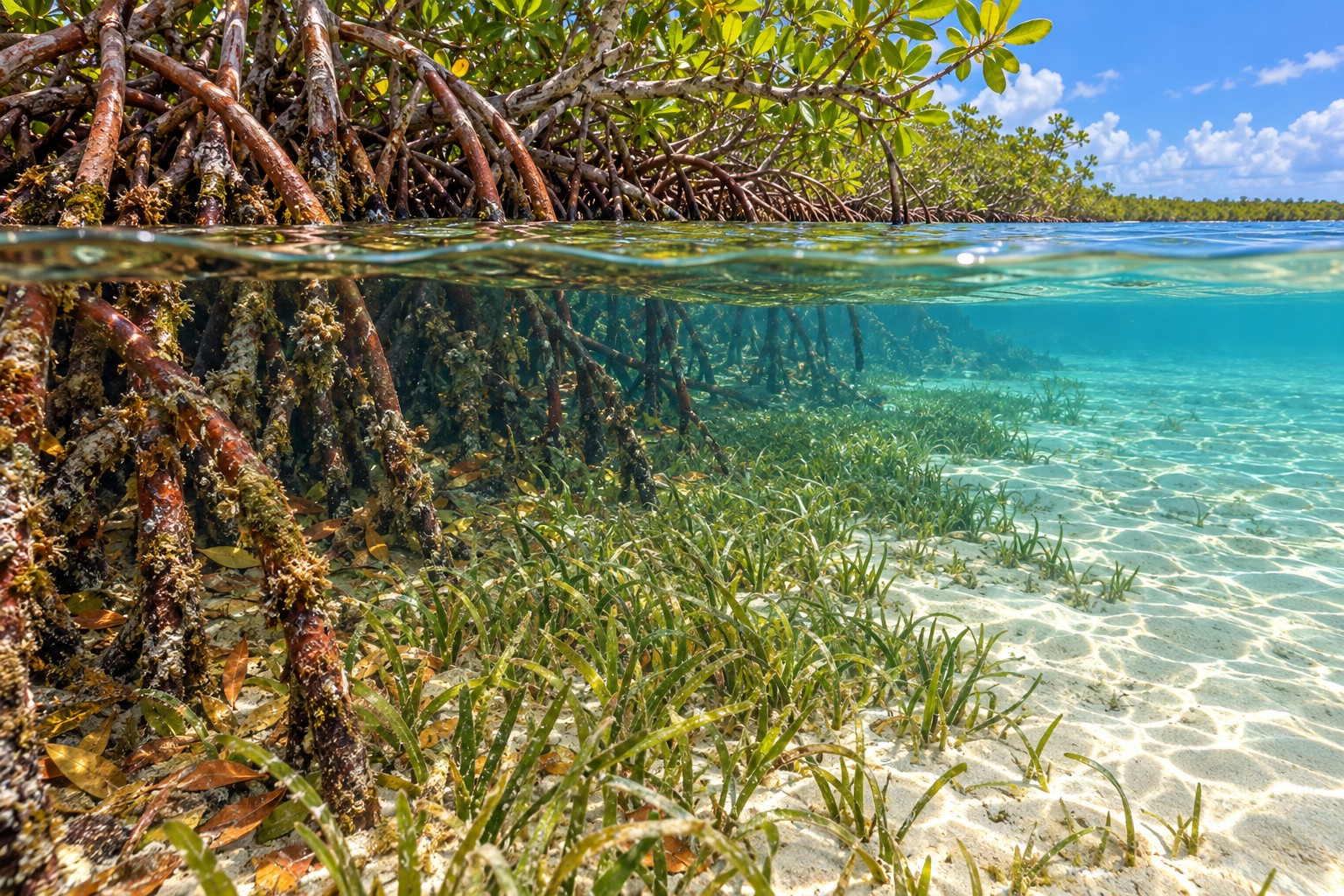
Key Largo has mangrove shorelines, shallow flats and ocean water leading toward the reef. It also has protected areas where fishing is restricted or prohibited. The first step is to choose a legal place and a safe route, then build the fishing plan around it.
This is not a destination where every waterfront park works like a public fishing pier. A swimming beach may have no suitable casting space. A kayak launch may lead to water with separate rules. A famous reef may be a place to look at fish rather than catch them.
Key Largo rewards a quieter approach. Clear shallows can reveal fish before they know you are there, but they also reveal the boat, line and splash of a careless cast. Patient observation matters as much as the contents of the tackle box.
Bayside thinking
Consider mangrove margins, open sand beside grass and sheltered water that fits the forecast. A shallow route still needs careful navigation and enough depth for the return.
Oceanside thinking
Plan around the marine forecast, the reef’s protected zones and suitable boat handling. Blue water on a map is not a measure of how easy the trip will be.
A LOCAL DETAIL YOU CANNOT SKIP
Reef names are not fishing permissions
Florida Keys National Marine Sanctuary uses different protected zones. Some protect specific reefs. Others have restrictions on vessel use, anchoring or entry. State and federal fishing rules apply alongside those zone rules.
Molasses Reef is a well-known Key Largo destination for diving and snorkeling. It is a sanctuary preservation area. Do not turn a photograph of fish there into a fishing recommendation.
Before a trip, locate your intended route on the current official zone map. Identify the boundaries you may approach. If you cannot confidently tell where a restricted area begins, choose a different route until you can.
Yellow buoys need attention: The sanctuary uses yellow buoys for certain protected zones. A buoy is not an invitation to tie up and fish. Read the rules for the named area and understand the boundary before approaching.
Rules for spearfishing differ from ordinary hook-and-line assumptions, and Key Largo’s management area has additional restrictions. This guide is written for rod-and-reel planning. It does not identify places to spearfish.
The park offers paddling and other water activities, with fishing permitted in designated areas. The word designated is important. Ask park staff about your intended fishing position or route rather than assuming all park water is open to the same activity.
For a first visit, make the shore and launch arrangements clear before unpacking. Separate swimming areas from fishing areas. If you rent a kayak, confirm both the rental boundaries and the fishing rules for where you intend to go.
The park is also a place to learn about the habitats around Key Largo. Use that knowledge when planning a later trip to legal fishing water. A coral-viewing trip and a fishing trip need different expectations.
BAYSIDE · PADDLECRAFT ACCESS
Rowell’s Waterfront Park
The county describes an eight-acre waterfront park at mile marker 104.5, with picnic space, swimming and a kayak-and-paddleboard launching area. Motorboats and personal watercraft are not allowed there.
Treat Rowell’s as a possible paddlecraft departure point after checking the local rules. It is not listed here as permission to cast through the swimming area. Choose a fishing route only after confirming where you can legally fish beyond the launch.
The county lists daily access from 7:30 a.m. until half an hour after sunset. Check current notices before traveling. A short out-and-back route is easier to judge than a long crossing on your first day.
NEARBY TAVERNIER · OCEANSIDE BOAT RAMP
Harry Harris Park
Harry Harris Park is in Tavernier, south of Key Largo. The county lists a boat ramp, picnic facilities, a playground and a protected swimming area. It can be relevant when planning an oceanside boat outing.
Nonresident entry and trailer-launch charges apply, with different ramp fees on certain days. Confirm the day’s charges and ramp suitability before bringing a boat. A park entrance fee and fishing-license requirements are separate matters.
Keep the swimming area free of hooks and launch operations orderly. Check wind and seas beyond the protected area before deciding that the open-water route is comfortable.
PRIVATE WATERFRONTS · ASK FIRST
Marinas, resort docks and roadside water
Many attractive shorelines are part of private property or active businesses. Do not assume a restaurant view or hotel dock is a public fishing platform.
If you are staying at a waterfront property, ask whether fishing is allowed, where hooks may be used and how fish should be landed. Keep clear of swimming ladders, boat slips and people arriving by water.
Roadside access can also be misleading. A visible patch of water is not enough reason to park on a shoulder or cross a barrier. Use an established, permitted entrance.
READ THE SMALL FEATURES
Mangrove roots and open lanes do different jobs
Mangrove roots create cover. Seagrass supports small animals and offers another kind of shelter. Open sand between them gives fish a route and gives you room to present a bait without hanging the hook in vegetation.
Look at the combination rather than one feature alone. A root line beside a little depth can fish differently from roots in only a few inches of water. A clear sandy strip through grass can be easier to work than a solid bed.
Roots, grass and bare sand form different parts of a feeding area. This illustration explains the habitat without marking a particular fishing location.
Stay outside the roots
Start with a cast along the outer edge. Throwing deep into tangled roots may produce a snag before a fish has a chance to respond. Control the line angle and keep enough room to lead a hooked fish away from cover.
Find the gap in the grass
A small opening can let a shrimp or lure move where a fish can see it. Use light weight when conditions allow. Too much weight may pull the bait down into the plants.
Use the sun to help your eyes
Glare can hide fish and bottom changes. Polarized glasses and a better viewing angle may help. Do not mistake improved visibility for reliable depth information. Navigation still needs a chart, local knowledge and attention.
Key Largo has rocky shores as well as mangroves. Photograph by Yinan Chen, 2013. The view does not establish public fishing access. Photo information.
CHOOSE A REALISTIC TARGET
Start with a fish that fits the day
Mangrove snapper
These fish use a range of cover, including mangrove edges and hard structure. A small shrimp or baitfish can be a useful offering where fishing is permitted. Keep it close to the edge without burying the hook inside the roots.
Use a presentation that looks natural in the clear water. An oversized weight or heavy splash can make a cautious fish hesitate. Once hooked, guide it away from cover while keeping steady pressure.
Identify the snapper correctly before keeping it. Different snapper species have different rules, and a small fish is not automatically the same species as the larger one beside it.
Bonefish
Bonefish are a specialist shallow-water target. They search flats for small bottom food and can be difficult to approach. A shrimp or a suitable fly must reach the fish without an alarming splash or a line laid across its path.
Watch where the fish is traveling. Put the offering ahead of it and let the fish close the distance. Casting repeatedly at the body often creates a fleeing fish rather than a bite.
Build the outing around careful release and suitable tackle. If you are still learning to spot fish through glare, spend time observing before expecting a quick catch.
Barracuda
Barracuda may be visible over shallow water and along edges. Their speed and teeth make them a different target from a small bait-stealing snapper. Use equipment, leader material and unhooking tools suited to them.
Do not place fingers near the mouth or attempt a casual hand landing from a kayak. A fish that looks still can move suddenly. Have the release method settled before casting to one.
Jacks
A moving school of jacks can create surface splashes and scatter baitfish. A small moving lure can match that activity when the area is open to fishing and you have room to cast.
Let the school come within a safe casting position rather than chasing through swimmers, boats or protected zones. Their strength can surprise anglers using a light outfit.
Tarpon
A rolling tarpon is exciting to see, but sighting one is not the same as having the right fishing opportunity. These powerful fish need appropriate equipment and a careful release plan.
Avoid turning a general sightseeing kayak outing into an improvised tarpon session. Learn the current handling rules and use tackle that does not prolong the fight unnecessarily.
Reef fish in legal fishing water
Snapper and grouper may be part of an oceanside boat plan outside closed areas. The exact species, zone and water jurisdiction determine the rules. A reef marked on a chart may still sit within a protected boundary.
Know the bottom, route and release needs before dropping a bait. Fish raised from depth may need help returning below the surface. Carry the required equipment and learn how to use it before a fish needs it.
MAKE THE OFFERING LOOK NATURAL
Use less weight when you can control the bait
In shallow, clear water, a bait often looks better when it moves freely. Begin with the least weight that lets it reach the intended depth. Add weight only when current or depth makes that necessary.
That does not mean leaving a huge loose loop of line. Keep enough contact to notice a bite and to prevent the bait from drifting into roots, a boat slip or a swimmer’s path.
Fishing situation
Offering to consider
Presentation goal
Permitted mangrove edge
Small live shrimp or baitfish
Travel alongside the roots with room to draw a fish away.
Open sand beside grass
Light soft lure or shrimp
Stay visible over the bottom without burying in vegetation.
A sighted fish on a flat
Target-matched bait or fly
Land ahead of the fish and let it approach.
Fast surface feeding
A compact moving lure
Match the small baitfish while keeping the cast clear of birds.
Deeper legal reef water
Species-appropriate natural bait
Reach the target depth with tackle and release gear suited to the trip.
When a fish follows and turns away
Do not immediately make a louder cast. Check whether the lure is too large, moving too quickly or pulling through an unnatural angle. A pause or a smaller offering may be more useful than a complete change of location.
When every cast hits the roots
Move the target farther from the branches. Practice accuracy on open water before trying a tight gap. Lost hooks and line in roots create problems for more than your tackle budget.
A SHORT DISTANCE CAN STILL BE EXPOSED
Read the marine forecast before picking a side
Wind direction affects which shore appears sheltered. It also affects the route back. A comfortable downwind paddle can become a hard return when you turn around.
On the oceanside, consider wind, waves, current and the ability of your boat together. On the bayside, shallow banks and narrow channels create a different set of demands. Neither side is automatically safe because the other looks rough.
Cool fronts
A front can change temperature, wind and the behavior of shallow-water fish. Choose a modest route and give the water time to tell you where activity remains. Slower presentations may suit a quiet period.
Warmer months
Heat affects people and bait. Carry water, protect the bait supply and plan for thunderstorms. A shorter early session may be more comfortable than a long exposed afternoon.
Water clarity and cloud
Cloud cover can make sight fishing harder even when the sea is calm. If you cannot see fish clearly, choose a method that searches suitable water without depending on visual targeting. Do not speed over a shallow flat simply because glare hides the bottom.
For a longer trip into Florida Bay, check whether the route enters Everglades National Park. The park has its own boating and access requirements. Plan that as a distinct outing rather than an unexamined extension of a Key Largo paddle.
KEEP THE EQUIPMENT SUITED TO THE TARGET
A light outfit still needs enough control
For small inshore baits and lures, a medium spinning outfit is a useful starting tool. Bring spare leader, several hook sizes and a few light weights. Adjust the rig to the current and cover instead of using one fixed arrangement everywhere.
For toothy fish, choose a suitable bite leader and long-reach unhooking tools. For large tarpon or offshore targets, move to equipment intended for that size of fish. A very long fight is not a good substitute for an appropriate outfit.
Pack polarized glasses, a hat, drinking water and protection for a phone or radio. Keep a measuring device handy if your plan includes a legal harvest. Stow hooks before moving the boat or carrying a kayak.
Use a landing net when it suits the fish and the craft. Prepare it before the fish reaches you. Trying to assemble equipment while a fish circles beside a kayak makes an avoidable problem more likely.
THREE DIFFERENT KINDS OF VISIT
Set the expectation before you leave shore
A learning day at Pennekamp
Ask staff about designated fishing areas and decide whether the day is for fishing, paddling or viewing the habitat. Keep those activities within their permitted spaces.
A short bayside paddle
Confirm a legal launch and route. Choose calm conditions, stay near a known return and work one suitable edge. Leave open-water crossings for a trip with the right preparation.
An oceanside boat outing
Check ramp access, the marine forecast and the current sanctuary map. Choose a legal fishing destination and a backup before leaving. Carry the tackle and release gear for that target.
A shore-based visit can still be worthwhile when fishing access is limited. Use the time to study water movement, learn the habitats and arrange a better-suited fishing outing. Do not force a cast from a place that is clearly intended for something else.
KEEP THE HABITAT INTACT
Leave roots, grass and coral where they belong
Give the boat enough water under its hull and motor. Do not use engine power to grind across a shallow bank. If the route looks doubtful, stop and reassess before the propeller reaches vegetation.
Never anchor on living coral. Use legal anchoring or mooring arrangements that fit the location and activity. A mooring used for reef viewing does not automatically permit fishing there.
Keep released fish in the water when practical and have unhooking tools within reach. Avoid lifting large fish for a prolonged photograph. Stop fishing a situation that repeatedly exposes exhausted fish to immediate predation.
Carry out all line and packaging. Respect private docks, marked swim areas and wildlife restrictions. The best fishing plan leaves the place ready for both fish and the next visitor.
KEY LARGO QUESTIONS
Useful answers before packing a rod
Can I fish at every reef near Key Largo?
No. Protected zones have different rules, and some prohibit fishing. Check the official boundary and rules for the named reef before planning to fish it.
Is Molasses Reef a beginner fishing spot?
It is a sanctuary preservation area known for diving and snorkeling. Treat it as a protected reef-viewing destination, not a place recommended here for casting.
Can I launch a motorboat at Rowell’s Waterfront Park?
The county identifies it as a kayak-and-paddleboard access area and says boats and personal watercraft are not allowed. Choose an appropriate motorboat ramp elsewhere.
Is Harry Harris Park in Key Largo?
It is nearby in Tavernier. It may fit an Upper Keys boat plan, but it is not the same park or launch as a Key Largo bayside access.
Does Pennekamp allow fishing?
The state park says fishing is permitted in designated areas. Ask about the exact location or route you intend to use.
What is the easiest bait to begin with?
A small shrimp can suit several legal inshore settings. The important part is getting it to the right depth without tangling it in roots or grass.
Why do shallow fish move away before I cast?
They may notice your wake, shadow, footsteps or noise. Stay farther away and observe the direction of travel before presenting the bait.
Can I extend a paddle into Florida Bay without extra planning?
No. Distance, shallow navigation and possible national-park requirements need attention. Build the route around your ability and a dependable return.