Atlantic beaches · Vilano Pier · Salt marshReviewed September 29, 2026Photo: Ebyabe, 2010
ATLANTIC SURF AND TIDAL MARSH
Choose between moving waves and moving channels
St. Augustine offers two very different fishing days. The Atlantic beaches have surf, sandbars and passing fish. Behind the barrier island, tidal creeks and the Intracoastal Waterway reward a closer look at marsh edges, shell and current.
Do not choose between them only by distance from your hotel. A windy ocean morning may call for a different plan. A marsh route needs enough water for the return journey. A pier visit depends on that particular pier being open.
Ocean pier repair notice: St. Johns County announced a closure of its Ocean and Fishing Pier beginning May 13, 2026, with work expected through the end of November 2026. This guide was checked September 29, 2026. Do not plan to fish that pier until the county confirms reopening.
Vilano Fishing Pier is a different facility on the Intracoastal side. Anastasia State Park and the Fort Matanzas area offer other settings, each with its own access rules.
CHOOSE YOUR STARTING POINT
Four locations, with the details that matter
INTRACOASTAL WATERWAY · PUBLIC PIER
Vilano Fishing Pier
260 Vilano Road, St. Augustine
The county lists this pier west of the Vilano Bridge, with parking, restrooms, a pavilion and a floating dock. Listed hours are dawn to dusk. It gives visitors a shore-based way to fish tidal water without choosing an ocean-surf position.
Watch the direction of the flow before dropping a bait. Around pilings, start with a short presentation you can retrieve cleanly. A cast straight across strong current can sweep into someone else’s line long before it reaches the intended depth.
Use the designated fishing space and respect any separate docking activity. A small shrimp or crab bait gives you a starting approach for fish feeding near hard cover. Check the leader after it brushes a piling.
ANASTASIA STATE PARK · TIDAL WATER
Salt Run
Salt Run offers a different view of Anastasia State Park from the open beach. Its tidal water, vegetation and oyster habitat make it a place to learn how fish use edges. The park lists a fishing area with a fish-cleaning station.
A kayak can help you cover suitable water, but it should not turn the outing into a race through the whole area. Begin near a permitted launch, choose one shoreline and keep track of the water level as you fish.
For bait fishing, hold a shrimp above vegetation with a float. For lure fishing, work a small soft bait through a clear lane. If the hook catches grass each time, change the depth or angle before trying a larger lure.
ANASTASIA STATE PARK · OCEAN SHORE
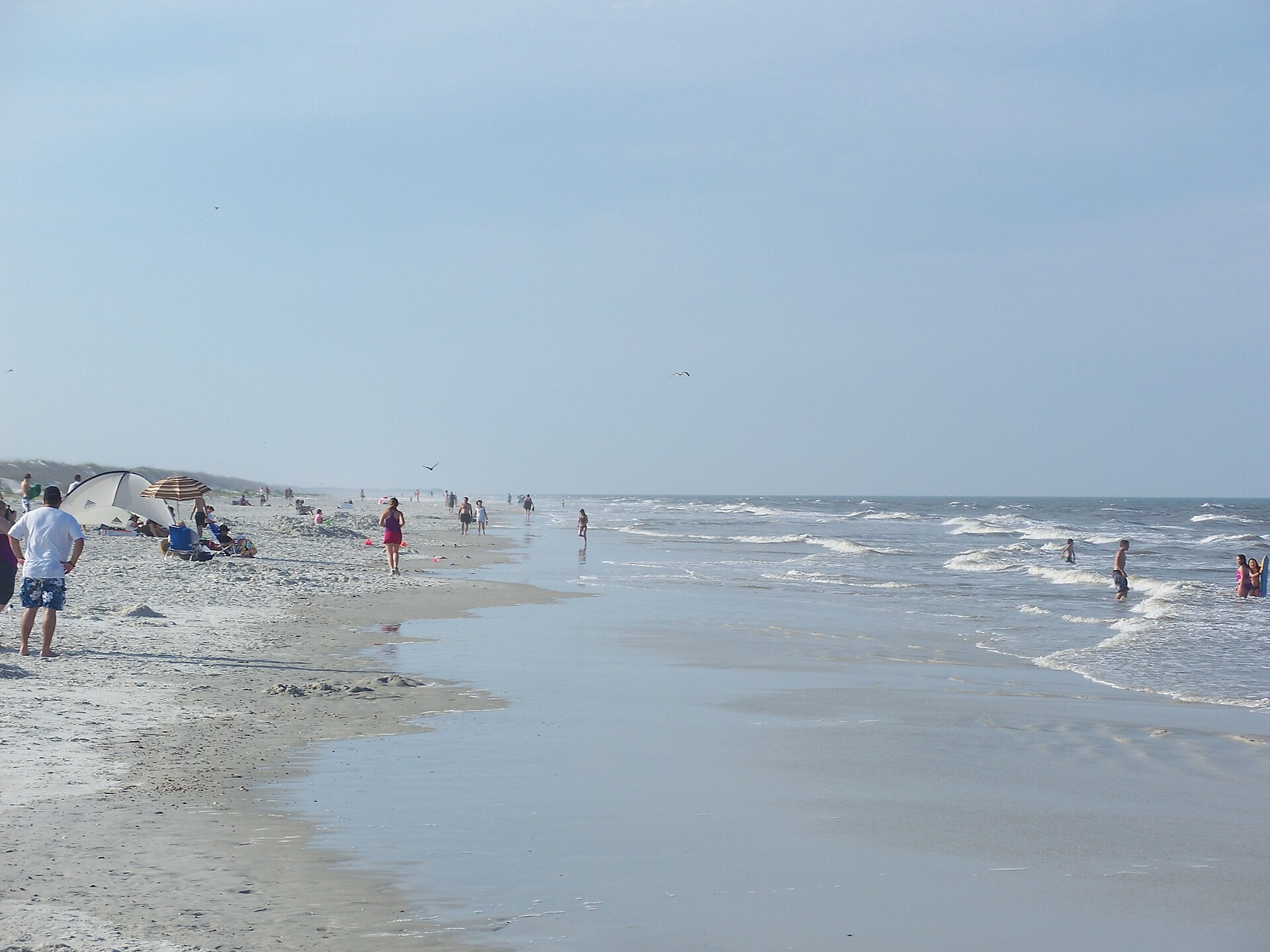
The Atlantic beach
The beach side of the park is a separate fishing setting from Salt Run. Here you are reading waves and sandbars. Choose a legal stretch well away from swimmers and keep your casting path clear.
Whiting and pompano are reasons to try a compact bait close to the bottom. A few short test casts can reveal more than immediately sending every rig as far as possible. Check park opening times and current beach notices before walking far from access.
Wind can push a rig sideways and build surf along this exposed coast. If you cannot control the line within your rod’s safe casting weight, another setting or another day is the better choice.
SOUTH OF TOWN · NATIONAL MONUMENT
Fort Matanzas waters
The national monument sits among the Atlantic, Matanzas Inlet, the Matanzas River and connected tidal waters. It is not a place where every boardwalk or dock is open for fishing.
The National Park Service prohibits fishing from park boardwalks and docks. It also restricts fishing along the shore above mean high tide within 50 feet of the fort docks. Follow local signs and ask staff about your intended shore position.
Do not dig for sand fleas or collect fiddler crabs inside the monument. Its rules prohibit collecting plants and animals. Bring legally obtained bait instead.
The inlet has strong moving water and changing sand. Avoid wading into channels to reach a casting spot. For a first visit, observe in daylight and stay on a clearly permitted, stable section of shore.
ST. AUGUSTINE BEACH · CHECK REOPENING
St. Johns County Ocean and Fishing Pier
This familiar oceanfront landmark is included here so visitors do not confuse it with Vilano. The county’s 2026 repair notice closes the pier during work on its pilings. The notice also changes nearby beach access and restricts access beneath the structure.
The county says the gift shop remains accessible during the project. That does not mean the fishing deck is open. Confirm a formal reopening before making the pier the center of your trip.
Anastasia’s dune edge. Use marked beach access instead of crossing protected vegetation. Photograph by Ebyabe, 2010. Image credit.
LET THE WATER LEVEL SHAPE THE ROUTE
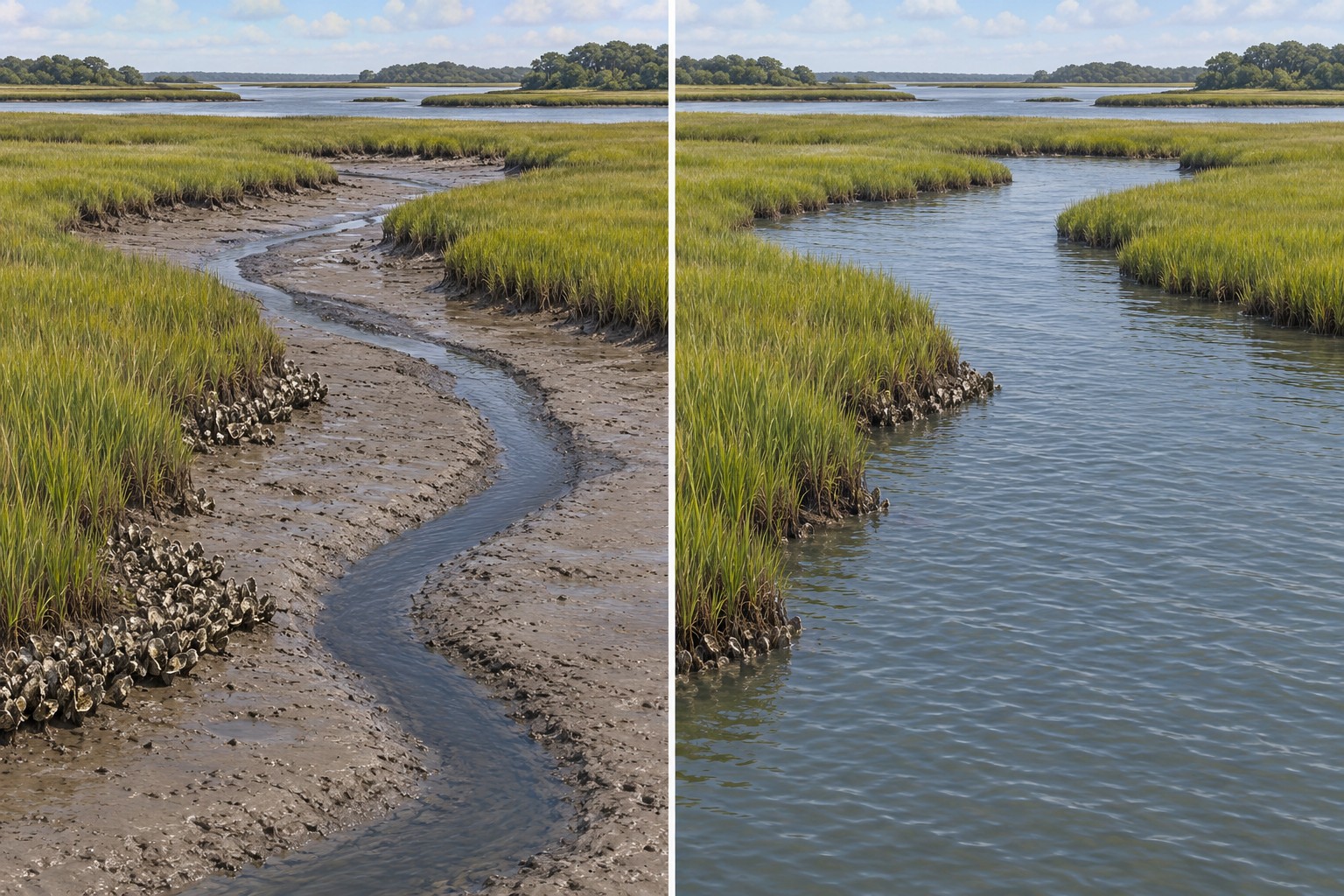
A marsh edge changes during the day
At higher water, shallow margins may become available to feeding fish. As the tide falls, those fish and their food may move toward drains and deeper lanes. Your task is to follow that change without getting your craft trapped on the flat.
A channel that carried a kayak on the way in may not do so on the way out. Leave yourself time, depth and an alternative. A narrow creek is not automatically a safe route just because waves cannot reach it.
The same marsh can offer very different travel space as water rises and falls. This comparison is a general illustration, not a tide prediction or local chart.
When water covers the shallow edge
Keep some distance from the grass and look for subtle movement. A small push of water can show a fish moving without revealing its body. Place a bait ahead of that path, then give the fish time to find it.
When water drains out
Try the mouth of a small drain where food enters the main channel. Work from deeper water and keep the boat clear of the opening. If the depth is becoming marginal, leave while the route is still usable.
When flow becomes difficult to fish
Find the slower side of a bend or a safe edge outside the fastest stream. The goal is a bait moving in a believable way. A rig tumbling uncontrollably across the bottom is hard to keep in the feeding zone.
Use the tide chart for planning, then watch the actual current. High and low water times are not identical to current changes at every bend, bridge and inlet.
MATCH YOUR TARGET TO THE SETTING
What to look for around St. Augustine
Redfish in the marsh
Investigate shell edges, creek mouths and shallow feeding lanes. A shrimp or small baitfish can be drifted into position. Soft lures help cover a longer stretch when the bottom allows it.
Avoid moving directly onto the fish. Shallow water gives them little room to ignore noise. One well-placed cast can be better than several hurried ones.
Trout near mixed bottom
Look for a change from vegetation to open sand or a shallow shelf beside depth. Try a lure that swims just over the cover, or suspend shrimp where the hook stays clear.
In a quiet period, vary the depth before replacing the entire outfit. A fish feeding below your lure may never see the change in color.
Black drum near the bottom
Shellfish and other bottom food make shrimp and crab baits useful choices. Present them beside accessible structure or along a suitable lower edge.
Use enough weight to hold the bait where you intend. Inspect the line when it contacts rough surfaces, and be ready for a fish larger than the small bait suggests.
Sheepshead at pilings and shell
A small crab or shrimp on a compact hook can fit this fish’s feeding style. Put it near the hard surface without leaving it wedged there.
Keep the rod in hand when possible. Light taps are easy to miss if you leave a loose line hanging unattended.
Flounder along sandy lanes
Work a small soft lure or baitfish near the bottom beside a current edge. Short movements and pauses can keep it within reach of a fish lying on the sand.
Choose a clean lane rather than dragging through thick shell. Check the current harvest season before retaining a catch.
Whiting and pompano in the surf
Try a small bottom bait where waves settle into a deeper lane. Shrimp is useful for an initial search. Sand fleas can suit pompano when obtained legally outside protected collection areas.
Do not mistake a far cast for a better cast. Change the distance until you find activity, then concentrate on that lane.
Bluefish around moving bait
Bluefish can turn up in coastal water where small fish are being chased. A compact lure or suitable bait can draw a strike when a school passes.
Respect their teeth. Use pliers for unhooking and inspect the leader. Keep hands away from the mouth even when the fish looks small.
Passing mackerel
When schools of small fish gather along the coast, watch for fast strikes near the surface. A small shiny lure can be useful if you have safe room to cast.
Let birds clear the area before casting toward activity. Do not move a boat through a school just to get a closer view.
THREE PRESENTATIONS TO UNDERSTAND
Depth, angle and bait size do most of the work
1
A bait that drifts past an edge
Cast slightly toward the arriving current so the bait travels across the chosen lane. Keep enough line out for a natural movement without allowing a large loose loop to catch on structure.
If the bait drags too quickly, change the casting angle or move to slower water. Adding weight may help reach depth, but it will not correct every poor drift.
2
A lure that stays just above the bottom
Use a small jig head and count it down before retrieving. A soft lure can be swum over grass or worked near a sandy edge. Change the sink time as depth changes.
When the lure comes back covered in vegetation, it is telling you something. Raise its path or use less weight. A clean-moving lure is easier for a fish to find.
3
A stationary surf bait
Choose a bottom rig and a sinker that stays in the intended area. Keep the bait small enough to leave the hook point exposed. Check it after repeated taps or whenever weed builds on the line.
Position the rod where you can reach it promptly. Do not leave lines in the water while walking far down the beach.
ADAPT TO WHAT THE COAST IS DOING
Wind can change your best option
Situation
A useful response
Ocean surf is building
Reconsider beach fishing. Look at a legal inland option only if its own conditions are suitable.
The water is draining from the marsh
Move toward a deeper return route before the shallows become a problem.
A pier rig keeps crossing other lines
Shorten the presentation or change position. Do not keep adding loose line.
Baitfish gather near a bend
Watch from a distance and cast into a clear feeding lane.
Cold water slows the bite
Try a smaller offering, a slower retrieve and nearby depth.
A storm interrupts the session
Leave exposed shore or water and reach proper shelter. Do not wait beneath an open pavilion.
Seasonal starting points
Winter: Protected tidal water and bottom-focused bait fishing can offer a more patient outing. Dress for the wind and consider a mild afternoon instead of the coldest part of the morning.
Spring: Watch how warmer water changes bait activity. A beach session and a marsh session need different rigs, so decide which one the forecast supports before packing.
Summer: Make the early part of the day count and plan around heat, crowds and storms. Keep live bait in good condition and leave time for an unhurried return.
Fall: Follow visible bait and check the effect of each front. Fish can change position as temperature and water movement shift.
A PRACTICAL KIT
Bring tackle you can adjust beside the water
For inshore fishing, pack a medium spinning rod, several small lure weights and spare leader. A float and a handful of hooks let you switch to shrimp without carrying a second tackle box.
For the surf, use a rod built for the total sinker-and-bait weight. Keep spare bottom rigs organized so hooks do not hang loose in a bag. A sand spike helps hold the outfit, but someone still needs to watch it.
For a pier, bring pliers and a landing plan. Ask about permitted landing equipment before targeting large fish from a high platform. Never rely on lifting a heavy catch by a thin line.
Good footwear matters near oyster shell and wet boards. A measuring tool, drinking water, sun protection and a place for used line should be part of every kit. For a kayak, wear your life jacket and secure loose tackle before launching.
MAKE THE FIRST DAY MANAGEABLE
Choose one of these shorter outings
Vilano without a boat
Check the pier’s access hours and bring one bait outfit. Watch the flow, then try a short presentation near suitable cover. Leave space for walking visitors and other anglers.
Salt Run at a measured pace
Confirm park and launch access. Pick a short route with enough return depth. Fish one edge carefully instead of trying to cover the whole waterway.
Anastasia from the sand
Check flags, surf and swimming activity. Start at an allowed stretch with a small bait. Compare close and farther casts, then end the visit while access and conditions remain comfortable.
Save the inlet and unfamiliar creek networks for a trip when you have more local knowledge. You can learn a great deal without making the first outing the most difficult one.
LOCAL RESTRICTIONS COME FIRST
Keep hooks out of closed access areas
Respect the ocean pier construction closure and all temporary beach signs. At Fort Matanzas, fishing and bait collection have park-specific restrictions in addition to state rules.
Confirm the current license, size, season and bag requirements for the species you plan to keep. A fish seen in the water is not automatically a legal harvest.
Release fish with wet hands and suitable support. Do not lay them on hot sand for a long photo session. Keep broken line away from birds, and give marine mammals room to pass without approaching them.
ST. AUGUSTINE QUESTIONS
Clear answers for planning the trip
Which pier is affected by the 2026 repair closure?
The county’s Ocean and Fishing Pier at St. Augustine Beach. Vilano Fishing Pier is a separate Intracoastal facility. Confirm current access to whichever one you choose.
Is Salt Run the same as the ocean beach?
No. It is tidal water within the Anastasia area, with a different bottom and fishing approach. A light bait or lure presentation fits it better than a heavy surf rig.
Can I fish from a Fort Matanzas boardwalk?
The National Park Service prohibits fishing from the park’s boardwalks and docks. Use only a permitted shore position and follow the signs around the fort docks.
Can I dig sand fleas at the national monument?
No. The park’s fishing guidance says collecting plants and animals is prohibited, including sand fleas and fiddler crabs. Obtain bait from a legal source elsewhere.
Why did my kayak route become too shallow?
The water level may have fallen during the trip. Plan for the return tide before entering a shallow creek, and keep a route that remains usable.
What if the current is too fast for my rig?
Try a slower edge, a shorter cast or a different position. A heavier sinker must still fit the rod and does not fix an unsafe fishing location.
Do I need a separate rod for every fish?
No. One suitable inshore outfit can cover several modest bait and lure methods. Surf casting and large-fish pier work may need different equipment.