
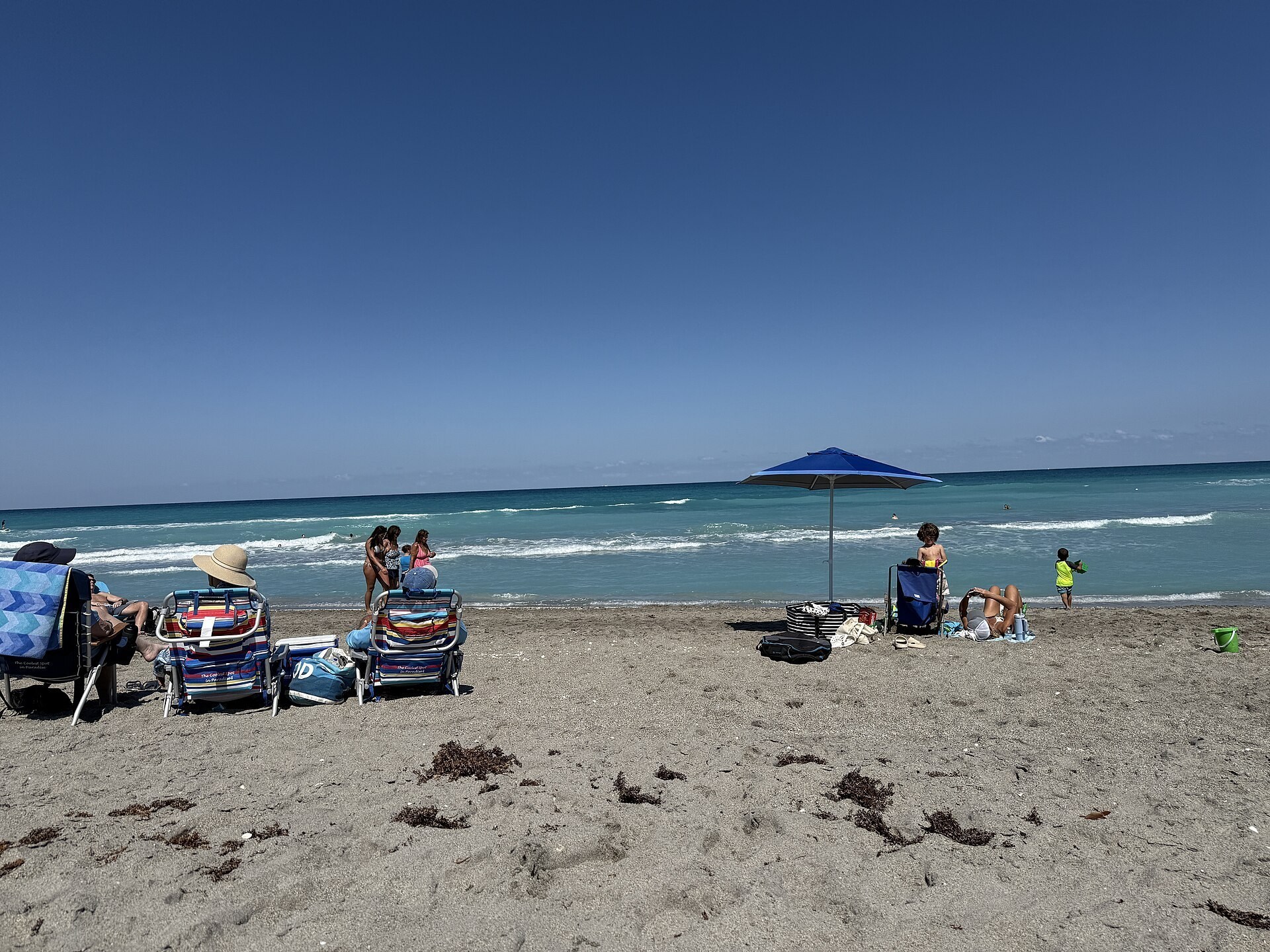
SOUTHEAST ATLANTIC
Loggerhead Park
fishing guide
Loggerhead Park combines a guarded Juno Beach shoreline with a nearby sea turtle conservation center. Fishing requires a separate clear section outside swimming water, with extra care around wildlife and nesting sand.
Explore the guide ↓Understand the beach and conservation setting
Loggerhead Park is at 14200 U.S. Highway 1 in Juno Beach. The county lists sunrise-to-sunset park access, guarded ocean frontage and a nature trail. Loggerhead Marinelife Center is a related conservation destination with its own visitor arrangements.
The park's swimming beach is not an unrestricted casting space. County guidance places shoreline fishing outside guarded swimming areas. Ask staff to identify the boundary before taking a baited hook toward the water.
A center visit and a fishing session can be part of the same day, but neither activity gives permission to interfere with turtles. Keep the fishing plan modest when the beach is crowded or wildlife activity requires more room.
Use established dune crossings. A shortcut through vegetation can damage habitat and create a path other visitors may mistakenly follow.
Find a clean strip of sand beneath the waves
The beach's productive fishing feature can be a shallow trough rather than a distant reef. Watch where breaking waves lose energy and reform. A lower strip inside a bar may hold small prey close to shore.
Start at a permitted position where the rig can settle without drifting into swimmers. A small bottom bait lets you test that lane with little equipment. Increase casting distance only when it gives access to a clearer section.
Check the rig after it has been through several waves. Weed wrapped around the leader can hide the bait and increase sideways pull. A cleaner nearby opening may be more useful than a heavier sinker.
Treat water color as a clue rather than a map. Shadows, stirred sand and true depth can all create darker patches. Compare the patch with the waves and the way the rig behaves.
Offer the small prey that sand feeders can take
Florida pompano and whiting are suitable targets to consider over clean beach sand. Small shrimp pieces, sand fleas and firm strip baits provide different ways to imitate or present compact prey. A large bait bundle can make a small fish difficult to hook.
Keep the hook point exposed and the leader free of twists. A short dropper can lift bait just above the bottom while the sinker holds below. For a beginner, one orderly hook is easier to manage than a crowded rig.
Change the bait when it becomes washed out or stripped. A quiet rod may be waiting over an empty hook. Look for those simple causes before deciding that a different color or elaborate rig is essential.
Use a measuring tool if harvest is part of the plan. Pompano and other catches need identification and current rule checks, not a guess made from a quick glance.
Search the clear edge without disturbing the beach
Snook can move along suitable warm-season beach water following small baitfish. A light lure session works best where the casting lane remains open and legal. Look along the shoreline before casting straight toward deeper water.
A small soft plastic or swimming plug can pass ahead of a cruising fish. Keep its path above the sand and avoid repeated splashes beside the same fish. A following fish may need a slower, cleaner presentation.
Do not pursue fish through bathers or enter a marked wildlife area. The opportunity can be left for another day. A beach route becomes less useful when following it would require breaking the access rules.
Plan the release before the strike. Wet hands, ready pliers and a brief photograph help keep the fish from spending unnecessary time on hot sand.
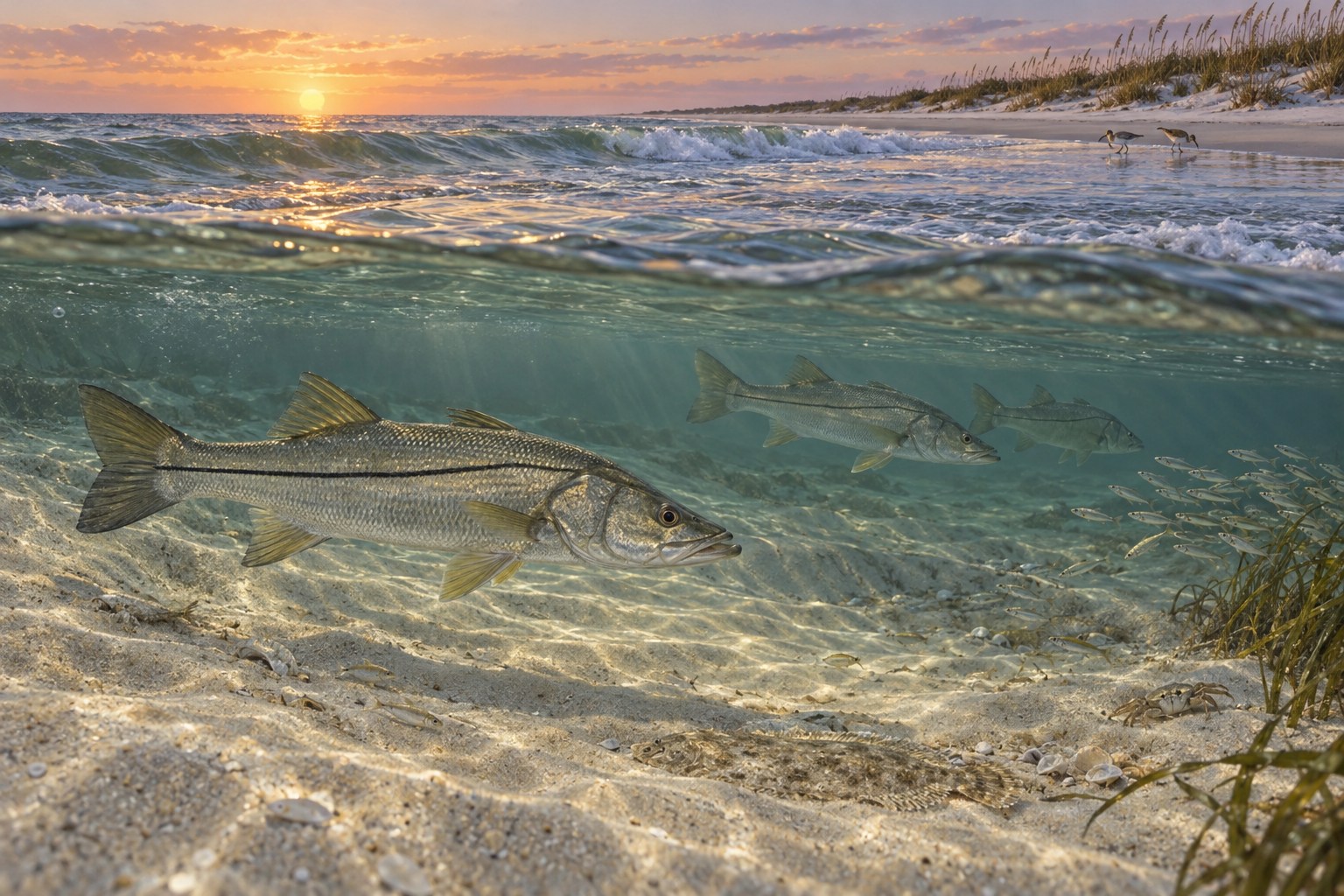
Read the feeding lane shown in the illustration
The habitat view explains how a fish can use a sandbar trough and nearby prey. It is a teaching view, not an exact survey of Loggerhead Park. Bars and troughs change after weather and wave action.
Use the idea to look for a lane where water moves food without sweeping the tackle out of control. The actual beach may have a different depth, bar shape or patch of weed. Let those observations decide where to place the rig.
Do not treat the illustration as an instruction to wade out. Land-based fishing from an approved clear section avoids the need to enter unknown channels or shorebreak.
Stop when wildlife enters the tackle lane
Sea turtles, birds and fish share this shoreline with visitors. If an animal moves toward a bait or lure, retrieve it when that can be done safely. Casting around the animal's immediate path adds an avoidable entanglement risk.
Marked nests need space, and holes should not remain as obstacles on the beach. Keep lights low and follow staff directions during nesting or hatchling activity. Watching quietly is different from following or touching wildlife.
Store unused bait and fish scraps in secure containers. Food left beside a rod can attract birds to hooks on the sand. Keep monofilament pieces out of ordinary loose beach litter where possible.
If wildlife is hooked or tangled, contact trained assistance and follow the instructions given. Do not assume that cutting the visible line has removed the danger.
Combine a short fishing lesson with a beach visit
A family session can focus on one safe cast and checking one bait. Explain the hook's position and the retrieve before a child takes the rod. Put the equipment away when the approved fishing space becomes busy.
The conservation center offers a different way to learn about the coast when fishing conditions are unsuitable. Check its schedule independently of the park gate. Avoid promising a particular animal encounter or activity without verifying the day's arrangements.
Bring water, sun protection and a manageable bag. Keep the return walk in mind before adding a cooler or several rods. Simple gear makes it easier to leave quickly when weather changes.
Let wind and surf decide the session length
Gentle conditions make observing a trough easier, but calm water does not guarantee a bite. Stronger onshore wind can bring rougher surf and floating weed. Judge the current beach rather than the conditions reported by someone yesterday.
Use tide and weather information together. A tide stage that was comfortable on a quiet morning may be difficult under larger waves. End early if lightning, shorebreak or crowding removes the safe fishing lane.
Record the bait size, water clarity and part of the trough tested. Those details give a returning angler a useful comparison instead of an expectation that every visit should produce the same fish.
Leave the shoreline ready for the next visitor
Count hooks and leaders as you pack so a missing piece is noticed before leaving. Remove rod holders and any tackle that could remain hidden in sand. Check beneath the chair and bait container as well as the casting area.
Verify current FWC rules before keeping a fish and use the internal species guides for identification help. The best ending is a clean beach, safely released fish and a clear idea of what the water taught you.
Common questions
Can I cast anywhere at Loggerhead Park?
No. Keep fishing outside guarded swimming areas and confirm the approved section with staff. Beach access alone does not remove those boundaries.
Is the habitat illustration a map of the park?
It explains a general sandbar feeding pattern. It does not show exact depths, current bars or an authorized wading route.
Can fishing be part of a family conservation-center visit?
A short permitted session can fit the day if conditions and space allow. The center and beach have separate schedules and activity rules.
What should I do if a turtle approaches my bait?
Avoid creating an entanglement opportunity and stop fishing in its path. If an animal becomes hooked or tangled, contact trained wildlife assistance.
Prepare for your visit
Check local tides and weather. Read more about snook, florida pompano, whiting. Check current FWC saltwater fishing rules.