
PANHANDLE
Seaside
fishing guide
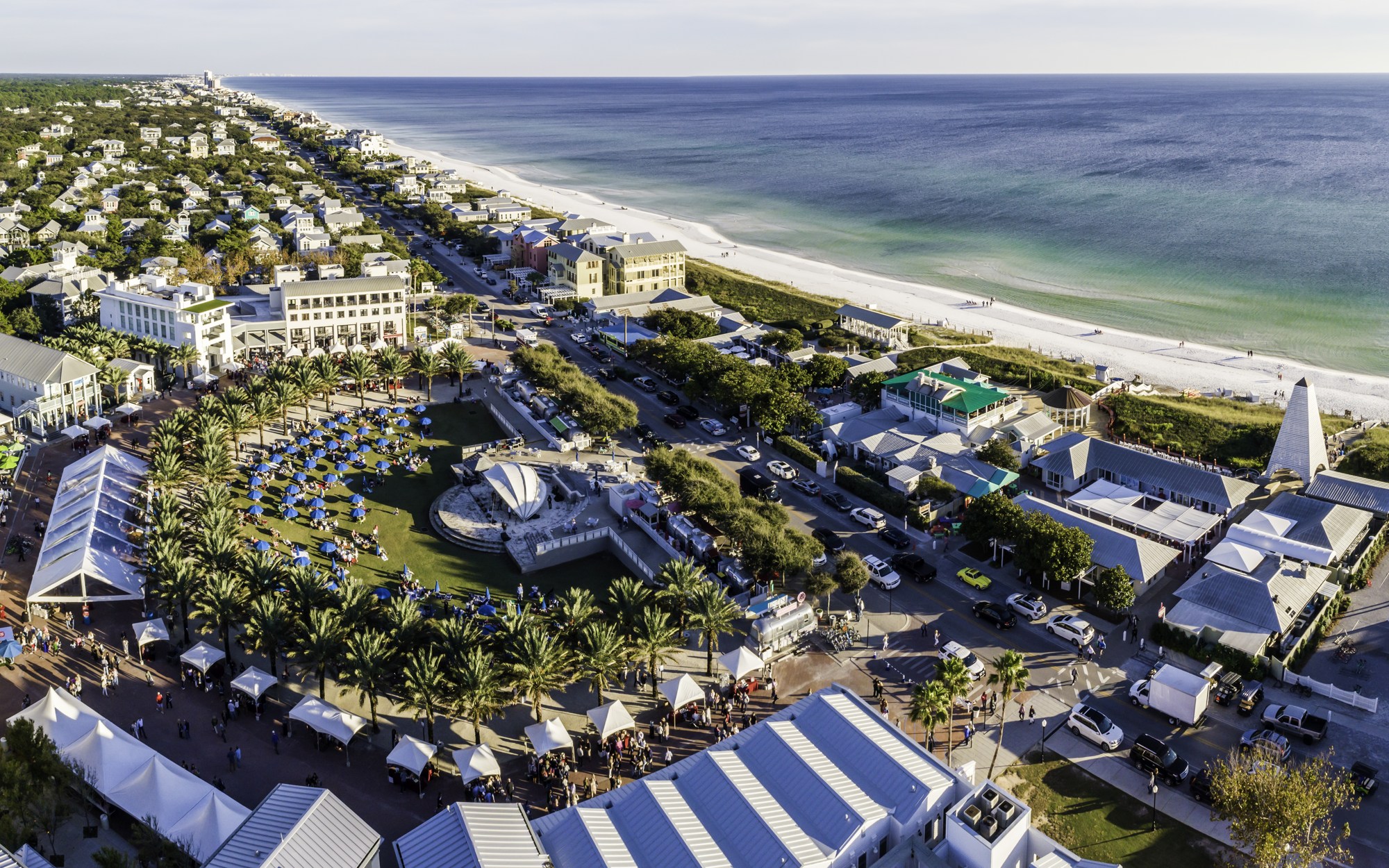
Seaside is a coastal community with managed beach access and substantial visitor activity. A town visit is not automatically a fishing access plan. Confirm your permitted shore route or choose a separate public access, then keep surf tackle compact and easy to control.
Explore the guide ↓Check the shore route before the parking route
Seaside has a managed beachfront setting rather than one simple public fishing-park entrance. Walton County Tourism discusses private beach access through resort or rental arrangements, including Seaside. Ask your accommodation or beach manager which route is included and whether fishing fits its current activity conditions.
Visitor parking, a shuttle ride into town or a restaurant stop does not settle beach rights. Choose a specific authorized crossing or a separate named public entry from the official county map. Keep the legal route clear before loading long rods and a cooler. A public-looking pavilion is not sufficient evidence of an unrestricted fishing path.
Use a regional public beach as a separate destination
The South Walton directory provides regional and neighborhood access options in the wider 30A area. Nearby Seagrove entries, including Santa Clara, are choices to investigate for a public Gulf outing. They have their own current notices and boundaries. Do not treat a public route farther along the coast as permission to set up anywhere around Seaside.
Confirm parking at that specific entrance and assess the beach before unpacking. Facilities useful to a mixed group can make a regional access easier than a small walking crossing. A smaller kit lets you adapt if the selected site is crowded. Keep the fishing plan separate from a later shopping or town visit.
Observe the surf before using the first rig
A clear trough beside a shallow bar can offer food routes for surf fish. Watch where waves repeatedly break and where they soften. Begin with the visible nearer change rather than measuring the outing by maximum casting distance. A short cast is easier to repeat and to keep outside nearby activity.
Light shifts, stirred sand and floating weed can disguise bottom shape. Observe several sets before declaring one dark patch a hole. A gap in a bar may carry strong outgoing flow. Fish toward appropriate water from secure sand, but do not wade into a channel to reach a farther feature.
Use a compact offering for sandy-surf fish
Whiting and seasonally passing pompano are reasonable possibilities along this Gulf coast. A small shrimp piece, sand flea or narrow bait strip makes a useful starting test. Match the hook to the offering and keep its point clear. Large loose bundles can fold or be removed before an effective hookup.
Keep the spare supply chilled during the walk and the session. Inspect bait regularly even when waves hide small taps. A hook that returns empty calls for shorter checks or tougher bait. Bait that remains untouched suggests trying a different range with the same basic presentation. Learn from those differences before making several tackle changes together.
Do not let a passing school override clear space
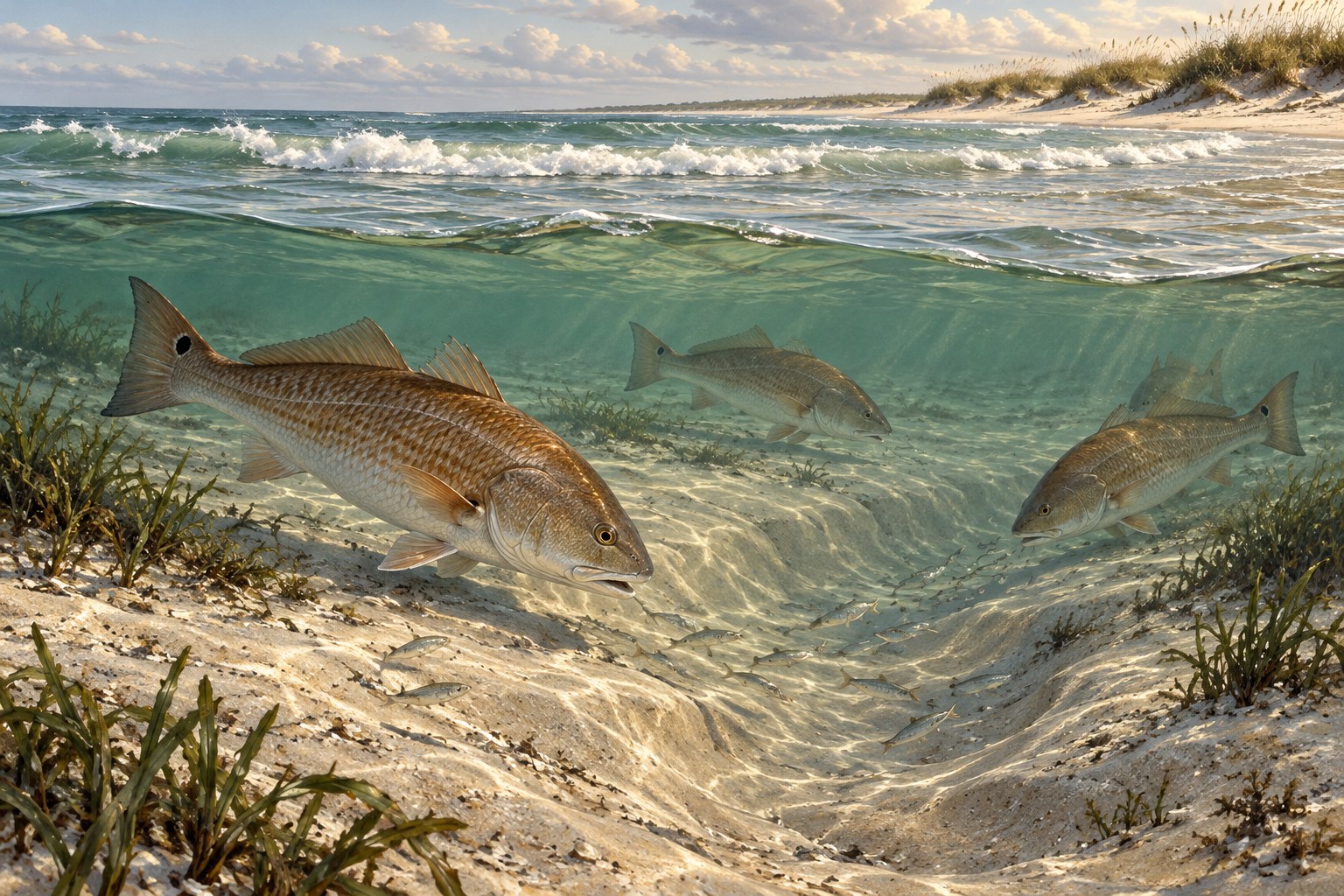
Visible small-fish activity can attract predators close enough for a compact lure. A spoon or small baitfish shape offers a way to test an open lane. Repeated prey movement gives more information than a single splash. Check the entire casting and retrieval path before beginning, including the backswing behind your shoulder.
A fish school can move through swimmers or paddle craft quickly. Let the opportunity pass instead of casting across them. Keep hooks controlled near the final breaker and carry pliers for toothy catches. A controlled short lure test is useful only while the lane remains safe and the shore position is lawful.
Take tackle that travels through town safely
Seaside's visitor movement can include bicycles, shuttles, cars and walking routes. Carry hooks covered and rod tips controlled in those shared spaces. A very large surf cart can be inconvenient even before reaching sand. Pick one outfit and a small essentials bag for the confirmed route, rather than turning the town stop into a gear-moving project.
A measuring tool, pliers and a sealed waste container should be easy to reach. Choose a casting weight inside the rod's limit and keep spare leaders tidy. The comparison below keeps access, transport and fishing decisions separate. Good parking does not prove beach permission, and beach permission does not prove an empty lane.
| Decision | Useful evidence | Common mistake |
|---|---|---|
| Reach the shore | Specific current access authorization | Assuming visitor parking includes the beach |
| Choose public water | A named open county access | Extending its rights along unrelated private frontage |
| Place a surf bait | Visible trough and clear lane | Using distance as the only goal |
| Carry the kit | A manageable safe route | Loose hooks around crowded walking paths |
Fit the session around weather and people
Seasonal pompano movement can draw spring and fall interest. Summer's heat, storms and beach crowds require a shorter flexible window. Cool fronts can quickly change wind and water clarity. Choose the session from current conditions rather than expecting one calendar period to make every stretch productive.
Tide times support planning but cannot predict all bar currents or wind-driven sweep. Watch the line after casting and retrieve when it travels outside the clear space. Build enough time for the walk back before bad weather approaches. A town visit can continue after fishing ends, without leaving an outfit unattended on the shore.
Verify the fish and remove the small litter
Use an accurate identification and measure before keeping a catch. Current species rules decide size, seasons and numbers. A past local photo does not establish today's legal limit. If uncertain, release promptly with wet hands and body support. Do not leave a fish on dry sand while looking for a tool buried in the bag.
Collect every leader, hook packet and personal item before leaving. Remove equipment within the applicable beach conditions rather than saving a space for an overnight return. Seaside can be a pleasant base for an educational coast trip when the fishing part remains honest about access and modest about the space it uses.
Common questions
Does visiting Seaside's shops provide fishing beach access?
No. Confirm the specific managed route and activity permission, or plan a separate named public destination.
Can a rental guest assume all fishing is allowed?
Ask the accommodation or beach manager about the current rules for the exact access and shore.
What public alternative could I investigate nearby?
Seagrove's named regional accesses, such as Santa Clara, are separate options. Confirm their current parking and beach conditions.
How should I carry tackle through town?
Cover hooks, control rod tips and keep the kit manageable around pedestrians, bicycles and transport services.
Prepare for your visit
Check local tides and weather. Read more about florida pompano, whiting. Check current FWC saltwater fishing rules.