
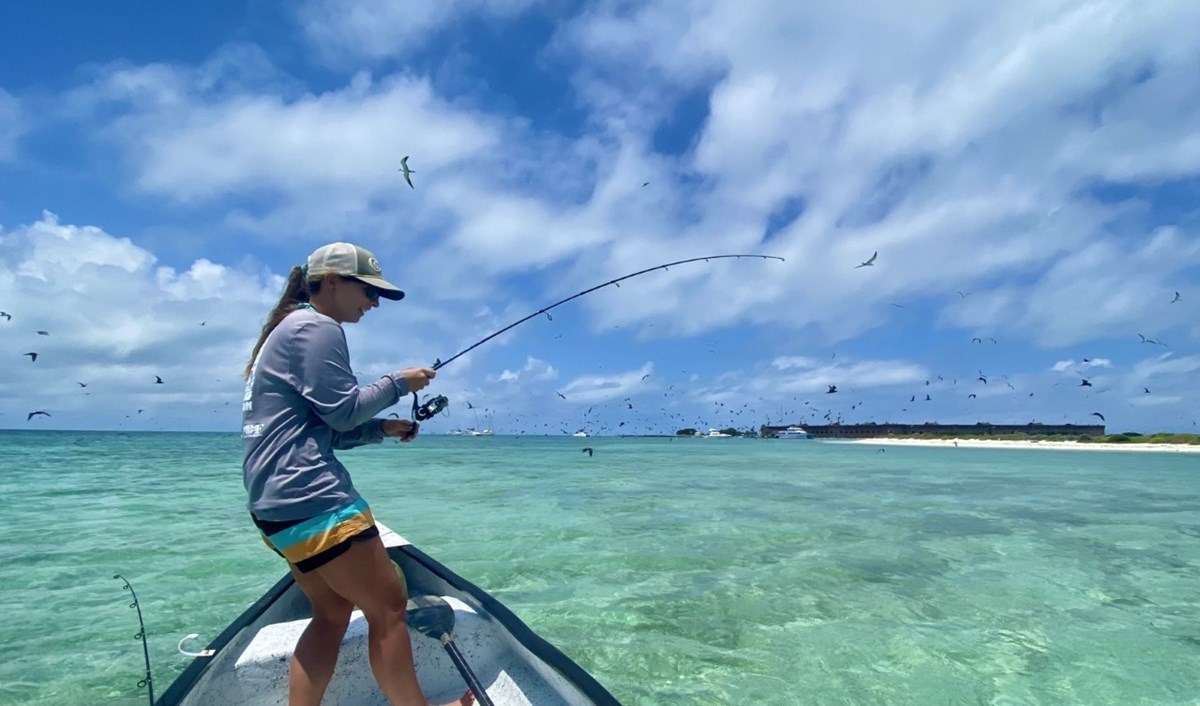
FLORIDA KEYS & EVERGLADES
Dry Tortugas
fishing guide
Dry Tortugas is a remote national park with limited designated fishing areas. Clear water and abundant wildlife do not mean open access everywhere. A successful trip starts with the park map, transport arrangements and precise fishing boundaries.
Explore the guide ↓Treat the journey as part of the fishing plan
Dry Tortugas National Park lies far offshore from Key West. There is no road to the islands. Visitors need an appropriate boat, ferry or seaplane arrangement, and each method has different luggage and activity limits. Ask the transport provider about fishing equipment before paying for a trip built around it.
A scheduled visit can leave much less fishing time than the full travel day suggests. Allow room for orientation, walking, meals and the required return. Private boaters need a sound offshore plan, fuel reserve and weather assessment. Do not assume that a beautiful photograph of Garden Key describes the sea conditions along the route. The crossing can determine whether fishing is sensible at all.
Read the fishing map before unpacking a rod
The park permits angling only in specified places and waters. The Research Natural Area is closed to fishing, including Loggerhead Key. Garden Key has designated exceptions rather than an open shoreline. The moat, marked swimming and snorkeling areas, protected coral and shark zones, and water close to historic coaling structures have restrictions.
Use the current map and ask a ranger to identify the exact open position. The same stretch may contain a walking route, boat access and a closed fishing boundary. Casting across a line into protected water is not acceptable merely because the angler stands outside it. A catch-and-release intention does not remove a closure. Keep the map available throughout the session.
Check whether the Garden Key site is available now
Some Garden Key locations have conditions linked to arriving boats or aircraft. The main dock is unavailable for fishing while the concession ferry is docked. The seaplane beach depends on the plane being absent. Designated visitor piers also have occupancy conditions and must not be confused with government-use piers.
Confirm the current permitted pier with staff and signs rather than relying on an old description of which side is available. Leave pedestrian passage and boat operations completely clear. If the only permitted location is occupied, wait or choose another expressly open site. Do not substitute the nearest swimming beach. An empty shoreline can still be closed to angling.
Use the park's allowed method from the start
The park's fishing rules require closely attended hook-and-line fishing and circle hooks. J-hooks, spearfishing and lobster collection are not part of a permitted angling plan. Private boaters must obtain the required boat permit at Garden Key before fishing in park waters. Florida licensing and species rules also apply.
Check the current park rules for allowed bait and harvest before loading the boat. Carry a compact rod and tackle suited to the expected fish, with spare leader and tools for cutting line safely. Keep the outfit under direct control. A rod left fishing while its owner walks through the fort does not meet the closely attended requirement, and it creates a hazard around visitor movement.
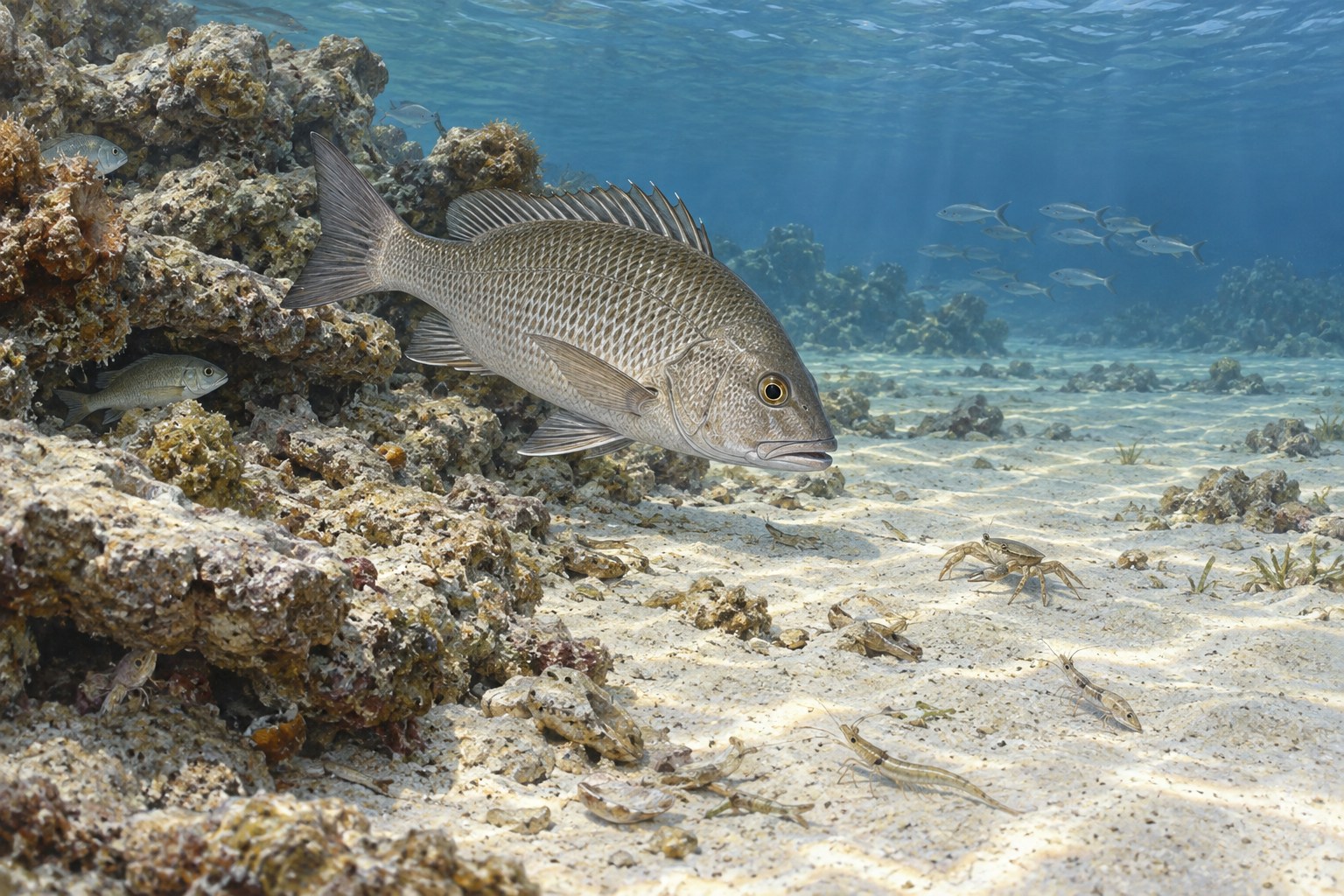
Match the bait to an accessible feeding lane
Legally obtained finfish and shrimp can suit a range of saltwater predators where the park permits their use. Small snapper-oriented offerings need not be large. Presenting a modest bait near an allowed edge can reduce wasted casts and avoid drawing fish through a swimming or boat access area.
Do not excavate bait from the beach, strip living material from structures or collect animals simply because they appear plentiful. Pack bait in a secure cooled container and bring enough for the planned window. Remote travel makes improvising supplies difficult. If the available fishing boundary cannot be used safely with the chosen bait, change the activity rather than trying to create a new fishing position.
Expect reef-associated fish without promising a catch
Snapper, jacks and other saltwater fish can use edges, deeper routes and structure in the wider Tortugas environment. Their presence in a protected or closed part of the park does not make that location available. Choose a target that matches the permitted water you can actually reach.
Watch small fish movement from the approved position. A controlled baitfish lure may explore an open lane, while a modest natural bait can stay nearer an allowed edge. Avoid tackle so light that a routine catch becomes a prolonged struggle around hard surfaces. Identify the fish before making a harvest decision. Uncertain identification is a reason for a careful release, not a guess about a bag limit.
| Planning step | What to confirm | Why it matters |
|---|---|---|
| Transport | Equipment allowance and return time | Fishing time may be limited |
| Park orientation | Exact open shoreline or pier | Most Garden Key shoreline is closed |
| Private boat arrival | Boat permit and route boundaries | Fishing cannot begin first |
Choose a safe offshore window rather than a favorite tide
Moving water can carry prey along island margins, but offshore wind and sea state take priority over a tide preference. Assess the whole journey, including the return after the fishing period. A forecast that improves later is not permission to begin an unsafe crossing now.
Carry the navigation and communication equipment appropriate to the vessel. Cell service is not a dependable substitute for marine communication in this remote setting. Heat, glare and limited shade can also wear down a shore visitor quickly. Pack water and sun protection for the actual hours away, then leave a reserve. If thunder or rough conditions threaten the route, reduce the plan before fatigue makes that decision harder.
Keep the wildlife and visitor areas free of fishing waste
The park protects birds, turtles, coral and sensitive island habitat. Never leave line, bait packaging or a hook where an animal can pick it up. Clean up small clippings immediately rather than assuming they will be easy to find later on pale sand or around dock edges.
Follow the park's rules for fish remains and food waste, especially near the moat and swimming beaches. Bring a bag that can hold waste securely for the trip home. Do not feed fish scraps to birds or other wildlife. Prepare release tools before a bite so the fish spends less time out of water. Keep photography brief and avoid dragging a catch across rough surfaces.
Let the park visit remain worthwhile without fishing
Fort Jefferson, clear-water observation and the island setting can fill the day when the permitted angling sites are unavailable. Separate that sightseeing plan from the fishing permission map. A walk beside beautiful water is not an invitation to lower a bait into it.
For a first visit, a short approved session may be more useful than attempting several locations. Record the access conditions, transport timing and equipment that worked. A later trip can be planned with better information. Do not let the cost or distance of travel pressure you into using a closed site. In a remote protected park, accepting a changed plan is part of being prepared.
Common questions
Is fishing allowed throughout Dry Tortugas?
No. The park has designated permitted areas, extensive closures and special Garden Key conditions. Consult current maps and staff.
Can I fish from the main dock while the ferry is there?
No. The dock fishing allowance depends on the concession ferry being absent.
Do private boats need a park permit before fishing?
Yes. Private boaters must complete the required boat permit at Garden Key before fishing in park waters.
Can I use ordinary J-hooks?
No. The park requires circle hooks for its permitted closely attended hook-and-line fishing. Verify the full current rules before travel.
Prepare for your visit
Check local tides and weather. Read more about permit. Check current FWC saltwater fishing rules.