
HookCurrent Florida fishing
Grouper
Know the fish before you drop. Know the bottom before you reel.
Several Florida species
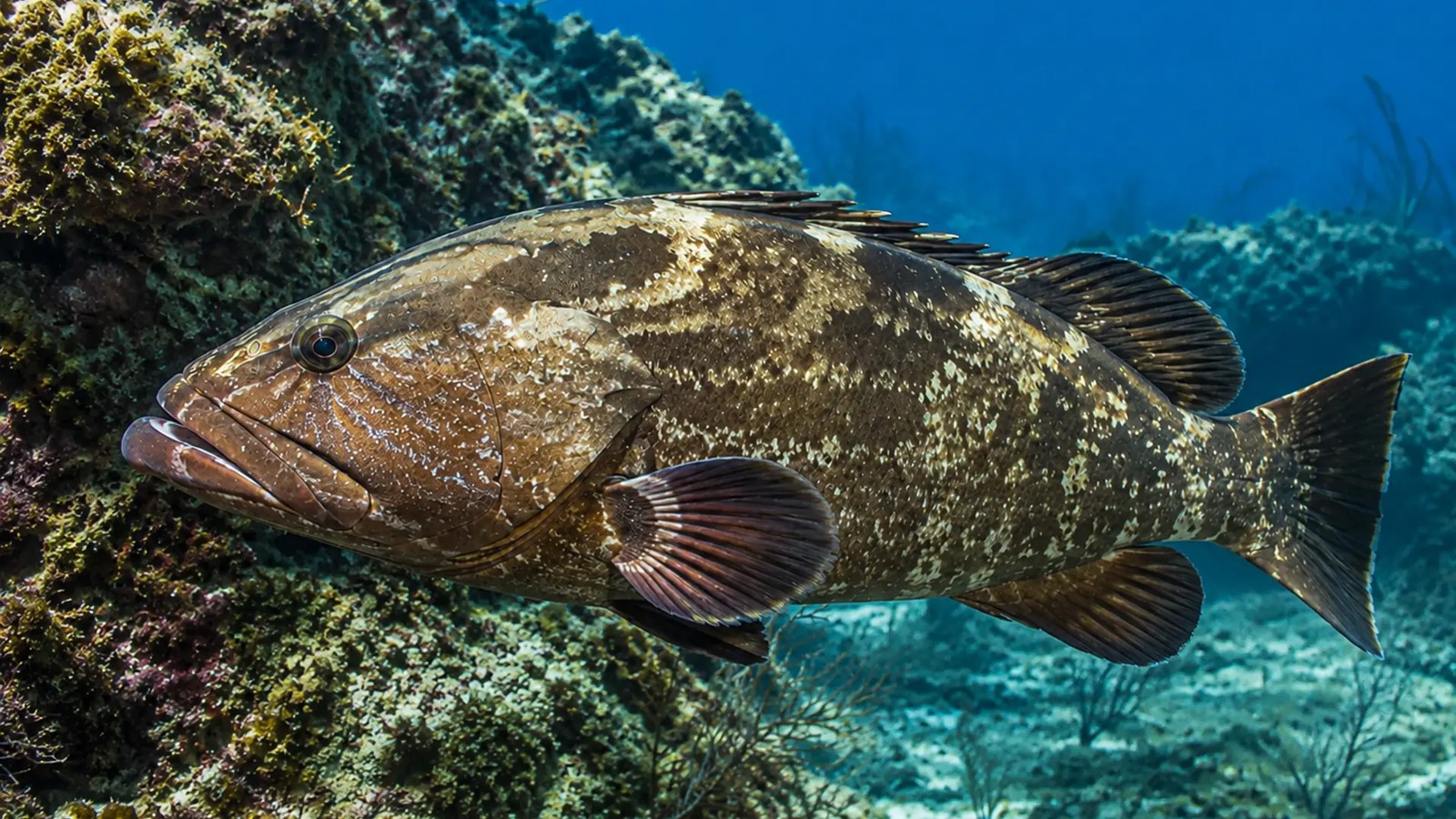
A grouper trip starts with a question that a single name cannot answer: which grouper? Florida has several species with different habits and fishing rules. This guide helps you tell the common catches apart, understand their habitat and fish around structure without treating every heavy bite as the same fish.
What makes a grouper a grouper?
Groupers are heavy-bodied reef fish with large mouths and strong tails. Many wait close to cover and take prey with a short burst. Their broad mouths can create suction as they open, helping draw food inward. A fish that seems too bulky to move quickly can still disappear into a ledge before an angler reacts.
Florida’s grouper fishery includes several kinds of fish rather than one species with different colors. Gag and black grouper belong to the genus Mycteroperca. Red grouper belong to Epinephelus. Scamp are another Mycteroperca species. Their names matter because legal sizes, seasons and catch limits can differ on the same boat.
Brown coloration alone is not an identification. Light, depth, stress and age can change the way a fish looks. Learn the markings, fin shape and overall body pattern before fishing. Keep a current identification reference where it is easy to reach, not buried beneath the cooler.
Gag, red grouper, black grouper or scamp?
A gag often has a pale gray-brown background with irregular darker marks. A red grouper usually shows a reddish or rusty brown body with pale scattered marks and a broad, sturdy head. Black grouper commonly have a more regular pattern of dark rectangular blotches. Scamp tend to look slimmer, with small darker spots and extended outer tail rays on larger fish.
These are useful starting clues, not a complete identification key. Small fish, faded fish and a hurried view over the gunwale can be difficult to judge. Other Florida groupers can resemble these four. If you cannot identify a catch confidently, release it carefully rather than assigning the most convenient name.
The word black causes particular confusion. Local nicknames are not reliable legal labels. Ask whether someone means a true black grouper or a dark-colored gag. Species identification should be settled before deciding whether the fish can go into the cooler.
| Species | Scientific name | Useful clues |
|---|---|---|
| Gag | Mycteroperca microlepis | Irregular darker marks on a pale gray-brown body |
| Red grouper | Epinephelus morio | Reddish brown color, pale marks and a robust head |
| Black grouper | Mycteroperca bonaci | Dark rectangular blotches and a heavy body |
| Scamp | Mycteroperca phenax | Fine spots, slimmer shape and longer outer tail rays |
The groupers you must treat differently
Nassau grouper harvest is prohibited in Florida. This species can show strong bars, a dark mark near the tail base and a dark band through the eye. Its appearance can change quickly. Never assume that a barred grouper is a legal catch without checking the full identification.
Goliath grouper are exceptionally large, thick-bodied fish associated with wrecks, reefs and other substantial cover. Florida has a limited permit-based harvest program with strict conditions. That program does not make ordinary goliath harvest legal. Most encounters require release, and handling restrictions matter even when the fish is much smaller than the enormous adults seen in photographs.
A protected fish is not a reason to improvise a trophy picture. Keep the fish supported by the water, remove accessible tackle safely and follow the current handling rules for that species. If large protected groupers repeatedly take hooked reef fish, changing the fishing spot can prevent more wasted catches.
The bottom matters more than the waypoint
Groupers use ledges, limestone outcrops, reefs, wrecks and patches of hard bottom. Cover provides a place to rest and ambush food. The most productive edge can be a small feature beside an obvious reef rather than the highest point on the chart.
Gag can use inshore and nearshore habitat at younger ages, then shift into deeper coastal water as they grow. Juvenile habitat should not be confused with a dependable place to catch legal adults. Red grouper often associate with low-relief hard bottom and areas where they can maintain a hole or depression. Black grouper are strongly associated with reef habitat, especially in southern Florida. Scamp are commonly encountered around offshore ledges and rocky bottom.
A bare sand patch between hard areas may still be useful. It can give an angler a place to present a bait close to cover without dropping directly into a snag. Think about the fish’s route from shelter to food. Your bait needs to cross that route, not simply touch the most expensive wreck on the screen.
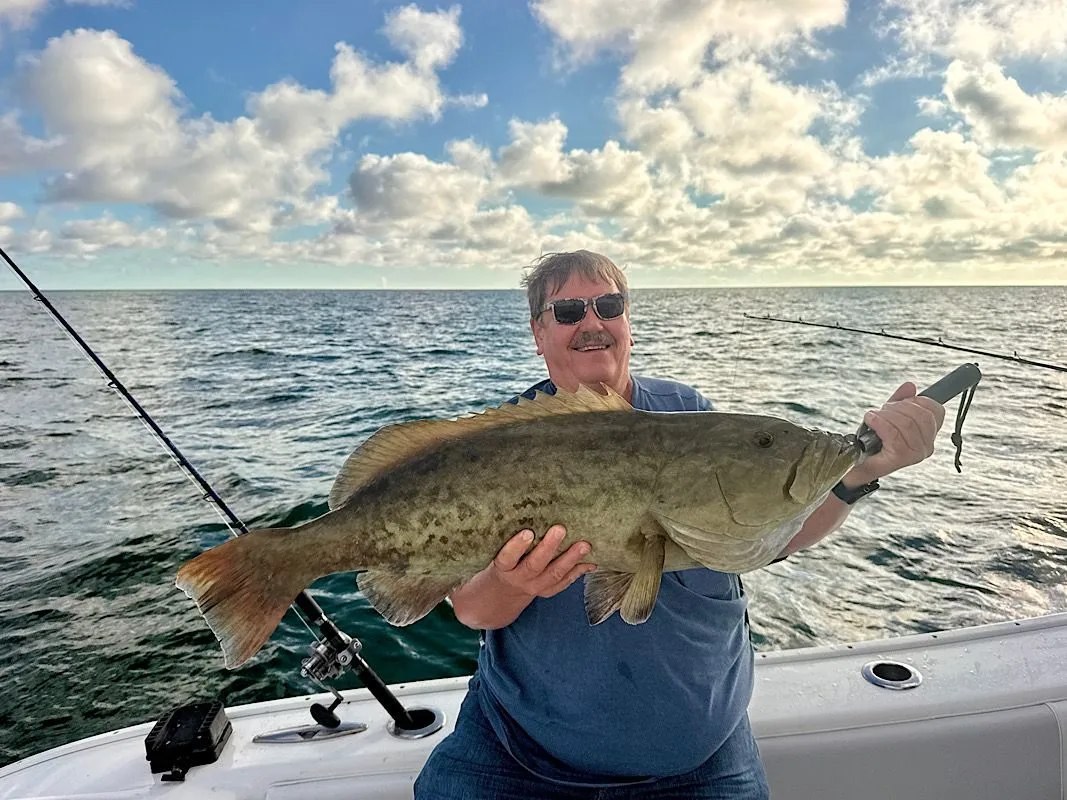
How grouper water changes around Florida
The Panhandle offers offshore reefs, wrecks and natural bottom. Distance from shore does not describe the whole trip. Depth, weather, bottom type and the target species determine the plan. A productive public reef can also be crowded, so a captain may spend considerable time looking for smaller pieces of nearby bottom.
The central and southwest Gulf coast has a broad shelf. A long run may be needed to reach deeper water, while some nearshore areas become useful under the right seasonal conditions. Tampa Bay and the surrounding coast are often associated with gag fishing, but an inshore fishery must still follow the correct size, season and area rules.
Southeast Florida and the Keys have different reef and current conditions. Black grouper are an important part of this southern reef setting. In the Keys, do not decide which rules apply merely by pointing at the Gulf on a map. Monroe County has special jurisdiction details. Protected areas and sanctuary zones add another layer that needs to be checked before anchoring, fishing or taking fish.
Growth and changes from female to male
Several familiar grouper species begin adult life as females, with some changing to males later. Biologists call this protogyny. The timing is not identical among species, and it is wrong to turn that pattern into a rule for every fish called a grouper. Nassau grouper, for example, should not be explained with a simple all-fish-change-sex story.
Gag can live for decades. NOAA describes females maturing around age four, with some changing sex later. Black grouper can also be long-lived and large before a sex change occurs. Removing large fish can therefore affect more than the number of fish left on a reef. It can change the size and sex structure of the spawning population.
Red grouper also have a special relationship with the bottom. They can clear loose material from holes, creating space used by other reef life. A grouper is not merely a predator sitting on a rock. It can help shape a small patch of habitat that shelters other animals.
When grouper spawn and why gatherings matter
Spawning time depends on the species and region. Gag generally reproduce during winter and spring, with different timing between the Gulf and Atlantic. Red grouper have an extended spawning season that commonly includes late winter through spring. Black grouper also form seasonal spawning gatherings. A single month cannot describe all Florida grouper reproduction.
Groupers release eggs and sperm into the water. Eggs and early larvae drift before young fish settle into suitable habitat. The route from an offshore spawning area to a nursery is influenced by currents and survival conditions, not a straight line that an angler can follow with a boat.
Spawning gatherings make fish easier to find and potentially easier to overfish. Seasonal closures can protect this part of the life cycle. A large concentration on the fish finder is therefore not proof that keeping fish is allowed. Check the species, location and date before planning a trip around a seasonal gathering.
What groupers eat
Small fish, crabs, shrimp, squid and octopus can all feature in grouper diets, with the mix changing among species and sizes. An adult black grouper is often hunting fish. A red grouper may take a wider variety of bottom-living prey. The useful lesson is to match both the food and its position near the bottom.
Live bait offers movement and scent, but a fresh dead bait can also work well. A grouper does not require every meal to look perfect. It does need a reason to leave shelter, and a bait spinning unnaturally several feet above the feeding lane may be easy to ignore.
Watch what the reef is doing. Small fish clustered on one side of a ledge can reveal current and feeding activity. Repeated small bites may mean smaller reef fish are stripping the bait before a grouper reaches it. Check the hook frequently enough to avoid fishing an empty rig.
Current, season and time of day
Moving water delivers food and scent, but too much current makes a bottom presentation difficult. The practical question is whether your rig can reach the target and stay in a useful position. Adding weight may help, but a change in drift angle or boat position can be more effective than hanging a much larger sinker.
Seasonal temperature changes influence where different sizes of grouper are found. Some gag fishing shifts toward shallower areas during cooler periods. That is a regional pattern, not a promise that every winter ledge will hold fish. Offshore fish can also respond to bottom temperature that differs from the surface reading on a boat.
Groupers can be caught throughout the daylight hours when the season and location permit. A dawn departure may be chosen for weather, travel time or boat traffic rather than a short feeding window. Begin with safe conditions and a legal target, then use current, bait activity and bite quality to refine the day.
How to search with a chart and fish finder
Use charts to locate likely depth changes and marked structures, then inspect the actual bottom. A charted reef symbol covers a place, not the precise edge holding fish that morning. Make a controlled pass while watching bottom shape and nearby bait marks. Save a waypoint only when you understand what it represents.
Take a second look from another direction if conditions allow. A small rise may appear differently depending on the boat’s path. Note the current direction and the relationship between bait, hard bottom and open sand. Avoid anchoring directly on fragile coral or in a restricted area.
Electronics help you find structure, but they do not identify every fish below the boat. A dense mark can contain several species. Treat the first few bites as information. If the rig returns damaged, the bait never stays on or every fish is undersized, adjust the presentation or move rather than repeating the same drop indefinitely.
Choose tackle that can turn the fish
Grouper tackle must do two jobs: detect a bottom bite and move a powerful fish away from cover. A stout conventional setup is common for deeper bottom fishing. Strong spinning tackle can work in suitable water, especially for lighter jigs and smaller targets. The rod, reel, line, leader and hook need to work together.
As a broad starting range, many adult-grouper setups use roughly 40 to 80 pound main line with an abrasion-resistant leader suited to the structure and fish. This is not a universal recipe. Shallow clear water, very heavy structure and deep offshore fishing call for different choices. Ask what size fish and depth the setup is intended to handle.
Set the drag with control before dropping. A fully locked reel can break tackle or pull an angler off balance. Do not wrap braid around a hand to gain leverage. Use a fighting position that keeps the angler secure, and let the boat operator know when a fish is heading beneath the hull.
| Part | Its job | Common mistake |
|---|---|---|
| Rod and reel | Apply steady pressure with enough lifting power | Using a light outfit beside heavy cover |
| Main line | Transmit the bite and lift the fish | Ignoring abrasion or old weak sections |
| Leader | Resist rough bottom and the fish’s mouth | Keeping a damaged leader for another drop |
| Sinker | Reach the feeding zone | Using excess weight without fixing the angle |
| Hook | Hold securely with the correct legal design | Burying the point inside a large bait |
A practical bottom rig
A sliding-sinker rig is one familiar option. The main line passes through an appropriate sinker and connects through a swivel to the leader and hook. Other situations favor a sinker below the hook or a more compact rig. Choose a layout that reaches the bottom without tangling on the descent.
Start with the least weight that keeps the bait in the intended zone. Lower the rig under control. When it reaches bottom, take up slack and keep enough contact to feel a change. Do not let an unnecessary pile of line sweep across the reef. A long leader can look natural but may be harder to control in strong current.
Reef-fish gear rules vary with water and tackle. Non-offset, non-stainless circle hooks are required in specified reef-fish fisheries when using natural bait. Carry the required release equipment and check the rule for the exact water you will fish. A familiar rig is not automatically a legal rig everywhere.
Live bait, cut bait and whole dead bait
Pinfish, grunts and other legal local baitfish are common live-bait choices. The right size depends on the hook and intended catch. A very large bait on a small hook can hide the point. A weak or damaged live bait may spin during the drop and arrive tangled around the leader.
Fresh cut bait puts scent into the current and can be easier to obtain than live bait. Whole dead sardines or similar baits can also be effective. Keep bait in good condition, avoid a thick wad around the hook gap and replace bait that has been chewed down to skin.
Hook placement should allow the bait to move without blocking the point or circle-hook gap. Lower it gently rather than throwing the rig into a knot. If a live bait fights the descent, pause briefly and regain control. The objective is a clean presentation near cover, not simply the fastest possible trip to the bottom.
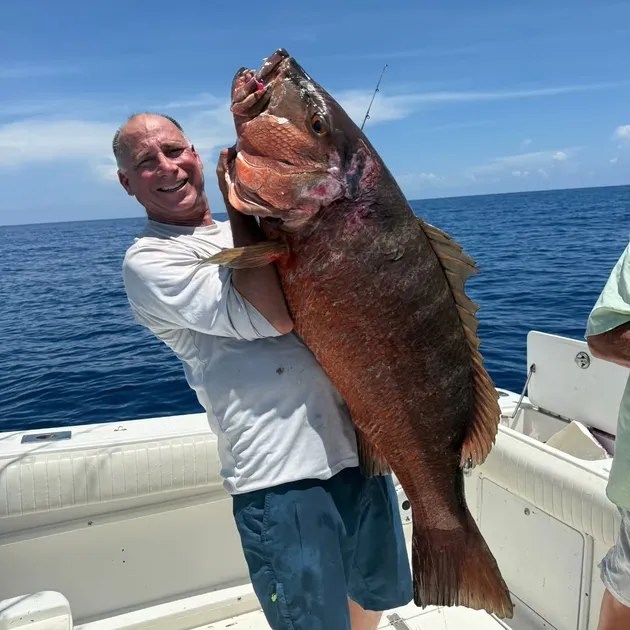
Jigging and shallow-water trolling
A metal jig or bucktail can imitate prey near a ledge while reducing the need for live bait. The lure must be heavy enough to work at the chosen depth and current. Lift it with controlled movements and stay aware of the bottom. Repeatedly burying the hooks in a wreck is expensive and leaves tackle behind.
Jigging works best when the angler can feel the lure and keep a sensible line angle. If the boat drifts too fast, reset the drift or change the weight. A short, controlled lift close to the bottom may be more useful than a dramatic sweep high above the fish.
In some shallow gag fisheries, diving plugs are trolled over suitable bottom during legal seasons. The lure’s running depth must fit the terrain. A plug intended for open water can hang instantly on a high ledge. Keep track of the bottom, avoid crowded channels and do not confuse a locally popular technique with permission to fish a closed season.
The bite and the first few seconds
A grouper bite can feel like sudden weight, a hard pull or a bait that has stopped moving naturally. With a circle hook, reel into firm, steady pressure instead of making a violent overhead strike. The hook needs to move toward the corner of the mouth before loading properly.
Once the fish is hooked, the first task is to gain distance from the structure. Keep pressure consistent and use the rod within its working angle. Pumping too high can damage the rod and give line back at the wrong moment. Short lifts followed by steady reeling are often more controlled.
If the fish reaches a hole, avoid a blind tug-of-war that risks snapping the line. A captain may change the boat angle or use another controlled approach. Keep hands away from tight braid and never lean dangerously over the side. Landing a fish is not worth losing your balance or creating a line injury.
Deep-water release and barotrauma
A fish brought quickly from depth may be unable to swim back down because gases expand as pressure falls. Signs can include a swollen body, bulging eyes or tissue protruding from the mouth. That protruding tissue is not something to push back or puncture with a hook.
A descending device can return a fish to depth while it remains in the water. Have the correct device and enough weight ready before fishing. Learn its operation before a struggling fish is beside the boat. Appropriate venting equipment and training may also be part of current reef-fish requirements, but an improvised puncture is not a substitute for knowing the procedure.
Reduce handling time and support the body of smaller fish if a brief lift is unavoidable. Do not hold a heavy grouper by the jaw alone. Measure a possible keeper efficiently, identify it correctly and release undersized or prohibited fish promptly. If sharks repeatedly intercept releases, change locations. Continuing to catch fish in the same situation can turn a release-only session into repeated losses.
Florida grouper rules need a species-by-species check
Grouper regulations are unusually easy to oversimplify. The fish’s identity, coast, state or federal water, date, size and the other fish already aboard can all affect what may be kept. Aggregate limits combine certain catches. A separate species limit can be smaller than the overall group limit.
As checked on October 4, 2026, FWC listed the Gulf gag recreational season as September 1 through September 30, 2026. That season had already closed. Do not reuse those dates as a future-year calendar. Other grouper species have different openings, closures and restrictions, and emergency changes can occur.
Use the official FWC grouper page linked below before each trip, then follow the applicable federal and protected-area requirements for your route. Check State Reef Fish Survey obligations as well as your saltwater license. A charter captain can explain the day’s legal target, but every angler benefits from recognizing the fish and understanding why some catches must go back.
Check current FWC grouper fishing rules.
Rules reviewed October 4, 2026. Confirm the requirements for your trip before fishing.
Build a better first grouper trip
Begin by choosing one target species and confirming an open fishery. Work backward from that choice to a suitable port, depth and boat. A short nearshore outing and a deep offshore trip require different travel time, weather margins and tackle. Tell the captain if you are new to heavy bottom fishing or prone to seasickness.
Before the first drop, agree on the bite procedure, how to clear other lines and where a fish will be measured. Put release tools where they can be reached immediately. Keep the deck free of loose sinkers and spare hooks. A simple routine makes a busy bite much easier to manage.
After each drift, ask what changed. Was the bait on bottom? Did the current carry it away from the ledge? Were the catches small, mixed or consistently the desired species? Use those answers to adjust. Successful grouper fishing is often a series of careful corrections rather than one secret coordinate.
Grouper questions answered
Are all grouper the same species?
No. Gag, red grouper, black grouper and scamp are separate species. Florida also has protected and less frequently caught groupers. Identification comes before a harvest decision.
Is a black grouper just a dark gag?
No. A true black grouper is Mycteroperca bonaci. Local nicknames can cause confusion, so use body markings and a reliable identification reference.
Do grouper change sex?
Several commonly caught species begin as females and some later become males. This is not a universal rule for every grouper species.
What bait should a beginner bring?
Ask the captain which legal local baits suit the target. Live baitfish and fresh dead bait are both useful. Bait size must leave the hook point and gap clear.
Can grouper be caught on lures?
Yes. Metal jigs, bucktails and, in some shallow fisheries, diving plugs can work. Depth, current, structure and legal season determine the method.
Why does my rig keep snagging?
The boat may be positioned directly over the roughest cover, or excess line may be sweeping across it. Adjust the angle, drift or sinker before making identical drops.
Should I strike hard with a circle hook?
A smooth increase in pressure is usually the correct approach. Reel until the line comes tight, then keep the fish moving away from cover.
Can I keep a goliath grouper?
Ordinary recreational harvest is prohibited outside the tightly controlled permit program and its conditions. A large fish beside the boat is not permission to land it.
What is an aggregate limit?
It is a combined limit covering specified species. A smaller individual-species limit may also apply within that total.
What should I do if a released fish floats?
Use the appropriate release equipment and procedure for barotrauma. Prepare a descending device before fishing and avoid unnecessary air exposure.
Are the Gulf and Atlantic rules identical?
No. Size limits, seasons and combined limits differ, and Monroe County requires special attention. Read the rules for the exact trip.
Can I fish for grouper from shore?
Some juveniles occur close to shore, but this guide’s adult-grouper methods mainly concern boat fishing around suitable structure. Shore access does not override size or season restrictions.
Plan your time on the water
Explore Florida fishing locations, check tides and weather, or find a local guide in the charter directory.