
NORTHEAST ATLANTIC
Amelia Island
fishing guide
Amelia Island fishing guide with Atlantic surf, Nassau Sound access, local fish, bait choices and a practical plan for changing tides.
Explore the guide ↓Choose a side of the island first
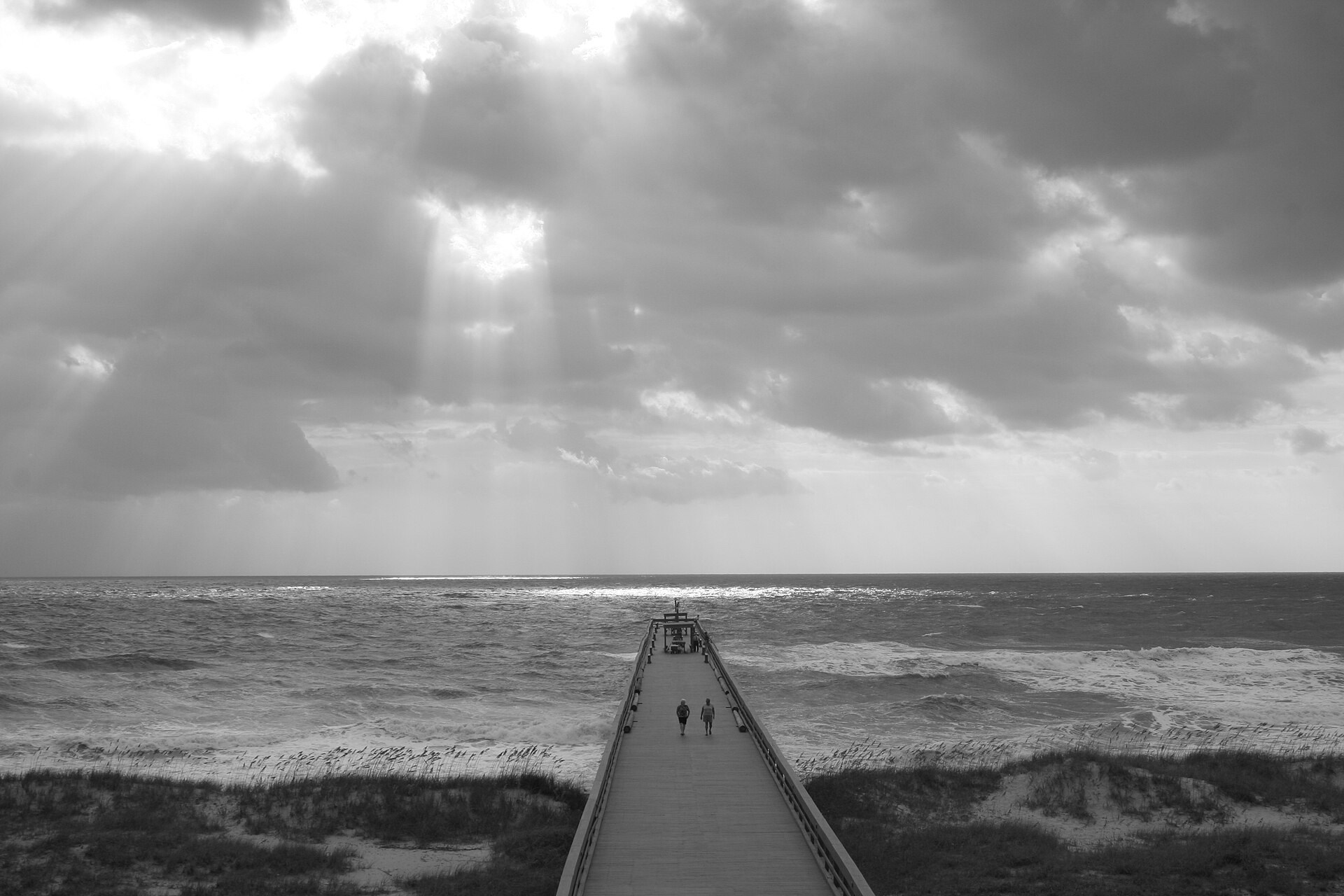
Amelia Island offers two very different fishing days. On the Atlantic side, waves wash shrimp, sand fleas and small fish through sandy troughs. On the western side, tidewater moves around marsh banks, oyster edges and river channels. Pick one setting before packing. A long surf rod and sand spike make sense on the beach. A shorter spinning rod is easier to use around a creek bend.
The island lies at Florida’s northeastern corner. St. Marys Inlet borders the north, while Nassau Sound opens at the south. Both ends carry stronger current than an ordinary stretch of beach. The middle of the island often gives a newcomer a simpler introduction. You can learn to read a trough without also dealing with a deep shipping channel.
For a first visit, choose a public beach entrance with parking and room to cast. Bring small pieces of shrimp for whiting. Save the inlet rocks and unfamiliar marsh routes for a separate trip with suitable equipment and a clear access plan.
Public places to start
Peters Point and Burney Park are county beach access choices. Burney serves the American Beach area. Facilities make these more practical starting points than an unmarked roadside gap. Use the dune crossings. A path through vegetation or a driveway beside a waterfront house does not establish public access.
Fort Clinch State Park provides a different northern option, with Atlantic shoreline and fishing near the St. Marys Inlet side. Its fishing areas deserve their own conditions check. Do not mistake a quiet-looking inlet edge for safe wading water. The bottom can fall away rapidly.
At the southern end, Amelia Island State Park and the George Crady fishing bridge overlook Nassau Sound. The bridge’s middle section is closed because of erosion-related damage. Each accessible end must be treated as a separate approach. You cannot plan a through-walk across the closure. After-hours fishing is not permitted on the bridge.
Beach driving rules also differ between county beaches and state park land. Nassau County restricts beach-driving eligibility. Visitors should plan around an ordinary parking lot instead of assuming that a four-wheel-drive vehicle gives permission to drive on the sand.
Fish to look for
| Target | Useful habitat | Starting presentation |
|---|---|---|
| Whiting | First sandy trough inside the breakers | A bite-sized shrimp bait presented near the sand |
| Redfish | Marsh drains and sand beside shell | Live shrimp or a paddletail crossing the flow |
| Flounder | Bottom transitions beside a channel | A mud minnow or slowly worked soft plastic |
| Black drum | Shell-rich edges and deeper holes | Fresh shrimp held just outside the roughest bottom |
| Spotted seatrout | Creek mouths and moving-water edges | Shrimp under a float or a small swimming lure |
Bluefish and jacks can interrupt a quiet beach session when bait schools arrive. Spanish mackerel are a possibility in warm, clearer coastal water. Treat these as passing opportunities. The steady beginner plan remains a small bottom bait for fish already feeding in the wash.
Redfish and black drum are different fish with different features. Redfish usually have a tail-base spot. Black drum have chin barbels and a deeper body. Identify a catch before deciding whether it can be kept.
Understand the marsh feeding lanes
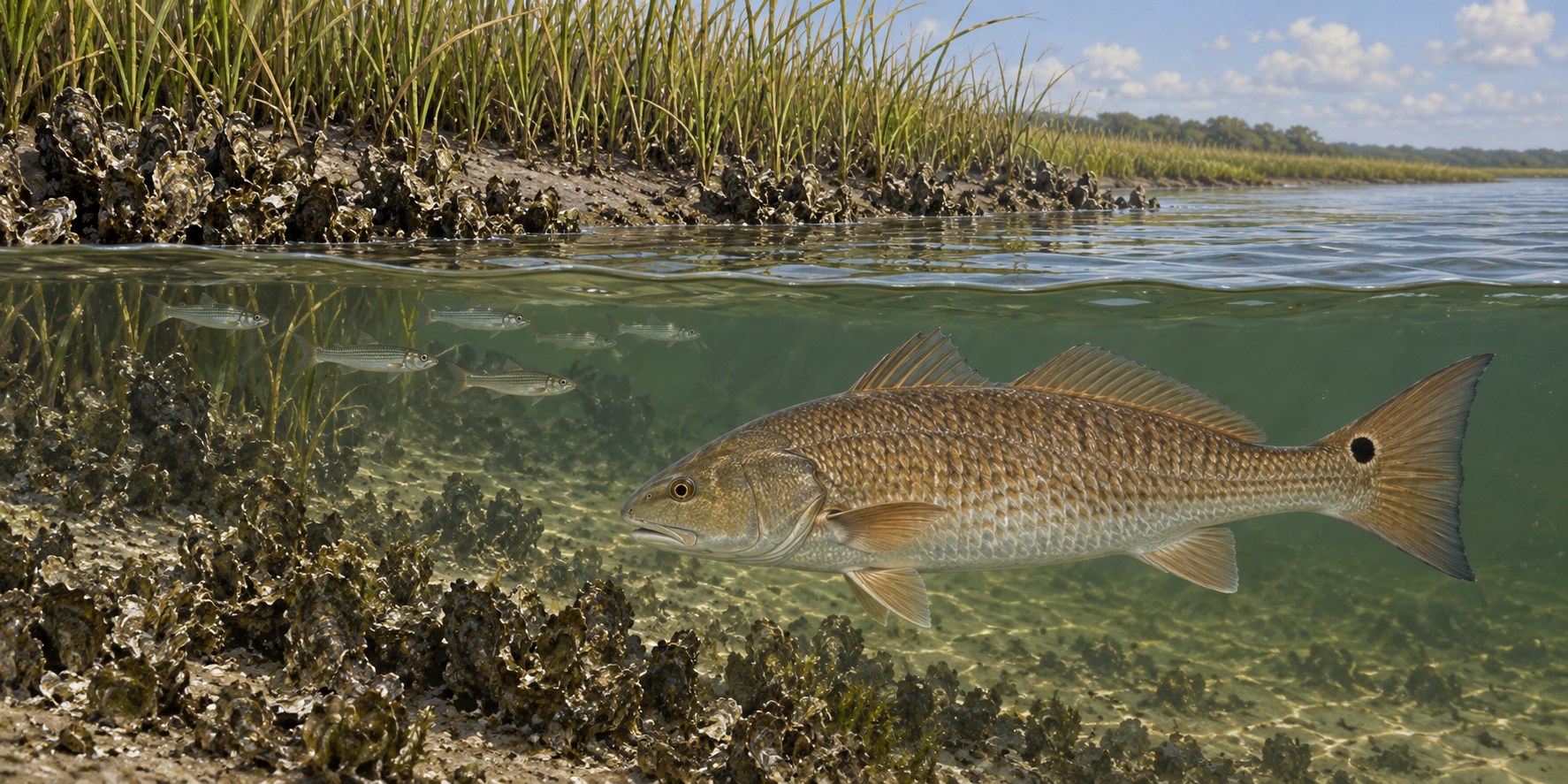
A marsh bank is not equally useful along its whole length. Look for a small drain, a point that bends the current or an oyster patch beside a depression. These features bring food past a manageable holding position. Cast beyond the feature and guide the bait through it. Dropping directly on a visible fish is more likely to alarm it.
Rising water lets redfish move higher onto the edge. Falling water draws small prey back toward drains. Neither tide direction guarantees a bite. A bank with bait and moderate flow can beat a famous place with empty, motionless water.
Oysters cut line and feet. Keep the boat off the shell and avoid stepping onto beds. If a retrieve keeps snagging, move the cast a little farther from the bank or use a lighter, weedless presentation. The aim is to pass beside cover, not drag through it.
Read the beach before casting
Observe successive wave sets from dry ground before choosing your position. A pale line of breaking water often marks a shallow bar. A darker strip shoreward of that line may be the trough. Gaps in the breakers can mark a deeper opening, but they can also carry dangerous outward flow. Fish such places from dry sand.
Begin with one cast into the closest useful lane. Make the next cast farther out only if the first depth produces nothing. Many whiting feed much closer than a visitor expects. Casting every bait beyond the outer bar can miss them.
Use a sinker that holds without burying the rod in constant strain. If the rig rolls down the beach toward other people, retrieve it. A heavier sinker can help only within the rod’s stated casting range. When the surf requires more weight than the equipment handles safely, choose another day or another setting.
Keep shrimp pieces compact. A long strip may be stolen from the hook without a solid bite. Check the bait after a few minutes, especially when the tip taps repeatedly but no fish stays attached.
A useful two-outfit kit
A medium spinning outfit with roughly 10 to 15-pound line covers small lures and modest inshore fish. Add an abrasion-resistant leader around shell. A separate surf outfit gives more room for a sinker and a longer cast. Match every weight to the printed rod rating rather than choosing tackle by appearance.
Carry pliers, a small landing net, spare hooks, leader material and a ruler. A towel is useful for cleaning equipment, but handle fish with wet hands instead of wrapping them in dry cloth. Keep a release fish supported near the water while removing the hook.
Live shrimp travel best in cool, aerated water. Do not leave a bait bucket in direct sun. For a short family outing, a small amount of fresh dead shrimp may be easier to manage than a large livewell setup.
Seasons, wind and the time of day
Spring warming can improve activity along beach and estuary edges. Summer favors short early outings before heat and thunderstorms build. Autumn bait movement can bring bursts of feeding near the beach and inlets. Winter often rewards a slower retrieve and attention to deeper, more sheltered water.
These are seasonal tendencies, not an appointment with the fish. A cold front, dirty runoff or several days of strong wind can matter more than the calendar. Compare the beach forecast with the actual wave pattern on arrival.
An east wind blows toward the Atlantic shore. It can add surf and drifting weed. A west wind may flatten the immediate beach, but that does not make an offshore kayak trip safe. Sheltered shore conditions and conditions farther from land can be very different.
Use the local tides and weather page to plan the visit, then watch the real current. A tide height prediction does not give the exact moment a creek or inlet will reverse.
A straightforward half-day plan
Start by checking a public entrance, the weather and any closure notices. At the water, spend ten minutes looking for a clear casting space and a feeding lane. Fish a small shrimp bait at two distances. If one distance produces bites, concentrate there instead of changing everything.
After a quiet stretch, change one thing: bait freshness, casting distance or position along the beach. That makes the result easier to understand. Moving from beach to inlet to marsh in a single morning often uses more time driving than fishing.
Finish before fatigue turns the walk back into a problem. Rinse salt from the reel gently, collect discarded line and note the wind, tide direction and bait that worked. Those details make the next Amelia visit more useful than a simple fish count.
Common Amelia Island questions
Can I fish without a boat?
Yes. Public beach entrances and designated park fishing areas provide shore options. A boat expands the marsh choices but is not necessary for a worthwhile first session.
Is a park admission ticket a fishing license?
Usually it is only admission. Check your own license requirements and any specific pier exemption through FWC’s current saltwater fishing information before fishing.
Should I start at the inlet?
Only if you are prepared for its current and access conditions. A roomy beach section is easier for practicing casts and learning bottom bites with children.
Put the plan into practice
Choose the part of Amelia Island that suits the equipment you actually carry. A light outfit for a shrimp bait beside sheltered water has a different job from a surf rod casting a sinker through waves. Trying to make one rig handle both can produce poor control in one setting. Bring a second outfit only when there is a clear reason for it.
For a first island visit, leave time to observe rather than filling every hour with travel between access points. Watch the water, locate the return crossing and make several controlled casts. Record which side of the island you fished, the wind direction and whether the bait stayed clean. Those details are more useful than recording only the tide height.