
SOUTHEAST ATLANTIC
Gulfstream Park
fishing guide
Gulfstream Park offers an Atlantic beach access between the larger beach towns of southern Palm Beach County. A compact surf session can focus on sand-feeding fish, clean bait placement and the first trough outside the protected swimming section.
Explore the guide ↓Choose the coastal park, not the racetrack
This guide concerns Gulfstream Park at 4489 North Ocean Boulevard in the Town of Gulf Stream. It is a Palm Beach County oceanfront park. The similarly named racing and entertainment property in Hallandale Beach is a different destination.
The county provides parking, restrooms, outdoor showers and picnic facilities at the coastal park. Its published access hours run from sunrise to sunset. Check the entrance information before arranging an early fishing stop.
Saltwater fishing is listed, but guarded swimming areas are excluded. Locate the fishing lane beyond that boundary and leave space for people walking along the shoreline.
A small public access does not grant access through adjacent private grounds. Enter through the park and keep the return route within the public crossing.
Make the first few minutes a beach survey
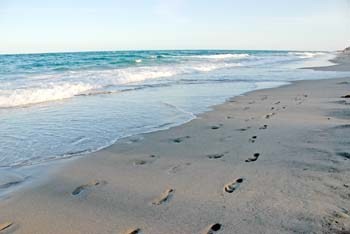
Watch the surf rather than opening every tackle box immediately. A broad white breaking line can identify a bar. A darker strip landward of it may be the near trough where small prey is exposed by wave action.
Look for a useful stretch that is clear of swimmers and has enough dry sand for the casting movement. If that section is too crowded, wait or choose a different public fishing setting.
Weed in the wash can build on a stationary line. Test one rig before setting another. A few minutes of repeated weed collection tells you the lane needs a change, not another unattended rod.
Move the bait in measured steps from near to farther water. That gives a practical comparison without turning every cast into a distance contest.
Begin with a small bait for whiting
Whiting are well suited to a sand-bottom surf approach. Use a small shrimp piece with the point visible. A modest hook can connect with smaller feeding fish more readily than a large hook hidden in a whole bait.
Place the offering close to the bottom with enough weight to prevent constant rolling. Watch the line for changes that persist beyond the rhythm of the waves. Light attention may be felt as several taps rather than a powerful pull.
Bring the rig in after suspected bites and check what remains. Firm bait threaded neatly lasts longer than a loose piece that tears during the cast. Replace it before the hook is left fishing empty.
One near-trough catch is useful evidence of the distance and layer. Repeat that placement a few times before moving farther out. The most reachable fish are often the easiest ones for a beginner to learn from.
Compare two small offerings for pompano
Florida pompano feed on small crustaceans in suitable surf habitat. A dropper rig with sand-flea-style bait on one hook and a shrimp section on the other can compare preferences while covering the same lane.
Keep both hooks clear of bulky material. A large decorative float or oversized bait is not required to make the rig visible. The offering needs to remain stable and easy to take.
The sinker should suit the wash and the rod's stated rating. Change the position before adding excessive weight. A rig placed across a strong alongshore sweep may roll even when it is unnecessarily heavy.
Check the branch leaders for twists after a forceful cast. A tangled upper hook cannot present normally. Slow the casting motion and arrange the rig so its components separate cleanly.

Switch to a lure only when the water gives a reason
Mullet traveling along the beach or small baitfish scattering at the surface can indicate a different opportunity. Snook, jacks or bluefish may use that prey in South Florida coastal water. Identify what is actually visible before choosing a method.
A swimming plug or soft plastic can be retrieved along a nearshore bait lane. Keep it away from the guarded section and anyone entering the water. Cast ahead of movement rather than into the middle of a crowded school.
Toothy fish can damage line quickly. Inspect a leader after a follow, missed strike or rough retrieve, even when no fish was landed. Tackle that survives one cast may be weakened for the next.
If the surface signs disappear, return to the sand-based plan or move along the legal section. Repeatedly casting a large lure into featureless water is a less focused use of a brief visit.
Use clarity and weed as practical signals
Clean green water can make a surf bait easier to fish, while heavy suspended sand may follow rough weather. Clarity alone does not determine whether fish are present, but it affects the methods that remain manageable.
Foam moving steadily along the shore shows the direction of the sweep. Set the cast so the line has space to travel without crossing another visitor's equipment. Retrieve before it approaches the edge of the legal lane.
A small amount of weed can be handled by frequent checks. A thick accumulation that bows the line and dislodges the weight makes a stationary presentation ineffective. Find cleaner water or shorten the session.
Observe more than the tide's name. A rising stage with heavy weed can be worse for your rig than a falling stage with a stable trough. Base the choice on what the bait is doing.
Pack for a short beach session
Bring a stable rod holder only if it can be placed without obstructing the walkway or beach use. Keep each rod attended. A bite that pulls a rod loose can turn a simple outing into lost tackle and loose line.
A small rubbish bag is as useful as a spare rig. Use it for packaging, torn strip bait wrappers and damaged monofilament. Secure it against the sea breeze.
| Item | Purpose | Keep it simple |
|---|---|---|
| Spinning or surf outfit | Place small baits in a chosen trough | Use a rod you can cast comfortably |
| Bottom or dropper rig | Present bait over sand | Check the hook point and branch leaders |
| Cold bait container | Keep shrimp firm | Separate the portion in use |
| Pliers and measuring tool | Handle and identify the catch | Have them ready before the first bite |
Set a session length that fits the conditions
Cooler-season visits can be comfortable when a front has passed and the sea has settled. Rough frontal days may be better spent preparing tackle than standing beside an uncontrollable surf rig.
During warmer weather, the first permitted part of the morning can reduce heat exposure. Carry drinking water even for a short stop. A sunny beach walk with fishing gear is more tiring than it looks from the parking space.
Leave early enough to exit under the park's schedule. A promising late bite does not extend public access. Keep the gear organized so the final pack-up is quick.
HookCurrent's local conditions page can help choose a day. Use it together with the beach flags and the actual casting space on arrival, since neither a tide graph nor a forecast accounts for every beach user.
Keep the fishing footprint small
The beach is habitat as well as recreation space. Stay clear of nesting markers and avoid walking through dune plants. Birds investigating bait scraps should be discouraged by keeping the scraps contained, rather than by feeding them.
The park's balloon prohibition is part of its marine-wildlife care. Apply the same care to leader clippings and broken hooks. Check the area where bait was prepared before leaving.
Consult the FWC reference for current harvest rules. A legal-looking fish still needs correct identification and measurement, and a release should happen promptly with the fish supported.
For a return visit, save a few useful notes: the fishing boundary, bait size, cast distance and whether weed affected the rig. That creates a practical local record without claiming that the same conditions will repeat.
Common questions
Is this the Gulfstream Park in Hallandale Beach?
No. This is the county oceanfront park in the Town of Gulf Stream at 4489 North Ocean Boulevard.
Can I set rods beside the lifeguard swimming section?
Keep the bait and line outside the guarded swimming boundary and maintain a safe casting area.
What is a simple first target here?
Whiting in a clean sandy trough can suit a small shrimp-bait approach.
Does a larger sinker always solve drifting?
No. Changing cast angle or position may control the rig better without exceeding the rod's rating.
Prepare for your visit
Check local tides and weather. Read more about snook, florida pompano, whiting. Check current FWC saltwater fishing rules.