
PANHANDLE
Mike Mitchell Beachwalk
fishing guide
Mike Mitchell Beachwalk reaches the Gulf from the western part of Santa Rosa Boulevard. Its county facilities make a short beach session practical. Learn what the surf is doing before deciding how far to cast or how much tackle to carry.
Explore the guide ↓Start at the signed county crossing
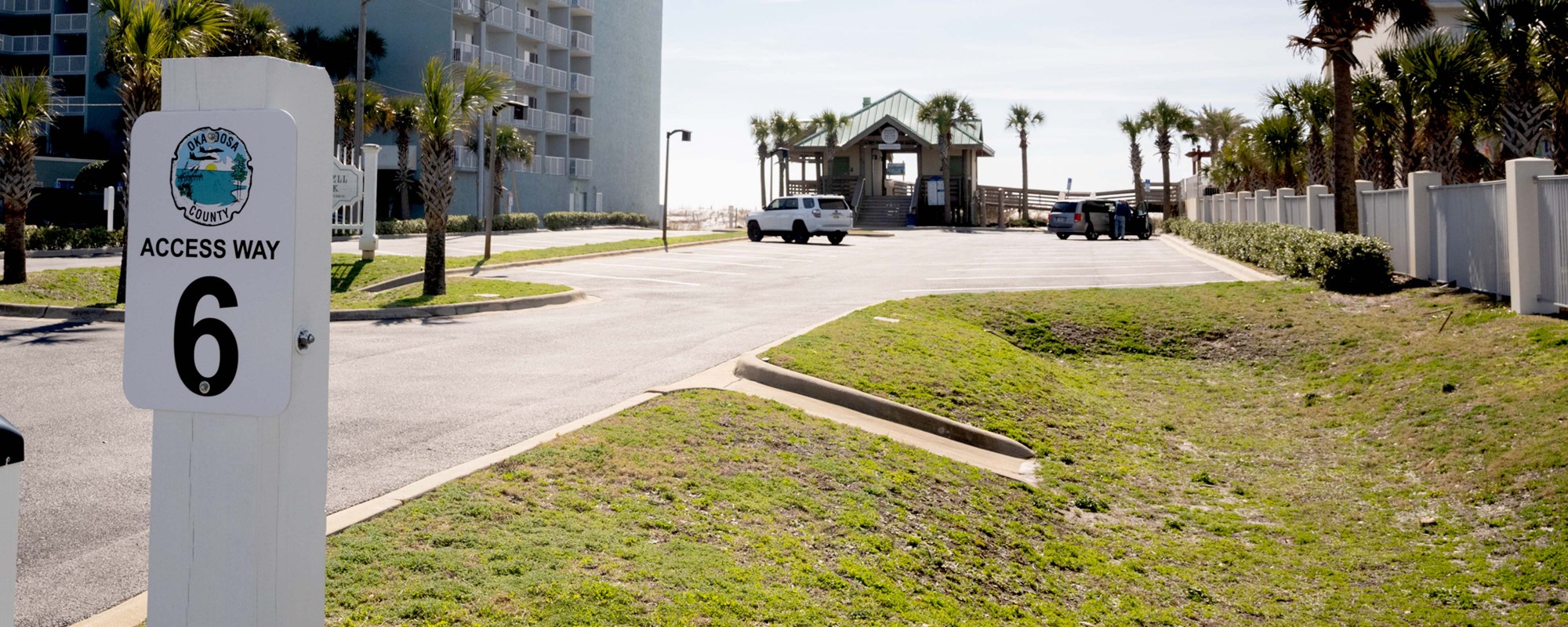
Mike Mitchell Beachwalk is Okaloosa Island's Beach Access 6 at 820 Santa Rosa Boulevard. Okaloosa County lists a pavilion, restrooms and parking at the site. Its normal schedule runs from one hour before sunrise until one hour after sunset. Any current restriction at the entrance takes priority over that general schedule.
The beachwalk gives land access to the Gulf shore. It is not permission to launch a motorboat, cross private courtyards or enter dunes beside the walkway. Find the signed route and leave it open. Fishing questions or changes in park facilities can be checked with the county's parks office before a long drive.
The county bans shark fishing on its own property and identifies separate setup restrictions before 7 a.m. Keep the emergency travel lane open behind the beach. The access opening window and the time for placing equipment are different matters; follow the signs and ask Beach Safety about anything unclear.
Make the first trip a scouting walk
Carry a rod and a small bag first, or inspect the beach without tackle. The short distance from a parking space can feel much longer with an overloaded cart on soft sand. Look for swimming activity, birds, loose weed and a broad enough casting lane. These observations decide whether to bring down the cooler.
The pavilion can be useful for a break, but do not turn a shared table into a spread of hooks and bait. Store spare rigs in a closed pouch. Keep the outfit you are using beside you on the beach. A simple camp leaves room to reposition when a family arrives through the same crossing.
Watch how waves mark the sand below
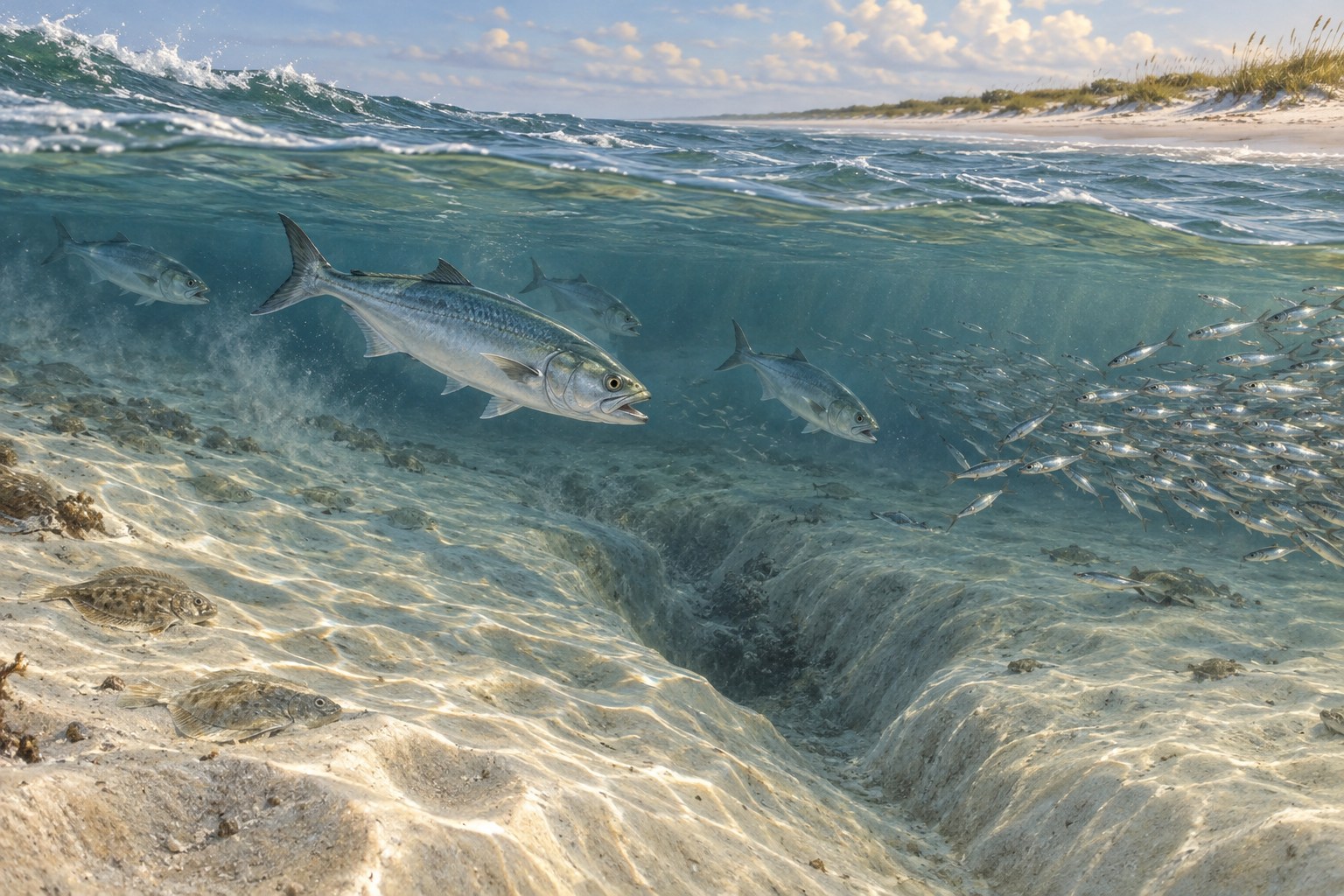
On a relatively calm day, a wave breaking consistently over one strip suggests shallow sand beneath it. Smoother water beside that strip may cover a trough. Fish searching for crustaceans can follow its edge. Look for a repeatable pattern across several sets rather than declaring one patch a guaranteed fishing hole.
Start with the visible nearshore change and vary the distance in small steps. A longer cast is only useful if it reaches a different feeding lane and remains controlled. Bar gaps can also concentrate outgoing flow. Observe them from the sand instead of wading into a channel to gain another few yards.
Compare two compact bait choices
A shrimp piece is an adaptable starting bait for whiting and mixed small surf fish. A sand flea or a narrow strip bait provides a different test for pompano. Keep each offering tidy on the hook. A large soft bait may cast poorly and be stripped before you recognize a bite.
When space allows a second attended rod, use the same casting distance to compare baits. Otherwise alternate offerings on one rig. Change one part of the setup at a time so you can learn from the result. Keep track of bait loss as well as landed fish; both reveal how the presentation is behaving.
Suspend the bait without overcomplicating the rig
A dropper rig holds one or two small baits above the sinker. A small float can lift an offering away from moving sand, while a plain hook tests a less conspicuous presentation. Use the fewest parts needed for the conditions. Long tangled leaders spend more time on the beach than in useful water.
The hook size should fit the bait and the likely fish, rather than the size of the rod. Make the point accessible and check that bait has not twisted around it. Renew a worn leader after contact with rough material. A tidy spare rig is an easy way to restart without spreading tackle over the walkway.
Match the equipment to a short island outing
Choose a spinning outfit that comfortably casts the sinker required to hold your lane. The manufacturer's weight range is the limit to respect. If a strong sweep demands more weight than the outfit can handle, shorten the session or choose calmer permitted water. Do not compensate with an uncontrolled heave.
Bring pliers, a measuring tool and a closed waste container alongside bait and spare weights. Keep sunglasses and a hat secured in wind. A modest kit makes it easier to move from an unproductive position while staying within public access. The table shows useful adjustments for common surf signals.
| What you notice | Try next | Why it helps |
|---|---|---|
| Repeated bites with missing shrimp | Use a shorter tougher offering | Keeps more bait attached |
| A clean trough very close in | Lower the casting distance | Tests feeding water with better control |
| A sinker rolling sideways | Review tension and appropriate holding weight | Reduces unwanted line travel |
| Heavy drifting grass | Rest the rig or find cleaner allowed water | Avoids fishing a buried hook |
Allow for fronts, heat and changing beach use
Pompano movements bring seasonal interest to the Panhandle surf. Spring and fall are useful periods to investigate, with no guarantee attached to a month. Whiting and mixed surf catches can offer other options. Watch actual bait activity and water condition instead of judging the outing only by a calendar.
A cool front may change the breeze and surf within a day. In warm weather, heat and lightning can shorten a comfortable visit. Start with a weather check, then reassess from the beach. The county's opening window can allow a quieter early session, provided visibility and current signs make fishing appropriate.
Keep your feet out of a risky return flow
A smooth-looking channel between breaking waves is not necessarily safe water. It can be a route for water returning offshore. A snagged rig is replaceable. Do not follow it into a rip, and do not send a child to retrieve a floating piece of tackle beyond the shallow wash.
When a fish takes line, stay on stable footing and use a smooth drag. Follow the fish along the dry beach only where public space and other visitors allow. If the rod tip draws you toward hazardous water, reduce the pressure and prioritize your position. No photograph or fish is worth losing a safe landing.
Leave the access ready for the next visitor
Check the current species rules before keeping your catch. Some similar-looking surf fish have different size or harvest conditions. Use an accurate measure and a confident identification. For release, handle the fish quickly with wet hands and keep its body supported rather than hanging it by a hook.
Remove every bit of line and bait packaging from your setup area. Wind can hide scraps against the base of a bag or rod holder. Take a final look before carrying gear back across Access 6. The useful facilities at Mike Mitchell work best when visitors keep the crossing and shared spaces uncluttered.
Common questions
Which numbered access is Mike Mitchell?
Okaloosa County identifies it as Beach Access 6 at 820 Santa Rosa Boulevard.
What facilities are listed?
The county lists a pavilion, restrooms and parking. Check for any temporary closure or change before relying on them.
What does a moving sinker tell me?
The current, line bow or weight may be carrying the rig sideways. Reassess control before the line reaches another beach user's water.
Is it sensible to bring several rods?
Begin with one attended outfit. Additional rods are only useful when there is ample clear room and you can monitor every line.
Prepare for your visit
Check local tides and weather. Read more about florida pompano, whiting, permit. Check current FWC saltwater fishing rules.