
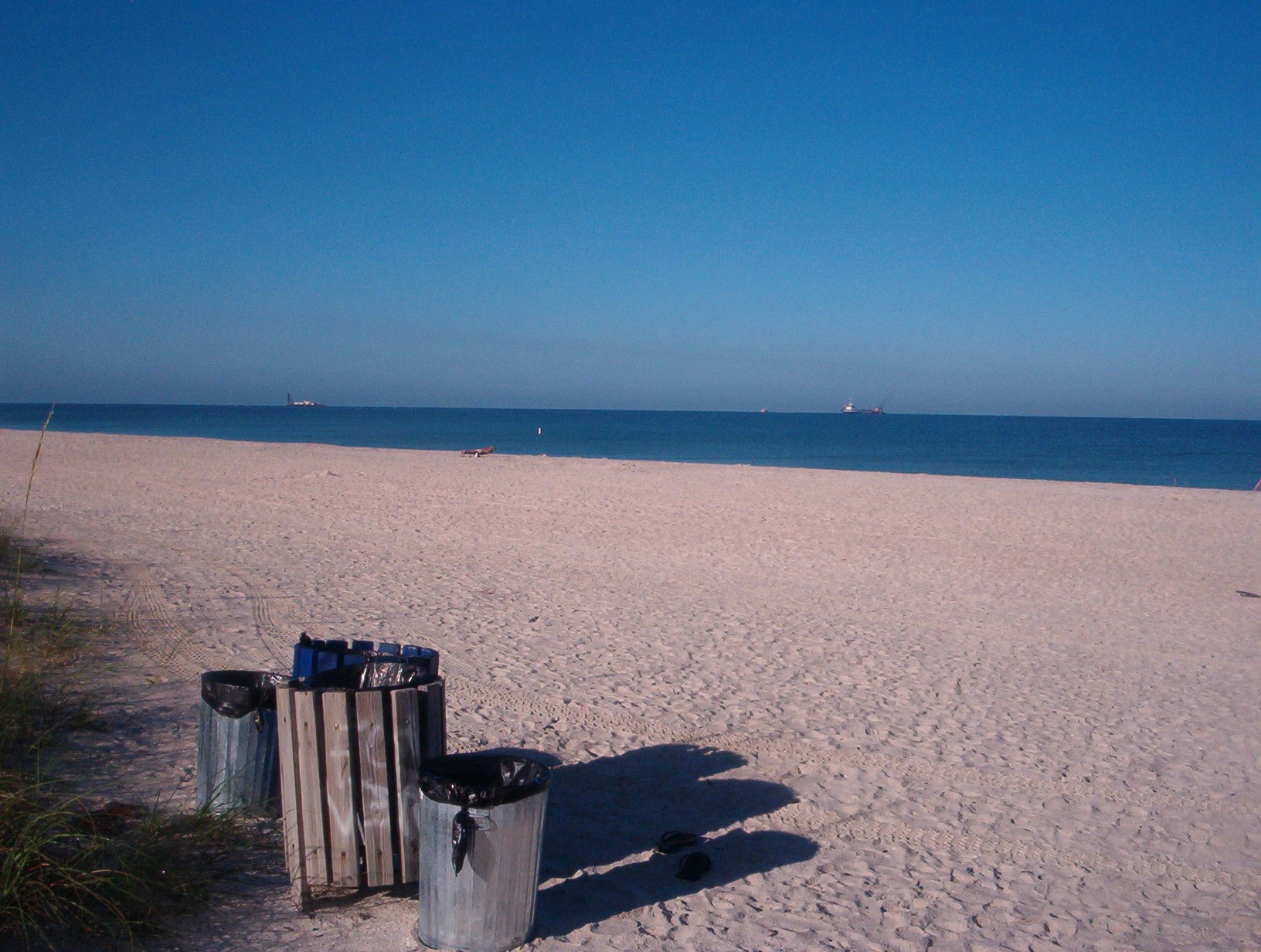
TAMPA BAY / SUNCOAST
Nokomis Beach
fishing guide
Read the beach troughs and North Jetty current. Learn which fish to target, how to present bait and how to keep an easy shore session safe.
Explore the guide ↓One beach, two very different fishing plans
Nokomis Beach sits on Casey Key, north of Venice Inlet. The open Gulf shore suits anglers who want to walk, read the waves and cast light tackle. North Jetty Park adds moving water and hard structure at the inlet. These are close together on a map, but they call for different equipment and judgment.
Choose the beach for a relaxed first visit. Look for an uncrowded stretch with a darker strip of water just beyond the wash. Choose the inlet only when the footing, waves and boat traffic allow a controlled presentation. A fish feeding beside the rocks is not a reason to climb onto a wet, exposed edge.
The local mix includes snook, pompano, whiting, sheepshead, ladyfish and Spanish mackerel. Which of those becomes a realistic target depends on the season and the water in front of you. This guide focuses on public shore access and short, manageable trips. It does not treat the inlet channel as a wading route.
Where to start around Nokomis
Nokomis Beach
The main beach is the straightforward choice for surf fishing. Enter through an established public access and move away from swimmers before unpacking. An empty patch of sand does not automatically allow fishing through a marked swimming area. Read the signs at that entrance and keep your hooks, bait and casting path clear of other visitors.
North Jetty Park
Sarasota County lists fishing among the activities at North Jetty Park, at 1000 Casey Key Road. It gives access to the northern side of the Venice Inlet area. Inspect the usable shore before carrying a cooler or several rods down to the water. Waves, maintenance barriers and the tide can reduce the space that is sensible to fish.
Do not confuse this park with Humphris Park on the Venice side of the inlet. A closure or opening on one bank says nothing about the other. For a visiting family, a broad beach position with room behind the rod is usually easier to manage than the jetty rocks.
Find the trough before making a long cast
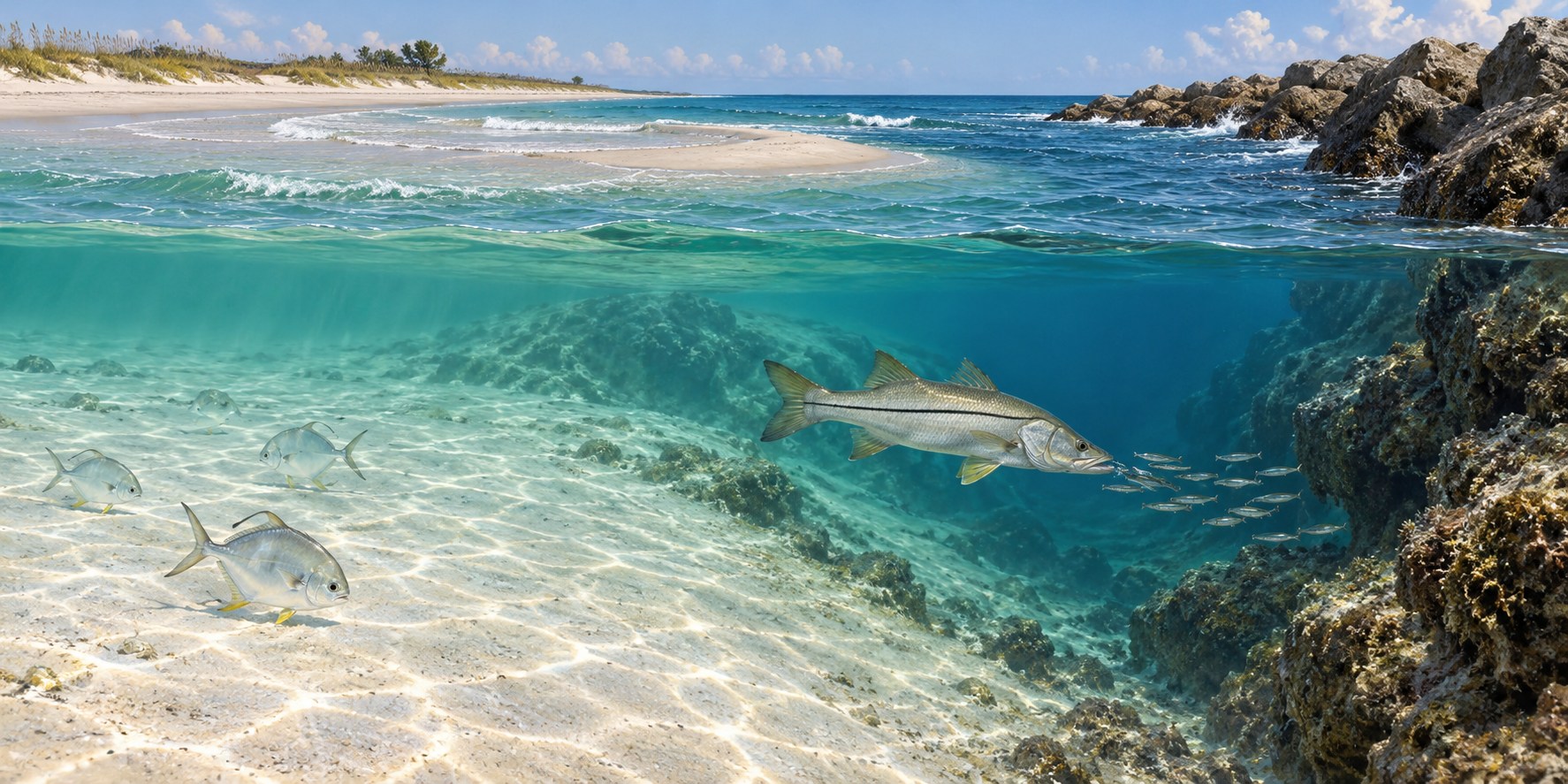
Stand back and watch several sets of waves. A wave may break on the outer bar, flatten in a darker trough and break again at your feet. That middle strip can carry food along the shore. Whiting and pompano do not always require a cast beyond the farthest breaker.
A break in the sandbar can look like a darker gap with fewer breaking waves. Fish the edges from dry sand when conditions are mild. Do not step into a gap to gain casting distance. Water leaving through it can be much stronger than the nearby surf suggests.
Near the inlet, watch floating grass or foam to see where fast water meets slower water. Predators can hold beside that boundary while bait moves past. A cast that travels naturally through a short section of the seam often beats a heavy rig planted in the middle of the channel.
Fish, bait and a useful starting method
| Target | Place to look | First bait or lure | Presentation |
|---|---|---|---|
| Snook | Beach wash and inlet edges | Small paddletail or live shrimp | Move parallel to the shoreline rather than casting over every fish |
| Pompano | Clean sand in the surf trough | Sand flea, shrimp piece or small pompano jig | Keep the offering near the bottom without burying it |
| Whiting | Shallow wash and sandy depressions | A small piece of fresh shrimp | Use a modest hook and test close water first |
| Sheepshead | Submerged rock and hard edges | Small shrimp or crab where lawful | Hold the bait close to cover with little slack |
| Spanish mackerel | Bait schools outside the inlet | Compact silver spoon | Retrieve briskly through feeding fish from a safe position |
Ladyfish often strike the same shrimp and jigs intended for other species. Their jumps can make a short outing lively. Use pliers and support the fish for a quick release rather than allowing it to thrash across the sand.
How the year changes the beach
Cooler months often make pompano, whiting and sheepshead sensible priorities. A passing front may dirty the Gulf and make the jetty unsuitable. Wait for the surf to settle, then search for improving water instead of insisting on the exact spot that worked before the wind changed.
Spring brings warming shallows and more bait movement. Watch for small fish flicking at the surface and birds repeatedly working one stretch. Spanish mackerel can appear with those bait schools. Warm late spring and summer mornings are a useful time to look for snook close to the sand.
Summer also brings thunderstorms, hot pavement and crowded swimming areas. Finish early when the forecast calls for afternoon lightning. Fall can offer active beach fishing as bait travels along the coast, but tropical weather and lingering rough water can quickly change the plan.
These are fishing tendencies, not harvest seasons. A species being easy to find does not mean you may keep it. Check the rules for that fish and the water you are actually fishing.
Use tide and wind together
A rising tide can put feeding fish over sand that was too shallow earlier. Falling water can carry bait toward the inlet and make shoreline seams easier to see. Neither direction wins every day. The useful question is whether your bait reaches an active feeding lane without dragging unnaturally.
An onshore wind adds surf and can gather loose grass along the beach. A strong offshore wind can flatten the shoreline while making a paddle trip unsafe. Judge a beach session and a kayak session separately. For the inlet, current speed and wave direction matter more than a simple high-tide time.
Use the nearest suitable station on HookCurrent’s tides and weather page, then compare the prediction with what the water is doing. A station farther inside the bay may not match the inlet’s strongest current at the same minute.
Pack for the way you plan to fish
A medium spinning outfit with roughly 10 to 15 pound braided line is a practical beach starting point. Add a leader suited to the target and abrasion. For snook near rocks, a stronger leader and more stopping power may be needed. Inspect the last few feet after a snag or a fish rubbing against cover.
Carry a small selection of jig heads, paddletails, spoons and bait hooks. Use only enough sinker to control the bait in the current. If the rig repeatedly wedges in rock, change the angle or switch to a lure that runs above the bottom rather than feeding tackle into the same crack.
Bring drinking water, polarized glasses, long pliers and a way to measure a fish before deciding whether it can be kept. A compact bag leaves a hand free while walking. Keep spare hooks in a closed box so they cannot spill where bare feet pass.
A simple two-hour outing
- Walk the beach first with the rod unrigged. Note swimmers, birds, wave gaps and the nearest safe exit.
- Spend the first casts in the closest trough. A small shrimp offering helps reveal whether small bottom feeders are present.
- If baitfish appear, try a paddletail or spoon through their outside edge. Avoid casting directly into a diving bird.
- Move a short distance after several unproductive presentations. Look for a change in depth or wave shape, not just another empty piece of sand.
- Leave enough time to clean up line scraps and carry all bait packaging back to a bin.
Do not add an inlet stop simply because the beach is slow. First decide whether the jetty conditions are suitable for your experience and shoes. A quiet beach session is preferable to an uncontrolled fight beside slippery rocks.
Keep the beach usable for everyone
Snook deserve careful handling, especially during warm-water spawning periods. Keep a large fish supported horizontally and minimize the time it spends out of water. Never drag it up dry sand for a photograph. If predators repeatedly take hooked fish, stop fishing that stretch.
Give nesting birds and marked turtle areas generous space. At night, avoid shining bright lights along the nesting beach. Footwear helps around shell and stone, but it does not make a rough inlet safe. Stay off surfaces being washed by waves.
Before keeping anything, review the FWC saltwater fishing requirements. The access and photograph notes identify the facility sources used for this guide.
Nokomis fishing questions
Is the beach better than the jetty for a beginner?
The beach usually provides more room to cast and a simpler place to land small fish. Start there in mild surf, outside swimming areas, before trying moving water around rock.
Do I need to cast a long way for pompano?
Not necessarily. Test the first trough with fresh bait before sending every cast beyond the outer sandbar. The feeding lane can be surprisingly close.
Can I walk across the inlet at low tide?
No. Venice Inlet is an active boat channel with strong water movement. Its banks and channel are not a crossing route.
What should I change when grass catches every cast?
Look for a cleaner stretch or shorten the session. A different sinker cannot solve a continuous belt of drifting weeds, and moving toward hazardous rocks is not a sensible trade.