Gulf surf · Bay piers · Seasonal fishReviewed September 29, 2026Photo: Darrellcdow
ONE ISLAND, TWO DIFFERENT SHORES
Decide which side of the island suits your day
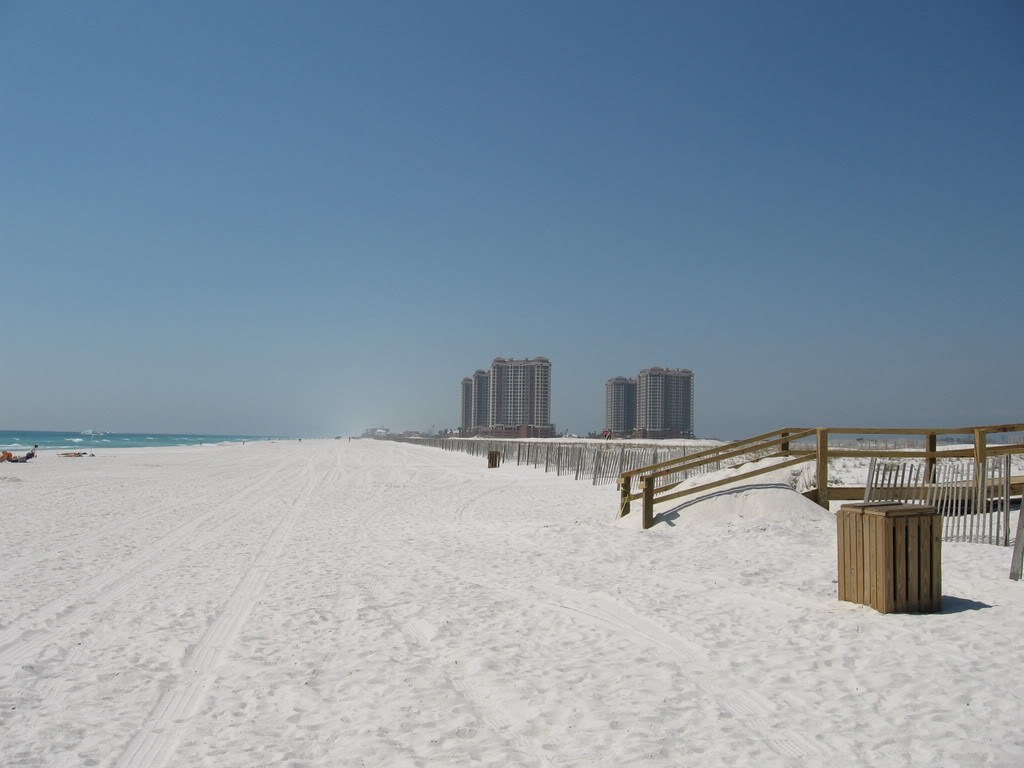
Pensacola Beach sits between open Gulf water and Santa Rosa Sound. That gives an angler a useful choice. You can fish a sandy beach with waves in front of you, or look for a quieter stretch of water on the other side.
The choice should come before the bait purchase. A heavy surf rig is awkward for working a shallow grass edge. A tiny bay jig may never settle in rolling surf. Choose one setting, pack for it and keep a second location in mind if the weather changes.
Gulf side
This is the shore for beach troughs, passing bait schools and the Pensacola Beach Gulf Pier. Pompano and whiting suit a modest surf setup. Spanish mackerel call for a more active approach when they are chasing small fish.
Sound and bay side
Santa Rosa Sound lies north of the beach community. Farther west, the Fort Pickens shoreline faces Pensacola Bay. Shoreline cover, current near pilings and changes in bottom depth matter more here than breaking surf.
A wind that makes one shore uncomfortable can leave another more manageable. Still, a sheltered view from the parking lot is only a first clue. Check the whole route before launching a kayak.
YOUR ACCESS OPTIONS
Pick a place that matches your tackle
OPEN GULF · WALK-ON FISHING
Pensacola Beach Gulf Pier
The Gulf Pier puts anglers over deeper water without a boat. It also gives you a way to see bait movement along the beach. Look down before you start. Small fish gathered around the pilings may tell you more than a long cast into empty water.
For a first visit, ask the pier staff which part of the pier suits your target. A bottom bait and a small casting lure solve different problems. Carrying both is useful, but avoid spreading several rods across a busy walkway.
Confirm admission, opening hours, rental options and the day’s rules before traveling. The main beach nearby is popular with swimmers. Your pier pass does not give you a reason to cast across their space.
Landing matters: Decide how you will bring a fish up before you hook it. Do not lift a heavy fish by the fishing line. Follow the pier’s landing-net and handling instructions.
PENSACOLA BAY · NATIONAL SEASHORE
Fort Pickens Fishing Pier
This is a bay pier, not a second Gulf surf pier. The National Park Service describes a roughly 200-foot platform and identifies it as a licensed fishing pier. Its listed rules allow two poles, or one pole and one cast net, per person. Check the posted rules on arrival.
Use the pilings as a clue to current direction. If floating material moves steadily past them, place a small bait where it can drift naturally along the edge. Avoid letting a sinker swing under someone else’s line.
The Fort Pickens area has an entrance fee. The park’s pier-license coverage applies to recreational fishing from that licensed pier. It should not be assumed to cover your separate beach or shoreline session.
Bring sun protection that fits the pier rules. The park lists shelters and canopies among the items prohibited on the pier. Park access can also change after bad weather.
SANTA ROSA SOUND · OLD BRIDGE
Bob Sikes Fishing Pier
The old bridge connection between Gulf Breeze and Pensacola Beach now provides fishing access beside the sound. This is a place to think about water passing fixed structure rather than waves moving over a sandbar.
Start by finding room to fish without crossing neighboring lines. Use only enough sinker weight to control the bait. If the current carries it under the structure at once, adjust your position rather than repeatedly breaking tackle off.
Small shrimp baits are a sensible first test. Around hard surfaces, a small crab bait may interest sheepshead. Keep spare leader because contact with rough pilings can weaken it before you notice a problem.
Use the designated fishing structure and legal parking. Do not stop on an active road bridge or step into traffic to reach a casting position.
SANDY SHORE · MOBILE FISHING
Gulf beaches and Fort Pickens beach access
The national seashore has beach-access parking areas along the Fort Pickens road. These can help you spread out when a central beach is busy. Choose a permitted fishing stretch and use established paths across the dunes.
Langdon Beach is also a managed swimming area. Ask a ranger about the separation between fishing and swimming activity rather than assuming every section of beach is available for hooks.
Access is part of the plan. Read the gate hours before you walk far from the car. Sand on the road, standing water or storm repairs can affect a route that was open on a previous visit.
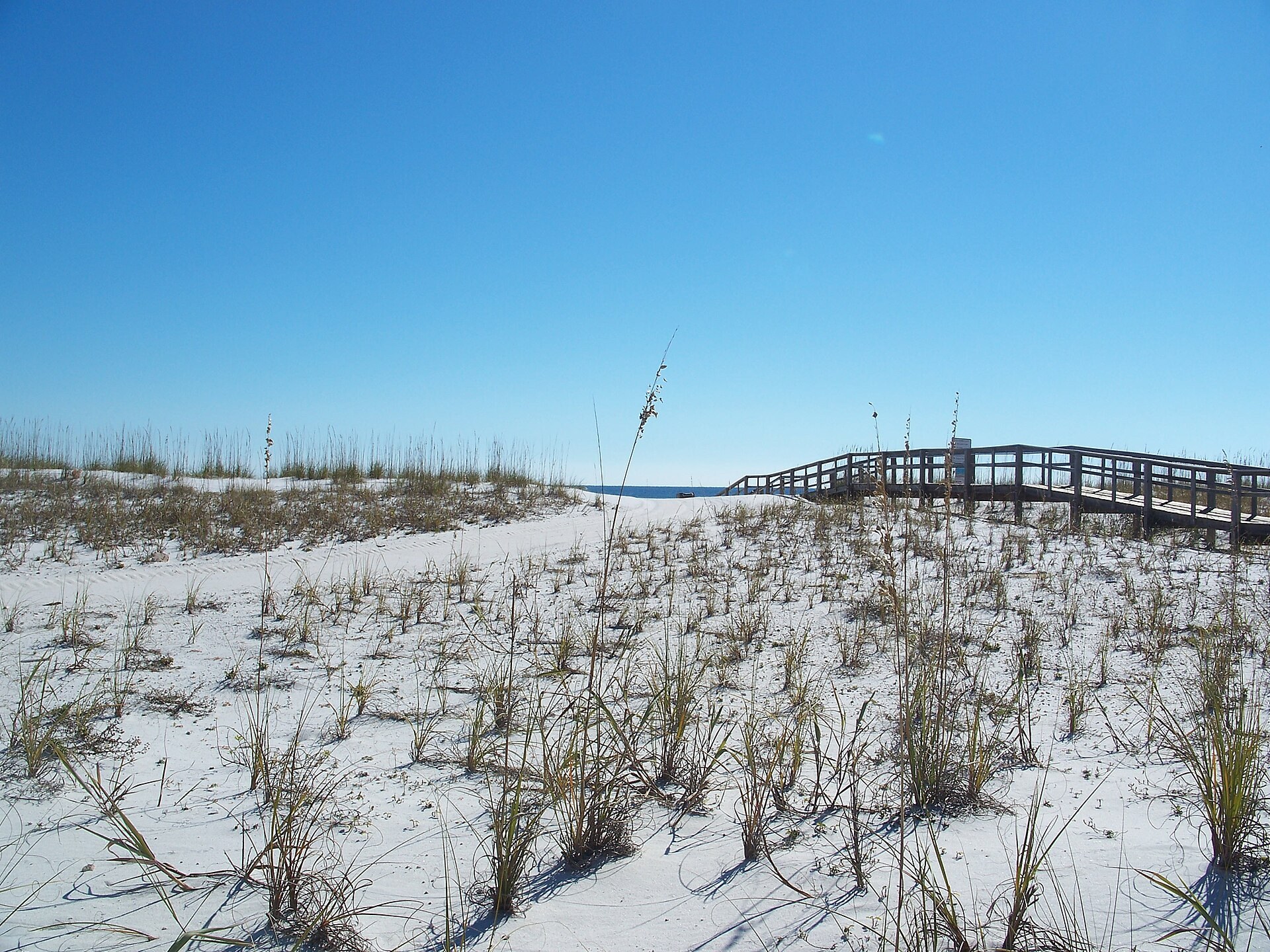
A beach walkover keeps foot traffic off the dunes. Photograph by Ebyabe, 2010. Image details.
CHOOSE A TARGET
Different fish reward different casts
Pompano: search the sand lanes
Work a small sand flea or shrimp bait along a trough. The first lane beyond the wash can be enough. Fish two distances only if you can watch both rods and keep the lines clear of other people.
A bite at the shorter distance is useful information. Move the other bait closer instead of assuming the bigger fish must be farther away. Spring is a familiar local window, but beach conditions still decide whether a session makes sense.
Whiting: downsize before casting farther
Whiting are a useful target for someone learning surf fishing. Offer a small piece of shrimp on a modest hook. Large chunks can produce repeated taps without a hooked fish.
Keep the rig simple and check it often. A bait stripped to shell is no longer doing the same job. This kind of fishing teaches you to notice the difference between a wave moving the rod and a fish taking the bait.
Spanish mackerel: watch the bait
Small fish scattering near the surface can turn a quiet pier session into a short burst of action. A compact silver spoon or jig is worth having ready. Match the size of the fleeing bait, not the size of the mackerel.
Cast alongside the feeding activity and retrieve without tangling nearby lines. Check the leader after contact with a fish. A nick from a tooth can cost the next lure.
Sheepshead: stay beside the hard cover
Look at pilings and other permitted structure where small shellfish grow. Fiddler crabs or small shrimp can be more suitable than a large baitfish.
Lower the bait with control. You want it near the feeding surface, not buried in a crack. Keep slight contact with the rig so a light bite is easier to notice. Be careful around the fish’s sharp spines when unhooking it.
Redfish: give the shoreline room
On the sound side, investigate an edge that has food and a little depth nearby. A shrimp below a float or a small soft lure lets you test the area without a complicated setup.
Approach shallow water quietly. Cast beyond the likely feeding lane, then bring the offering into it. Repeated splashes directly over the same patch can work against you.
Spotted seatrout: keep the lure out of the grass
Grass and open sand beside it provide a useful starting pattern in sheltered water. Use a lightly weighted lure that swims above the vegetation. A heavier jig may simply collect a ball of grass.
In cooler weather, nearby deeper water deserves attention. Give the lure time to reach the intended depth and shorten the retrieve if fish are reluctant to chase.
What about the larger fish seen from the pier?
King mackerel, cobia and other larger visitors are possible coastal targets. They need a landing plan and tackle chosen for that job. Watching an experienced angler catch one is not a reason to tie a large live bait onto a light whiting rod.
For a short family visit, pick a manageable fish and learn that method. You can build toward more demanding targets after you understand the pier, the current and your equipment.
BETTER PIER FISHING
Use the structure without losing every rig
Stand where you can follow your line from the rod tip to the water. On a crowded pier, a long diagonal cast may cross several anglers before the bait settles. A shorter, controlled presentation is often easier to fish properly.
Read the current from the surface
Watch foam, leaves or a small piece of floating weed. Their movement shows the surface direction. The flow near the bottom may differ, but the surface gives you a starting point for where a loose line will travel.
Place a bait so it approaches a piling rather than immediately disappearing beneath the platform. If it keeps snagging, change the angle, shorten the drift or lift it higher. More sinker weight is not the answer to every snag.
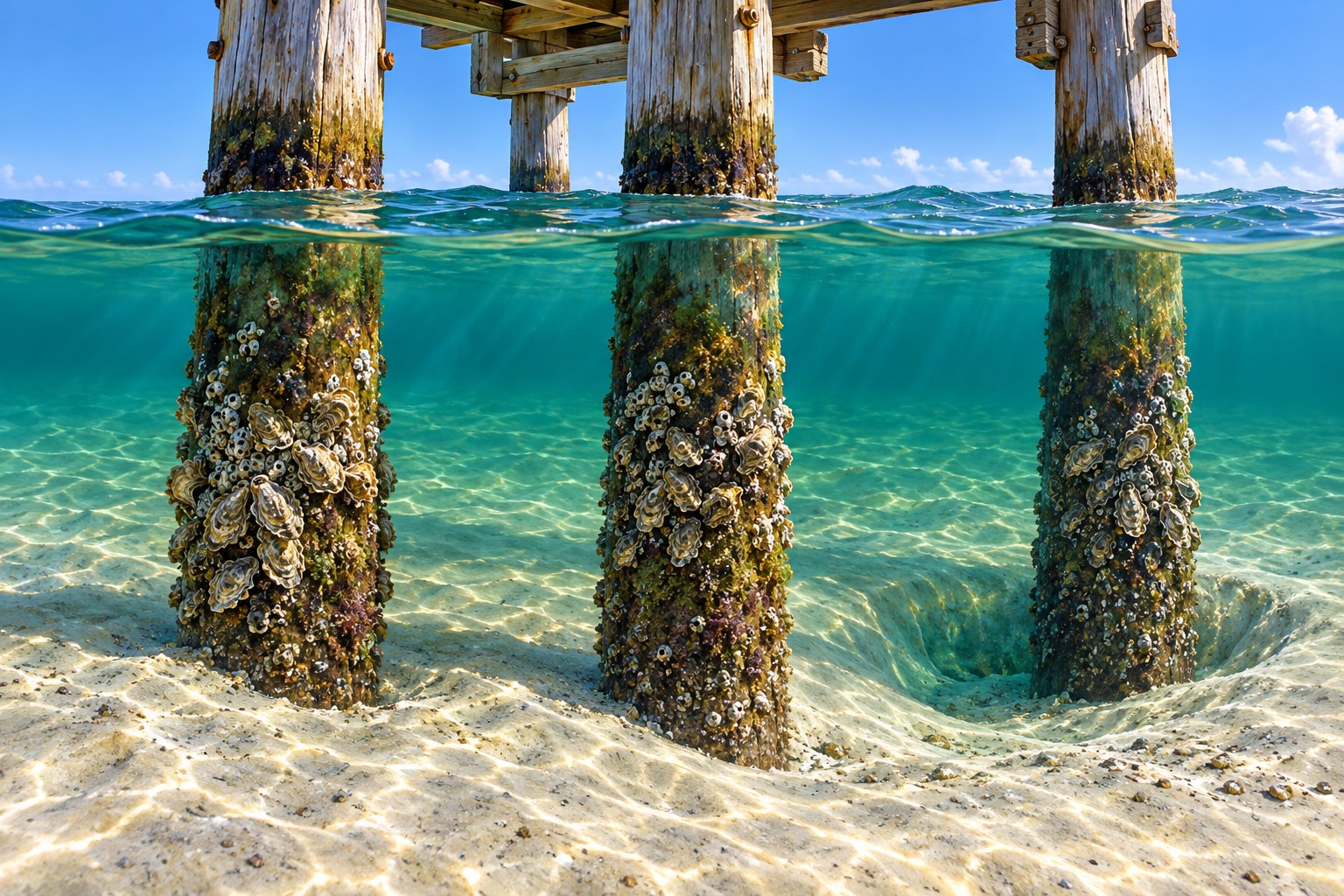
Hard surfaces create feeding cover. This illustration shows the idea beneath a pier, not a survey of either Pensacola fishing pier.
Separate searching from waiting
A bottom bait tests one small area. A moving lure searches a larger stretch. If the water is quiet and you cannot see baitfish, a patient bottom presentation may suit the session. If fish are striking at the surface, keeping an active lure ready makes more sense.
Do not cast through birds to reach feeding fish. Wait for a clear opening. Keep bait scraps contained so the pier does not become a feeding station for birds around hooks.
A BEACH SESSION THAT TEACHES YOU SOMETHING
Change the distance before changing the whole rig
Set the first bait in the closest deeper lane you can reach from dry sand. After a few checks, move the next cast farther out. Note where the bait survives, where bites happen and where weed gathers.
If two rods are allowed and the space is suitable, one close bait and one farther bait can make the comparison easier. Keep both within a distance you can manage. Do not spread unattended lines across a busy beach.
What the rig tells you
What to change next
Small taps with bait partly missing
Trim the bait and check that the hook is not buried in it.
Seaweed on every retrieve
Walk to a cleaner stretch or shorten the cast to avoid the weed line.
A sinker that keeps rolling sideways
Check its shape and weight against the surf and rod rating. Stop if holding bottom needs an unsafe load.
One distance gets every bite
Concentrate on that lane while the pattern lasts.
Nothing touches a fresh bait
Test a new lane, then a different stretch of beach. Avoid making five tackle changes at once.
A sand spike is a rod holder pushed into the beach. Set it securely and stay beside the rod. It does not make it safe to leave hooks fishing while you swim, walk away or stop watching a child.
THROUGH THE YEAR
Build around the weather window
Spring: keep a surf rod ready
Pompano make beach fishing worth considering, while warmer water brings more attention to bait schools along the Gulf. Around structure, sheepshead can be part of the plan.
Wind can make a promising calendar date a poor surf day. Leave room to switch to a suitable pier or sheltered shore.
Summer: shorten the middle of the day
Strong sun and busy beaches change the practical side of fishing. Arrive during legal early access hours and carry enough water. Watch the sky as closely as the rod.
Afternoon storms can develop before your planned finish. A nearby car or substantial building should be part of your exit plan.
Fall: pay attention to moving bait
A school of small fish can create opportunities along both shores. Keep a small lure available and examine current edges around the piers.
As fronts arrive, check the new wind direction. The comfortable side of the island may change overnight.
Winter: choose comfort and control
Cold wind over open water can make a long pier session unpleasant. Protected positions and smaller natural baits offer a more patient approach.
A milder afternoon can be a better choice than forcing an early start. In the sound, explore depth changes with slower retrieves.
The seasons above describe fishing possibilities. They do not set the dates when a particular species may be kept.
PACK FOR ONE CLEAR JOB
Keep the first tackle bag small
For beach fishing, bring a rod rated for the sinker and bait you intend to cast. Pack several ready-made bottom rigs, a few suitable sinkers and small hooks. A bait knife, pliers and a container that keeps shrimp cold solve more problems than an overflowing lure box.
For a bay or sound session, a medium spinning outfit and a selection of small jig heads are useful. Add a float, some leader material and a few hooks for shrimp. Leave space in the bag for a wet towel, drinking water and used line.
For the pier, ask about landing equipment and allowed tackle before buying specialized gear. Wear shoes that grip a wet deck. Keep sharp hooks covered while walking past other visitors.
Give children a role before handing over the rod
Have them watch the bait bucket, look for diving birds or count the seconds while a lure sinks. Show them where the hook travels during a cast. Let one person cast at a time in a clearly defined space.
Choose a short outing with an easy place to stop. The best first trip may end with a small fish and a good memory rather than a full cooler.
TWO WAYS TO SPEND A MORNING
Choose a fixed base or a moving search
Stay in one place: the bay pier plan
Check Fort Pickens access before leaving. Bring one simple bait outfit and enough supplies for a short session. On the pier, watch the current and find space before setting up.
Fish a controlled bait near suitable cover. If the bite is slow, change depth or position on the platform without crowding another angler. Leave time to pack up before the gate deadline.
Travel light: the beach plan
Choose an open, permitted access and walk only as far as you can comfortably return. Look for a deeper lane and try a small bait at two distances.
If the stretch fills with swimmers, pack up and move. A light load makes that choice easier. Use the walk back to study how the bars and wave patterns change along the shore.
RESPECT THE BEACH AND YOUR CATCH
Keep the day within the conditions
Read beach flags before approaching the water. A fishing rod is not a reason to enter dangerous surf. Stay clear of the pass, ferry operations and restricted sections of the shoreline.
Check the fishing license and harvest rules that apply to your chosen place and species. A licensed pier and a separate beach outing are different situations. Never carry an assumption from one to the other.
Unhook small fish with wet hands and as little time out of water as possible. Use appropriate landing gear on a high platform. Take broken line and hooks with you, and keep every wheel and footstep off protected dunes.
BEFORE YOUR VISIT
Pensacola Beach questions
Are the Gulf Pier and Fort Pickens pier the same place?
No. The Pensacola Beach Gulf Pier faces the open Gulf. The Fort Pickens fishing pier extends into Pensacola Bay inside the national seashore. Expect different access arrangements and fishing conditions.
Can I switch from surf fishing to the sound?
Yes, if you have legal access and suitable conditions. Change the tackle too. A large surf sinker is usually unnecessary for a shallow, sheltered presentation.
Which bait gives a beginner a useful start?
A small fresh shrimp bait covers a range of modest beach and pier targets. Buy only what you can keep in good condition during the outing.
Does the Fort Pickens entrance fee replace a fishing license?
No. Entry and fishing permissions are separate. The park identifies its fishing pier as licensed, but you must check your own license requirements for fishing elsewhere in the park.
Why do I lose so much tackle beside a piling?
The current may be carrying the rig under the structure. Try a different angle or a shorter drift. Inspect the leader for rubbing, and avoid repeatedly dragging a hooked sinker through the same snag.
Should I bring a beach cart?
It can help on a longer surf visit, but only if it fits the access route. Check whether there are stairs, narrow walkovers or soft sand. Carrying less is often easier than moving a heavy cart through difficult access.
Can I keep fishing when thunder starts?
End the session and reach proper shelter. A rod holder, pier roof or open beach pavilion does not make lightning harmless.
What should I check on the morning of the trip?
Review wind, surf, storms and access notices. Then check that your chosen location is open and your tackle suits it. See HookCurrent tides and weather.