

SOUTHEAST ATLANTIC
Phipps Ocean Park
fishing guide
Phipps Ocean Park is undergoing a major redesign, and its public park and beach access remain closed under the town's current notice. Use this guide to understand the coastline and plan a future permitted visit, with open alternatives for fishing now.
Explore the guide ↓The public beach access is currently closed
The Town of Palm Beach's project notice lists Phipps Ocean Park as closed to the public during its transformation. The estimated construction period runs from May 1 through November 18, 2026. An estimate is not confirmation that the beach will reopen on that exact date.
The racquet center and its parking have reopened for tennis and pickleball patrons only. That limited reopening does not provide public beach access. The south end of the park and the beach access remain unavailable until project completion under the published notice.
Do not use the court parking as a route to the shore or walk around construction barriers. A historical beach photo or an old fishing recommendation cannot establish current entry permission.
For fishing now, choose a separately open facility with confirmed angling access. R. G. Kreusler Park and other Palm Beach County locations offer different nearby settings, each with its own swimming boundaries and parking rules.
Verify more than a construction date before returning
A future visit needs an actual reopening announcement, a usable entrance and the current beach rules. Check all three before loading equipment. Newly opened facilities can have arrangements that differ from their former layout.
The project includes landscape restoration, beach facilities and education features. Those improvements are intended for public recreation, but they do not by themselves specify a fishing area. Ask the beach staff about the permitted location and timing after reopening.
Keep the first return visit light enough to adapt. Walk the established route and identify the swimming boundaries before assembling a rod. Do not assume that a former path, parking row or fishing angle is still available.
Use the site photo as context for the park and its work, not as a statement that the pictured access is currently usable. The separate research notes retain the reviewed project notice.
Learn the beach habitat while access is unavailable
The Palm Beach ocean shoreline includes sand, changing nearshore bars and hard features in parts of the coast. Fish respond to prey and water movement within those habitats. A park's renovation does not freeze its offshore sandbars in their former shape.
A trough inside a bar can carry small prey along the shore. An open margin beside hard bottom can give predators a feeding route. Those are useful ideas for an approved future position or another legal beach, not reasons to enter the closed park.
The habitat illustration explains a sand-and-edge relationship. It does not show a surveyed bottom, construction boundary or exact future fishing station. Observe the actual shoreline after access is confirmed.
Learning to distinguish a clear lane from a snaggy patch can be done through careful observation at an open beach. There is no need to trespass to prepare for a later outing.
Prepare a compact surf-bait method for an open beach
Whiting and Florida pompano can feed over suitable regional beach sand. Small shrimp pieces, sand fleas and firm prepared bait strips offer manageable presentations. These suggestions apply where angling is permitted, including any future approved park section.
Use a tidy bait with a visible hook point. A short dropper above a holding sinker helps keep it from being buried. Begin close when the trough is near shore rather than assuming every opportunity requires a long cast.
Check for weed and empty hooks after a quiet interval. An apparently settled rig can be fouled or stripped. Adjust based on what comes back instead of adding elaborate tackle without understanding the problem.
Choose sinker weight that allows control in the actual waves. A rig rolling toward other people must be retrieved promptly. Legal space is as important as the choice of bait.
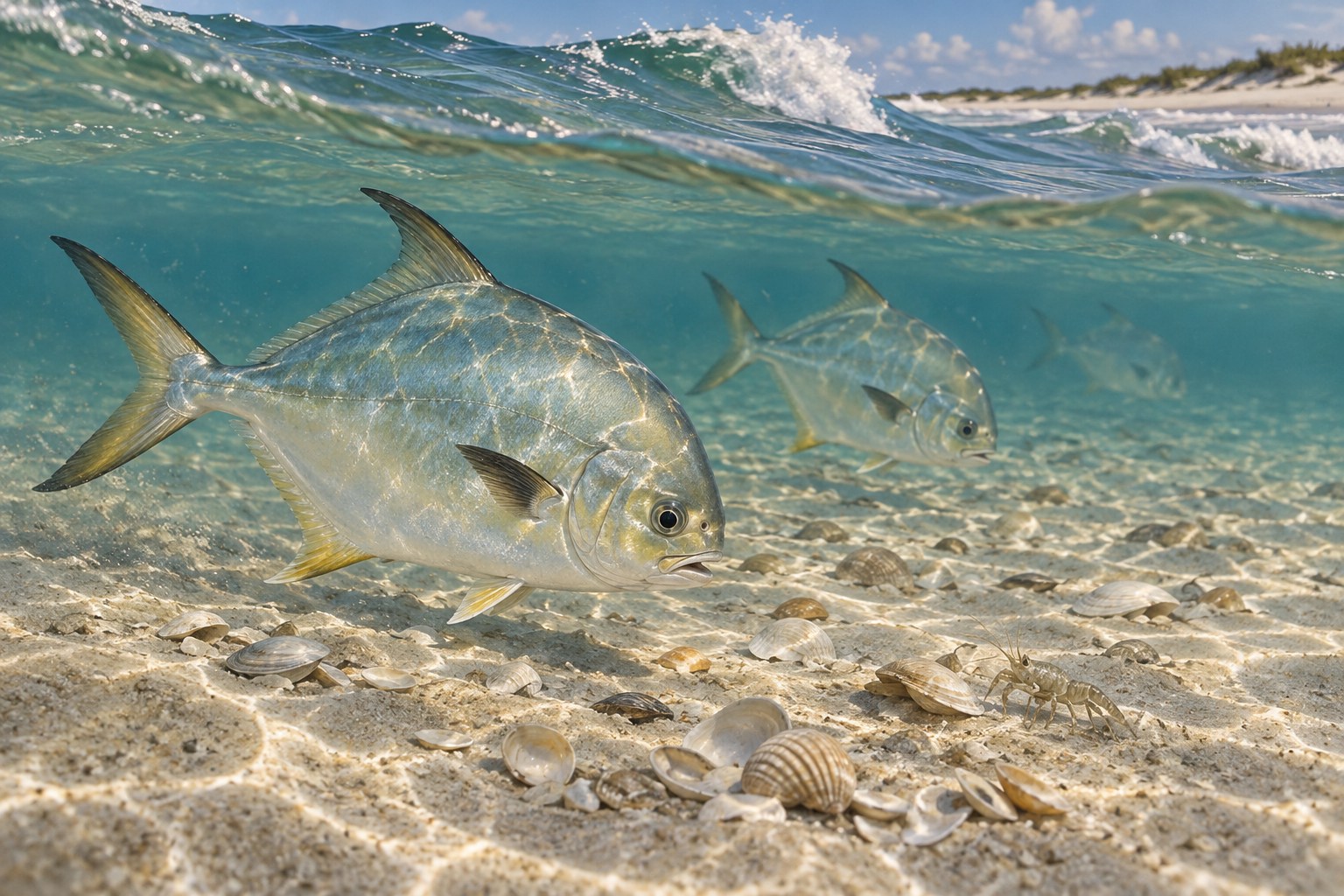
Use a clear shoreline lane for a future lure search
Snook and jacks can follow small fish along suitable South Florida beaches. A swimming soft plastic or small plug can search a legal lane with little equipment. Look for prey and movement rather than treating a calendar month as a catch forecast.
Place the lure ahead of a visible fish's direction and keep it above the bottom. A quiet angled cast often presents it more naturally than repeated splashes beside the same fish. Adjust the speed if a fish follows without committing.
On a mixed-bottom coast, check the leader after every scrape. Fish beside recoverable water and avoid a method that leaves tackle in rock. The best-looking edge is not useful if the catch cannot be landed and released safely.
Never apply these methods inside a closed or protected section. Choose an open alternative until the park's public access and fishing arrangements are confirmed.
Use seasonal patterns without making promises
Warm beach water can support a snook-search plan, while cooler fronts may change opportunities for pompano, bluefish or mackerel. Local bait, visibility and waves can outweigh those broad patterns. A future reopening date does not predict the fishing on opening day.
Wind can move weed and increase shorebreak even under a pleasant sky. Watch the forecast and the actual water before deciding to stay. Storm risk is a reason to change the outing, not a detail to ignore for a favorable tide.
Keep notes at the open alternative you actually fish. Its bar shape and current may differ from the Phipps shoreline. Do not transfer observations between beaches without checking whether the habitat matches.
Choose a plan that respects the closure
The current decision is about access first. Fishing preparation can continue without entering a work site or using limited court parking for another purpose.
| Situation | Appropriate plan | Check before acting |
|---|---|---|
| Public park remains closed | Choose an open permitted fishing facility | Its own entrance and angling rules |
| Racquet facilities are available | Visit for the authorized court activity | Parking is for court patrons |
| Estimated completion date approaches | Wait for an actual reopening notice | Date estimates can change |
| Public beach access reopens | Observe the new layout before fishing | Current boundaries and staff guidance |
Give the restored landscape time and space
The redesign places emphasis on native coastal landscape and education. Stay on completed public paths once access returns. Walking through young planting or dunes can undo work that helps protect the shoreline.
Keep line, balloons, packaging and bait waste from entering the vegetation. Wildlife can be injured by tackle even when it is left well above the waves. Store hooks before moving between beach and park facilities.
Do not use project renderings as photographs of completed amenities. A proposed layout describes an intention, while the available facilities must be confirmed after the work.
Make the eventual first trip a short learning visit
When access is officially restored, start with the route, rules and water observation. Bring one manageable rod rather than a full station. A short first visit leaves room to understand the changed park without rushing.
Verify current FWC licenses and harvest requirements before fishing an open location. Use the internal Locations directory to choose an alternative now and compare it with the future Phipps visit.
Common questions
Can I currently use Phipps Ocean Park's beach access?
The town's reviewed notice keeps the public park and beach access closed during the project. Wait for an actual reopening announcement.
Does the reopened tennis parking let me reach the beach?
No. The racquet center parking is reopened for tennis and pickleball patrons only under the notice. It does not restore public beach access.
Will the park definitely reopen November 18, 2026?
That is an estimated end date in the construction notice. It should not be treated as a confirmed reopening.
Why include fishing methods for a closed park?
They explain the coastal habitat and help plan a future approved visit or an open alternative. They do not authorize entry during the closure.
Prepare for your visit
Check local tides and weather. Read more about snook, florida pompano, whiting. Check current FWC saltwater fishing rules.