

PANHANDLE
Port St. Joe
fishing guide
Start at the town waterfront, then learn the shallow bay. Find public park options, useful fish habitats and manageable fishing methods.
Explore the guide ↓A WALKABLE WATERFRONT BESIDE ST. JOSEPH BAY
Start close to town and learn the bay
Port St. Joe sits on the eastern shore of St. Joseph Bay. Public waterfront parks make it possible to begin without a long boat ride. Beyond the town edge, shallow grass and sandy pockets create a different kind of fishing from the Gulf surf outside Cape San Blas.
The bay’s broad appearance can hide how shallow it becomes. Fish often use small changes in depth rather than the middle of an open-looking flat. From town, look for water moving past a pier or shoreline corner. From a small boat, look for the boundary between grass and a deeper sandy lane.
This is a good place to plan around one habitat at a time. A shrimp beside a piling teaches different skills from a soft plastic drifting over grass. Choose the outing that matches your access and the day’s wind.
Two town parks worth knowing
Frank Pate Park
The city lists a four-lane boat launch and a fishing pier at Frank Pate Park. It offers a clear starting point for a bay trip or a shorter shore session. Check the current launch permit arrangements if you bring a trailer. Prepare gear away from the ramp lanes.
For pier fishing, inspect the direction of water movement before lowering a bait. Keep children back from the edge while you rig. Do not let a line drift into the path boats need for launching and returning.
Clifford Sims Park
Clifford Sims Park provides bayfront access with piers and a bulkhead along the town waterfront. Choose a section where fishing is permitted and there is room to land a fish. Leave the walking route open and avoid casting over people passing behind you.
The easiest access may not reach the deepest water. That is not necessarily a problem. Small fish and feeding activity often occur along the edge. A short, controlled cast can be more useful than trying to clear the entire shoreline.
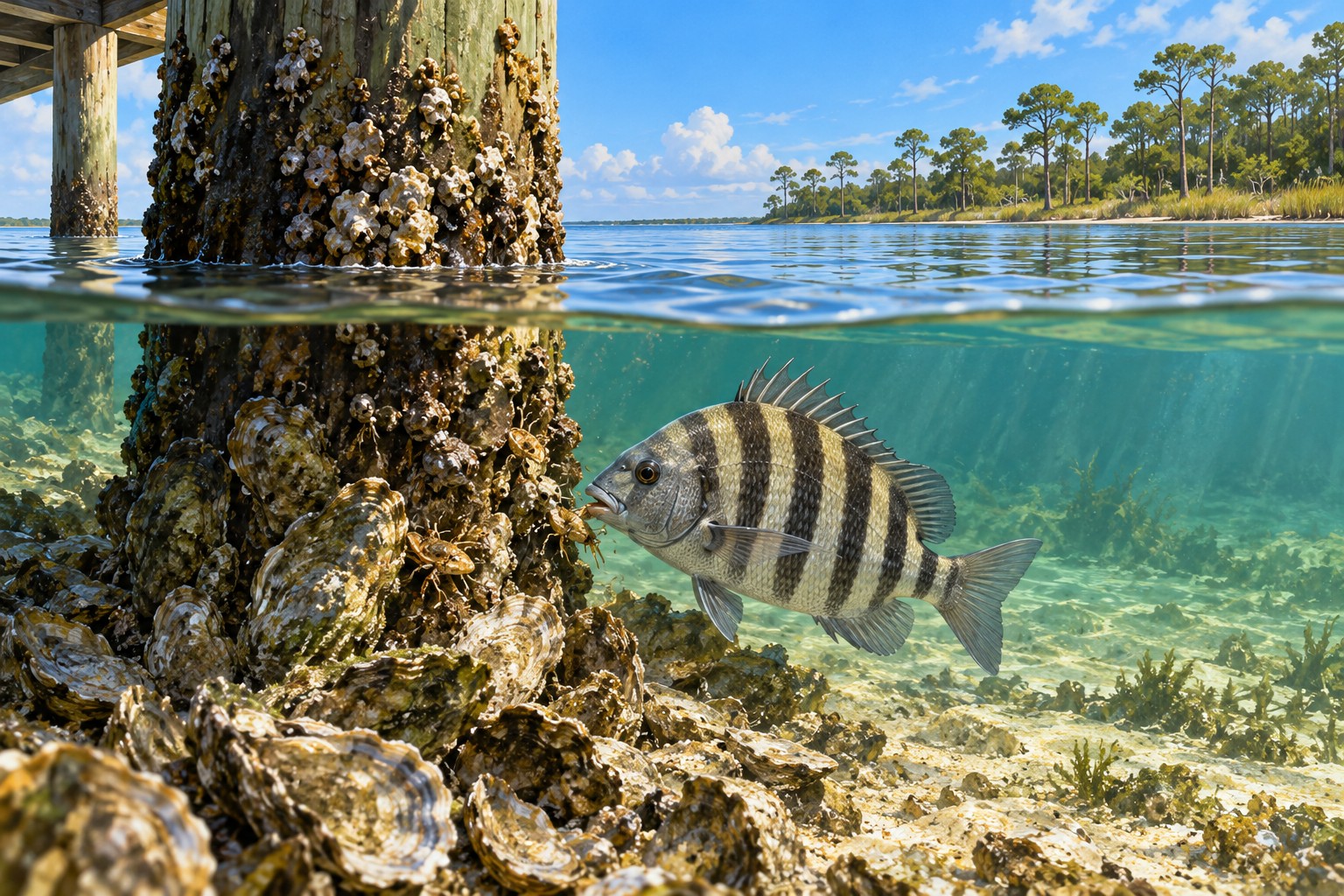
Work a piling one side at a time
Barnacles and other growth on hard structure support small food items. Sheepshead inspect those surfaces. A bait placed a few feet away may be ignored while one close to the piling receives attention.
Use a compact shrimp or crab bait with the hook point clear. Lower it under control. Keep enough tension to feel a light touch without pulling the bait continuously away from the structure. If it catches on the bottom, change the angle before increasing weight.
After a bite or snag, run your fingers carefully along the leader. Rough patches mean the line has rubbed against something abrasive. Replacing a short leader is better than losing the next fish to damage you already knew was there.
Explore the grass without damaging it
St. Joseph Bay’s shallow habitat deserves careful boat handling. Stay in suitable marked routes until you know you have enough water. Do not use the engine to force a boat across a flat. A dark patch may be grass, a hole or something else entirely.
Once safely positioned, let a light lure travel over the grass rather than through it. A shrimp beneath a float can help keep bait at a useful height. Set the depth by the water under your boat, then adjust as you drift into a different area.
Watch where each bite occurs. Several strikes near pale sand may tell you to focus on pockets. Bites along the outside edge suggest a different drift. Repeat the useful path without driving through the fish you have just found.
A short list of sensible targets
| Fish | Likely setting | Useful bait or lure |
|---|---|---|
| Spotted seatrout | Grass with nearby depth changes | A light paddletail or suspended shrimp |
| Redfish | Shallow feeding edges and sandy openings | A weed-resistant soft plastic or natural bait |
| Sheepshead | Pier pilings and rough hard cover | A small crab or firm shrimp piece |
| Flounder | Sandy bottom beside a deeper lane | A slowly hopped small jig |
| Black drum | Structure and bottom-feeding areas | A shrimp or crab bait near the bottom |
A mixed catch does not require a bag full of specialized rigs. A small selection of hooks, light weights and soft plastics can cover the town waterfront and a modest bay session.
Water level changes the route as well as the bite
A falling tide may expose bottom that your boat crossed earlier. Wind can add to that change. Leave enough water for the return trip and do not make a shallow shortcut simply because another boat did it.
For shore fishing, watch the direction bait or floating leaves travel. Put your presentation where it can move naturally through the allowed area. If the current carries it under a walkway or across the ramp, change position.
Use the tide and weather planner to choose a window, then judge actual conditions at the park. A calm morning does not guarantee an equally calm afternoon on the open bay.
Adjust through the year
In spring, give warming grass flats and shoreline edges attention. Keep a slower option ready after cold fronts. Fish respond to the water they occupy, not the season printed on the calendar.
Summer calls for a shorter exposure to heat. Start with good light for reading shallow water, then take a break before the hottest part of the day. Boat activity can increase, so keep a careful watch even while drifting.
Fall can be a pleasant time to work several nearby shoreline features. Search for bait moving along the bank. A productive edge may shift as wind changes the water level.
During winter, concentrate on comfortable weather and nearby deeper water. Use smaller movements and allow the lure to pause. Structure fishing from town can be a practical alternative to covering a cold, windy bay.
A manageable first morning
Begin at a listed public park and spend a few minutes observing. Choose either a structure bait or a small lure, then fish it carefully. If the water is quiet, walk to another allowed position before changing everything in the tackle box.
For a boat trip, choose one nearby grass area and one deeper backup. Tell someone your route and expected return. Carry a chart, required safety equipment and enough water for delays. A phone photograph of the bay is not a navigation chart.
Keep the day’s catch decision separate from the excitement of the bite. Consult FWC’s current saltwater fishing rules before retaining fish. Measure carefully and release fish you cannot confidently identify.
Turn a small waterfront position into several presentations
A pier position can offer more than one useful angle. Begin on the outside of the nearest structure, then compare a slightly deeper drop and a short cast away from it. Keep the bait similar so you can tell whether position matters.
If a sheepshead-sized bite is only a quick peck, check the bait after the next drop. A fish may be removing soft shrimp without taking the hook. Use a firmer, smaller piece with an exposed point and maintain gentle contact. Do not respond by leaving an oversized bait farther from the piling.
For a black drum or another bottom-feeding target, the useful water may lie away from the exact piling face. Let the rig settle on reachable bottom without blocking boat movement. Give the bait time, but inspect it often enough to know it is still present.
From a high edge, arrange the landing net before you begin. Decide who will hold the rod and who will use the net if fishing with someone else. Keeping that step calm is kinder to the fish and safer for people on the walkway.
A better grass-flat drift
Start the drift outside the area you want to fish and watch its direction before casting. If wind carries you straight toward an exposed shallow patch, reposition early. Do not wait until the hull is almost touching bottom.
Compare a sandy pocket with the grass immediately beside it. The pocket may give a predator a clear view of passing food, while the grass shelters that food. A lure traveling between them can be more useful than one cast at random across the middle.
Keep the lure’s movement consistent for several casts. Then make a deliberate change, such as a slower swim or a shorter pause. When a fish strikes, you will have a better idea of which change helped.
A float can reveal the drift clearly, but it still needs attention. If the shrimp hangs in grass, shorten the leader below the float. If the water deepens and bites stop, consider a modest depth adjustment rather than immediately changing location.
When to leave the flat
Leave before depth becomes marginal, before the wind makes the return unpleasant or when storms begin to threaten. A productive patch can be revisited on another day. Running a motor through grass to escape a falling tide is a preventable mistake.
Record the useful depth change in your notes, along with water level and wind. That combination helps you find a comparable situation next time without assuming the same exact patch always holds fish.
Port St. Joe trip questions
Can I fish without a boat?
The city’s listed fishing piers and public waterfront parks make shore-based outings possible. Follow the signs at the particular park.
Is this the same as Cape San Blas surf fishing?
No. Town fishing concentrates on the bay and its structures. The peninsula’s Gulf beach has waves, sandbars and different tackle needs.
Why does my float keep lying over?
Your bait or weight may be resting on the bottom. Shorten the depth setting and check whether the rig can move freely.
Can I run across the grass if the boat is small?
Only use water deep enough for safe passage without contacting habitat. A small hull does not make damaging a shallow flat acceptable.