
SOUTHWEST
Punta Gorda
fishing guide
Plan around Laishley and Ponce de Leon access, then read river-mouth color changes and harbor feeding edges.
Explore the guide ↓Where the Peace River opens into Charlotte Harbor
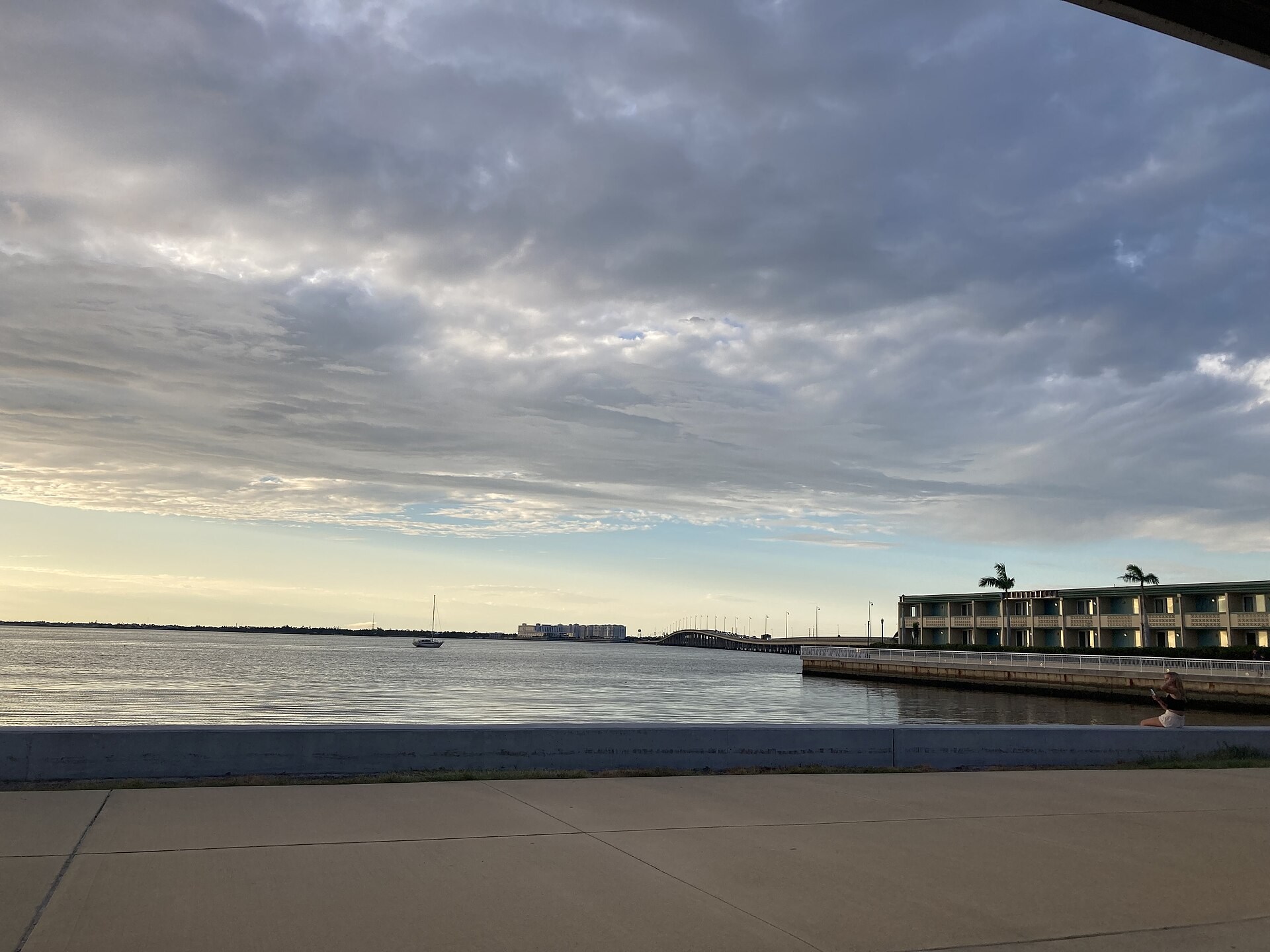
Punta Gorda is a river-mouth fishing base. The Peace River broadens into Charlotte Harbor beside the city, creating a mixture of freshwater influence, tidal movement and wide open water. Anglers can look for mangrove edges, channel margins and bait concentrations without treating every mile of harbor as equally promising.
Snook and redfish are well suited to this estuary setting. Seatrout use appropriate grass habitat, and jacks or ladyfish may chase bait in more open water. The city also offers waterfront parks and boat access, but each has its own restrictions. A scenic seawall is not automatically a public fishing platform.
The most useful first decision is how you will reach the water. A short shore visit, a kayak route and a powered-boat trip lead to different places. Choose an available access point and build a realistic route from it rather than picking a distant fishing mark first.
Start from established city access
Laishley Municipal Marina
Laishley Municipal Marina, at 120 Laishley Court, is a city boating access point near downtown. Check current launch, trailer parking and facility arrangements before arrival. Prepare the boat away from the active ramp lane so other users can launch and retrieve without waiting for your tackle setup.
Ponce de Leon Park
At 3400 Ponce de Leon Parkway, this park provides another route toward the harbor and canal system. The city lists a ramp and fishing amenities, but the boat-ramp dock is not a place to set fishing lines. Confirm the usable fishing area and any current repair notice when you arrive.
Waterfront walks
Gilchrist Park and other waterfront spaces help visitors see the harbor, but the photograph in this guide does not grant fishing access to every visible edge. Follow the signs at the exact location. Keep promenades clear and avoid private docks, moored boats and places where casting would interfere with other users.
Look for the edge between water types
Rainfall and river flow can carry darker water into the harbor. Tidal water meets it in shifting bands rather than at a fixed line. Bait may gather where water color, depth or current changes. Watch those boundaries for small fish, feeding birds and occasional surface strikes.
A color edge is a clue, not a guarantee. Fish it when there is food or useful cover nearby. If the only visible change is a broad patch of muddy water with no activity, move to a more defined feature rather than spending the whole trip chasing color alone.
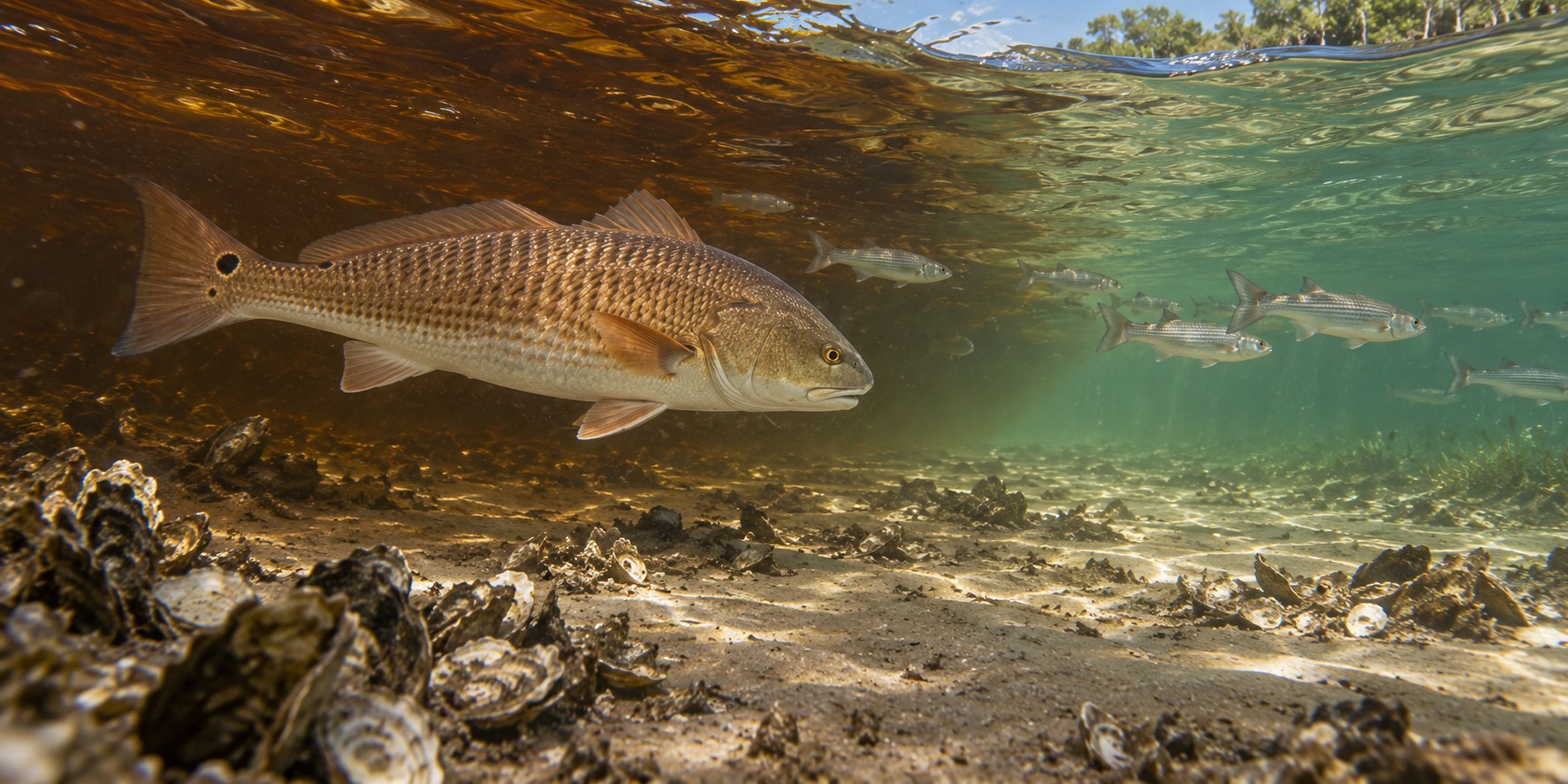
Keep boat movement slow near shallow margins. Water that hides the bottom also hides oyster and mud banks. Use marked travel routes and current charts. The illustration below explains a feeding pattern, not a navigable line through the harbor.
Fish to plan for around Punta Gorda
| Target fish | Useful search area | Bait or lure |
|---|---|---|
| Snook | Mangrove points, canal mouths and nearby depth | A swimming soft plastic or live shrimp presented along cover |
| Redfish | Shallow shell edges and feeding shorelines | A shrimp or weedless bait placed ahead of the fish |
| Spotted seatrout | Grass with sand openings | A light jig or shrimp suspended above the blades |
| Sheepshead | Legal hard-structure fishing positions | Compact shrimp or crab bait presented beside the piling |
| Jacks | Moving schools of small fish | A durable plug or paddletail retrieved through the activity |
| Ladyfish | Current edges and open-water bait | A small jig with an active but controlled retrieve |
Tarpon are part of the wider harbor fishery, but targeting large tarpon is a separate undertaking. Use suitable equipment and handling practices rather than turning a light inshore outfit into an improvised big-fish rig.
Work a point in three passes
First cast to the outer edge from a comfortable distance. This gives any fish holding away from the bank a chance to take the bait before the boat approaches. Keep the splash small and allow the lure to swim naturally with the flow.
Next work the corner where the current changes direction. A predator can hold in slower water and intercept food passing through the faster lane. Adjust the casting angle so the bait crosses that meeting point rather than dragging straight out of it.
Finally test the nearest deeper pocket. Fish may drop back there as the tide falls or the sun rises. If all three passes show no bait or interest, move to another feature. Repeating the same cast twenty times rarely adds new information.
Season, rain and tide all matter
Winter weather can produce low water and cool shallows. Protected deeper edges often deserve attention after a front. A smaller bait worked patiently may be more effective than a fast surface lure over a flat that has suddenly cooled.
Spring encourages more shoreline activity as water warms. Look for food around mangrove points and grass margins. A rising tide can open shallow feeding space, while a falling tide can bring fish toward the nearby drains.
Summer rainfall can change the upper estuary quickly. A productive bank may fish differently after several wet days. Search along the transition toward suitable water rather than assuming the fish must remain at the same waypoint.
Fall often provides comfortable fishing windows between fronts. Keep the wind forecast central to the route. The broad harbor can become unpleasant long before the small creek where you started looks rough.
A small kit for changing harbor conditions
Carry shrimp, a few paddletails, weedless hooks and several light jig weights. That selection lets you fish roots, sand pockets and channel edges without filling the boat with tackle. Choose the weight by how the bait moves through the water, not by habit.
Use leader material that suits the expected abrasion. Snook near hard cover require more control than small trout over open grass. Check knots and the first few feet of leader whenever a fish rubs against structure.
Keep a net, pliers and a measuring board within reach. A cooler is useful only for fish that are legal to keep and that you intend to use. Release unwanted catches promptly, with wet hands and support beneath the body.
Make a short shore visit worthwhile
Choose a confirmed fishing position with a clear cast and a safe landing edge. Watch for current before adding weight. A small shrimp placed beside cover may be more useful than a long cast into featureless water.
Keep one rod active and the rest of the equipment compact. Waterfront parks serve walkers, children and boaters as well as anglers. Reposition or reel in when people need to pass. Never leave a baited hook swinging at a child’s height.
If the only available position requires casting through mooring lines or across a ramp lane, skip it. Another legal access point or a different day is better than creating a conflict at a working waterfront.
Respect the estuary and its rules
Consult FWC’s current saltwater fishing information before harvest. Learn the identification and rules for each target rather than assuming similar fish share a limit. Keep release tools ready for protected or out-of-season catches.
Slow around manatees, avoid nesting islands and do not cut mangrove branches to make a casting lane. Take discarded line back with you when it can be collected safely. The Punta Gorda source and photograph record lists the city information behind this guide’s access advice.
Use a short session to compare water movement
At a permitted shoreline position, spend a few minutes watching drifting leaves and small bait. Note whether they follow the bank or move away toward deeper water. Present a lure across that route and compare the response with a cast parallel to shore. Keep the retrieve at a manageable depth rather than changing speed constantly. This small experiment can reveal the useful lane without a long move along the waterfront. If boat wakes or visitors make control difficult, pause and reset instead of forcing another cast into a poor situation.
Punta Gorda fishing questions
Is this freshwater or saltwater fishing?
The area is an estuary with changing salinity. Your location and target species determine which requirements apply, so check the appropriate license rules before the trip.
Can I fish from the ramp dock at Ponce Park?
Do not use the launch dock as a fishing station. Use a designated, open fishing area and leave the ramp clear for boats.
Where should I start after heavy rain?
Look for healthy water, bait and a defined current or color edge. Be prepared to change the route, and avoid areas under a water-quality advisory.
Is crossing the harbor necessary for good fishing?
No. A nearby point or creek edge can provide the same useful feeding pattern with a shorter and more manageable return.