
SPACE / TREASURE COAST
Vero Beach
fishing guide
Vero Beach fishing guide comparing public ocean and lagoon access, pompano and whiting bait, trout methods and a focused first visit.
Explore the guide ↓Choose a beach session or an Indian River outing
Vero Beach gives anglers two different coastal settings. The Atlantic side offers surf, sandbars and moving schools of small fish. The Indian River Lagoon side offers structure, shallow margins and protected-looking water that still needs attention to wind and access.
For a first visit, choose one setting and one practical target. Whiting and pompano fit a beach plan, while trout, redfish and other estuary fish fit suitable lagoon habitat. Trying to cover everything in a few hours often leaves too little time to learn any one place.
Public access is the starting point. Beaches, parks, ramps and private waterfront have different rules. A stretch visible from a road is not automatically a place to park and fish.
Use a confirmed park entrance
Riverside Park is listed by the city at 3200 Riverside Park Drive. Its facilities include fishing and boat-ramp access. Check current signs to identify the areas intended for fishing and keep launch lanes clear.
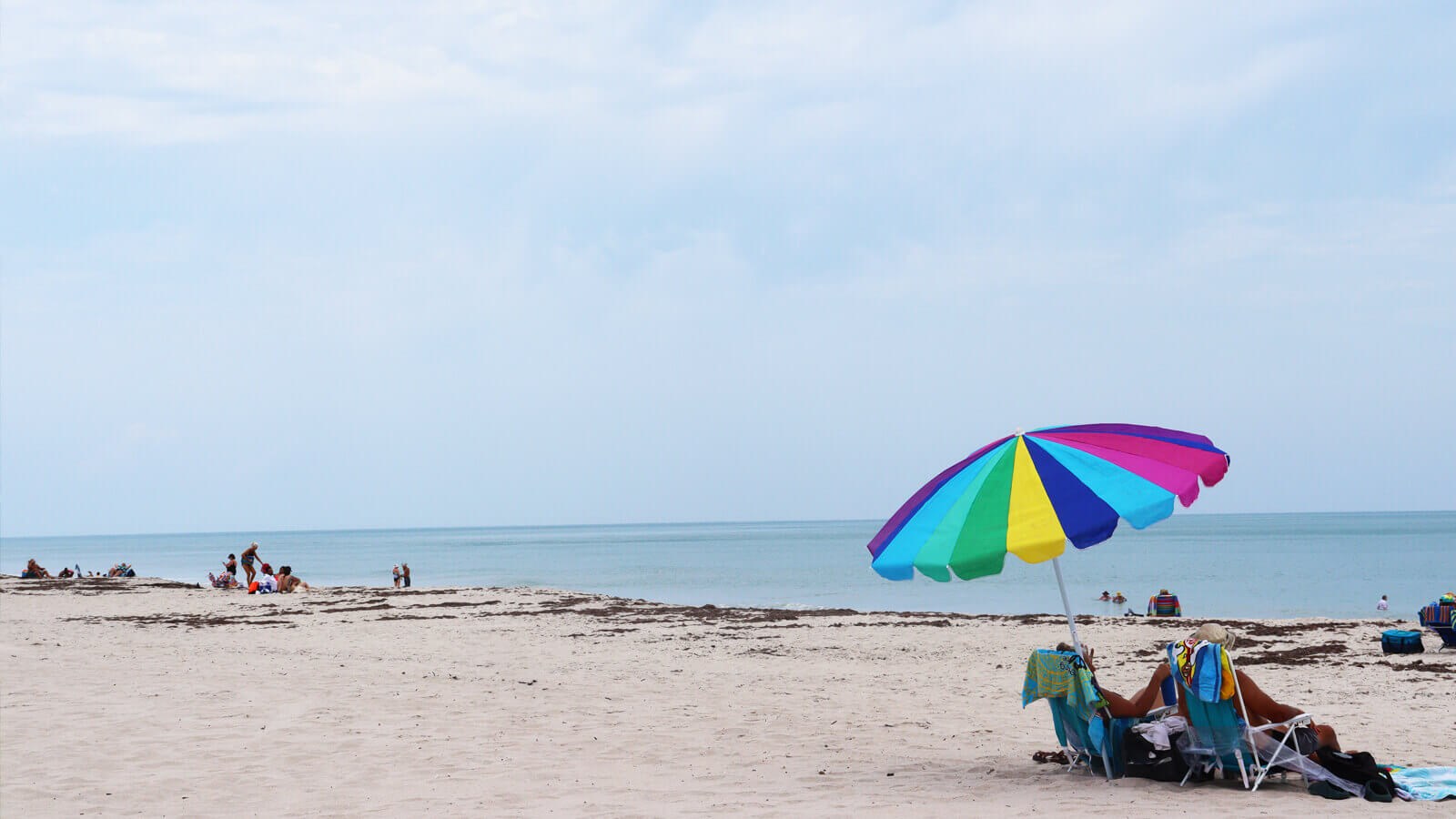
On the ocean side, use an open public beach crossing and move away from active swimming areas. The photograph in this guide shows South Beach, a public recreation setting where other beach users need room.
Do not infer that every nearby pier or dock allows fishing. Read the posted rules and respect private marina or residential property. A park’s general waterfront setting does not make all structures interchangeable.
If a specific accessible route, restroom or parking arrangement is essential, confirm it before traveling. Temporary work and weather can affect facilities independently of the broader park opening.
Whiting and pompano share sand but need attention to detail
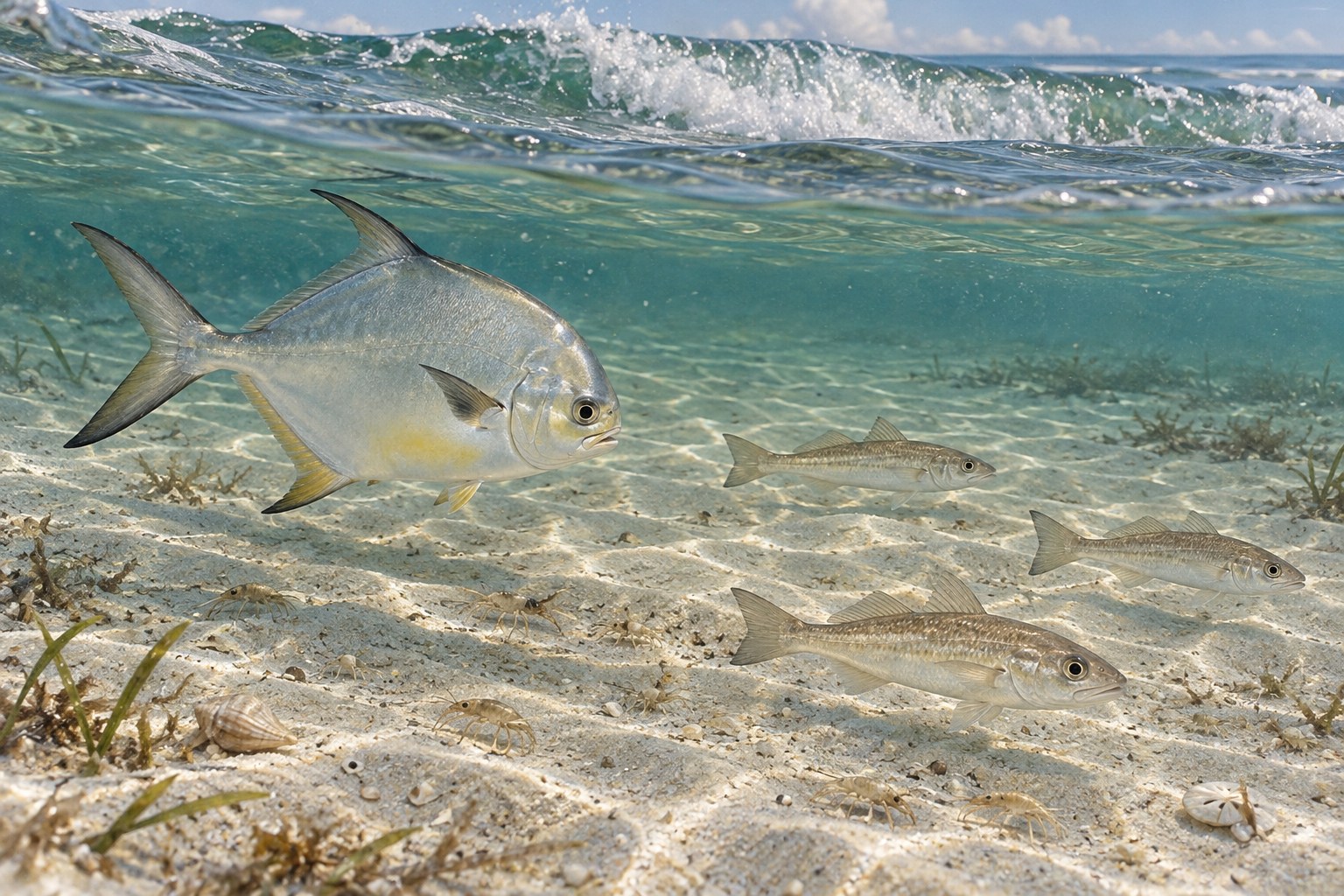
Whiting often make a useful starting target because a small shrimp piece near bottom can reach them in the inside trough. Pompano may travel through clean surf and take compact prey over sand. Both reward a tidy bait rather than an oversized piece covering the hook.
Watch several wave sets to locate a bar and the water inside it. Begin with a moderate cast. If the nearer lane receives attention, keep testing it before assuming deeper water is better.
A dropper rig can hold a pompano bait above sand, while a simple bottom presentation works for whiting. Choose weight according to control and the rod’s rating, not a fixed habit from another beach.
Identify the catch carefully. A small silver fish is not enough information for a harvest decision.
Learn one trough before moving
Place the first bait in a lane you can observe. Notice how far it drifts and whether weed gathers on the line. Retrieve soon enough to confirm the rig remains untangled and baited.
If small taps occur, check the hook point and bait size. If nothing happens, vary distance while leaving the basic presentation similar. That lets the next result tell you something useful.
Sand fleas can be tried where gathering is permitted. Shrimp and prepared baits are convenient alternatives when you do not want the session to depend on finding natural bait along the beach.
Stay on a safe shore position. Outward-flowing gaps in the surf can be dangerous even when the rest of the beach looks calm. Do not wade into one for a longer cast.
Read a lagoon edge for prey
From a legal shore position or authorized craft, look for small bait beside a depth change or vegetation boundary. Trout can feed in the open lane, while redfish may travel along a shallower margin. The useful feature can be subtle.
A light swimming lure is a good search tool when it stays above bottom clutter. Work it across the edge and slow down near the most promising section. Repeatedly dragging plants back is a sign to raise the presentation.
Live shrimp under a float can hold the bait in a chosen layer. Adjust the hanging depth to the water in front of you. Keep the drift clear of docks, other anglers and launch traffic.
Approach quietly and avoid damaging shallow habitat. A boat should not be pushed into water too shallow for its motor simply to shorten a cast.
Match the plan to the water
| Goal | Useful setting | First presentation |
|---|---|---|
| A simple surf session | Open sand with manageable waves | Small shrimp bait for whiting |
| Pompano fishing | Clean moving water over a trough | Compact bait above the bottom |
| Searching for trout | Open lagoon lane beside cover | Swimming soft plastic or suspended shrimp |
| Looking for redfish | Shallow edge with a deeper route nearby | Quietly presented weedless lure or bait |
| Fishing near hard cover | Permitted accessible structure | Small controlled bait with abrasion checks |
Each plan has a different definition of useful water. A beach rig should not be carried unchanged into a shallow lagoon edge without considering depth and cover.
Keep a structure rig recoverable
Hard cover can hold food and attract fish, but it also catches tackle. Cast beside a feature rather than deep through several supports. A clean retrieval path matters as much as proximity to cover.
Use enough weight to keep contact without pinning the rig in a crack. If current carries it toward a snag, retrieve early and change the angle. Repeated losses indicate the method needs adjustment.
Check leader for roughness after every contact with a piling or shell. Keep pliers ready and use care around sharp spines when handling a catch.
Private docks remain private. Do not step onto them, tie up or use them as a landing platform without permission.
Use a conservative lagoon route
A launch at a public park is only the beginning of a boating plan. Check the wind across the full route and leave enough time for the return. A sheltered starting point can lead to much more exposed water.
Wear a life jacket when paddling and keep communication equipment accessible. Store sharp tackle before moving. Give larger boats room and pay attention to wakes before they reach the craft.
Watch for manatees and follow posted speed zones. Avoid running across shallow plants or disturbing wildlife to reach a casting position. Quiet travel can also improve the fishing approach.
Stay within a route that matches your experience. A short outing close to a recognizable return point is a sensible first step.
Choose the conditions before the calendar
Cooler periods can offer comfortable surf fishing, while warmer months may favor shorter mornings. Fronts, storms and strong onshore wind can change the plan at any time of year.
On the beach, tide affects the trough and available dry sand. In the lagoon, local flow and wind affect the presentation. Do not apply one simple tide rule to both settings.
Check the weather and tide information, then inspect the chosen water on arrival. A forecast is preparation rather than a guarantee.
For a more specific public beach farther north, compare Golden Sands Beach. Its facilities and access are described separately.
Keep the first kit focused
A beach kit can include a suitable rod, holding weights, compact hooks, leader, bait and a rod holder. A lagoon kit benefits from small lures, a float and lighter presentation choices. Both need pliers and a measuring tool.
Carry drinking water and sun protection, with a quick exit plan for lightning. Store fishing bait in its own chilled container, away from lunch. Avoid spreading equipment where it blocks a public path.
Verify licensing and harvest rules with FWC’s current saltwater guidance. Identify each fish before deciding whether it may be kept.
Release fish promptly with wet hands and body support. Collect line and hooks before leaving, and note the depth or distance that produced the best response.
Keep a useful record without overstating the result
After fishing, note the access, habitat, bait and approximate water conditions. Record whether the fish came from an ocean trough, a pier edge or a shallow lagoon lane. A broad label such as Vero Beach does not explain those differences.
Also note what failed to present cleanly. A lure dragging grass or a surf rig covered in weed was not a fair test of the target’s presence. That information can save time on the next visit.
Avoid turning one good catch into a promise about the whole season. Fish move, sand shifts and public access changes. The best record is specific enough to guide a fresh assessment, while leaving room for the next day’s conditions to be different.
Put the plan into practice
Match the day’s equipment to the chosen side of the barrier island. A sheltered river outing and an exposed Atlantic surf session may require different sinker weights, casting space and landing plans.
Vero Beach fishing questions
Is Riverside Park an ocean access?
No. It is part of the river-side plan and includes listed fishing and boat access. Ocean beach visits use separate entrances.
What is a useful beginner surf target?
Whiting can be tried with a small shrimp bait in the inside trough. Adjust placement based on the waves and bite response.
Can I fish every dock along the lagoon?
No. Confirm public fishing permission and respect private waterfront and boat operations.
Should I use the same rig on both sides?
The tackle may overlap, but depth, current and cover require different presentations. Choose the rig after choosing the setting.