
HookCurrent Florida fishing
Mahi Mahi
Follow the moving water, floating cover and feeding birds.
Coryphaena hippurus
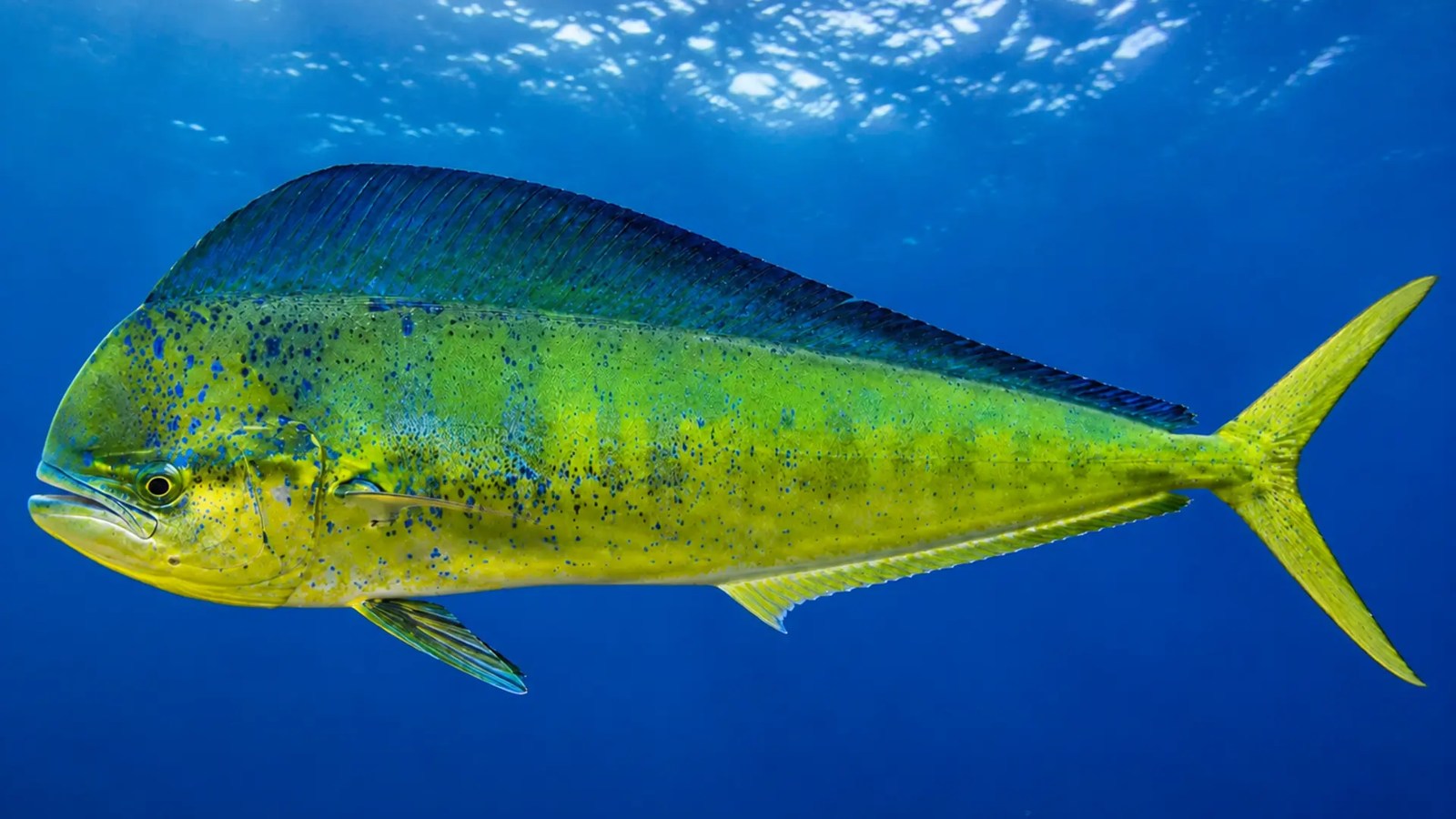
Mahi mahi turn an offshore search into a moving puzzle. A weed line that held fish yesterday can be miles away today. The most useful skill is learning to read what is happening now: the current, the bait, the birds and the floating cover. This guide explains the fish behind those clues and the methods that turn a promising patch of water into a careful, well-run fishing stop.
Meet the dolphinfish
Mahi mahi are fish, not the marine mammals also called dolphins. Anglers use mahi, dolphinfish and dorado for the same familiar offshore species, Coryphaena hippurus. A long dorsal fin runs along much of the back. The body narrows sharply toward a deeply forked tail, giving the fish a distinctive outline even before its colors appear.
A lively mahi can flash brilliant green, blue and yellow. Color fades after death and changes with excitement, so a photograph may show a different shade from the fish you first saw beneath the boat. Mature males, often called bulls, have a high, blunt forehead. Females, commonly called cows, have a more rounded head profile. Young fish are less obvious.
There is also a related species called the pompano dolphinfish. It is not the same as the Florida pompano caught along beaches. Common names can overlap in confusing ways, which is why the scientific name helps when checking a detailed identification or research source.
Fast growth and a short life
Mahi grow quickly compared with many popular Florida game fish. NOAA describes maturity within the first several months of life and a lifespan of up to about five years. That rapid turnover is very different from a large redfish or grouper that may have survived for decades.
Fast growth does not mean the supply is unlimited. Young fish still need enough food, suitable water and a chance to survive. Heavy fishing pressure and changes in ocean conditions can affect what anglers encounter. A school of small fish beneath a board is not a reason to keep every legal fish available.
Size and age are also not interchangeable at the dock. Growth varies with food and environmental conditions. Avoid assigning an exact age from the length of a single catch. For trip planning, it is more useful to understand that mahi are active, fast-growing predators that can move quickly through an area.
Where mahi live
Mahi occupy warm ocean water and spend much of their time in the upper water column. They are not reef residents waiting beside one permanent rock. Fish may travel through deep water while feeding close enough to the surface for anglers to see them.
Floating sargassum creates valuable habitat. Small fish and other animals use the weed for shelter, and predators patrol the edges. A floating log, buoy or other object can create a similar gathering point. The object itself is only part of the story. Nearby bait and current help determine whether a fish stays or simply passes by.
Some good mahi water looks almost empty. A current seam with scattered bait or a moving group of feeding birds may be more useful than a thick but lifeless weed mat. Look beyond the object. Ask what food is present, how the water is moving and whether the clues form a pattern.
Migration follows an ocean that keeps changing
Mahi are wide-ranging fish. Their movements reflect currents, temperature, feeding opportunities and life stage. Florida anglers often see seasonal changes, but there is no fixed coastal lane that all mahi follow on a predictable date.
The Gulf Stream and related offshore features influence east-coast fishing. Eddies, current boundaries and warm-water features also matter in the Gulf. A productive edge can shift substantially between trips. Yesterday’s coordinates can be a sensible starting point, but they should not become the entire search plan.
Think in terms of moving habitat. The fish, the bait and the floating cover can all be traveling. Record the conditions around a catch as well as the position. Water appearance, current direction, bird activity and the kind of cover may teach you more than a single saved dot.
When mahi reproduce
Mahi can begin reproducing very young and may spawn repeatedly during favorable conditions. Females release batches of eggs into the water rather than guarding a nest. The eggs and early larvae drift in the ocean, where currents influence their journey.
Spawning activity varies by region and temperature. Warm conditions support an extended season in parts of the species’ range, but that does not mean every Florida school is spawning throughout the year. A local fishing peak can reflect movement and feeding as well as reproduction.
Rapid growth and repeated spawning help explain why mahi populations can turn over quickly. They do not remove the need for limits and careful release. Small fish have future value, and a responsible day does not depend on filling a boat limit every time a school is found.
What mahi eat and how they hunt
Flying fish, other small fish, squid and crustaceans are part of the mahi menu. Around floating weed, a school can feed on animals sheltering beneath the cover. In open water, mahi may chase bait that is being pushed toward the surface by other predators.
A sudden color flash below a bait can be the first sign of an interested fish. Mahi can rush a lure aggressively, but they can also follow and refuse it. A fish that has seen several hooks or heard repeated splashes may become cautious even while it remains beside the boat.
When a school is selective, reduce unnecessary disturbance. Try a smaller fresh bait, a different depth or a more natural drift. Throwing larger amounts of food at reluctant fish can fill them without creating a bite. Observe the response to each change instead of cycling through every bait in the cooler.
Where Florida anglers look
The Keys and southeast coast give access to offshore current features that can hold mahi. Key Largo, Islamorada, Marathon, Miami, Fort Lauderdale and the Palm Beaches are familiar departure areas. The distance to productive water changes with the day, and no single mileage should be treated as a guarantee.
Along the Treasure Coast and farther north on the Atlantic side, offshore trips may involve different runs, weather windows and seasonal patterns. A report from the Keys does not automatically describe the water outside Fort Pierce or Cape Canaveral. Look for information tied to the same region and recent conditions.
Gulf anglers also catch mahi around offshore weed lines, floating objects and suitable blue-water features. Long distances can make fuel planning and weather judgment especially important. Mahi are an offshore target; a promising forecast on the beach does not by itself describe conditions along a distant current edge.
A useful seasonal outlook
Spring and summer are important mahi periods for many Florida offshore anglers, especially in southern and Atlantic waters. Fish can be encountered outside those months when suitable conditions develop. The useful question is not simply whether the calendar says mahi season. It is whether accessible water currently holds bait, cover and fish.
Wind affects both the trip and the clues. It can organize scattered weed into lines, break a line apart or make a productive area unsafe to reach. Current can move the whole feature overnight. After a weather change, allow time to search rather than expecting the previous stop to remain unchanged.
An early start gives more searching time and may offer a better travel window. Mahi can still feed later in the day. Watch the actual forecast, radar and sea conditions throughout the trip. Do not let a late bite erase the fuel and weather margin needed to return safely.
| Period or condition | What to consider | Practical response |
|---|---|---|
| Spring warming | Seasonal movement and developing offshore activity | Search recent current edges and bait concentrations |
| Summer | Frequent offshore opportunities in many southern areas | Plan around heat, storms and the return run |
| After a wind change | Weed lines and surface clues may have shifted | Rebuild the search instead of trusting old coordinates |
| Scattered weed | Fish may be spread among small patches | Look for birds and bait before stopping everywhere |
| A strong current boundary | Food and floating cover may collect | Inspect both sides and note the drift |
Read birds, weeds and floating objects
A frigatebird circling low and watching the surface can point toward feeding activity. Small diving birds may also mark bait. Birds are clues, not promises. Some follow boats or investigate food unrelated to mahi. Watch their behavior long enough to distinguish traveling birds from birds focused on a moving target.
Approach floating cover slowly and keep enough distance to avoid driving through the fish. Look beneath it with polarized glasses if conditions allow. A few small baitfish, a flash of yellow or a shadow moving below the object can justify a careful first presentation.
Never collect dangerous debris or lean over the side to inspect it closely. Floating objects can carry ropes, hooks or sharp edges. Keep the propeller and fishing lines clear. If another boat is already working a small object, give it room instead of circling through its spread.
An outfit for trolling and another for pitching
A practical mahi boat often carries both trolling tackle and a ready spinning outfit. Trolling covers water. A pitching rod lets an angler place a bait or lure beside an object or visible fish without rebuilding a rig while the school disappears.
For many school-size situations, a quality spinning outfit with roughly 20 to 30 pound line is a useful starting point. Larger fish, heavy trolling spreads and rough conditions may call for stronger tackle. Leader strength should balance abrasion resistance with a natural presentation. Inspect the section nearest the hook after each fish.
Keep a dehooker, measuring tool, suitable landing equipment and a clear storage plan ready. Mahi can jump and thrash vigorously. Loose hooks on the deck create problems much faster than an angler can solve them during a double hookup. Prepare spare leaders before leaving the dock.
| Method | Useful equipment | Reason |
|---|---|---|
| Searching by trolling | Balanced trolling outfits and clean-running baits | Covers water while looking for signs |
| Casting to visible fish | Ready spinning rod with an appropriate leader | Allows a quiet, accurate presentation |
| Fishing a school | Pre-tied spare rigs and accessible dehooker | Reduces delays and loose tackle |
| Keeping a legal fish | Measuring tool and ice already prepared | Avoids a long, disorganized handling period |
| Releasing a fish | Long-handled release tools where suitable | Limits handling and hook hazards |
Troll a spread you can manage
Rigged ballyhoo, small skirted baits and suitable lures are common mahi trolling choices. The best speed is the speed that makes the chosen bait work correctly in the actual sea. A bait that spins, skips badly or washes out needs adjustment even if the speed display shows a familiar number.
Place baits where they can be watched and managed without constant tangles. A small, clean spread is more useful than a crowded one that the crew cannot clear. Turns change lure speed and position. Watch the inside lines during a turn and keep track of where each bait is running.
When a fish strikes, keep control of the boat and communicate. Other fish may follow, but clearing a path for the hooked fish comes first. A second angler can prepare a pitch bait while the first fight continues. Do not throw a new bait across a tight line or beneath a turning propeller.
Present a bait to a visible mahi
Cast beyond the fish’s likely path when possible, then bring the bait into view. Landing a heavy rig directly on its head can end the opportunity. A light, natural presentation often works better than repeated frantic casts.
Live baitfish, fresh cut pieces or an appropriate whole dead bait can all be useful. Choose a hook that leaves its point and gap clear. With a circle hook, let the line come tight smoothly rather than snapping the rod back. Follow the hook and bait rules that apply to the water and fishery.
If the fish follows but will not take, change one thing at a time. Allow a bait to sink, use a smaller piece or make a longer cast away from the boat. Sometimes the best move is to stop adding noise for a moment. A fish remaining in sight is not the same as a fish committed to eating.
Manage a school without chaos
Once mahi gather near the boat, keep the operation simple. One person should know where each hooked fish is going. Put spare rods where their hooks cannot catch clothing or skin. Keep anglers from crossing lines as fish circle beneath the hull.
A small amount of chum can hold interest, but excessive feeding may work against you. Do not leave a hooked fish tethered beside the boat for a prolonged period merely to attract others. Land a legal keeper efficiently or release a fish promptly. The school is not more important than the fish already on the line.
Count retained fish carefully and measure doubtful catches before placing them with the keepers. Fish in a school are not necessarily all the same size. Stop when the applicable limit is reached, and consider stopping earlier when you have enough for the table. A lively school can remain a good memory without becoming a full cooler.
Lures and flies for active fish
Small jigs, soft plastics, surface plugs and streamlined casting lures can all attract mahi. Match the lure to the fish’s size and the visible food. A compact lure may be easier for a hesitant school fish to accept than a large, noisy plug.
Retrieve with enough movement to suggest prey, then watch how the fish responds. A quick chase followed by a refusal may call for a pause or a different profile. Keep the lure moving in a controlled lane rather than dragging it through everyone else’s lines.
Fly fishing is possible when a boat can place the angler within range. A suitable saltwater outfit, clear casting space and a plan for the fight are essential. Wind, railings and loose tackle make offshore casting different from a lawn practice session. Discuss the approach with the captain before arriving with only a fly rod.
Landing, releasing and keeping fish
Mahi can remain extremely active beside the boat and on deck. Keep fingers away from hooks and mouths, and avoid grabbing a tight leader without the right technique. An inexperienced angler should let the crew handle the final steps. Clear the landing area before the fish arrives.
Use a gaff only for a fish you have positively identified as legal and intend to keep. A gaff is not a measuring tool or a release tool. For fish going back, use an appropriate method that limits injury and time out of water. Remove accessible hooks carefully and avoid a prolonged photo session.
For retained fish, prepare ice and clean storage before fishing. Keep the catch cool promptly and separate it from loose tackle and dirty deck water. Take only what you can use within the legal limit. Good handling begins with a plan, not after several fish are already lying in the sun.
Florida mahi limits are not the same on both coasts
Rules checked on October 4, 2026 differed between Florida’s Atlantic and Gulf state waters. FWC listed a 20-inch fork-length minimum in Atlantic state waters, with a private recreational limit of five per person or 30 per vessel, whichever is less. Gulf state waters had no minimum size listed and a limit of ten per person or 60 per vessel, whichever is less.
For-hire rules and captain-and-crew restrictions require a separate check. Offshore routes may also enter federal waters, where additional requirements apply. The numbers above are a dated planning summary, not a substitute for checking the rules for the actual trip.
Fork length means the distance to the fork in the tail, measured using the proper method. It is not the same as total length to the longest tail tip. Use the official FWC dolphinfish page below to confirm current requirements and follow its guidance for the waters you will fish.
Check current FWC mahi mahi fishing rules.
Rules reviewed October 4, 2026. Confirm the requirements for your trip before fishing.
When good-looking water produces nothing
A weed line without bait may be only floating vegetation. Before spending the whole morning there, look for movement beneath it and check nearby edges. A long line with one active section is common. Fish the useful stretch rather than treating every mile as equal.
If baits keep collecting weed, adjust the trolling path and inspect them frequently. A lure hidden inside a clump is not fishing effectively. Work the clean side of the edge and avoid repeatedly crossing the thickest mat with every line.
If fish appear but refuse everything, consider pressure, bait size and presentation before assuming a special color is required. Make a quiet drift, offer a fresh smaller bait or move to another group. Some schools simply will not cooperate, and continuing a search can be more productive than turning one refusal into a long argument.
A first-trip plan that leaves room to learn
Ask how much of the day is likely to be spent searching and how the captain chooses the route. Mahi fishing can involve long periods of observation between short bursts of action. Understanding that rhythm helps set realistic expectations.
Bring sun protection, drinking water and suitable footwear, then listen to the crew’s instructions about hooks and landing fish. Decide in advance whether the goal is a few fish for dinner, a larger fish or simply learning the technique. Those goals can lead to different decisions when a school of small mahi appears.
Keep a short record afterward: departure area, broad conditions, useful signs, successful bait and what failed. Over several trips, that record can reveal patterns without pretending that the ocean repeats itself exactly. The best lesson may be why an unpromising-looking current seam held more life than the largest weed line of the day.
Mahi Mahi questions answered
Is mahi mahi a dolphin?
It is also called dolphinfish, but it is a fish. It is not related to the marine mammals commonly called dolphins.
Why do mahi change color?
Their vivid appearance changes with condition and excitement, and the colors fade after death. Color alone is not a reliable way to judge the fish’s identity or freshness.
How can I recognize a mature male?
A mature bull commonly has a high, blunt forehead. Females usually have a more rounded head. Young fish are harder to distinguish.
Do mahi stay under the same weed line?
Not necessarily. The weed, current, bait and fish can all move. Treat yesterday’s location as a clue rather than a fixed fishing spot.
How far offshore do I need to go?
There is no dependable statewide distance. Productive water shifts, and the required run differs among ports and days. Let conditions and safe boat range guide the plan.
Are birds always a sign of mahi?
No. They may be following other predators or unrelated food. Their behavior and the presence of bait make the clue more useful.
Can I catch mahi on spinning tackle?
Yes. A suitable spinning outfit is useful for casting to visible fish and floating cover. Choose tackle that can handle the expected size.
Should I use live bait or lures?
Both can work. Trolling lures and rigged baits help search. A live or fresh dead pitch bait can be effective once fish are located.
Why do mahi follow but refuse my bait?
Pressure, bait size, line visibility or an unnatural presentation may be involved. Try a quieter approach and change one feature at a time.
Is fork length the same as total length?
No. Fork length ends at the fork of the tail. Use the correct measurement method when checking the Atlantic minimum.
Can a small mahi school contain bigger fish?
Yes. Sizes can differ within and around a group. Measure each questionable catch rather than judging the whole school from one fish.
Is filling the vessel limit the goal?
It does not need to be. Keep only a legal amount that you can use, and handle released fish with the same care as a larger catch.
Plan your time on the water
Explore Florida fishing locations, check tides and weather, or find a local guide in the charter directory.