
HookCurrent Florida fishing
Sailfish
Read the current. Watch the bait. Be ready for the first run.
Istiophorus platypterus
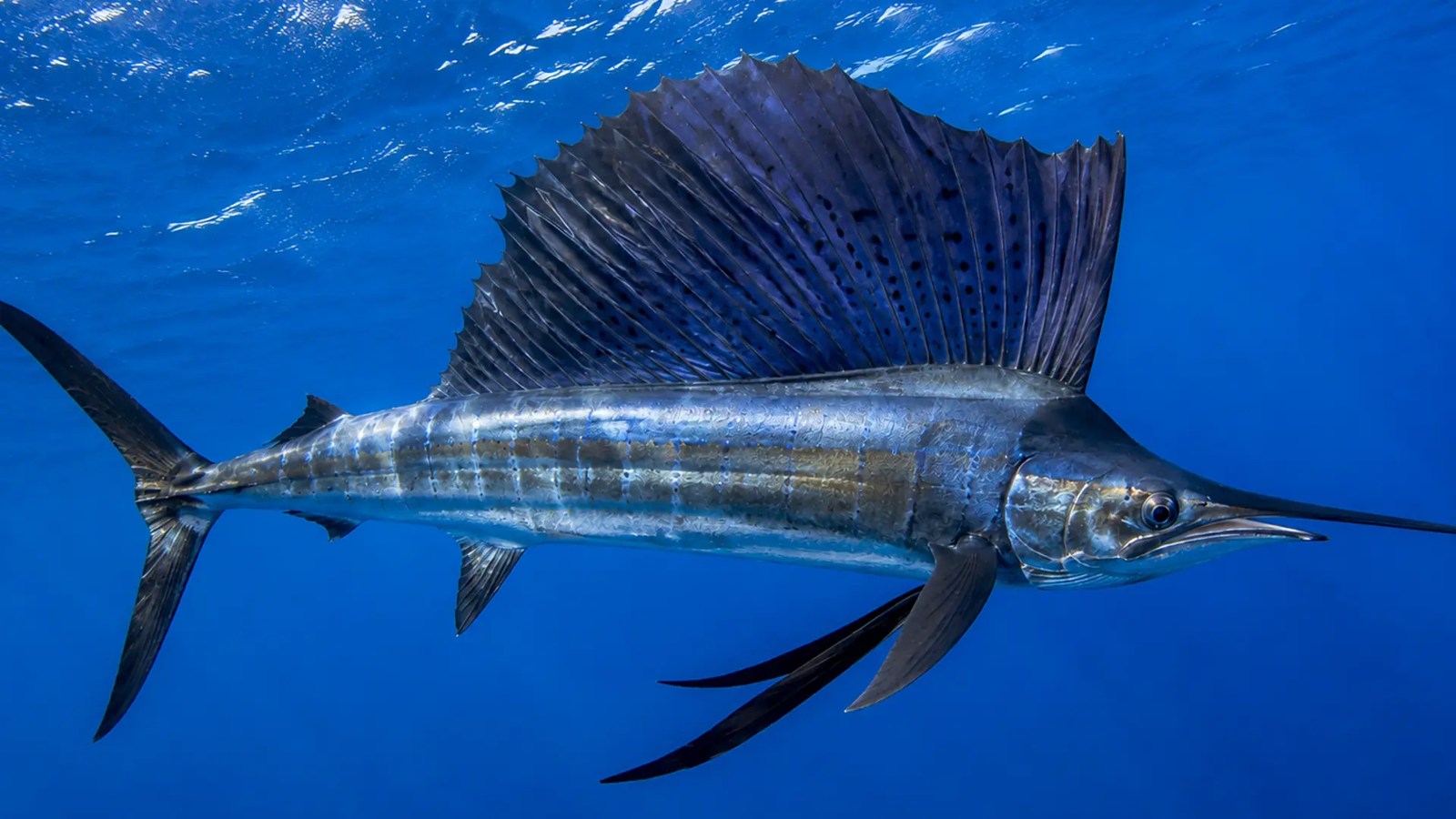
A sailfish can turn a quiet spread of baits into a very busy boat. The spectacular jump is only one part of the story. Understanding where sailfish feed, why their Florida seasons differ and how to manage a safe release makes the whole trip better. Start with the fish, then build a method that fits the conditions and the crew.
How to identify a sailfish
The tall dorsal fin is the obvious feature. It can rise like a sail above the back, then fold into a groove when the fish swims. The upper jaw forms a long, pointed bill. A slender body, narrow tail base and deeply forked tail complete the familiar shape.
Sailfish are often dark blue above and pale below, with vertical bars or changing blue highlights along the sides. Excited fish can show striking colors beside a bait or during a fight. Those colors vary, so use body shape and the large dorsal fin rather than one particular shade.
Marlin also have bills, but their proportions and dorsal fins differ. A swordfish has a broader, flattened bill and other distinguishing features. If a billfish appears in the spread, the crew should identify it before deciding how to handle it. The label sailfish should not be used for every slender fish with a bill.
Names, speed and the myths around the fish
The scientific name used here is Istiophorus platypterus. Some Atlantic references use Istiophorus albicans. That difference in naming does not mean an angler should assume two visibly different local sailfish fisheries. Older and newer references may use different classifications.
Sailfish are fast, agile predators, but dramatic claims about a precise top speed are often repeated without useful context. A number measured or estimated in one way is not a reliable promise of sustained swimming speed. You do not need a record-breaking speed claim to appreciate how quickly a fish can change direction beside a boat.
The bill is part of a feeding system, not simply a spear used to impale every meal. Sailfish can use it to strike or disrupt schooling prey. Their shape and maneuverability help them separate and capture fish from a moving group. Watching a feeding fish is more informative than treating every bill movement as an attack on the hook.
The water sailfish use
Sailfish roam warm marine water and often hunt in the upper part of the water column. Off southeast Florida, suitable current and bait can bring them within reach of relatively short offshore runs. In other places, finding the right water may require a very different trip.
Current edges, reef-adjacent offshore water, color changes and concentrations of bait can all matter. These features are useful because they organize food and movement. A depth reading alone does not explain why fish are present. Two stretches of water at the same depth can hold very different amounts of life.
Sailfish are not permanently attached to one reef. They move through areas as conditions change. A productive drift should be understood as part of a larger current and bait pattern. Save the conditions along with the location, and be prepared to adjust when the water changes.
Seasonal movement around Florida
Many southeast Florida anglers associate sailfish with the cooler part of the year. Seasonal fronts, current and bait movement can create periods of strong fishing. This is a regional fishing pattern, not a rule that every sailfish migrates past every Florida port on the same schedule.
Sailfish can also be caught during warmer months. Summer opportunities and offshore conditions differ among the Atlantic coast, Keys and Gulf. A winter report from Palm Beach should not be applied directly to a summer trip out of the Panhandle.
Think of migration as changing availability rather than a parade with a fixed arrival date. Wind direction, current strength, water conditions and bait help explain the day in front of you. Local reports are useful when they describe those details, especially if they come from the same stretch of coast you plan to fish.
Spawning is not the same as the best fishing season
Sailfish reproduce by releasing eggs and sperm into the water. Spawning is associated with warm conditions, and Florida references describe summer spawning activity. That biological timing should not be confused with the winter fishing peaks familiar to many southeast Florida anglers.
The early stages are tiny compared with the adult fish. Larvae drift and feed in the ocean before developing the proportions people recognize as a billfish. Young sailfish can grow rapidly, but growth and survival depend on suitable food and conditions.
A visible group of sailfish is not automatically a spawning group. Fish may gather because prey is concentrated. Avoid assigning a reproductive explanation to every feeding event. For anglers, the practical lesson is to protect fish throughout the year, not only during a presumed spawning month.
What sailfish eat
Small schooling fish and squid make up much of the sailfish diet. The local menu can include prey similar to the live baits anglers carry, but the fish are responding to what is available in the water rather than a fixed list of favorite bait names.
Sailfish may hunt alone or around other feeding fish. Bait pressed near the surface can reveal the action through splashes, birds or a sudden change in the school’s movement. A fish may appear beside a bait without immediately taking it. The bill can touch or strike prey before the fish commits.
That behavior explains why patience and control matter. A rushed reaction can pull the bait away or set a hook before it is positioned correctly. Watch the bait and follow the crew’s agreed procedure. Different rigs and hook types require different handling, so one dramatic hook-setting rule does not fit every situation.
Where to plan a Florida sailfish trip
The Palm Beaches, Jupiter, Stuart, Fort Lauderdale and Miami are well-known southeast Florida departure areas. The Keys also offer sailfish opportunities, with local tactics shaped by wind, current and bait. These are broad planning regions, not guarantees for a particular date.
Farther north on the Atlantic side, sailfish can appear in offshore fisheries that also target other species. Gulf sailfish encounters require attention to the particular port, run and seasonal conditions. Ask a captain whether sailfish are the primary target or a possible addition to a mixed offshore day.
Choose the trip around experience as well as location. A crew that regularly handles sailfish can explain bait care, hook procedures, line clearing and release before the first fish arrives. That preparation matters more than a promise of a specific number of bites.
Fronts, current and safe conditions
A passing cold front can change the fishing, but the word front is not a recommendation to go offshore in rough weather. Strong winds opposing current can produce steep, uncomfortable seas. Boat capability, forecast detail and the captain’s judgment come before the reputation of a post-front bite.
Watch how wind and current affect the drift. They may push the boat and bait in different directions. A bait that looks well placed from the cockpit can be dragging unnaturally below the surface. Adjusting the drift or spread is often more useful than adding another line.
Water color and temperature changes can help identify boundaries, but neither should be treated as a magic switch. Look for bait and activity along the boundary. A sharp edge with no visible life may be less useful than a subtler change with feeding birds and repeated bait marks.
| Clue | What it may indicate | What to do next |
|---|---|---|
| Concentrated bait | An available food source | Watch its depth and movement |
| A current or color edge | Different water masses meeting | Inspect the edge for life before committing |
| A changing drift | Wind and current acting differently | Check bait position and line angles |
| A seasonal front | A possible shift in fish and bait movement | Evaluate sea safety before fishing value |
| Birds focused on a small area | Prey being pushed toward the surface | Approach carefully and observe |
Keep live bait healthy
Goggle-eyes, threadfin herring, pilchards and other suitable local baitfish are familiar sailfish choices. Availability varies by port and day. A fresh, lively bait usually gives the crew more options than a stressed fish that can barely swim.
Avoid overcrowding the livewell. Maintain appropriate water flow and handle bait gently. A crowded, poorly supplied well can turn an expensive bait supply into weak fish before the first drift. The captain’s bait system is part of the fishing method, not simply a storage bucket.
Choose a bait size that fits the hook and presentation. Rigging should allow natural movement while keeping the hook point and gap clear. Experienced crews may use bridles or other methods suited to their setup. Learn the exact routine from the crew instead of improvising around a sharp hook and a struggling bait.
Tackle should shorten the fight, not create a stunt
Sailfish are often caught on relatively light offshore tackle, but the equipment still needs enough line capacity, reliable drag and strength for a controlled fight. Many live-bait setups fall in roughly the 20 to 30 pound line class, with heavier or different arrangements used as conditions require. This is a starting discussion, not a fixed shopping list.
Leader choice involves abrasion resistance, visibility and the chosen rig. Inspect it after a fish or a missed bite. A damaged section near the hook is not improved by hoping the next fish is smaller. Connections should be tied and checked before the spread is deployed.
Set the drag deliberately and understand how it will be used. Sudden excessive pressure can break line or pull the hook, while too little pressure can extend the fight unnecessarily. The crew should explain when the angler reels, when the boat moves and who handles the leader. Clear roles prevent a spectacular fish from turning the cockpit into confusion.
Drifting and slow presentations
A live-bait spread should place baits in useful water while allowing the crew to see and manage them. Some may be presented near the surface and others deeper, depending on the conditions and rules. The purpose is to offer natural prey at different positions, not to use every rod holder.
Check baits often enough to know they are still swimming correctly. A tangled, exhausted or spinning bait can remain in the water for a long time without doing its job. Watch line angles as the boat drifts and prevent baits from crossing beneath the hull.
When a fish appears, call its location clearly. Avoid several people giving conflicting instructions to the angler. The correct response depends on the rig, and circle-hook methods generally rely on smooth pressure rather than a hard strike. Let the designated crew member guide the sequence.
What kite fishing does
A fishing kite holds release clips above the water. Lines from the fishing rods run through those clips, allowing live baits to work at or near the surface with much of the leader held clear. The kite itself does not fight the fish. Once a line releases, the angler is connected through the fishing rod and reel.
The method needs suitable wind, careful adjustment and a practiced crew. Kite height, clip tension, boat movement and bait position all interact. A bait hanging out of the water or being dragged sideways is not a natural presentation. The crew constantly watches and adjusts the setup.
For a first sailfish trip, kite fishing is best learned with an experienced operator. There are more lines in the air and more steps to clear after a bite. Ask where to stand, which rod belongs to which bait and what to do when a clip releases. Understanding those basics lets you enjoy the method without trying to master every adjustment at once.
Trolling ballyhoo, lures and teasers
Trolling can cover water while searching for fish and bait. Rigged ballyhoo and other suitable baits are common options. A bait should swim or skip as intended for its rig, without spinning. The crew adjusts speed and position to the sea conditions rather than relying on one speed for every day.
Teasers may attract a fish without carrying a hook. In a practiced pitch-bait routine, a crew member removes or moves the teaser while another presents a hooked bait. This requires coordination. It is not a good moment for an unbriefed angler to throw an extra lure into the spread.
Hook requirements can differ with the fishery, permit and tournament rules. Do not assume that a rig seen in an old photograph is appropriate for the current trip. Decide the legal setup before leaving, then keep the trolling spread small enough for the available crew to manage cleanly.
From the first run to the leader
Keep the rod under control and follow the fish’s direction. Sailfish can jump, change course and cross other lines quickly. Clear unused tackle when instructed. The boat operator may maneuver to improve the line angle and reduce the amount of line lost.
During a jump, the crew may tell the angler to lower the rod or briefly reduce pressure. The aim is to avoid a sudden shock load while maintaining control, not to create a large pile of slack. Listen to the instructions for the actual tackle and situation instead of making a dramatic movement automatically.
As the fish comes close, keep hands away from tight line and the leader unless you are the trained person assigned to handle it. Never wrap leader around a hand or arm. The fish can surge again without warning. A controlled boat-side approach makes release safer for both the fish and the crew.
Keep the fish in the water
Plan the release before the bite. Have the dehooking or leader-cutting tools ready and agree on a safe position beside the boat. A sailfish’s bill and sharp movements can injure people, so final handling belongs with an experienced crew member.
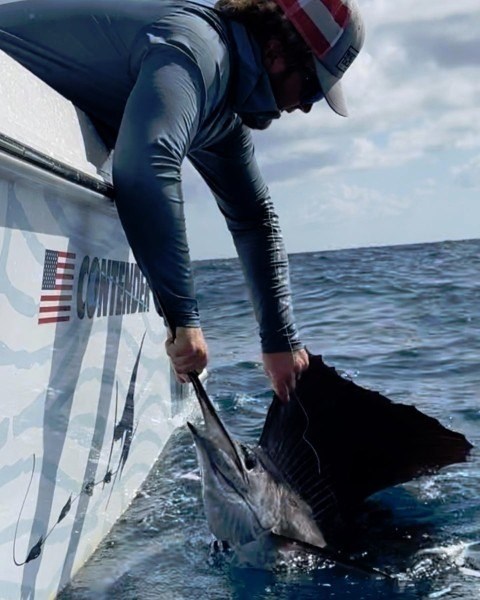
Do not lift a sailfish into the cockpit for a picture. A water-side photograph can record the catch without supporting the fish’s weight by its bill or exposing it to unnecessary air. Keep hands out of the gills and avoid crushing or bending the body.
Remove an accessible hook when it can be done safely and promptly. If removal would cause more harm, the crew may cut the leader close using the appropriate procedure. Allow the fish to regain strength with water moving naturally through its mouth and gills, following experienced handling guidance. Do not drag it backward. Release when it can swim away under its own control.
The Florida and federal rules to check
FWC’s billfish guidance, checked on October 4, 2026, lists a 63-inch lower-jaw fork-length minimum for sailfish and a one-billfish-per-person daily limit. Those figures do not make every sailfish a legal keeper. Federal permits, quotas, reporting and other conditions can also apply. Catch and release is the practical focus of this guide.
FWC states that sailfish intended for release may not be removed from the water when fishing in federal waters, or when fishing in state waters with a federal HMS permit. Keeping released fish in the water is also a sound handling practice beyond those specific circumstances.
Federal offshore billfish fishing involves HMS permit requirements, and landed billfish have reporting obligations. Check the official FWC billfish page below and the current requirements it directs you to before the trip. Tournament entry does not replace fishing permits or conservation rules.
Check current FWC sailfish fishing rules.
Rules reviewed October 4, 2026. Confirm the requirements for your trip before fishing.
Common ways to miss the opportunity
Staring only at the rod tip can hide the most useful clue: a fish approaching the bait. Watch the water around the spread. Polarized glasses can help in suitable light, but the crew still needs clear communication when someone sees a bill, sail or color change.
Weak bait is another avoidable problem. A fish that no longer swims naturally may need replacing, even if the hook is still perfectly tied. Check the bait supply throughout the trip and protect it from rough handling.
The final mistake is treating a release as an afterthought. A successful fight can be spoiled by a long photo setup, a missing tool or unclear roles. Prepare those details before fishing. The quality of the release is part of the catch, not a separate task after the exciting part ends.
How to choose and enjoy a first sailfish outing
Tell the captain whether you want a dedicated sailfish day or a mixed offshore trip. Ask which method is likely to be used and whether the crew supplies the live bait. Weather may require a change, so understand the operator’s cancellation and rescheduling policy before booking.
At the dock, ask for a short explanation of the bite routine. Know where to stand, which equipment to avoid touching and who will help if the fish crosses the boat. A few minutes of preparation can make the first hookup far less stressful.
After the trip, remember more than the jump count. Note the current, bait choice, method and release. A day with one well-handled fish can teach more than a hurried series of bites. The goal is to understand the fish well enough that the next opportunity feels clearer, calmer and more rewarding.
Sailfish questions answered
Is sailfish the same as marlin?
No. Both are billfish, but sailfish have a distinctive tall dorsal fin and different body proportions. Correct identification is important for handling and harvest rules.
Are sailfish only in Florida during winter?
No. Winter is a familiar peak in parts of southeast Florida, but fish can be encountered in other seasons. Patterns vary by region and conditions.
Does a cold front guarantee a good bite?
No. It can change bait and fish movement, but it can also make the sea unsafe. Weather and boat capability take priority.
What is the best live bait?
Goggle-eyes, threadfin herring and pilchards are common choices. Local availability, bait condition and the presentation matter more than one universal favorite.
Why use a kite?
It lets the crew position baits near the surface while holding much of the leader above the water. The method requires suitable conditions and active adjustment.
Can sailfish be caught by trolling?
Yes. Rigged baits and suitable lures can attract them while covering water. Some crews also use teasers and a coordinated pitch-bait approach.
Should I make a hard hook-set?
That depends on the rig, but circle-hook fishing generally calls for smooth pressure rather than a sharp strike. Follow the crew’s procedure for the actual setup.
What does lower-jaw fork length mean?
It measures from the tip of the lower jaw to the fork of the tail. The long upper bill is not included.
Can I hold a sailfish for a photo?
Keep it in the water. Specific federal and HMS-related rules prohibit removing fish intended for release, and water-side photos avoid unnecessary lifting and air exposure.
Do I need a special offshore permit?
Federal HMS requirements apply to relevant billfish fishing. Check the trip, vessel and current rules with the captain before departure.
Are sailfish always feeding when they raise the sail?
No single fin position explains every behavior. Watch the whole fish and nearby bait rather than assuming a raised sail guarantees a bite.
What is the most important beginner skill?
Listen to one clear set of crew instructions. Knowing the bite, fight and release routine is more useful on a first trip than trying to manage every rod yourself.
Plan your time on the water
Explore Florida fishing locations, check tides and weather, or find a local guide in the charter directory.