
FLORIDA KEYS & EVERGLADES
Duck Key
fishing guide
Arrange private launch access before exploring channel edges, or choose a separate nearby public or state park outing.
Explore the guide ↓Good-looking water needs a real access plan
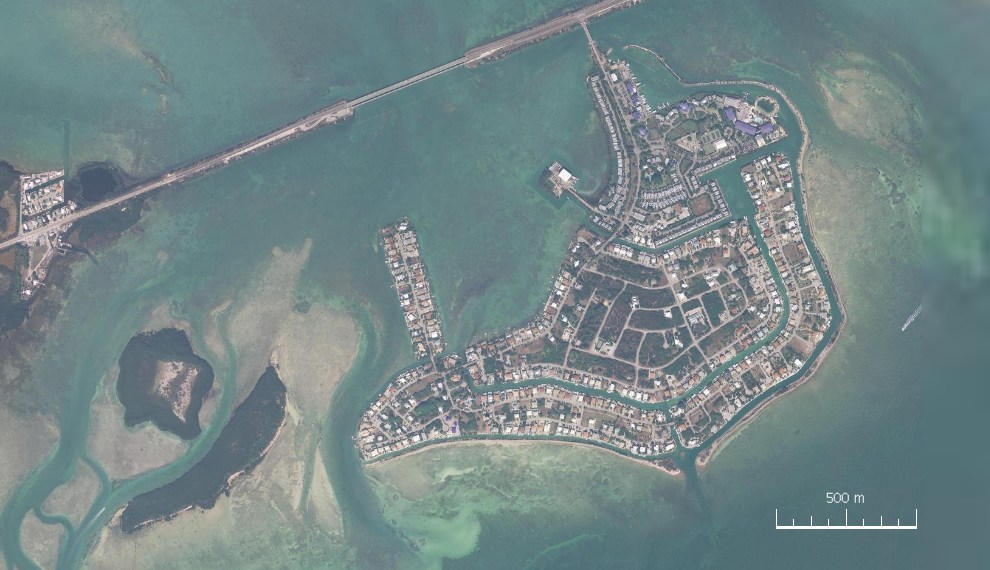
Duck Key is surrounded by turquoise channels, shallow bottom and mangrove islands. Those features can support snapper, jacks, barracuda and other Keys fish. They also sit beside a largely developed island where many docks and shorelines are private.
A visitor should begin with permission and launch arrangements. A bridge view or an attractive canal is not enough. Choose a facility that confirms access, then plan fishing water within a safe distance.
Duck Key can serve as a base for channel fishing, nearby flats or more demanding Atlantic trips. Keep those options separate. A short kayak outing and a reef boat trip need different weather limits, equipment and return plans.
Private ramps and nearby public alternatives
Marathon’s launch information identifies the Hawks Cay ramp at 61 Hawks Cay Boulevard as private. Confirm whether it is available to you, along with current fees, parking and hours. Do not arrive assuming that a resort ramp operates like an unrestricted county facility.
The same regional information identifies private access on nearby Conch Key. Again, permission and terms must be confirmed directly. A marina’s presence on a map does not establish public day use.
For public alternatives, consider an appropriate Marathon ramp after checking the route and current city rules. That changes the starting point and distance, so recalculate the day’s plan rather than treating it as an interchangeable driveway.
Curry Hammock State Park offers another nearby setting for paddling and permitted fishing. Check its current launch arrangements and rules. It is a separate park visit, not an informal entrance onto Duck Key’s private waterfront.
Find the edge between shallow and deep water
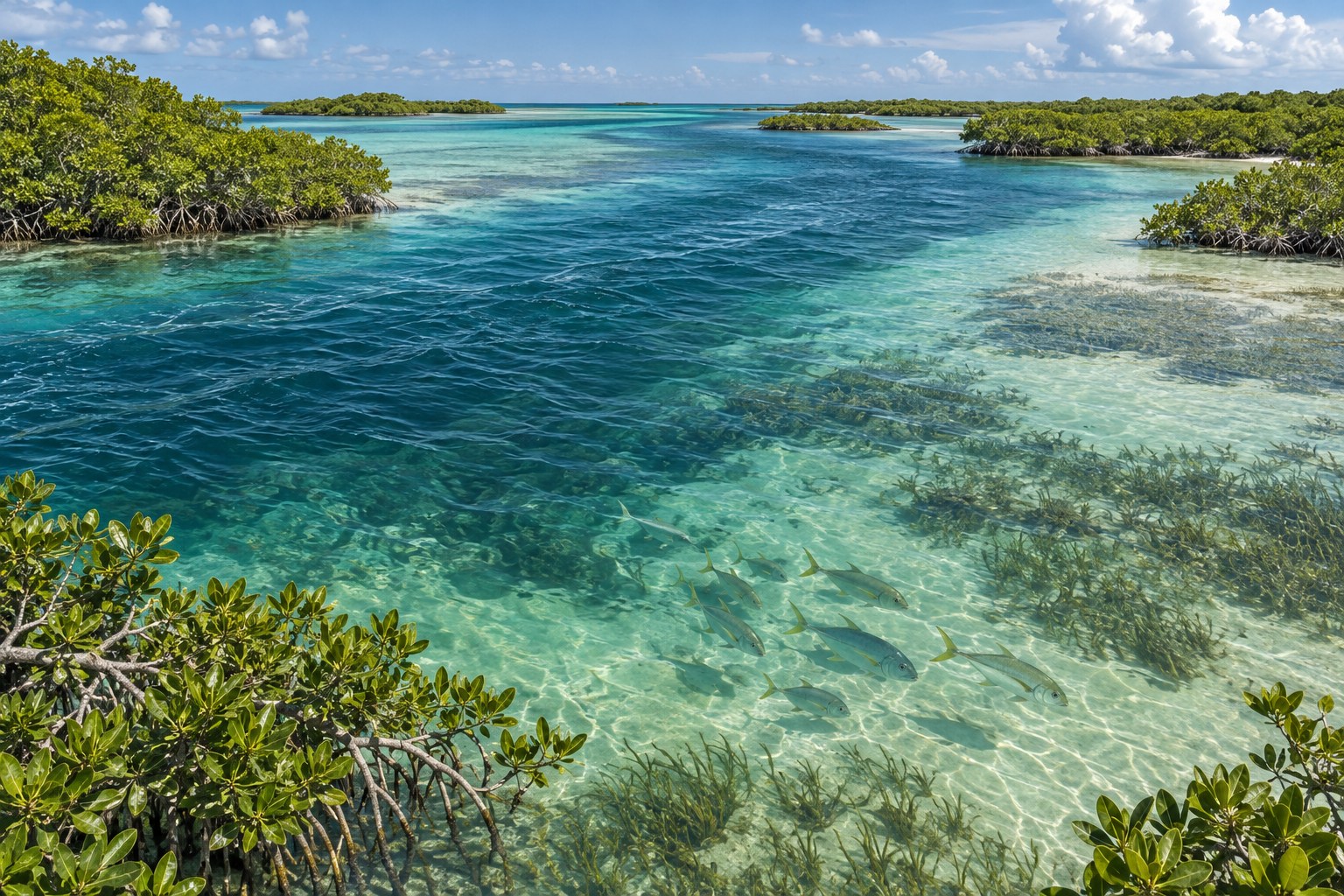
The clearest channel clue is often a color change. Pale sand or grass lies beside deeper blue water. Fish may travel along the edge, using depth as a route and nearby shallows as feeding ground.
Color is not a reliable depth measurement by itself. Clouds, glare and bottom type can change the appearance. Use proper navigation and depth information for the boat while using the visual edge as a fishing clue.
Cast across the edge at an angle that keeps the lure in the useful lane. If it races away with the current, adjust the presentation. Avoid drifting across a flat so shallow that the hull or motor contacts living bottom.
Keep the target list realistic
| Fish | Habitat clue | Starting presentation | What to avoid |
|---|---|---|---|
| Mangrove snapper | Legal cover beside a channel | Small shrimp or cut bait | Loose oversized bait that is easily stolen |
| Jack crevalle | Traveling bait and surface disturbance | Compact spoon or swimming lure | Casting through boat traffic to reach the school |
| Barracuda | Clear edge with visible baitfish | Suitable lure with deliberate leader choice | Handling a toothy fish without tools or a plan |
| Bonefish | Legal shallow flat with feeding room | Quiet shrimp imitation | Chasing a fish with the boat |
| Reef snapper | Permitted Atlantic reef habitat | Boat-based bait method suited to depth | Entering a protected zone because another boat is there |
Use a target that matches your access and experience. Seeing a large fish under a private dock does not create a lawful opportunity to pursue it from land.
Work a moving school without scattering it
Jacks can arrive quickly and leave just as quickly. Watch the direction of bait movement, then cast ahead and to the side. A lure retrieved beside the school is easier to distinguish than one buried in the middle of hundreds of minnows.
Keep hooks away from birds. If birds are diving tightly into the same spot, wait for a clear lane or let the opportunity pass. Do not make a hurried cast that risks wildlife or another angler.
Use tackle that can handle a strong run. A modest-looking jack can pull hard near structure. Know where you can safely guide and land the fish before making the cast.
After the school moves away, inspect the leader and hooks. Bent or damaged tackle can make the next chance fail even when the presentation is good.
A nearby park can offer a more suitable small-craft day
Curry Hammock’s shallow coastal setting can suit a carefully planned paddle when wind and access cooperate. Park information describes fishing opportunities and habitat used by fish such as snook, redfish, tarpon, mangrove snapper and bonefish.
Do not read that list as a promise that all will be available near the launch. Choose a permitted shoreline or edge and fish within a short route. Ask about current restrictions and keep away from swimming areas.
Protect seagrass and avoid disturbing wildlife on nearby islands. A paddle craft should still carry a flotation device, water, communication and a clear return plan. Shallow water can be difficult to cross when strong wind is against you.
Check zones before going farther offshore
Florida Keys National Marine Sanctuary includes areas where fishing is restricted or prohibited. Before choosing a reef destination, check the current NOAA map and rules for that exact position.
A reef’s popularity for snorkeling does not make it a fishing recommendation. Keep anchors off living coral and respect marked boundaries. Plan the boat’s position as carefully as the bait presentation.
Offshore travel also requires an appropriate vessel and marine forecast. Do not extend a sheltered channel trip into open Atlantic water just because the morning began calmly.
Two moving forces to watch
Wind moves the boat while current moves the lure. When both act in the same direction, a drift can become faster than expected. When they oppose each other, boat position may seem stable while the line sweeps strongly below.
Use the area tide and weather outlook to plan, then observe the line angle and nearby surface movement. Choose a position where you can present the bait and control the craft at the same time.
For a kayak, preserve an easy return path. Do not drift farther from the launch while focusing on a bite. Set a distance or time limit before starting and check it regularly.
Seasonal decisions around Duck Key
Cooler fronts can make exposed channels windy and rough. A sheltered nearby option may still be useful, but the route to it must also be safe. Avoid judging the whole trip from the calm water immediately beside a dock.
Spring can bring active bait and more boats using popular passages. Keep casting lanes clear and leave navigation room. A quieter secondary edge can be more pleasant than a crowded channel mouth.
Summer favors early starts and a conservative storm plan. Heat can also damage bait and tire the crew. Keep supplies shaded and finish before conditions become uncomfortable.
In fall, let current bait activity and weather determine the target. The same channel can offer a moving-lure opportunity one day and a slow snapper presentation the next.
Pack for control, not for every possible species
For a modest inshore trip, carry one dependable spinning outfit, a small selection of jigs or spoons, suitable leader material and a few bait hooks. Add pliers, a measuring tool and a landing option that fits the position.
Keep spare hooks enclosed while moving through a resort or public launch. Secure rods in a kayak so an unexpected wake does not send them overboard. Avoid carrying a large open tackle box where it blocks safe movement.
If you intend to target barracuda or larger channel fish, make that a deliberate change in equipment and handling preparation. Do not improvise around sharp teeth or a fish too large for the landing space.
Make the first visit easy to repeat
Confirm access the day before, choose a short route and write down the return deadline. At the first fishing stop, observe the edge before casting. Test one lure depth and one slightly different angle.
Record what made the spot useful: bait, current, cover or a change in depth. If it was unproductive, note whether the presentation was actually under control. That distinction helps you improve without blaming the location.
Return before the route becomes a struggle. A comfortable first trip gives you a reliable base for exploring another nearby feature next time.
Check harvest rules and leave the habitat intact
Review the FWC recreational fishing rules for licenses and target species. Sanctuary and park restrictions may add limits at particular places.
Keep released fish wet and supported. Retrieve discarded line safely, avoid damaging grass with the hull and never use a mangrove branch as disposable boat hardware.
Let a clean retrieve tell you something
A lure that returns with grass on every cast is not fishing the same way as a clean lure, even if both were aimed at the channel edge. Check the hook before each new presentation. If grass is suspended in the water, move a short distance within the legal route or use a more suitable weedless setup. If the lure is digging into bottom, change depth control. This small check prevents a long sequence of ineffective casts while a school passes nearby. Around Duck Key’s clear water, watching the final part of the retrieve can also show whether a fish follows without committing.
Duck Key questions
Is the Hawks Cay ramp public?
The regional ramp information identifies it as private. Confirm your access and the current terms directly.
Can I fish from a residential bridge or dock?
Only where access and fishing are specifically permitted. A view of fish below is not permission.
Is Curry Hammock on Duck Key?
No. It is a nearby state park with its own entrance, facilities and rules.
Where are the access references?
The Duck Key research and photograph notes record the sources behind these recommendations.